VS

Ford Kuga vs Volvo XC40 - Differences and prices compared

Compare performance (243 HP vs 197 HP), boot space and price (34200 £ vs 36800 £ ) at a glance. Find out which car is the better choice for you – Ford Kuga or Volvo XC40?

Kuga

Two Roads, Two Characters

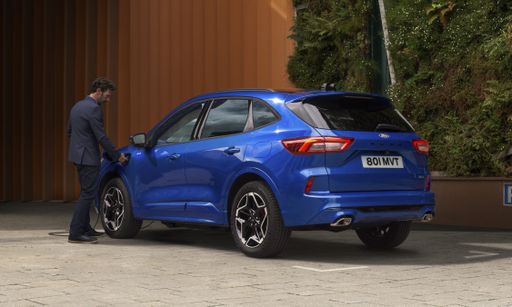
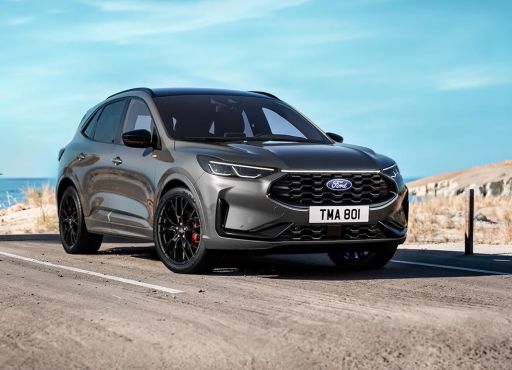
The Ford Kuga and Volvo XC40 are cut from very different cloth, yet both aim squarely at your everyday life. The Ford plays the dependable all-rounder, keen to please with friendliness and fuss-free usability. The Volvo leans into boutique charm, delivering a sense of occasion every time you pull the door handle. It’s comfort versus cool, but neither feels out of its depth.
XC40

City Swagger vs Suburban Sense

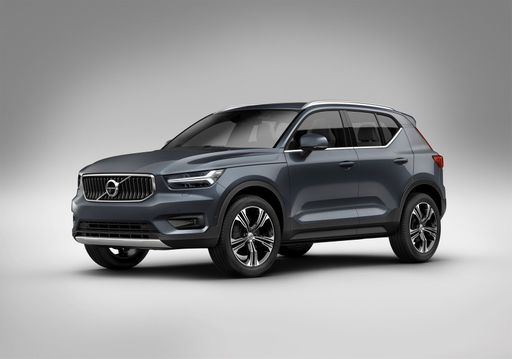
Threading through town, the XC40’s upright stance and crisp edges make it easy to place and a breeze to park. The Kuga prefers to stretch its legs, feeling relaxed and unflustered on ring roads and school runs alike. If your commute is a patchwork of tight streets and short hops, the Volvo’s tidy footprint shines. Spend more time hopping between suburbs, and the Ford settles into a smooth, quietly confident rhythm.

Kuga

Cabin Vibes and Touchpoints

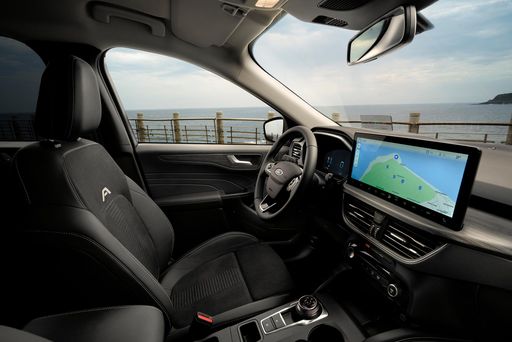
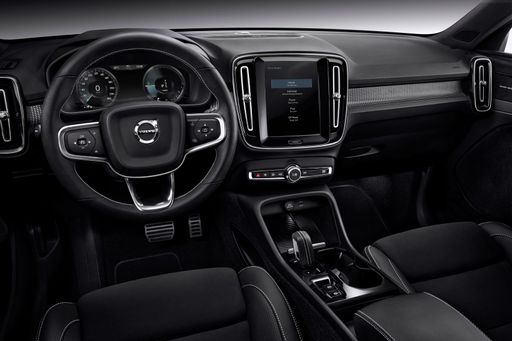
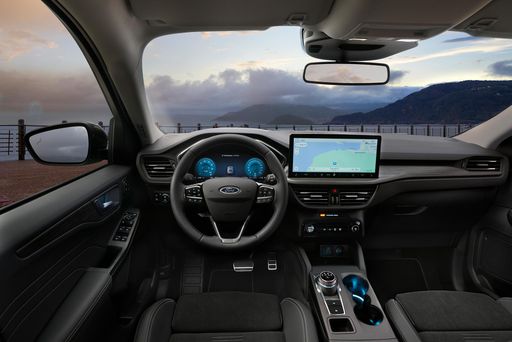
Inside, the Volvo is Scandi-lounge chic, with superb seats and materials that feel a notch more special. Ford counters with smart, durable finishes and controls that fall to hand without thought, the kind of layout you master in minutes. Volvo’s infotainment brings slick integration and a modern interface, though some functions sit a layer deep. Ford keeps more physical buttons for core tasks, which many drivers still prefer when the road turns bumpy.

XC40

Backseat Politics

Families will appreciate the Kuga’s straightforward space and flexibility, with a rear bench and load area designed around real-world errands. The Volvo fights back with clever storage touches and a square aperture that makes awkward items less awkward. Fitting child seats is simple in both, with doors that open wide and clear access to the anchors. On a weekend IKEA run, neither will flinch, but the Ford’s family-first packaging makes life feel slightly easier.

Kuga

Ride and Handling: Sofa or Sneakers?

The Kuga has a light-on-its-feet character, steering that encourages you to link corners neatly, and a willingness that feels a bit playful. Choose wheels carefully and it rides with a supple calm, shrugging off rougher patches without drama. The XC40 is more about composure than capers, gliding along with a planted stance and excellent noise insulation. It feels grown-up on the motorway, the sort of car that makes long drives pass in a relaxed blur.

XC40

Tech, Aids, and Everyday Helpers

Volvo’s driver assistance feels mature and reassuring, with clear graphics and calm interventions that reduce fatigue. Its connected services integrate naturally with your digital life, especially if you’re already living in a certain tech ecosystem. The Ford focuses on intuitive, easy-to-grab controls and straightforward smartphone pairing that just works. Both deliver the essentials, but they do so with different personalities: the Volvo polished, the Ford practical.

Costs, Value, and the Long Game

The Kuga makes a strong case for value, particularly if you can take advantage of its hybrid potential and keep charging habits regular. Volvo trades on brand equity, plushness, and strong desirability, which often pays dividends come resale time. Servicing packages and insurance will depend on your region and spec, but day-to-day, the Ford aims to keep bills friendly. The XC40 justifies its premium feel with a more upscale experience, and that’s a currency many buyers happily invest in.

Which Keys Suit Your Life?

If your world revolves around school gates, supermarket sprints, and the occasional long holiday haul, the Kuga’s easygoing nature and family-first thinking are hard to argue with. If you value design flair, serene cruising, and a cabin that turns every drive into a small treat, the XC40 is a compelling partner. Both will commute, cruise, and carry with confidence; it’s about the vibe you want from the journey. Keep reading to see which one takes the DriveDuel Champion crown.

Ford Kuga

4.3 (5 Reviews)
rate

Volvo XC40

5 (4 Reviews)
rate

Here’s where it gets real: The technical differences in detail

Costs and Efficiency:

Price and efficiency are key factors when choosing a car – and this is often where the real differences emerge.

Ford Kuga has a minimal advantage in terms of price – it starts at 34200 £ , while the Volvo XC40 costs 36800 £ . That’s a price difference of around 2520 £.

Fuel consumption also shows a difference: Ford Kuga manages with 2.80 L and is therefore significantly more efficient than the Volvo XC40 with 6.50 L. The difference is about 3.70 L per 100 km.

Engine and Performance:

Under the bonnet, it becomes clear which model is tuned for sportiness and which one takes the lead when you hit the accelerator.

When it comes to engine power, the Ford Kuga has a a bit edge – offering 243 HP compared to 197 HP. That’s roughly 46 HP more horsepower.

In acceleration from 0 to 100 km/h, the Ford Kuga is hardly perceptible quicker – completing the sprint in 7.30 s, while the Volvo XC40 takes 7.60 s. That’s about 0.30 s faster.

In terms of top speed, the Ford Kuga performs hardly perceptible better – reaching 200 km/h, while the Volvo XC40 tops out at 180 km/h. The difference is around 20 km/h.

There’s also a difference in torque: Volvo XC40 pulls somewhat stronger with 300 Nm compared to 240 Nm. That’s about 60 Nm difference.

Space and Everyday Use:

Cabin size, boot volume and payload all play a role in everyday practicality. Here, comfort and flexibility make the difference.

Both vehicles offer seating for 5 people.

In curb weight, Ford Kuga is a bit lighter – 1526 kg compared to 1688 kg. The difference is around 162 kg.

In terms of boot space, the Volvo XC40 offers slight more room – 452 L compared to 412 L. That’s a difference of about 40 L.

In maximum load capacity, the Ford Kuga performs slightly better – up to 1534 L, which is about 206 L more than the Volvo XC40.

When it comes to payload, Ford Kuga barely noticeable takes the win – 550 kg compared to 532 kg. That’s a difference of about 18 kg.

Who wins the race in the data check?

The Ford Kuga is decisively ahead in the objective data comparison.
This result only shows which model scores more points on paper – not which of the two cars feels right for you.

Ford Kuga
Volvo XC40

Costs and Consumption

View detailed analysis

Engine and Performance

View detailed analysis

Dimensions and Body

View detailed analysis
from about £34,200
Kuga

Ford Kuga

  • Engine Type : Petrol, Full Hybrid, Plugin Hybrid
  • Transmission : Manuel, Automatic
  • Drive Type : Front-Wheel Drive, All-Wheel Drive
  • Power HP : 150 - 243 HP
  • Consumption L/100km : 2.8 - 6.8 L
  • Electric Range : 68 km

Ford Kuga

4.3 (5 Reviews)
rate

The Kuga is Ford’s adaptable family SUV that blends usable space with a surprisingly lively driving character, making daily commutes and weekend escapes equally enjoyable. With smart interior packaging, an easy-to-use infotainment setup and composed road manners, it’s a sensible choice for buyers who want a bit of fun without the fuss.

details

Volvo XC40

5 (4 Reviews)
rate

The Volvo XC40 wraps Scandinavian minimalism into a compact, city-ready SUV with a premium cabin that feels both practical and grown-up. It will suit buyers who prize safety, clever storage and a composed ride, proving that small dimensions don't mean small personality.

details
Ford Kuga
Volvo XC40

Costs and Consumption

Price
34200 - 46300 £
Price
36800 - 47200 £
Consumption L/100km
2.8 - 6.8 L
Consumption L/100km
6.50 L
Consumption kWh/100km
-
Consumption kWh/100km
-
Electric Range
68 km
Electric Range
-
Battery Capacity
1.1 - 14.4 kWh
Battery Capacity
-
co2
55 - 154 g/km
co2
147 - 148 g/km
Fuel tank capacity
42 - 54 L
Fuel tank capacity
54 L

Dimensions and Body

Body Type
SUV
Body Type
SUV
Seats
5
Seats
5
Doors
5
Doors
5
Curb weight
1526 - 1859 kg
Curb weight
1688 kg
Trunk capacity
412 L
Trunk capacity
452 L
Length
4604 - 4645 mm
Length
4425 mm
Width
1882 mm
Width
1863 mm
Height
1673 - 1681 mm
Height
1652 mm
Max trunk capacity
1534 L
Max trunk capacity
1328 L
Payload
541 - 550 kg
Payload
532 kg

Engine and Performance

Engine Type
Petrol, Full Hybrid, Plugin Hybrid
Engine Type
Petrol MHEV
Transmission
Manuel, Automatic
Transmission
Automatic
Transmission Detail
Manual Gearbox, CVT, Automatic Gearbox
Transmission Detail
Dual-Clutch Automatic
Drive Type
Front-Wheel Drive, All-Wheel Drive
Drive Type
Front-Wheel Drive
Power HP
150 - 243 HP
Power HP
163 - 197 HP
Acceleration 0-100km/h
7.3 - 9.9 s
Acceleration 0-100km/h
7.6 - 8.6 s
Max Speed
195 - 200 km/h
Max Speed
180 km/h
Torque
240 Nm
Torque
265 - 300 Nm
Number of Cylinders
3 - 4
Number of Cylinders
4
Power kW
111 - 178 kW
Power kW
120 - 145 kW
Engine capacity
1496 - 2488 cm3
Engine capacity
1969 cm3

General

Model Year
2025
Model Year
2024
CO2 Efficiency Class
E, D, B
CO2 Efficiency Class
E
Brand
Ford
Brand
Volvo
What drivetrain options does the Ford Kuga have?

The Ford Kuga is available as Front-Wheel Drive or All-Wheel Drive.

The prices shown are estimates based on German list prices, adjusted for local VAT. Local registration taxes (e.g. NoVA, BPM or CO2 malus) are not included. This information is not legally binding.