VS

Ford Kuga vs Volvo XC60 - Differences and prices compared

Compare performance (243 HP vs 455 HP), boot space and price (34200 £ vs 49200 £ ) at a glance. Find out which car is the better choice for you – Ford Kuga or Volvo XC60?

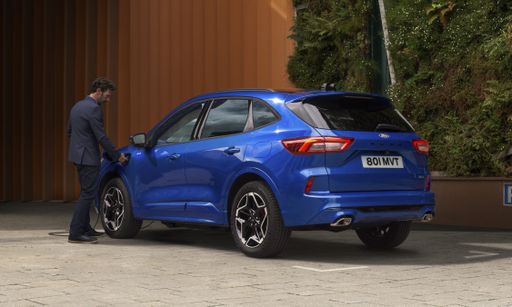
Kuga

Introduction: Battle of the SUVs

The compact SUV segment has rapidly gained popularity, and two standout contenders are the Ford Kuga and the Volvo XC60. Both vehicles offer an appealing blend of performance, comfort, and modern technology, making them top choices for drivers looking for versatility and innovation. In this article, we will delve into the technical specifications and innovative features of these two vehicles, highlighting their strengths and unique offerings.

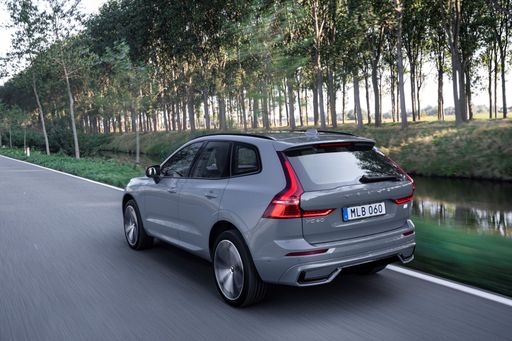
XC60

Power and Performance

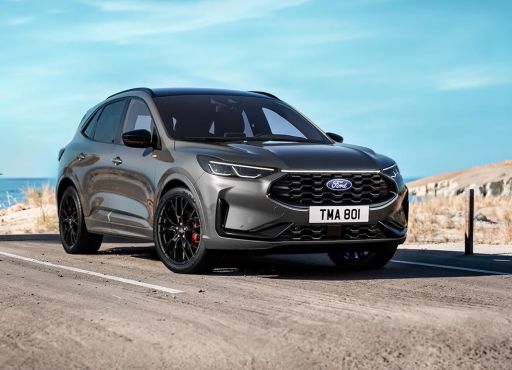
When it comes to powertrains, the Ford Kuga offers a range of options, including petrol, full hybrid, and plug-in hybrid variants. The Kuga's petrol engines deliver power outputs of 150 HP, 180 HP, and a robust 243 HP in the top variant, with acceleration times ranging from 7.3 to 9.5 seconds for 0-100 km/h. The engine choices also provide impressive fuel efficiency, with consumption as low as 5.3 L/100 km and a CO2 emission rating reaching 122 g/km.

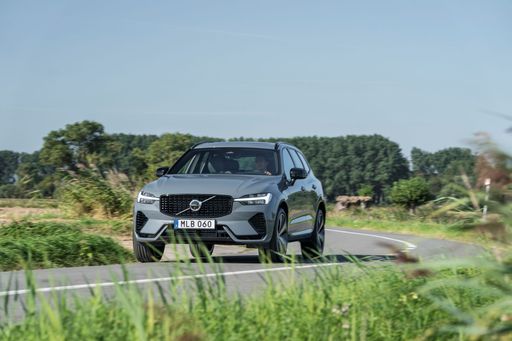
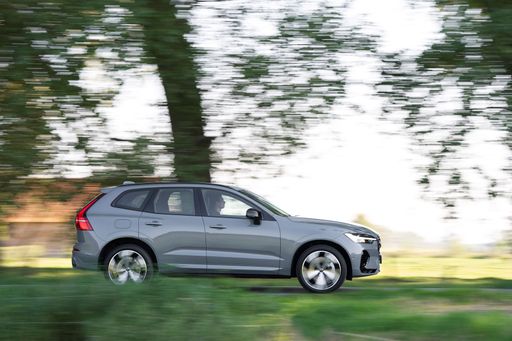
On the other hand, the Volvo XC60 takes performance up a notch with its powerful petrol mild-hybrid and plug-in hybrid engines. The XC60 boasts power outputs of 250 HP in the base model and up to a staggering 455 HP in the high-performance variant. The acceleration for its most powerful trim is an impressive 4.9 seconds to 100 km/h, showcasing its sporty edge. Its fuel consumption starts at 7.7 L/100 km, with CO2 emissions as low as 22 g/km for the PHEV variants.

Kuga

Advanced Driving Technologies

Both vehicles are equipped with advanced driving technologies designed for safety and convenience. The Ford Kuga features Ford's Co-Pilot360 suite, which includes adaptive cruise control, lane centering, and stop-and-go functionality. Additionally, the Kuga's optional hybrid systems enhance fuel efficiency while delivering a seamless driving experience.

The Volvo XC60, famous for its safety pedigree, includes the innovative City Safety system, which provides automatic emergency braking and collision avoidance. It also boasts advanced adaptive cruise control and Pilot Assist, a feature that enables semi-autonomous driving on highways. Volvo's commitment to driver assistance technologies places the XC60 at the forefront of safety innovation.

XC60

Interior Comfort and Convenience

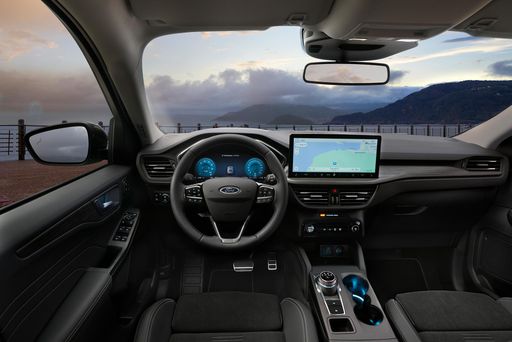
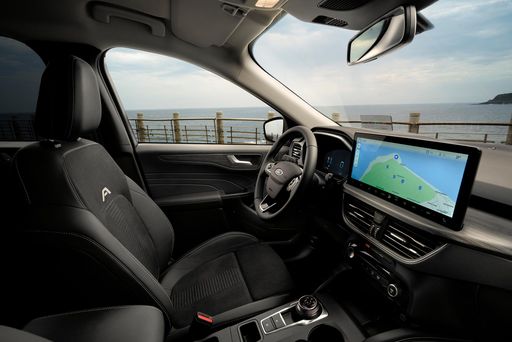
Stepping inside, both SUVs prioritize comfort, yet their approaches differ. The Ford Kuga's interior is spacious and user-friendly, with a modern aesthetic. It features a versatile trunk capacity of 412 L, expandable for larger cargo, and a range of infotainment options, including Ford's Sync 3 system, which supports Apple CarPlay and Android Auto.

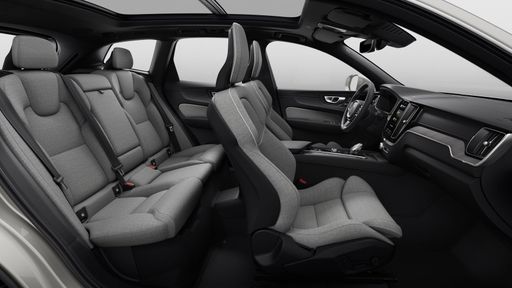
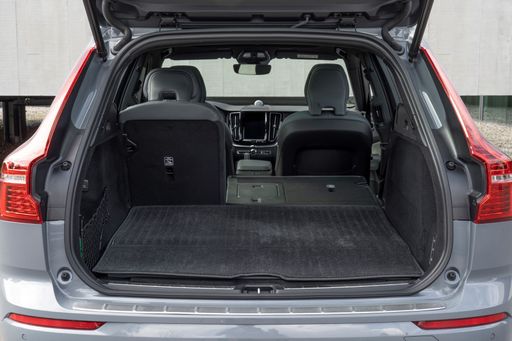
In contrast, the Volvo XC60 sets a standard for premium interiors with its luxurious materials and impeccable build quality. With a trunk capacity of 483 L, the XC60 offers slightly more cargo space. The infotainment system is based on Volvo's Sensus interface, featuring a large touchscreen and advanced connectivity options. Volvo's focus on ergonomics and high-quality materials ensures a comfortable and upscale driving experience.

Kuga

Efficiency and Eco-Friendly Features

With environmental concerns being more prominent than ever, both SUVs offer eco-friendly features. The Ford Kuga provides hybrid options that can achieve impressive electric ranges of up to 69 km, making it suitable for short trips without burning fossil fuels. Its mild hybrid variant enhances efficiency further with low CO2 emissions.

The Volvo XC60 does not lag in this department, providing a plug-in hybrid variant with an electric range of up to 80 km, allowing for short commutes in electric-only mode. This blend of electric and traditional power helps reduce the XC60's carbon footprint, emphasizing Volvo's commitment to sustainability.

XC60

Conclusion: Choosing the Right SUV for You

In the Ford Kuga vs. Volvo XC60 showdown, both SUVs have their unique advantages. The Ford Kuga excels in offering a wider range of powertrains and flexible driving options, while the Volvo XC60 stands out for its luxurious interior, cutting-edge safety features, and performance capabilities. Ultimately, the choice will depend on what qualities and features matter most to you, whether it's the innovative tech of the Kuga or the sophisticated comfort of the XC60. Each vehicle respectfully caters to consumers' diverse needs within a competitive SUV market.

Ford Kuga

4.3 (5 Reviews)
rate

Volvo XC60

4.7 (5 Reviews)
rate

Here’s where it gets real: The technical differences in detail

Costs and Efficiency:

Price and efficiency are key factors when choosing a car – and this is often where the real differences emerge.

Ford Kuga has a decisively advantage in terms of price – it starts at 34200 £ , while the Volvo XC60 costs 49200 £ . That’s a price difference of around 14949 £.

Both cars consume an average of 2.80 L per 100 km – no difference here.

As for electric range, the Volvo XC60 performs to a small extent better – achieving up to 82 km, about 14 km more than the Ford Kuga.

Engine and Performance:

Power, torque and acceleration say a lot about how a car feels on the road. This is where you see which model delivers more driving dynamics.

When it comes to engine power, the Volvo XC60 has a convincingly edge – offering 455 HP compared to 243 HP. That’s roughly 212 HP more horsepower.

In acceleration from 0 to 100 km/h, the Volvo XC60 is convincingly quicker – completing the sprint in 4.90 s, while the Ford Kuga takes 7.30 s. That’s about 2.40 s faster.

In terms of top speed, the Ford Kuga performs hardly perceptible better – reaching 200 km/h, while the Volvo XC60 tops out at 180 km/h. The difference is around 20 km/h.

There’s also a difference in torque: Volvo XC60 pulls convincingly stronger with 709 Nm compared to 240 Nm. That’s about 469 Nm difference.

Space and Everyday Use:

Cabin size, boot volume and payload all play a role in everyday practicality. Here, comfort and flexibility make the difference.

Both vehicles offer seating for 5 people.

In curb weight, Ford Kuga is clearly perceptible lighter – 1526 kg compared to 1900 kg. The difference is around 374 kg.

In terms of boot space, the Volvo XC60 offers to a small extent more room – 483 L compared to 412 L. That’s a difference of about 71 L.

In maximum load capacity, the Volvo XC60 performs slight better – up to 1543 L, which is about 9 L more than the Ford Kuga.

Maximum payload is identical – both can carry up to 550 kg.

Who wins the race in the data check?

The Volvo XC60 holds a decisive overall lead in the objective data comparison.
This result only shows which model scores more points on paper – not which of the two cars feels right for you.

Ford Kuga
Volvo XC60

Costs and Consumption

View detailed analysis

Engine and Performance

View detailed analysis

Dimensions and Body

View detailed analysis
from about £49,200
XC60

Volvo XC60

  • Engine Type : Petrol MHEV, Plugin Hybrid
  • Transmission : Automatic
  • Drive Type : All-Wheel Drive
  • Power HP : 250 - 455 HP
  • Consumption L/100km : 2.8 - 7.5 L
  • Electric Range : 74 - 82 km

Ford Kuga

4.3 (5 Reviews)
rate

The Kuga is Ford’s adaptable family SUV that blends usable space with a surprisingly lively driving character, making daily commutes and weekend escapes equally enjoyable. With smart interior packaging, an easy-to-use infotainment setup and composed road manners, it’s a sensible choice for buyers who want a bit of fun without the fuss.

details

Volvo XC60

4.7 (5 Reviews)
rate

The Volvo XC60 blends Scandinavian calm with confident presence, offering a cabin that feels plush without shouting for attention. It’s a smart pick for buyers after a composed ride, clever practicality and thoughtful safety touches — it even makes running the family shuttle feel almost serene, which is a small miracle.

details
Ford Kuga
Volvo XC60

Costs and Consumption

Price
34200 - 46300 £
Price
49200 - 75100 £
Consumption L/100km
2.8 - 6.8 L
Consumption L/100km
2.8 - 7.5 L
Consumption kWh/100km
-
Consumption kWh/100km
-
Electric Range
68 km
Electric Range
74 - 82 km
Battery Capacity
1.1 - 14.4 kWh
Battery Capacity
14.70 kWh
co2
55 - 154 g/km
co2
64 - 169 g/km
Fuel tank capacity
42 - 54 L
Fuel tank capacity
71 L

Dimensions and Body

Body Type
SUV
Body Type
SUV
Seats
5
Seats
5
Doors
5
Doors
5
Curb weight
1526 - 1859 kg
Curb weight
1900 - 2150 kg
Trunk capacity
412 L
Trunk capacity
468 - 483 L
Length
4604 - 4645 mm
Length
4708 mm
Width
1882 mm
Width
1902 mm
Height
1673 - 1681 mm
Height
1651 - 1655 mm
Max trunk capacity
1534 L
Max trunk capacity
1528 - 1543 L
Payload
541 - 550 kg
Payload
510 - 550 kg

Engine and Performance

Engine Type
Petrol, Full Hybrid, Plugin Hybrid
Engine Type
Petrol MHEV, Plugin Hybrid
Transmission
Manuel, Automatic
Transmission
Automatic
Transmission Detail
Manual Gearbox, CVT, Automatic Gearbox
Transmission Detail
Automatic Gearbox
Drive Type
Front-Wheel Drive, All-Wheel Drive
Drive Type
All-Wheel Drive
Power HP
150 - 243 HP
Power HP
250 - 455 HP
Acceleration 0-100km/h
7.3 - 9.9 s
Acceleration 0-100km/h
4.9 - 6.9 s
Max Speed
195 - 200 km/h
Max Speed
180 km/h
Torque
240 Nm
Torque
350 - 709 Nm
Number of Cylinders
3 - 4
Number of Cylinders
4
Power kW
111 - 178 kW
Power kW
184 - 335 kW
Engine capacity
1496 - 2488 cm3
Engine capacity
1969 cm3

General

Model Year
2025
Model Year
2025
CO2 Efficiency Class
E, D, B
CO2 Efficiency Class
F, B
Brand
Ford
Brand
Volvo
What drivetrain options does the Ford Kuga have?

The Ford Kuga is available as Front-Wheel Drive or All-Wheel Drive.

The prices shown are estimates based on German list prices, adjusted for local VAT. Local registration taxes (e.g. NoVA, BPM or CO2 malus) are not included. This information is not legally binding.