VS

Ford Kuga vs Geely Starray comparison

Compare performance (243 HP vs 262 HP), boot space and price (34,200 £ vs 28,300 £ ) at a glance. Find out which car is the better choice for you – Ford Kuga or Geely Starray?

Ford Kuga vs Geely Starray: Key differences

Ford Kuga

4.3 (7 Reviews)
rate
  • barely quicker 0–100 km/h
  • slightly lighter
details

Geely Starray

5 (2 Reviews)
rate
  • visibly cheaper
  • barely more power
  • significantly more electric range
details

All details on performance, efficiency, range and trunk space can be found in the technical comparison below – including user reviews for both models.

By Achim Sedelmaier

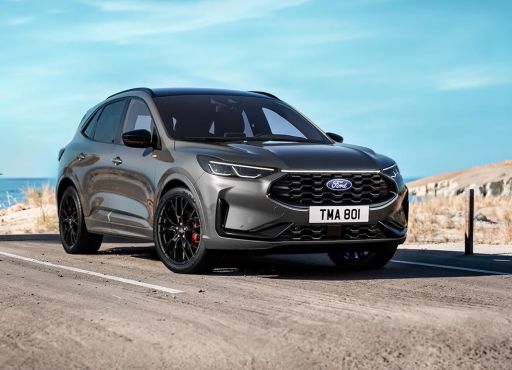
Kuga

Opening: Ford Kuga VS Geely Starray — two different answers to the family‑SUV brief

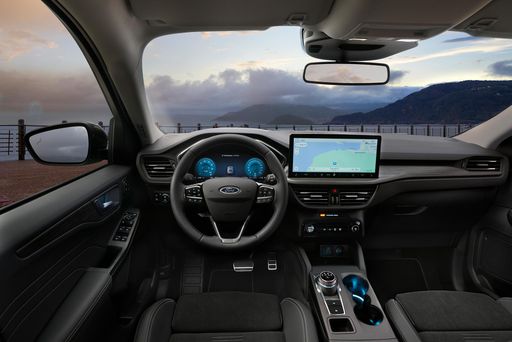
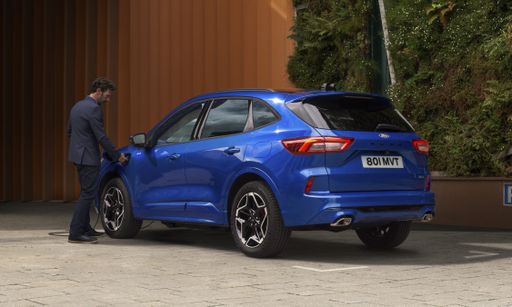
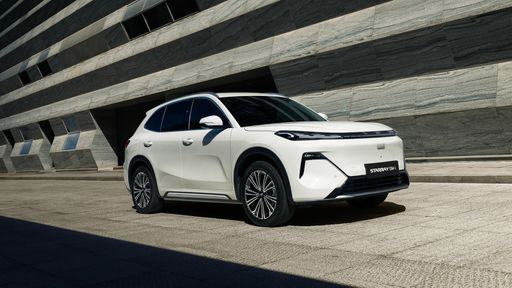
Ford Kuga VS Geely Starray frames a straightforward choice: the Kuga is a driver‑focused compact SUV that prizes agility and familiar hybrid efficiency, while the Starray is a value‑led, long‑range PHEV that prioritises space and running costs. The Ford Kuga feels like a European compact SUV tuned for steering precision and composed cruising, whereas the Geely Starray aims to deliver maximum electric kilometers, a big rear seat and a low purchase price. Both will carry a family, but they do it in different ways — one with sliding rear seats for flexibility, the other with cavernous legroom and a larger trunk. If you care more about in‑seat driving engagement you’ll gravitate to the Kuga; if you care about daily electric range and low ownership cost the Starray is the more obvious pick.
Starray

Character and driving feel

The Ford Kuga wears its personality on its sleeve with direct steering and a tauter chassis that rewards an attentive driver, while the Geely Starray prefers to be uninvolving and predictable. In everyday town traffic the Starray’s electric mode is calm and undemanding, making it easy to glide through urban stops, whereas the Kuga’s hybrid systems make it exceptionally frugal in mixed city driving but can get vocal under hard acceleration. On country roads the Kuga’s sharper responses and reduced body roll make it more engaging and confidence‑inspiring, but the Starray will keep passengers comfortable without asking for energetic inputs. Both cars have moments of annoyance — the Kuga with a touch‑centric climate interface and the Starray with menu‑deep infotainment and occasional nanny‑like assistant interventions — so the feel of driving them is as much about interface design as chassis tuning.

Kuga

Comfort and long‑distance behavior

For long miles the Ford Kuga tends to feel more settled and quieter at steady speeds, which helps reduce driver fatigue, while the Geely Starray is quieter when running purely electric but shows more tyre and wind noise when the combustion engine takes over. The Kuga’s firmer suspension can be fatiguing on very poor surfaces, especially in sportier trims, but it rewards steady cruising with calm refinement; the Starray’s suspension aims for softness yet can exhibit a light fidget over certain road textures. Seat comfort and ergonomics tilt differently too: the Kuga offers a familiar, driver‑oriented cockpit and bolstering, while the Starray delivers a relaxed seating position and exceptional rear comfort for passengers. If you regularly tackle long motorway stretches with passengers who prize quiet and composure, the Kuga will feel more grown‑up; if you alternate electric inner‑city runs with occasional highways and prioritise rear seat calm, the Starray’s EV strengths are compelling.

Practicality, space and everyday usability

The Geely Starray clearly wins the space argument for passengers and luggage, giving taller occupants real legroom and a trunk that better swallows family kit, whereas the Ford Kuga trades slightly less boot space for a more versatile rear bench that slides for extra flexibility. Parents will appreciate the Starray’s roomy rear and flat floor for child seats, but the Kuga’s ISOFIX layout and easier access in some trims feel more thoughtful for quick school‑run chores. The Kuga’s packaging can be compromised by hybrid hardware in certain versions, while the Starray’s large battery is the reason it achieves such long electric ranges and usable luggage area in other versions. Day‑to‑day usability therefore depends on your priorities: choose the Starray if rear space and trunk capacity are non‑negotiable, choose the Kuga if adjustable rear seating and slightly smarter load handling matter more.

Cabin feel, controls and perceived quality

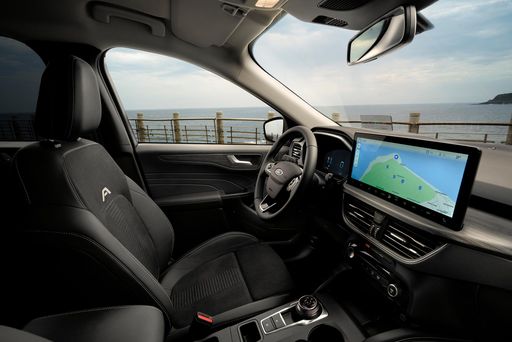
The Ford Kuga’s interior feels utilitarian and functional rather than lavish, with straightforward materials and a high‑quality infotainment screen, while the Geely Starray punches above its price with surprisingly soft surfaces and reassuring build in many areas. Both cars lean heavily on touchscreen controls, but the Kuga’s system is quicker to read at a glance while the Starray buries frequently used functions inside menus and can feel slow to respond. If tactile switches and physical shortcuts matter the Kuga’s limited physical controls can frustrate, yet the Starray’s big display and dense menus create more distraction overall. Perceived quality is a toss‑up: the Kuga feels familiar and competent but not premium, the Starray feels like value for money but occasionally reveals cheaper trim inserts under scrutiny.

Buyer fit: who should choose which before the technical deep dive

If you are a driver who values involvement, steady high‑speed refinement and the flexibility of a sliding rear seat, the Ford Kuga is the one that will feel right every day; it suits commuters who mix urban efficiency with country‑road fun and don’t mind a firmer ride. If your priorities are low running cost through long electric ranges, rear‑seat space, a larger boot and a lower sticker price, the Geely Starray is the pragmatic choice that rewards regular home charging and family hauling. Both cars make different compromises on noise, refinement and interface design, so your decision comes down to whether you want a slightly sportier, more composed cruiser (Kuga) or a cheaper, more spacious long‑range PHEV that maximises electric driving (Starray). Below this editorial comparison you’ll find the technical comparison that explains how drivetrain, range, charging and dimensions create those real‑world differences so you can match numbers to the driving impressions described here.

Here’s where it gets real: The technical differences in detail

Kuga

Costs and Efficiency:

Looking at overall running costs, both models reveal some interesting differences in everyday economy.

Geely Starray is visibly cheaper – starting at 28,300 £ , while the Ford Kuga costs 34,200 £ . That’s a price difference of around 5,965 £.

As for electric range, the Geely Starray offers significantly more range – reaching up to 136 km, about 68 km more than the Ford Kuga.

Starray

Engine and Performance:

Power, torque and acceleration say a lot about how a car feels on the road. This is where you see which model delivers more driving dynamics.

When it comes to engine power, the Geely Starray offers barely more power – delivering 262 HP compared to 243 HP. That’s roughly 19 HP more horsepower.

When accelerating from 0 to 100 km/h, the Ford Kuga is barely quicker – completing the sprint in 7.3 s, while the Geely Starray takes 8 s. That’s about 0.7 s quicker.

Kuga

Space and Everyday Use:

Whether family car or daily driver – which one offers more room, flexibility and comfort?

Both vehicles offer seating for 5 people.

In terms of curb weight, Ford Kuga is slightly lighter – 1,526 kg compared to 1,730 kg. The difference is around 204 kg.

When it comes to payload, the Ford Kuga carries visibly more – 550 kg compared to 435 kg. That’s a difference of about 115 kg.

Who wins the race in the data check?

The Geely Starray is clearly superior overall in the objective data comparison.
This result only shows which model scores more points on paper – not which of the two cars feels right for you.

from £28,300
Starray

Geely Starray

  • Engine Type Plugin Hybrid
  • Transmission Automatic
  • Drive Type Front-Wheel Drive
  • Power HP 262 HP
  • Consumption kWh/100km 14.7 - 18.3 kWh/100km
  • Electric Range 83 - 136 km
Ford Kuga
Geely Starray

Costs and Consumption

View detailed analysis

Engine and Performance

View detailed analysis

Dimensions and Body

View detailed analysis

Ford Kuga

The Ford Kuga is a practical and comfortable compact SUV that balances everyday usability with a composed ride and adaptable interior. It offers sensible tech and safety features, making it a solid choice for families or anyone seeking a versatile, easy-to-live-with crossover.

details

Geely Starray

The Geely Starray blends a sleek, modern exterior with a comfortable, well-appointed cabin that feels more upscale than its price suggests. It offers a composed, user-friendly driving experience with thoughtful tech and space that make it a practical choice for everyday family and city use.

details
Ford Kuga
Geely Starray

Costs and Consumption

Price
34,200 - 46,300 £
Price
28,300 - 32,600 £
Consumption L/100km
2.8 - 6.8 L/100km
Consumption L/100km
-
Consumption kWh/100km
-
Consumption kWh/100km
14.7 - 18.3 kWh/100km
Electric Range
68 km
Electric Range
83 - 136 km
Battery Capacity
-
Battery Capacity
-
co2
55 - 154 g/km
co2
33 - 54 g/km
Fuel tank capacity
-
Fuel tank capacity
-

Dimensions and Body

Body Type
SUV
Body Type
SUV
Seats
5
Seats
5
Doors
-
Doors
-
Curb weight
1,526 - 1,859 kg
Curb weight
1,730 - 1,815 kg
Trunk capacity
-
Trunk capacity
528 L
Length
-
Length
-
Width
1,882 mm
Width
1,905 mm
Height
-
Height
-
Max trunk capacity
-
Max trunk capacity
-
Payload
541 - 550 kg
Payload
435 kg

Engine and Performance

Engine Type
Petrol, Full Hybrid, Plugin Hybrid
Engine Type
Plugin Hybrid
Transmission
Manuel, Automatic
Transmission
Automatic
Transmission Detail
Manual Gearbox, CVT, Automatic Gearbox
Transmission Detail
Automatic Gearbox
Drive Type
Front-Wheel Drive, All-Wheel Drive
Drive Type
Front-Wheel Drive
Power HP
150 - 243 HP
Power HP
262 HP
Acceleration 0-100km/h
7.3 - 9.9 s
Acceleration 0-100km/h
8 - 8.2 s
Max Speed
-
Max Speed
-
Torque
240 Nm
Torque
-
Number of Cylinders
3 - 4
Number of Cylinders
4
Power kW
111 - 178 kW
Power kW
193 kW
Engine capacity
1,496 - 2,488 cm3
Engine capacity
1,499 cm3

General

Model Year
2025
Model Year
2026
CO2 Efficiency Class
E, D, B
CO2 Efficiency Class
B
Brand
Ford
Brand
Geely
DriveDuel uses data analysis and artificial intelligence to evaluate vehicle data and create content. Content is regularly reviewed and improved. The displayed prices are estimates based on German list prices, adjusted to the respective country’s VAT. Country-specific registration taxes are not included. This information is not legally binding.