
VS

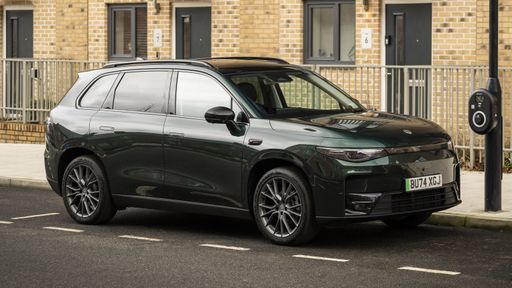
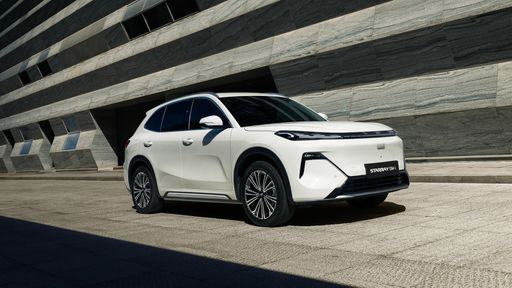
Leapmotor C10 vs Geely Starray comparison

Compare performance (598 HP vs 262 HP), boot space and price (32,200 £ vs 28,300 £ ) at a glance. Find out which car is the better choice for you – Leapmotor C10 or Geely Starray?

Leapmotor C10 vs Geely Starray: Key differences

Leapmotor C10

  • considerably more power
  • clearly more electric range
  • clearly quicker 0–100 km/h
details

Geely Starray

5 (2 Reviews)
rate
  • moderately cheaper
  • a bit more efficient
  • a bit lighter
  • somewhat more trunk space
details

All details on performance, efficiency, range and trunk space can be found in the technical comparison below – including user reviews for both models.

By Achim Sedelmaier

C10

Leapmotor C10 VS Geely Starray — quick summary for shoppers

Leapmotor C10 VS Geely Starray sets up a classic family‑SUV trade‑off: the Leapmotor C10 prioritises rear‑seat space and kit for the money, while the Geely Starray focuses on electric driving range and a larger, more flexible boot. The C10 feels like a value-packed people‑carrier with generous head‑and‑legroom and a calm, city-friendly demeanor. The Starray reads as a pragmatic PHEV for commuters who can regularly plug in, offering quieter EV cruising and a reassuringly big luggage area. Both cars make compromises in software logic and driver aids, but for different reasons — Leapmotor leans hard into kit and space, Geely leans into electric range and trunk practicality. Read on to see which trade-offs matter most for your daily life.
Starray

Driving character and controls

The Leapmotor C10 is gently tuned: light steering, a small turning circle and soft responses make it undemanding in town but uninvolving on twisty roads. The Geely Starray feels more reserved — its power delivery can seem a touch languid when pushed, yet in electric mode it masks drivetrain noise and can feel composed at steady speeds. If you prize nimble urban maneuvering and easy parking, the Leapmotor C10 is the friendlier companion; if you want a quieter, more relaxed motorway cruise with less electric anxiety, the Starray’s EV temperament will suit you better. Neither car is aimed at driving enthusiasts — both trade engagement for safety and comfort — but they reach that goal by different mechanical temperaments. Expect the C10 to feel more playful in the city and the Starray to feel steadier when you settle into a long run.

Comfort and long‑distance behavior

On short hops and school runs the Leapmotor C10’s cushioned seats and soft suspension make it very pleasant, while its high rear bench and flat floor keep passengers comfortable and unbothered. Over motorway miles the C10 shows its limits: wind and tyre noise and occasional vibrations give it a less polished long‑distance persona than its cabin size suggests. The Geely Starray, particularly in electric mode, tends to feel quieter and more linear on sustained runs, though its combustion engine can be vocal and the suspension sometimes introduces fine jitter over uneven surfaces. For cross‑country regulars who can charge, the Starray will feel more composed; for urban‑oriented families who value in‑car comfort over long‑run serenity, the C10 will be the more comfortable daily. Both need workarounds to match the refined highway calm of class leaders, but they get there in different ways.

Cabin feel, tech and perceived quality

The Leapmotor C10 delivers a pragmatic interior: robust materials, lots of standard equipment and a spacious back row, but infotainment and driver aids are often intrusive or buried in menus. The Geely Starray presents a sleeker screen experience and generally higher perceived fit‑and‑finish, yet its large interface suffers from deep menus and small icons that frustrate quick interactions. Leapmotor sells you space and kit for the money; Geely sells you refinement and warranty reassurance, but both require patience with touchscreens and the way some safety systems behave. If tactile controls and quick access matter, neither car is ideal, but the Starray’s interface feels more modern while the C10’s cabin feels more utilitarian and family‑proof. In short, the C10 reads as pragmatic and well‑equipped, the Starray as more polished but fiddlier to operate.

Practicality, family usability and luggage

Behind the wheel as a family car, the Leapmotor C10’s selling point is its enormous rear accommodation and easy entry — child seats go in smoothly and three adults can sit more comfortably than in many rivals. The Geely Starray counters with a clearly larger and more versatile boot, a usable underfloor space and a long electric range that reduces fuel stops for commuters who charge. If your priority is rear passenger comfort, the C10 wins the day; if you regularly carry bulky loads or prefer fewer refuelling or charging interruptions, the Starray’s cargo logic and plug‑in flexibility feel more practical. Both trim down other annoyances — fiddly touch controls and assist prompts — but those pain points are less visible to travellers who need space first. Think of the C10 as the passenger‑first choice and the Starray as the luggage‑and‑range solution.

Who should choose which — buyer fit and next steps

If your life revolves around school runs, rear‑seat comfort and getting lots of equipment for your money, the Leapmotor C10 is the clearer fit: it’s roomy, easy to live with in the city and generous on standard kit. If you commute with access to charging, haul luggage regularly, or want lower running costs from a long electric range, the Geely Starray lines up better with those priorities thanks to its PHEV/EV strengths and bigger boot. Both cars trade off polish and intuitive software for price and space, so the deciding factor in this matchup is how you balance rear‑seat comfort against luggage range and charging habits. With that in mind, the technical comparison that follows will make those trade‑offs concrete and help you match specs to the day‑to‑day points above.

Here’s where it gets real: The technical differences in detail

C10

Costs and Efficiency:

When it comes to price and running costs, the biggest differences usually appear. This is often where you see which car fits your budget better in the long run.

Geely Starray is moderately cheaper – starting at 28,300 £ , while the Leapmotor C10 costs 32,200 £ . That’s a price difference of around 3,951 £.

In terms of energy consumption, the Geely Starray is a bit more efficient: consuming 14.7 kWh/100km compared to 16.2 kWh/100km for the Leapmotor C10. That’s a difference of about 1.5 kWh/100km.

As for electric range, the Leapmotor C10 offers clearly more range – reaching up to 510 km, about 374 km more than the Geely Starray.

Starray

Engine and Performance:

Under the bonnet, it becomes clear which model is tuned for sportiness and which one takes the lead when you hit the accelerator.

When it comes to engine power, the Leapmotor C10 offers considerably more power – delivering 598 HP compared to 262 HP. That’s roughly 336 HP more horsepower.

When accelerating from 0 to 100 km/h, the Leapmotor C10 is clearly quicker – completing the sprint in 4 s, while the Geely Starray takes 8 s. That’s about 4 s quicker.

Space and Everyday Use:

Beyond pure performance, interior space and usability matter most in daily life. This is where you see which car is more practical and versatile.

Both vehicles offer seating for 5 people.

In terms of curb weight, Geely Starray is a bit lighter – 1,730 kg compared to 1,950 kg. The difference is around 220 kg.

Looking at boot space, the Geely Starray offers somewhat more boot space – 528 L compared to 435 L. That’s a difference of about 93 L.

When it comes to payload, the Leapmotor C10 carries only slightly more – 480 kg compared to 435 kg. That’s a difference of about 45 kg.

Who wins the race in the data check?

The Leapmotor C10 is clearly superior overall in the objective data comparison.
This result only shows which model scores more points on paper – not which of the two cars feels right for you.

from £32,200
C10

Leapmotor C10

  • Engine Type Electric, Plugin Hybrid
  • Transmission Automatic
  • Drive Type Rear-Wheel Drive, All-Wheel Drive
  • Power HP 215 - 598 HP
  • Consumption kWh/100km 16.2 - 20.9 kWh/100km
  • Electric Range 145 - 510 km
Leapmotor C10
Geely Starray

Costs and Consumption

View detailed analysis

Engine and Performance

View detailed analysis

Dimensions and Body

View detailed analysis

Leapmotor C10

The Leapmotor C10 is a roomy, family-focused electric MPV that blends practical packaging with contemporary styling. Inside it prioritizes comfort and useful tech, making it a sensible everyday choice for buyers who want electric convenience without flashy performance pretensions.

details

Geely Starray

The Geely Starray blends a sleek, modern exterior with a comfortable, well-appointed cabin that feels more upscale than its price suggests. It offers a composed, user-friendly driving experience with thoughtful tech and space that make it a practical choice for everyday family and city use.

details
Leapmotor C10
Geely Starray

Costs and Consumption

Price
32,200 - 42,800 £
Price
28,300 - 32,600 £
Consumption L/100km
-
Consumption L/100km
-
Consumption kWh/100km
16.2 - 20.9 kWh/100km
Consumption kWh/100km
14.7 - 18.3 kWh/100km
Electric Range
145 - 510 km
Electric Range
83 - 136 km
Battery Capacity
-
Battery Capacity
-
co2
0 - 38 g/km
co2
33 - 54 g/km
Fuel tank capacity
-
Fuel tank capacity
-

Dimensions and Body

Body Type
SUV
Body Type
SUV
Seats
5
Seats
5
Doors
-
Doors
-
Curb weight
1,950 - 2,264 kg
Curb weight
1,730 - 1,815 kg
Trunk capacity
400 - 435 L
Trunk capacity
528 L
Length
-
Length
-
Width
1,900 mm
Width
1,905 mm
Height
-
Height
-
Max trunk capacity
-
Max trunk capacity
-
Payload
400 - 480 kg
Payload
435 kg

Engine and Performance

Engine Type
Electric, Plugin Hybrid
Engine Type
Plugin Hybrid
Transmission
Automatic
Transmission
Automatic
Transmission Detail
Reduction Gearbox
Transmission Detail
Automatic Gearbox
Drive Type
Rear-Wheel Drive, All-Wheel Drive
Drive Type
Front-Wheel Drive
Power HP
215 - 598 HP
Power HP
262 HP
Acceleration 0-100km/h
4 - 8.5 s
Acceleration 0-100km/h
8 - 8.2 s
Max Speed
-
Max Speed
-
Torque
320 - 720 Nm
Torque
-
Number of Cylinders
4
Number of Cylinders
4
Power kW
158 - 440 kW
Power kW
193 kW
Engine capacity
1,499 cm3
Engine capacity
1,499 cm3

General

Model Year
2,024 - 2,026
Model Year
2026
CO2 Efficiency Class
A, B
CO2 Efficiency Class
B
Brand
Leapmotor
Brand
Geely
DriveDuel uses data analysis and artificial intelligence to evaluate vehicle data and create content. Content is regularly reviewed and improved. The displayed prices are estimates based on German list prices, adjusted to the respective country’s VAT. Country-specific registration taxes are not included. This information is not legally binding.








