VS

BYD Seal U vs Geely Starray comparison

Compare performance (324 HP vs 262 HP), boot space and price (34,300 £ vs 28,300 £ ) at a glance. Find out which car is the better choice for you – BYD Seal U or Geely Starray?

BYD Seal U vs Geely Starray: Key differences

BYD Seal U

4.2 (10 Reviews)
rate
  • slightly more power
  • clearly more efficient
  • clearly more electric range
  • noticeably quicker 0–100 km/h
  • marginally more trunk space
details

Geely Starray

  • noticeably cheaper
  • somewhat lighter
details

All details on performance, efficiency, range and trunk space can be found in the technical comparison below – including user reviews for both models.

By Achim Sedelmaier

Seal U

BYD Seal U VS Geely Starray — quick take

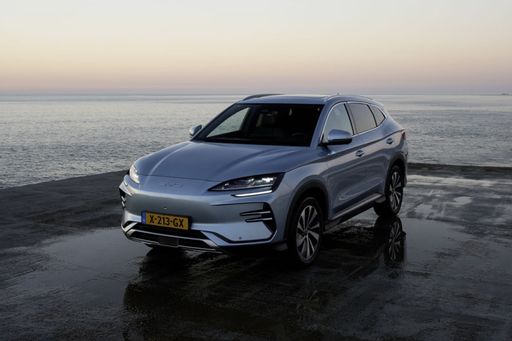
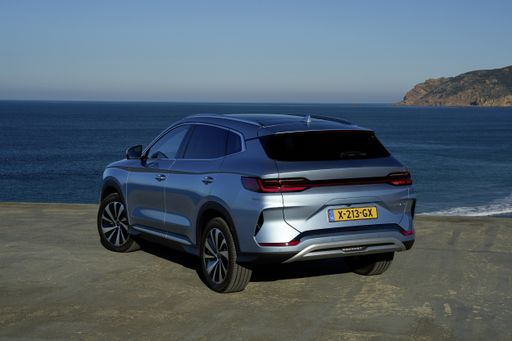
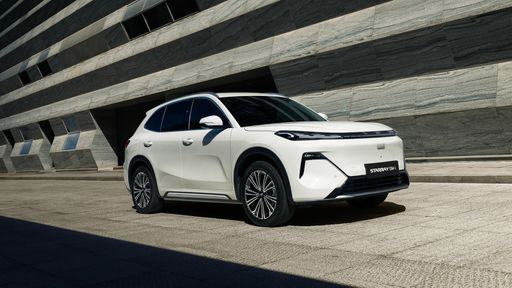
BYD Seal U VS Geely Starray pits two very different ideas of a family SUV against each other: one leaning into refinement, kit and electric range, the other into space, PHEV practicality and an aggressive price. The BYD Seal U feels like a well-equipped, quiet cruiser that aims to soothe daily life and long motorway runs. The Geely Starray trades some of that refinement for more rear-seat room and a PHEV layout that prioritises everyday electric kilometres and lower purchase cost. In this matchup the choice is less about outright superiority and more about which compromises you can live with day-to-day.

Starray

Character and driving experience

The BYD Seal U drives like a comfort-first machine: calm, insulated and biased toward relaxed motorway cruising rather than sporty responses. The Geely Starray is more functional in character — it can be composed in electric city use but feels less polished when pushed, with a more workmanlike engine note under load. BYD’s steering and suspension aim to remove stress, which helps fatigue on long runs but sacrifices sharpness on twisty roads, while the Starray’s chassis is tuned for predictability rather than engagement. If you want a composed, soothing car for long commutes the BYD leans closer to that ideal; if you value a straightforward, room-focused drive and the ability to maximise electric commuting, the Geely is the more pragmatic choice.

Seal U

Comfort, cabin feel and perceived quality

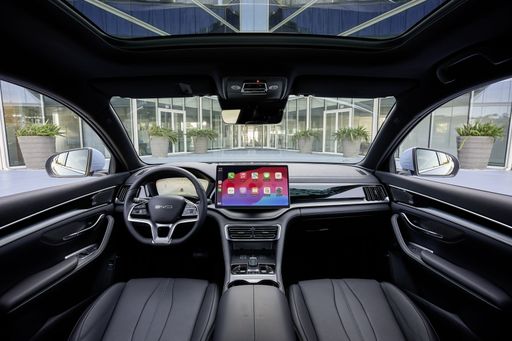
The BYD Seal U presents a calmer interior ambience with quieter acoustics and a slightly more premium touch to materials and seat comfort, giving a stronger first impression at the door. The Geely Starray wins on sheer space — rear passengers enjoy exceptionally generous legroom and a feeling of openness — but the infotainment and some trim details feel more utilitarian in daily use. Both cars come loaded with equipment, yet the BYD’s features tend to feel more polished (think ventilated seats and a clear camera setup), whereas the Starray’s kit is focused on practicality and value. In short, BYD aims for a near-premium cabin experience; Geely delivers a roomy, cost-aware interior that sometimes shows its budget roots.

Practicality and family usability

For growing families the Geely Starray is hard to ignore because it prioritises rear accommodation and boot space, making three across the back or a week’s luggage easier to manage. The BYD Seal U remains very family-friendly with a flat rear floor, ISOFIX points and thoughtful touches, but its boot and flexible cargo solutions feel a touch less generous compared with the Starray’s bulk. Neither car is a camper-van, so if modularity like a 40:20:40 split or a pass-through is mission-critical you should check the layouts closely — the Starray emphasizes sheer volume while the BYD focuses on refinement and usable details. For parents who need maximum everyday space the Geely is the pragmatic pick; for those who prefer slightly more polished interior appointments and safety tech, BYD feels better matched.

City manners versus long-distance behavior

In town both the BYD Seal U and Geely Starray are easy to live with: light steering, cameras and parking aids make tight manoeuvres straightforward, but the two differ in how they behave on longer trips. The BYD is the more composed motorway companion, with a quiet cabin that soaks up speed and reduces fatigue, whereas the Starray can feel louder and displays more high‑speed wind or tyre noise. For commuters who can plug in daily, the Geely’s PHEV setup with DC charging and long electric commuting capability will cut running costs and reduce fuel days; BYD’s full-electric character (or high-capacity PHEV option) suits buyers who prioritise a longer pure‑electric run and a serene long-distance experience. Choose the Starray for efficient, cost-driven commuting; choose the BYD Seal U for relaxed highway miles and a quieter long-haul environment.

Who should buy which car — buyer-fit summary

If you value cabin calm, a slightly more refined finish and an equipment-led ownership experience, the BYD Seal U is the car that will feel more rewarding on daily long runs and family trips. If your priority is rear-seat space, the lowest initial outlay and a PHEV that maximises electric kilometres with the option to fast-charge on the road, the Geely Starray is the more rational, cost-conscious pick. Neither choice is a universal winner; instead, the decision comes down to whether you want refinement and perceived quality (BYD) or maximum usable space and purchase-value (Geely). Below this editorial comparison the technical section breaks down range, charging, power and running-cost trade-offs so you can match those numbers to the everyday priorities I’ve outlined here.

Here’s where it gets real: The technical differences in detail

Seal U

Costs and Efficiency:

Price and efficiency are often the first things buyers look at. Here it becomes clear which model has the long-term edge – whether at the pump, the plug, or in purchase price.

Geely Starray is noticeably cheaper – starting at 28,300 £ , while the BYD Seal U costs 34,300 £ . That’s a price difference of around 6,000 £.

In terms of energy consumption, the BYD Seal U is clearly more efficient: consuming 12.1 kWh/100km compared to 14.7 kWh/100km for the Geely Starray. That’s a difference of about 2.6 kWh/100km.

As for electric range, the BYD Seal U offers clearly more range – reaching up to 500 km, about 364 km more than the Geely Starray.

Starray

Engine and Performance:

Power, torque and acceleration are the classic benchmarks for car enthusiasts – and here, some clear differences start to show.

When it comes to engine power, the BYD Seal U offers slightly more power – delivering 324 HP compared to 262 HP. That’s roughly 62 HP more horsepower.

When accelerating from 0 to 100 km/h, the BYD Seal U is noticeably quicker – completing the sprint in 5.9 s, while the Geely Starray takes 8 s. That’s about 2.1 s quicker.

Seal U

Space and Everyday Use:

Beyond pure performance, interior space and usability matter most in daily life. This is where you see which car is more practical and versatile.

Both vehicles offer seating for 5 people.

In terms of curb weight, Geely Starray is somewhat lighter – 1,730 kg compared to 1,940 kg. The difference is around 210 kg.

Looking at boot space, the BYD Seal U offers marginally more boot space – 552 L compared to 528 L. That’s a difference of about 24 L.

When it comes to payload, the Geely Starray carries only slightly more – 435 kg compared to 410 kg. That’s a difference of about 25 kg.

Who wins the race in the data check?

The BYD Seal U stands well ahead of its rival in the objective data comparison.
This result only shows which model scores more points on paper – not which of the two cars feels right for you.

from £34,300
Seal U

BYD Seal U

  • Engine Type Electric, Plugin Hybrid
  • Transmission Automatic
  • Drive Type Front-Wheel Drive, All-Wheel Drive
  • Power HP 218 - 324 HP
  • Consumption kWh/100km 12.1 - 20.5 kWh/100km
  • Electric Range 70 - 500 km
BYD Seal U
Geely Starray

Costs and Consumption

View detailed analysis

Engine and Performance

View detailed analysis

Dimensions and Body

View detailed analysis

BYD Seal U

The BYD Seal U is a sleek electric fastback that blends sporty styling with a roomy, tech-focused interior, making it an appealing choice for buyers who want electric performance without sacrificing comfort. It delivers a smooth, composed ride and intuitive features, positioning it as a practical yet modern option in the EV market.

details

Geely Starray

The Geely Starray blends a sleek, modern exterior with a comfortable, well-appointed cabin that feels more upscale than its price suggests. It offers a composed, user-friendly driving experience with thoughtful tech and space that make it a practical choice for everyday family and city use.

details
BYD Seal U
Geely Starray

Costs and Consumption

Price
34,300 - 39,800 £
Price
28,300 - 32,600 £
Consumption L/100km
-
Consumption L/100km
-
Consumption kWh/100km
12.1 - 20.5 kWh/100km
Consumption kWh/100km
14.7 - 18.3 kWh/100km
Electric Range
70 - 500 km
Electric Range
83 - 136 km
Battery Capacity
-
Battery Capacity
-
co2
0 - 71 g/km
co2
33 - 54 g/km
Fuel tank capacity
-
Fuel tank capacity
-

Dimensions and Body

Body Type
SUV
Body Type
SUV
Seats
5
Seats
5
Doors
-
Doors
-
Curb weight
1,940 - 2,147 kg
Curb weight
1,730 - 1,815 kg
Trunk capacity
425 - 552 L
Trunk capacity
528 L
Length
-
Length
-
Width
1,890 mm
Width
1,905 mm
Height
-
Height
-
Max trunk capacity
-
Max trunk capacity
-
Payload
410 kg
Payload
435 kg

Engine and Performance

Engine Type
Electric, Plugin Hybrid
Engine Type
Plugin Hybrid
Transmission
Automatic
Transmission
Automatic
Transmission Detail
Reduction Gearbox, Automatic Gearbox
Transmission Detail
Automatic Gearbox
Drive Type
Front-Wheel Drive, All-Wheel Drive
Drive Type
Front-Wheel Drive
Power HP
218 - 324 HP
Power HP
262 HP
Acceleration 0-100km/h
5.9 - 9.6 s
Acceleration 0-100km/h
8 - 8.2 s
Max Speed
-
Max Speed
-
Torque
300 - 550 Nm
Torque
-
Number of Cylinders
4
Number of Cylinders
4
Power kW
160 - 238 kW
Power kW
193 kW
Engine capacity
1,497 - 1,498 cm3
Engine capacity
1,499 cm3

General

Model Year
2,024 - 2,026
Model Year
2026
CO2 Efficiency Class
A, B
CO2 Efficiency Class
B
Brand
BYD
Brand
Geely
DriveDuel uses data analysis and artificial intelligence to evaluate vehicle data and create content. Content is regularly reviewed and improved. The displayed prices are estimates based on German list prices, adjusted to the respective country’s VAT. Country-specific registration taxes are not included. This information is not legally binding.