
VS

Leapmotor B10 vs Geely Starray comparison

Compare performance (218 HP vs 262 HP), boot space and price (25,600 £ vs 28,300 £ ) at a glance. Find out which car is the better choice for you – Leapmotor B10 or Geely Starray?

Leapmotor B10 vs Geely Starray: Key differences

Leapmotor B10

4.8 (2 Reviews)
rate
  • a bit cheaper
  • visibly more efficient
  • substantially more electric range
  • barely quicker 0–100 km/h
details

Geely Starray

4.8 (4 Reviews)
rate
  • somewhat more power
  • very slightly lighter
  • visibly more trunk space
details

All details on performance, efficiency, range and trunk space can be found in the technical comparison below – including user reviews for both models.

By Achim Sedelmaier

B10

Leapmotor B10 VS Geely Starray: which suits your garage?

Leapmotor B10 VS Geely Starray sets up a clash between a value‑heavy, comfort‑focused electric SUV and a space‑maximising PHEV that prioritises utility and range. The Leapmotor B10 arrives as the quieter, softer cruiser that packs a surprising amount of kit for the money, while the Geely Starray trades some refinement for bigger usable space and a long electric driving capability in PHEV form. That contrast drives the buying choice: whether you want a composed, feature-rich electric experience or a pragmatic family car that shrinks running costs by doing more miles electrically. Read on to see how those instincts play out in everyday use rather than on paper specs alone.
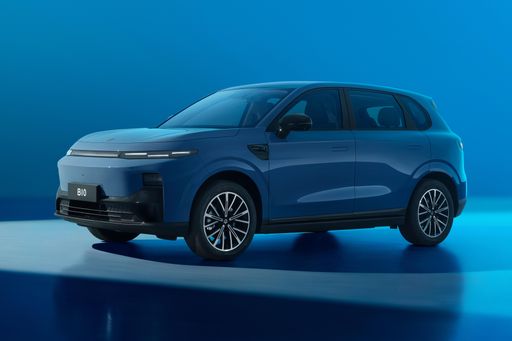
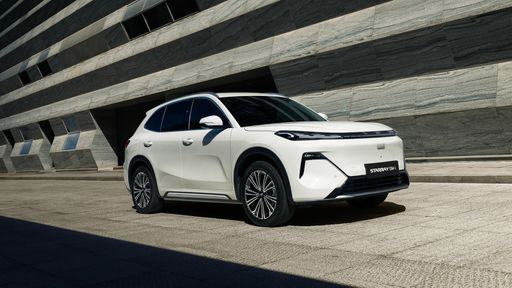
Starray

Driving character: relaxed cruiser vs. pragmatic mover

The Leapmotor B10 behaves like a calm boulevard cruiser — soft suspension, light steering and a steady, undemanding shove make daily commuting and relaxed motorway miles pleasant. By contrast, the Geely Starray feels more utilitarian: it’s tuned for safe, steady progress and a stronger shove when you ask for it, but it never really rewards sporty inputs. If you want a composed, low‑effort EV that hides the drivetrain and soothes bumps, the B10 is the friendlier companion; if you want the reassurance of extra shove and the flexibility of a PHEV drivetrain under mixed conditions, the Starray is more practical. Both avoid sharp steering and driver engagement, but they trade involvement for different kinds of usefulness.

Comfort and long‑distance behavior: quiet EV vs. functional range

On long runs the Leapmotor B10’s electric refinement and cushioned ride make fatigue less likely, although highway wind and mirror noise can be noticeable at higher speeds. The Geely Starray is comfortable in everyday use but reveals more mechanical and road noise under load — the PHEV powertrain and tyre/road interactions are less serene on sustained autobahn stints. Where the Starray wins is in flexible long‑distance economics: you can cover long commutes on electric miles if you can top up regularly, while the B10 keeps trips simple with pure EV cruising and faster DC charging when you need rapid recharges. In short, the B10 feels better for long, quiet motorway miles if you prioritise calm; the Starray is better for mixed duties where usable electric range plus combustible backup matters more.

Cabin, tech and perceived quality: touchscreen heavy vs. roomy and tactile

The Leapmotor B10 leans hard on its big touchscreen and abundant standard kit, which makes the cabin feel modern but also touch‑centric and fiddly for basic controls. The Geely Starray offers a similarly large display, yet its menus are deeper and the interaction finishes feel more hierarchical — both cars push you towards the screen rather than physical shortcuts. Materially, the Starray often gives a softer, more premium first impression in key touch spots, while the B10 mixes solid build with more economical plastics but compensates with generous features. Both have intrusive driver aids that some owners find annoying, but the experience differs: B10’s electronics can feel more insistent, whereas Starray’s systems are more about breadth and coverage despite clunkier operation.

Practicality and family usability: flat floor comfort vs. luggage and flexibility

Families will appreciate roomy rear seats in both the Leapmotor B10 and the Geely Starray, yet they deliver that space in different ways: the B10 gives a very flat floor and excellent legroom that simplifies child‑seat placement, while the Starray amplifies cargo flexibility with a larger boot and multi‑level floor storage. If you regularly carry bulky suitcases or weekend gear, the Starray’s luggage practicality and underfloor options feel more useful; if rear passenger comfort and easy access are your priority, the B10’s flat rear and generous headroom are compelling. Neither car offers full sliding or split flexibility that some rivals do, so consider which form of space — passenger comfort or load capacity — you actually use day to day.

Buyer fit and trade‑offs: who should choose which before the specs?

Choose the Leapmotor B10 if you want an affordable, well‑equipped EV that prioritises a quiet, composed cabin and straightforward charging life — it’s a strong pick for first‑time EV buyers and comfort‑minded families. Opt for the Geely Starray if your priority is maximum usable space, longer electric operating range in PHEV form and the flexibility to mix electric commuting with occasional long drives without range anxiety. The trade‑off is simple: the B10 favours refinement and value, while the Starray favours load‑carrying and mixed‑fuel practicality; your decision should hinge on whether calm driving or cargo and range flexibility matter more. With those real‑world priorities in mind, the technical comparison that follows will help you match those tendencies to the exact drivetrain, charging and cargo details.

Here’s where it gets real: The technical differences in detail

B10

Costs and Efficiency:

Price and efficiency are key factors when choosing a car – and this is often where the real differences emerge.

Leapmotor B10 is a bit cheaper – starting at 25,600 £ , while the Geely Starray costs 28,300 £ . That’s a price difference of around 2,649 £.

In terms of energy consumption, the Leapmotor B10 is visibly more efficient: consuming 12 kWh/100km compared to 14.7 kWh/100km for the Geely Starray. That’s a difference of about 2.7 kWh/100km.

As for electric range, the Leapmotor B10 offers substantially more range – reaching up to 434 km, about 298 km more than the Geely Starray.

Starray

Engine and Performance:

Power, torque and acceleration say a lot about how a car feels on the road. This is where you see which model delivers more driving dynamics.

When it comes to engine power, the Geely Starray offers somewhat more power – delivering 262 HP compared to 218 HP. That’s roughly 44 HP more horsepower.

When accelerating from 0 to 100 km/h, the Leapmotor B10 is barely quicker – completing the sprint in 7.5 s, while the Geely Starray takes 8 s. That’s about 0.5 s quicker.

Space and Everyday Use:

Cabin size, boot volume and payload all play a role in everyday practicality. Here, comfort and flexibility make the difference.

Both vehicles offer seating for 5 people.

In terms of curb weight, Geely Starray is very slightly lighter – 1,730 kg compared to 1,780 kg. The difference is around 50 kg.

Looking at boot space, the Geely Starray offers visibly more boot space – 528 L compared to 420 L. That’s a difference of about 108 L.

Maximum payload is identical – both can carry up to 435 kg.

Who wins the race in the data check?

The Leapmotor B10 stands well ahead of its rival in the objective data comparison.
This result only shows which model scores more points on paper – not which of the two cars feels right for you.

from £25,600
B10

Leapmotor B10

  • Engine Type Plugin Hybrid, Electric
  • Transmission Automatic
  • Drive Type Rear-Wheel Drive
  • Power HP 218 HP
  • Consumption kWh/100km 12 - 17.3 kWh/100km
  • Electric Range 86 - 434 km
Leapmotor B10
Geely Starray

Costs and Consumption

View detailed analysis

Engine and Performance

View detailed analysis

Dimensions and Body

View detailed analysis

Leapmotor B10

The Leapmotor B10 is a sleek electric sedan that balances a comfortable, spacious cabin with an emphasis on smart technology and everyday usability. It suits buyers who want a modern, practical EV with thoughtful interior design and a calm, composed driving feel.

details

Geely Starray

The Geely Starray blends a sleek, modern exterior with a comfortable, well-appointed cabin that feels more upscale than its price suggests. It offers a composed, user-friendly driving experience with thoughtful tech and space that make it a practical choice for everyday family and city use.

details
Leapmotor B10
Geely Starray

Costs and Consumption

Price
25,600 - 33,000 £
Price
28,300 - 32,600 £
Consumption L/100km
-
Consumption L/100km
-
Consumption kWh/100km
12 - 17.3 kWh/100km
Consumption kWh/100km
14.7 - 18.3 kWh/100km
Electric Range
86 - 434 km
Electric Range
83 - 136 km
Battery Capacity
-
Battery Capacity
-
co2
0 - 54 g/km
co2
33 - 54 g/km
Fuel tank capacity
-
Fuel tank capacity
-

Dimensions and Body

Body Type
SUV
Body Type
SUV
Seats
5
Seats
5
Doors
-
Doors
-
Curb weight
1,780 - 1,860 kg
Curb weight
1,730 - 1,815 kg
Trunk capacity
334 - 420 L
Trunk capacity
528 L
Length
-
Length
-
Width
1,885 mm
Width
1,905 mm
Height
-
Height
-
Max trunk capacity
-
Max trunk capacity
-
Payload
360 - 435 kg
Payload
435 kg

Engine and Performance

Engine Type
Plugin Hybrid, Electric
Engine Type
Plugin Hybrid
Transmission
Automatic
Transmission
Automatic
Transmission Detail
Reduction Gearbox
Transmission Detail
Automatic Gearbox
Drive Type
Rear-Wheel Drive
Drive Type
Front-Wheel Drive
Power HP
218 HP
Power HP
262 HP
Acceleration 0-100km/h
7.5 - 8 s
Acceleration 0-100km/h
8 - 8.2 s
Max Speed
-
Max Speed
-
Torque
240 Nm
Torque
-
Number of Cylinders
4
Number of Cylinders
4
Power kW
160 kW
Power kW
193 kW
Engine capacity
1,499 cm3
Engine capacity
1,499 cm3

General

Model Year
2,025 - 2,026
Model Year
2026
CO2 Efficiency Class
B, A
CO2 Efficiency Class
B
Brand
Leapmotor
Brand
Geely
DriveDuel uses data analysis and artificial intelligence to evaluate vehicle data and create content. Content is regularly reviewed and improved. The displayed prices are estimates based on German list prices, adjusted to the respective country’s VAT. Country-specific registration taxes are not included. This information is not legally binding.








