VS

BYD Seal U vs BYD Sealion 7 comparison

Compare performance (324 HP vs 530 HP), boot space and price (34,300 £ vs 42,800 £ ) at a glance. Find out which car is the better choice for you – BYD Seal U or BYD Sealion 7?

BYD Seal U vs BYD Sealion 7: Key differences

BYD Seal U

4.1 (7 Reviews)
rate
  • clearly cheaper
  • significantly more efficient
  • a bit lighter
  • only slightly more trunk space

BYD Sealion 7

5 (2 Reviews)
rate
  • clearly more power
  • only slightly more electric range
  • markedly quicker 0–100 km/h

All details on performance, efficiency, range and trunk space can be found in the technical comparison below – including user reviews for both models.

Seal U

Two Flavors of Electric Confidence

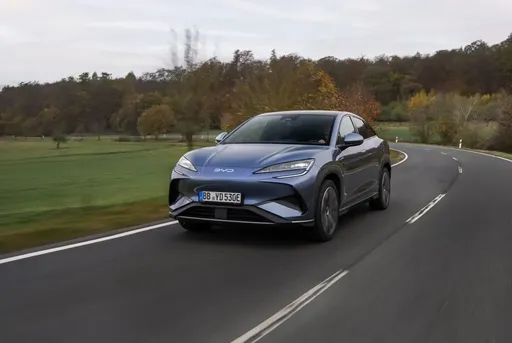
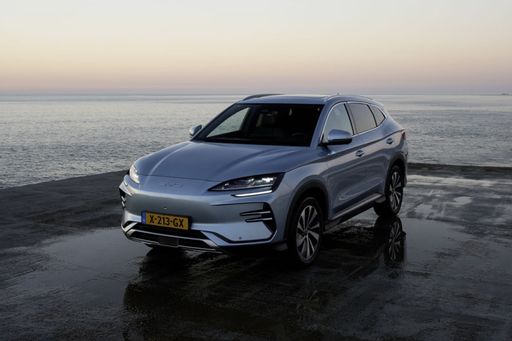
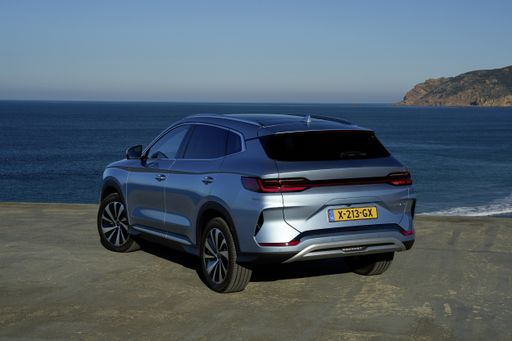
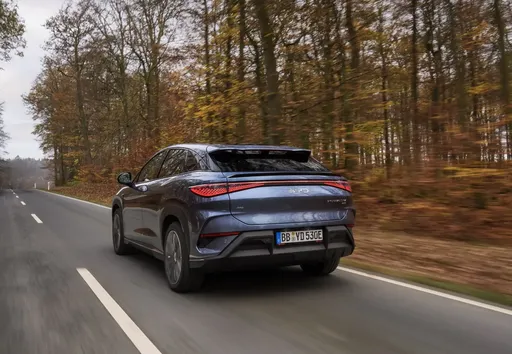
Park them side by side and the family-minded Seal U plays the friendly, upright SUV, while the sleeker Sealion 7 brings a coupe-like swagger that turns heads. The Seal U looks ready for school runs and supermarket skirmishes, all calm surfaces and easygoing stance. The Sealion 7 sits lower and tauter, with a purposeful posture that hints at eager responses. Both feel modern and well put together, but they clearly speak to different personalities.

Sealion 7

Living Room vs Lounge

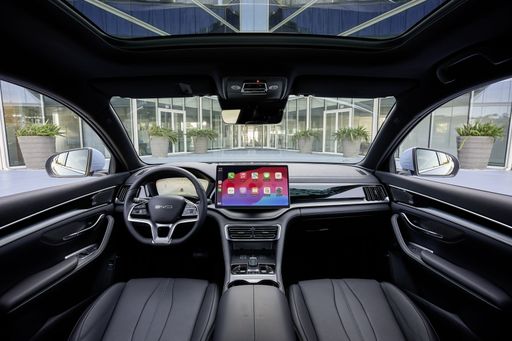
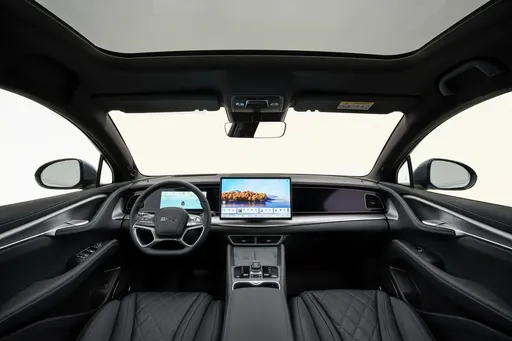
Inside, the Seal U majors on space and simplicity, with big windows, generous cubbies, and seats that welcome you after a long day. The Sealion 7 counters with a more cocooning vibe, richer trims, and a dash design that feels a touch more premium. BYD’s signature rotating screen features in both, yet the Seal U’s layout leans toward clarity while the Sealion 7 aims for a showroom wow factor. Families will appreciate the straight-talking practicality; style seekers may prefer the mood lighting and flair.

Seal U

Brains, Screens, and the Human Touch

The infotainment experience is slick and quick, with voice control that handles daily tasks without fuss. The Seal U keeps the learning curve gentle, making everyday interactions feel natural even if you’re not a tech nerd. The Sealion 7 piles on a few more toys and settings, rewarding those who like to tailor every drive but adding a shade more menu-diving. Crucially, both back up their screen sheen with logical shortcuts and usable driver aids.

Sealion 7

City Calm, Motorway Maturity

The Seal U prioritizes comfort, smoothing over rough patches with a relaxed gait that suits urban trundling and long-haul cruising alike. It’s the kind of car that takes the sting out of speed bumps and keeps cabin chatter low. The Sealion 7 rides a touch firmer, feeling more tied down on fast roads and more alert when the pace rises. Noise isolation is polished in both, with only a hint of wind and road hum at higher speeds.

Seal U

Bends and Backroads

Point the Sealion 7 at a snaking B-road and it responds with crisp steering and a confident, planted feel that encourages a cheeky detour. The Seal U is happier playing the steady hand, with predictable responses and an easygoing balance that keeps passengers relaxed. Brakes are progressive in both, and the drivetrain calibration feels polished, avoiding the herky-jerky antics some EVs suffer. The result is two distinct characters: one keen and athletic, the other composed and reassuring.

Sealion 7

Boots, Seats, and Family Logistics

The Seal U’s more upright shape pays dividends for everyday hauling, making bulky loads simpler and rear-seat life breezier. The Sealion 7 trades a bit of vertical cargo freedom for style, yet folds flat impressively when you need to move big stuff. In the back, both offer generous legroom and supportive pews, with Isofix points that don’t require contortionist skills. It’s the classic square-versus-sleek dilemma, and neither choice feels like a compromise.

Sensible Head, Passionate Heart

The Seal U is the rational pick, offering strong value and kit without grandstanding, an EV that slots neatly into busy lives and tight parking spaces. The Sealion 7 asks for a little more, but gives back with a more premium presentation and a drive that feels a notch more special. Both are efficient enough to keep running costs in check and refined enough to make long trips feel uneventful in the best way. Keep reading to find out which one claims the DriveDuel Champion crown next.

Here’s where it gets real: The technical differences in detail

Seal U

Costs and Efficiency:

Looking at overall running costs, both models reveal some interesting differences in everyday economy.

BYD Seal U is clearly cheaper – starting at 34,300 £ , while the BYD Sealion 7 costs 42,800 £ . That’s a price difference of around 8,571 £.

In terms of energy consumption, the BYD Seal U is significantly more efficient: consuming 12.1 kWh/100km compared to 19.9 kWh/100km for the BYD Sealion 7. That’s a difference of about 7.8 kWh/100km.

As for electric range, the BYD Sealion 7 offers only slightly more range – reaching up to 502 km, about 2 km more than the BYD Seal U.

Sealion 7

Engine and Performance:

Power, torque and acceleration are the classic benchmarks for car enthusiasts – and here, some clear differences start to show.

When it comes to engine power, the BYD Sealion 7 offers clearly more power – delivering 530 HP compared to 324 HP. That’s roughly 206 HP more horsepower.

When accelerating from 0 to 100 km/h, the BYD Sealion 7 is markedly quicker – completing the sprint in 4.5 s, while the BYD Seal U takes 5.9 s. That’s about 1.4 s quicker.

There’s also a difference in torque: the BYD Sealion 7 delivers clearly more torque with 690 Nm compared to 550 Nm. That’s about 140 Nm more.

Seal U

Space and Everyday Use:

Whether family car or daily driver – which one offers more room, flexibility and comfort?

Both vehicles offer seating for 5 people.

In terms of curb weight, BYD Seal U is a bit lighter – 1,940 kg compared to 2,225 kg. The difference is around 285 kg.

Looking at boot space, the BYD Seal U offers only slightly more boot space – 552 L compared to 520 L. That’s a difference of about 32 L.

Maximum payload is identical – both can carry up to 410 kg.

Who wins the race in the data check?

The BYD Sealion 7 sits just ahead overall in the objective data comparison.
This result only shows which model scores more points on paper – not which of the two cars feels right for you.

from £42,800
Sealion 7

BYD Sealion 7

  • Engine Type : Electric
  • Transmission : Automatic
  • Drive Type : Rear-Wheel Drive, All-Wheel Drive
  • Power HP : 313 - 530 HP
  • Consumption kWh/100km : 19.9 - 21.9 kWh/100km
  • Electric Range : 456 - 502 km
BYD Seal U
BYD Sealion 7

Costs and Consumption

View detailed analysis

Engine and Performance

View detailed analysis

Dimensions and Body

View detailed analysis

BYD Seal U

The BYD Seal U pairs a sleek fastback silhouette with a surprisingly roomy, tech-rich cabin, giving electric chic without the showroom pretension. It's a smart pick for buyers after confident handling, sensible practicality and standout value — all wrapped up with a cheeky grin when you put your foot down.

details

BYD Sealion 7

The Sealion 7 captivates with its striking design and impressive performance that appeals to both enthusiasts and casual drivers alike. With a focus on comfort and advanced technology, this model redefines the driving experience, making every journey enjoyable. Its sleek silhouette coupled with an innovative interior showcases the perfect blend of style and functionality.

details
BYD Seal U
BYD Sealion 7

Costs and Consumption

Price
34,300 - 39,800 £
Price
42,800 - 52,300 £
Consumption L/100km
-
Consumption L/100km
-
Consumption kWh/100km
12.1 - 20.5 kWh/100km
Consumption kWh/100km
19.9 - 21.9 kWh/100km
Electric Range
70 - 500 km
Electric Range
456 - 502 km
Battery Capacity
-
Battery Capacity
-
co2
0 - 71 g/km
co2
0 g/km
Fuel tank capacity
-
Fuel tank capacity
-

Dimensions and Body

Body Type
SUV
Body Type
SUV
Seats
5
Seats
5
Doors
5
Doors
-
Curb weight
1,940 - 2,147 kg
Curb weight
2,225 - 2,435 kg
Trunk capacity
425 - 552 L
Trunk capacity
520 L
Length
4,785 mm
Length
-
Width
1,890 mm
Width
1,925 mm
Height
1,668 mm
Height
-
Max trunk capacity
1,440 L
Max trunk capacity
-
Payload
410 kg
Payload
410 kg

Engine and Performance

Engine Type
Electric, Plugin Hybrid
Engine Type
Electric
Transmission
Automatic
Transmission
Automatic
Transmission Detail
Reduction Gearbox, Automatic Gearbox
Transmission Detail
Reduction Gearbox
Drive Type
Front-Wheel Drive, All-Wheel Drive
Drive Type
Rear-Wheel Drive, All-Wheel Drive
Power HP
218 - 324 HP
Power HP
313 - 530 HP
Acceleration 0-100km/h
5.9 - 9.6 s
Acceleration 0-100km/h
4.5 - 6.7 s
Max Speed
175 km/h
Max Speed
-
Torque
300 - 550 Nm
Torque
380 - 690 Nm
Number of Cylinders
4
Number of Cylinders
-
Power kW
160 - 238 kW
Power kW
230 - 390 kW
Engine capacity
1,497 - 1,498 cm3
Engine capacity
-

General

Model Year
2,024 - 2,026
Model Year
2,024
CO2 Efficiency Class
A, B
CO2 Efficiency Class
A
Brand
BYD
Brand
BYD
DriveDuel uses data analysis and artificial intelligence to evaluate vehicle data and create content. Content is regularly reviewed and improved. The displayed prices are estimates based on German list prices, adjusted to the respective country’s VAT. Country-specific registration taxes are not included. This information is not legally binding.