VS

BYD Seal U vs BYD Seal 6 comparison

Compare performance (324 HP vs 212 HP), boot space and price (34,300 £ vs 36,800 £ ) at a glance. Find out which car is the better choice for you – BYD Seal U or BYD Seal 6?

BYD Seal U vs BYD Seal 6: Key differences

BYD Seal U

4.1 (7 Reviews)
rate
  • very slightly cheaper
  • clearly more power
  • significantly more electric range
  • significantly quicker 0–100 km/h

BYD Seal 6

4.7 (2 Reviews)
rate
  • considerably more efficient
  • moderately lighter

All details on performance, efficiency, range and trunk space can be found in the technical comparison below – including user reviews for both models.

Seal U

Meet the contenders

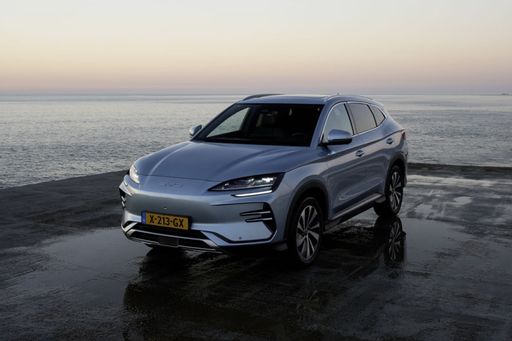
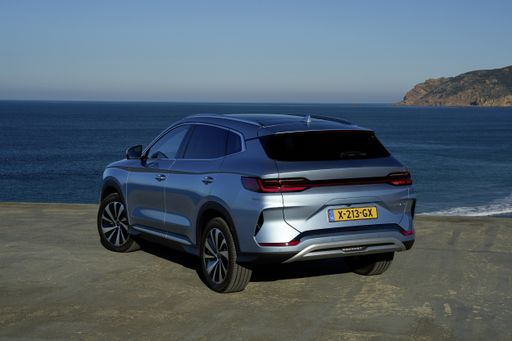
Two members of the same family, the BYD Seal U and the BYD Seal 6 arrive with clear personalities and very different promises. One feels tuned to deliver a sharper, more athletic impression the moment you open the door, while the other prefers a composed, understated presence that quietly does its job. Together they make for an entertaining duel: think tension between immediacy and refinement rather than a simple arms race. Drive one and you might race the horizon; live with the other and you’ll notice how little fuss there is on a long weekday.
Seal 6

Attitude versus understatement

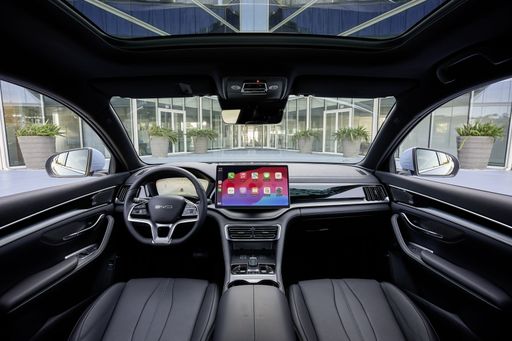
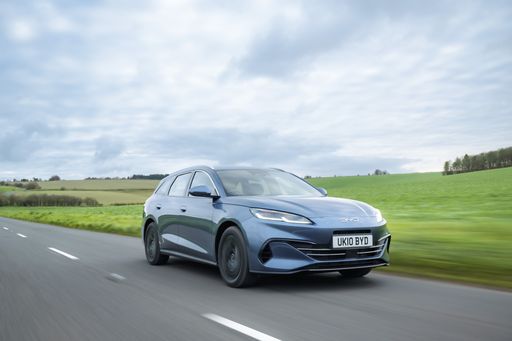
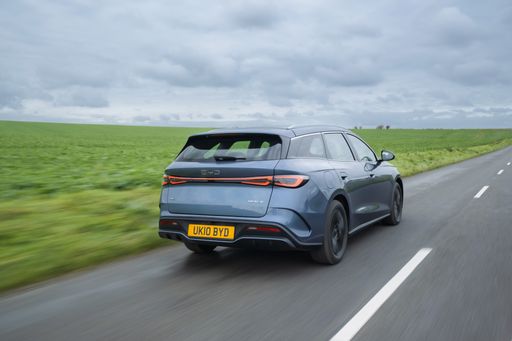
The Seal U projects a more extroverted stance — tighter lines, a hint of aggression, and an eagerness to engage; it’s the sort of car that announces itself at the lights. The Seal 6 takes the opposite tack, favouring calm surfaces and a softer delivery that aims to reassure rather than provoke. That contrast matters more than sheet metal: it tells you how each car will feel on winding B-roads, in traffic, or when you’ve got the kids in the back. It’s personality over specification — one is expressive, the other reserved.

Seal U

How they fit into everyday life

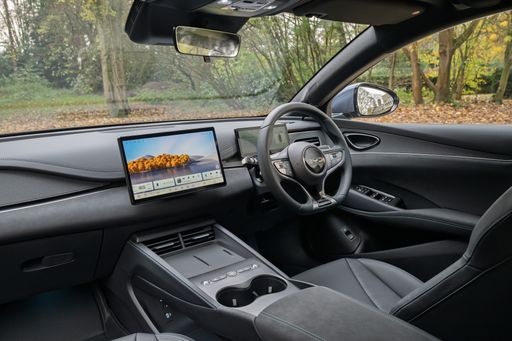
Practicalities reveal the real differences: one of these will feel livelier in the driver’s seat, rewarding input and carving through corners with purpose, while the other smooths out the commute and hushes the road noise for a less demanding routine. Cargo and usability are tuned to different owners — think weekend kit and occasional long hauls versus tidy daily chores and school runs. Controls and screens are arranged with distinct priorities: immediacy and sport-orientation on one, straightforward comfort and low-stress ergonomics on the other. Choose the one that makes your weekday feel easier or your weekend feel more engaging, depending on how you split your time.

Seal 6

What it says about you

Picking the Seal U signals a taste for dynamism and a willingness to be noticed; it’s the car for people who enjoy steering feel, sharper body language, and a cabin that feels like a cockpit. Opting for the Seal 6 sends a quieter message — someone who values calm arrival, predictable behaviour, and a car that blends into life without demanding attention. Either choice is a statement: one leans toward a more sporting image, the other toward discreet competence and comfort. Neither choice needs to be justified; it’s about which story you want your car to tell every morning.

Seal U

Who the Seal U will click with

If you’re the sort who counts responsiveness, modern driver aids, and the look you walk away from into a café, the Seal U will feel like an obvious fit — it suits buyers who prize a spirited drive and contemporary tech that feels sharp and current. It’s aimed at people who enjoy being behind the wheel and like their car to be part gadget, part sporting accessory. Value-conscious drivers who still want a dash of flair will find its personality hard to ignore, especially if you prefer your car to double as a small thrill on everyday runs. Think of it as the choice for those who want to feel involved, not just transported.

Seal 6

Who the Seal 6 will click with

The Seal 6 will appeal if you prioritise calm, usable space, and an interior that favours soft comfort over driver theatrics, and if the Seal U’s sharper edge feels a touch too eager for everyday use. It suits families and commuters who want a predictable, reassuring companion for long stretches and city weaving alike, with a focus on steady refinement rather than headline-grabbing antics. Style-conscious buyers who prefer understatement and solid everyday manners will appreciate its composed character. Keep reading — the detailed breakdown after this will put flesh on the bones of these personalities.

Here’s where it gets real: The technical differences in detail

Seal U

Costs and Efficiency:

Looking at overall running costs, both models reveal some interesting differences in everyday economy.

BYD Seal U is very slightly cheaper – starting at 34,300 £ , while the BYD Seal 6 costs 36,800 £ . That’s a price difference of around 2,571 £.

In terms of energy consumption, the BYD Seal 6 is considerably more efficient: consuming 7.8 kWh/100km compared to 12.1 kWh/100km for the BYD Seal U. That’s a difference of about 4.3 kWh/100km.

As for electric range, the BYD Seal U offers significantly more range – reaching up to 500 km, about 399 km more than the BYD Seal 6.

Seal 6

Engine and Performance:

Power, torque and acceleration are the classic benchmarks for car enthusiasts – and here, some clear differences start to show.

When it comes to engine power, the BYD Seal U offers clearly more power – delivering 324 HP compared to 212 HP. That’s roughly 112 HP more horsepower.

When accelerating from 0 to 100 km/h, the BYD Seal U is significantly quicker – completing the sprint in 5.9 s, while the BYD Seal 6 takes 8.5 s. That’s about 2.6 s quicker.

Seal U

Space and Everyday Use:

Beyond pure performance, interior space and usability matter most in daily life. This is where you see which car is more practical and versatile.

Both vehicles offer seating for 5 people.

In terms of curb weight, BYD Seal 6 is moderately lighter – 1,710 kg compared to 1,940 kg. The difference is around 230 kg.

When it comes to payload, the BYD Seal 6 carries marginally more – 435 kg compared to 410 kg. That’s a difference of about 25 kg.

Who wins the race in the data check?

The BYD Seal U stands well ahead of its rival in the objective data comparison.
This result only shows which model scores more points on paper – not which of the two cars feels right for you.

from £34,300
Seal U

BYD Seal U

  • Engine Type : Electric, Plugin Hybrid
  • Transmission : Automatic
  • Drive Type : Front-Wheel Drive, All-Wheel Drive
  • Power HP : 218 - 324 HP
  • Consumption kWh/100km : 12.1 - 20.5 kWh/100km
  • Electric Range : 70 - 500 km
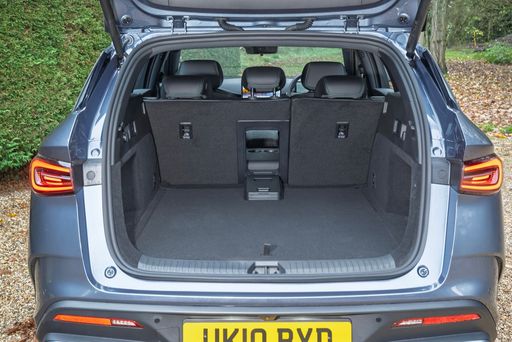
BYD Seal U
BYD Seal 6

Costs and Consumption

View detailed analysis

Engine and Performance

View detailed analysis

Dimensions and Body

View detailed analysis

BYD Seal U

The BYD Seal U pairs a sleek fastback silhouette with a surprisingly roomy, tech-rich cabin, giving electric chic without the showroom pretension. It's a smart pick for buyers after confident handling, sensible practicality and standout value — all wrapped up with a cheeky grin when you put your foot down.

details

BYD Seal 6

The BYD Seal 6 is a captivating electric sedan that captures attention with its sleek design and modern aerodynamics. With a strong focus on sustainability, it offers an impressive electric driving experience, combining efficiency with cutting-edge technology. The Seal 6 stands out in the EV market for its luxurious interior and innovative features, making it a strong contender for drivers looking to embrace the future of transportation.

details
BYD Seal U
BYD Seal 6

Costs and Consumption

Price
34,300 - 39,800 £
Price
36,800 - 42,800 £
Consumption L/100km
-
Consumption L/100km
-
Consumption kWh/100km
12.1 - 20.5 kWh/100km
Consumption kWh/100km
7.8 - 11.2 kWh/100km
Electric Range
70 - 500 km
Electric Range
54 - 101 km
Battery Capacity
-
Battery Capacity
-
co2
0 - 71 g/km
co2
38 - 60 g/km
Fuel tank capacity
-
Fuel tank capacity
-

Dimensions and Body

Body Type
SUV
Body Type
Estate
Seats
5
Seats
5
Doors
5
Doors
-
Curb weight
1,940 - 2,147 kg
Curb weight
1,710 - 1,805 kg
Trunk capacity
425 - 552 L
Trunk capacity
-
Length
4,785 mm
Length
-
Width
1,890 mm
Width
1,875 mm
Height
1,668 mm
Height
-
Max trunk capacity
1,440 L
Max trunk capacity
-
Payload
410 kg
Payload
435 kg

Engine and Performance

Engine Type
Electric, Plugin Hybrid
Engine Type
Plugin Hybrid
Transmission
Automatic
Transmission
Automatic
Transmission Detail
Reduction Gearbox, Automatic Gearbox
Transmission Detail
Automatic Gearbox
Drive Type
Front-Wheel Drive, All-Wheel Drive
Drive Type
Front-Wheel Drive
Power HP
218 - 324 HP
Power HP
184 - 212 HP
Acceleration 0-100km/h
5.9 - 9.6 s
Acceleration 0-100km/h
8.5 - 8.9 s
Max Speed
175 km/h
Max Speed
-
Torque
300 - 550 Nm
Torque
-
Number of Cylinders
4
Number of Cylinders
4
Power kW
160 - 238 kW
Power kW
135 - 156 kW
Engine capacity
1,497 - 1,498 cm3
Engine capacity
1,498 cm3

General

Model Year
2,024 - 2,026
Model Year
2,025
CO2 Efficiency Class
A, B
CO2 Efficiency Class
B
Brand
BYD
Brand
BYD
DriveDuel uses data analysis and artificial intelligence to evaluate vehicle data and create content. Content is regularly reviewed and improved. The displayed prices are estimates based on German list prices, adjusted to the respective country’s VAT. Country-specific registration taxes are not included. This information is not legally binding.