VS

BYD Seal U vs Kia Sportage comparison

Compare performance (324 HP vs 288 HP), boot space and price (34,300 £ vs 30,200 £ ) at a glance. Find out which car is the better choice for you – BYD Seal U or Kia Sportage?

BYD Seal U vs Kia Sportage: Key differences

BYD Seal U

4.1 (7 Reviews)
rate
  • moderately more power
  • considerably more electric range
  • noticeably quicker 0–100 km/h

Kia Sportage

4.9 (2 Reviews)
rate
  • somewhat cheaper
  • visibly lighter
  • marginally more trunk space

All details on performance, efficiency, range and trunk space can be found in the technical comparison below – including user reviews for both models.

Seal U

Head-to-head: BYD Seal U VS Kia Sportage

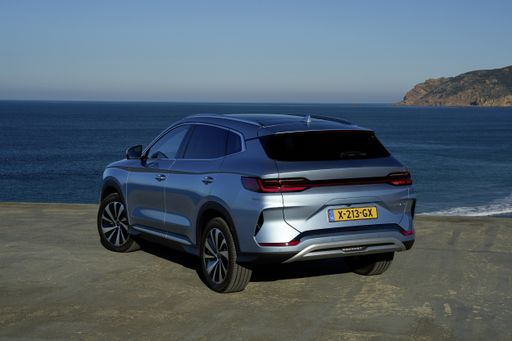
The matchup is simple on paper: the BYD Seal U takes a contemporary electric fastback stance while the Kia Sportage sits squarely in the compact SUV camp, and this is a direct comparison of two different answers to modern driving needs. If you searched for a BYD Seal U vs Kia Sportage comparison, you’ve landed in the right place — we’re here to turn spreadsheet facts into real-world impressions. The contrast is about feel as much as figures: one leans into slick electric performance and tech, the other trades on roomy practicality and everyday composure. Read on for a buyer-focused run-down that helps you match personality to purpose before you dive into the detailed numbers below.
Sportage

Personality clash: sportscar-ish electric vs sensible crossover

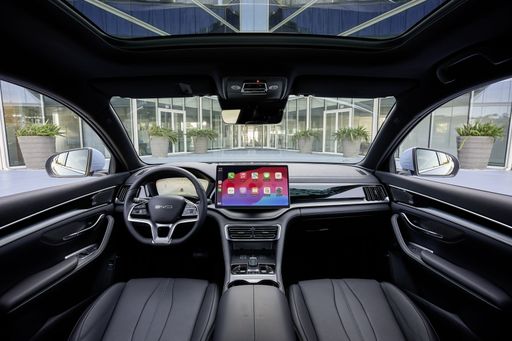
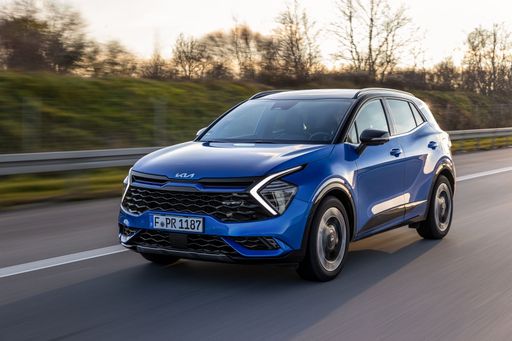
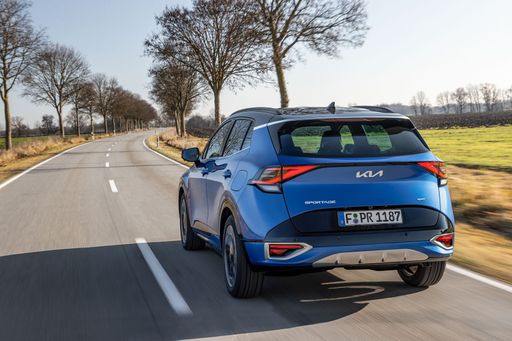
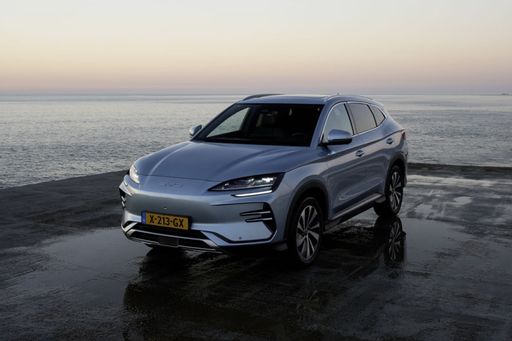
The BYD Seal U cultivates a sharper, more showy persona — it wants to be noticed on the road and feels engineered for effortless shove and modernity, while the Kia Sportage plays the reliable family member who quietly gets the job done. Look and feel matter: the Seal U projects futuristic intent with a taut silhouette, whereas the Sportage opts for a friendlier, upright presence that promises usable space. In cabin mood the Seal U tilts toward minimalism and digital drama, the Sportage towards layered practicality and approachable controls. That difference sets the tone for the rest of the duel: excitement and image versus predictability and no-nonsense utility.

Seal U

Daily life: city commutes, school runs and long motorway hauls

For urban commuters and people who want a compact footprint, the Kia Sportage feels like a comfortable, familiar choice that prioritises visibility, easy ingress and a sensible boot for weekend chores. The BYD Seal U, meanwhile, rewards longer stretches with a quieter, more planted character that will suit motorway miles and those who prefer a sportier, more engaging commute. Families will appreciate the Sportage’s straightforward packaging and usability, while buyers who want a blend of performance and refinement will lean to the Seal U. Either way, your daily schedule will decide whether you want zipped practicality or a slightly more expressive, tech-forward companion.

Sportage

What you’re really buying: image, reassurance or innovation?

Choosing the BYD Seal U is a statement — it tells people you value cutting-edge electric tech and a car that feels modern and fast, even when it’s stationery in the driveway. Selecting the Kia Sportage is more of a pragmatic promise: you’re opting for perceived reliability, ease of use and a more conventional ownership story. Comfort and feature-rich cabins play differently here: the Seal U trades a hint of firmness for agility and spectacle, the Sportage trades some showroom drama for everyday ease and straightforward ergonomics. In short, one seduces with novelty and presence, the other reassures with competence and common sense.

Seal U

Who should seriously consider the BYD Seal U?

If you’re after a car that leans into modern electric character and you enjoy tech-first packaging, the BYD Seal U will hit the sweet spot for you — it’s for drivers who like to feel they’re a step ahead of the mainstream. This is also a smart pick for those who value a composed, high-speed feel and don’t want a pedestrian driving experience. Buyers sensitive to image and wanting a sharper driving personality will appreciate what the Seal U brings to the driveway. If you occasionally need the sensible, functional side of the Kia Sportage, however, remember that the Seal U asks you to prioritise style and performance over pure practicality.

Sportage

Who should lean toward the Kia Sportage (and where the Seal U tempts)

The Kia Sportage is the sensible ally for family life, mixed urban driving and anyone who prefers a calm, easygoing ownership experience with accessible packaging and seat comfort. It suits shoppers who prioritise predictability, straightforward ergonomics and flexibility over headline-grabbing tech or performance theatrics. That said, if you’re tempted by the high-tech character and sharper drive of the BYD Seal U, it’s worth testing both back-to-back to see whether emotional payoff outweighs everyday convenience. No outright victor here — just different promises; scroll on to the detailed delta section to see how the feel maps to the figures.

Here’s where it gets real: The technical differences in detail

Seal U

Costs and Efficiency:

When it comes to price and running costs, the biggest differences usually appear. This is often where you see which car fits your budget better in the long run.

Kia Sportage is somewhat cheaper – starting at 30,200 £ , while the BYD Seal U costs 34,300 £ . That’s a price difference of around 4,115 £.

As for electric range, the BYD Seal U offers considerably more range – reaching up to 500 km, about 434 km more than the Kia Sportage.

Sportage

Engine and Performance:

Power, torque and acceleration are the classic benchmarks for car enthusiasts – and here, some clear differences start to show.

When it comes to engine power, the BYD Seal U offers moderately more power – delivering 324 HP compared to 288 HP. That’s roughly 36 HP more horsepower.

When accelerating from 0 to 100 km/h, the BYD Seal U is noticeably quicker – completing the sprint in 5.9 s, while the Kia Sportage takes 7.5 s. That’s about 1.6 s quicker.

There’s also a difference in torque: the BYD Seal U delivers clearly more torque with 550 Nm compared to 380 Nm. That’s about 170 Nm more.

Seal U

Space and Everyday Use:

Whether family car or daily driver – which one offers more room, flexibility and comfort?

Both vehicles offer seating for 5 people.

In terms of curb weight, Kia Sportage is visibly lighter – 1,552 kg compared to 1,940 kg. The difference is around 388 kg.

Looking at boot space, the Kia Sportage offers marginally more boot space – 587 L compared to 552 L. That’s a difference of about 35 L.

When it comes to payload, the Kia Sportage carries clearly more – 580 kg compared to 410 kg. That’s a difference of about 170 kg.

Who wins the race in the data check?

The BYD Seal U is decisively ahead in the objective data comparison.
This result only shows which model scores more points on paper – not which of the two cars feels right for you.

from £34,300
Seal U

BYD Seal U

  • Engine Type : Electric, Plugin Hybrid
  • Transmission : Automatic
  • Drive Type : Front-Wheel Drive, All-Wheel Drive
  • Power HP : 218 - 324 HP
  • Consumption kWh/100km : 12.1 - 20.5 kWh/100km
  • Electric Range : 70 - 500 km
BYD Seal U
Kia Sportage

Costs and Consumption

View detailed analysis

Engine and Performance

View detailed analysis

Dimensions and Body

View detailed analysis

BYD Seal U

The BYD Seal U pairs a sleek fastback silhouette with a surprisingly roomy, tech-rich cabin, giving electric chic without the showroom pretension. It's a smart pick for buyers after confident handling, sensible practicality and standout value — all wrapped up with a cheeky grin when you put your foot down.

details

Kia Sportage

The Kia Sportage proves you don't have to choose between style and sensible family motoring, wrapping modern, confident looks around a roomy, well-equipped cabin. It's an easy car to live with — comfortable on daily runs, pleasantly engaging when you want a bit of fun, and kind to your wallet so you can keep smiling at the fuel pump.

details
BYD Seal U
Kia Sportage

Costs and Consumption

Price
34,300 - 39,800 £
Price
30,200 - 47,100 £
Consumption L/100km
-
Consumption L/100km
2.9 - 7.8 L/100km
Consumption kWh/100km
12.1 - 20.5 kWh/100km
Consumption kWh/100km
-
Electric Range
70 - 500 km
Electric Range
63 - 66 km
Battery Capacity
-
Battery Capacity
-
co2
0 - 71 g/km
co2
67 - 177 g/km
Fuel tank capacity
-
Fuel tank capacity
-

Dimensions and Body

Body Type
SUV
Body Type
SUV
Seats
5
Seats
5
Doors
5
Doors
-
Curb weight
1,940 - 2,147 kg
Curb weight
1,552 - 1,896 kg
Trunk capacity
425 - 552 L
Trunk capacity
526 - 587 L
Length
4,785 mm
Length
-
Width
1,890 mm
Width
1,865 mm
Height
1,668 mm
Height
-
Max trunk capacity
1,440 L
Max trunk capacity
-
Payload
410 kg
Payload
533 - 580 kg

Engine and Performance

Engine Type
Electric, Plugin Hybrid
Engine Type
Petrol, Full Hybrid, Diesel MHEV, Plugin Hybrid
Transmission
Automatic
Transmission
Manuel, Automatic
Transmission Detail
Reduction Gearbox, Automatic Gearbox
Transmission Detail
Manual Gearbox, Dual-Clutch Automatic, Automatic Gearbox
Drive Type
Front-Wheel Drive, All-Wheel Drive
Drive Type
Front-Wheel Drive, All-Wheel Drive
Power HP
218 - 324 HP
Power HP
136 - 288 HP
Acceleration 0-100km/h
5.9 - 9.6 s
Acceleration 0-100km/h
7.5 - 11.6 s
Max Speed
175 km/h
Max Speed
-
Torque
300 - 550 Nm
Torque
250 - 380 Nm
Number of Cylinders
4
Number of Cylinders
4
Power kW
160 - 238 kW
Power kW
100 - 212 kW
Engine capacity
1,497 - 1,498 cm3
Engine capacity
1,598 cm3

General

Model Year
2,024 - 2,026
Model Year
2,025 - 2,026
CO2 Efficiency Class
A, B
CO2 Efficiency Class
F, D, E, G, B
Brand
BYD
Brand
Kia
DriveDuel uses data analysis and artificial intelligence to evaluate vehicle data and create content. Content is regularly reviewed and improved. The displayed prices are estimates based on German list prices, adjusted to the respective country’s VAT. Country-specific registration taxes are not included. This information is not legally binding.