VS

Kia Sportage vs Kia Stonic comparison

Compare performance (288 HP vs 115 HP), boot space and price (29,100 £ vs 20,400 £ ) at a glance. Find out which car is the better choice for you – Kia Sportage or Kia Stonic?

Kia Sportage vs Kia Stonic: Key differences

Kia Sportage

5 (3 Reviews)
rate
  • considerably more power
  • clearly more efficient
  • considerably quicker 0–100 km/h
  • considerably more trunk space
details

Kia Stonic

4.6 (2 Reviews)
rate
  • significantly cheaper
  • noticeably lighter
details

All details on performance, efficiency, range and trunk space can be found in the technical comparison below – including user reviews for both models.

By Achim Sedelmaier

Sportage

The direct duel: Kia Sportage VS Kia Stonic in the crossover ring

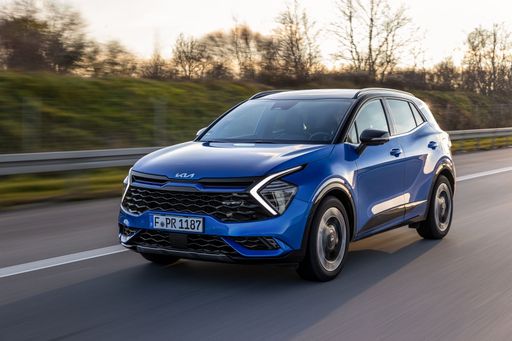
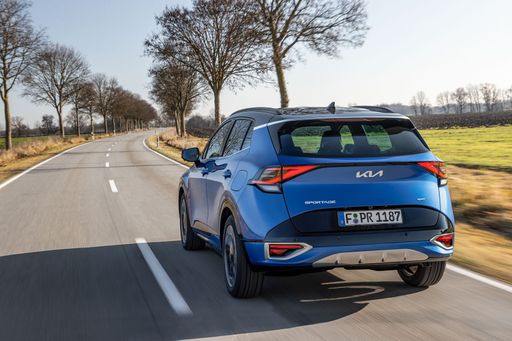
Kia Sportage VS Kia Stonic lays out a simple choice between a roomier compact SUV and a sprightly city crossover, and this comparison is for buyers who already know the names and want the real-world scoop. The Kia Sportage arrives with the presence and scale of a family-focused crossover, while the Kia Stonic plays the lightweight, urban-savvy subcompact game. This page cuts through brochure-speak to explain how each car behaves day to day, what kind of driver it flatters, and where each shines or concedes ground. If you’re comparing practicality, personality and perceived quality between these two crossovers, read on — we’ll make the differences clear without drowning you in stats.
Stonic

Attitude check: grown-up assurance vs cheeky agility

The Kia Sportage projects a more grounded, grown-up attitude — think measured and confident rather than flashy — while the Kia Stonic is jaunty, nimble and deliberately city-minded. Sportage feels like the sensible statement: bigger presence, more composure and a cabin that aims to feel substantial on long drives. The Stonic trades that heft for personality, sharper steering feel in tight spaces and easier parking choreography. Together they show two different design philosophies: one leans toward adult comfort and quiet authority, the other toward accessible style and urban fun.

Sportage

Real life use: highway calm or urban convenience?

For longer commutes and weekend getaways the Kia Sportage is the one that removes the fatigue — more space, a quieter highway demeanor and a boot that swallows luggage without fuss. The Kia Stonic shines in traffic-heavy days and narrow shopping streets where its smaller footprint saves time and patience, and it’s easier to live with if you rarely need big cargo capacity. Families will find the Sportage’s versatility hard to beat for school runs and road trips, while singles or couples who prize low running costs and easy city parking will gravitate to the Stonic. Both are usable every day, but they reward different routines: long miles versus short hops.

Stonic

Buying it for image: substance or sprightly style?

If you want a car that quietly signals competence and a bit of ambition, the Kia Sportage does that without shouting — it reads as practical prestige at the lights. Choosing the Kia Stonic says you prefer personality over presence: a car that looks fun, can be customised, and doesn’t scream “I needed a minivan” when you park it outside the café. Some buyers will justify a Sportage as a small upgrade toward something more substantial; others will defend the Stonic as clever, economical taste. Neither choice is apologetic — one is simply more adult in stance, the other more playful in intent.

Sportage

Who the Sportage suits best

The Kia Sportage is a great match if you prioritise comfort and presence — think relaxed cabin ambience, useful interior space and a car that calms long drives rather than excites them. It suits buyers who like their mobility to feel accomplished: practical enough for family duties yet solid enough to satisfy image-conscious owners who value a composed ride. Sportage buyers tend to be those who put comfort and a bit of status above the last pound saved at the showroom. If you find the Kia Stonic tempting for city life, remember the Sportage gives you more room and serenity when the motorway calls.

Stonic

Who the Stonic suits best (and when the Sportage still tempts)

The Kia Stonic is for the pragmatic city driver and the value-minded buyer who wants style without the hassle of managing a bigger car, ideal for tight streets, easy parking and lower running costs. It appeals to people who prefer nimble usability and lower purchase impact, and it’s a sensible, friendly option for first-time buyers or second-car households. That said, if you occasionally need the extra space or motorway refinement offered by the Kia Sportage, the Stonic can feel like a clever compromise rather than a full replacement. Read the numbers, then sit in both: your daily routine will tell you which personality fits your life better.

Here’s where it gets real: The technical differences in detail

Sportage

Costs and Efficiency:

Price and efficiency are key factors when choosing a car – and this is often where the real differences emerge.

Kia Stonic is significantly cheaper – starting at 20,400 £ , while the Kia Sportage costs 29,100 £ . That’s a price difference of around 8,743 £.

Fuel consumption also shows a difference: the Kia Sportage uses 2.9 L/100km and is clearly more efficient than the Kia Stonic with 5.6 L/100km. The difference is about 2.7 L/100km.

Stonic

Engine and Performance:

Power, torque and acceleration say a lot about how a car feels on the road. This is where you see which model delivers more driving dynamics.

When it comes to engine power, the Kia Sportage offers considerably more power – delivering 288 HP compared to 115 HP. That’s roughly 173 HP more horsepower.

When accelerating from 0 to 100 km/h, the Kia Sportage is considerably quicker – completing the sprint in 7.5 s, while the Kia Stonic takes 10.7 s. That’s about 3.2 s quicker.

There’s also a difference in torque: the Kia Sportage delivers considerably more torque with 380 Nm compared to 200 Nm. That’s about 180 Nm more.

Sportage

Space and Everyday Use:

Cabin size, boot volume and payload all play a role in everyday practicality. Here, comfort and flexibility make the difference.

Both vehicles offer seating for 5 people.

In terms of curb weight, Kia Stonic is noticeably lighter – 1,205 kg compared to 1,552 kg. The difference is around 347 kg.

Looking at boot space, the Kia Sportage offers considerably more boot space – 587 L compared to 352 L. That’s a difference of about 235 L.

When it comes to payload, the Kia Sportage carries clearly more – 580 kg compared to 445 kg. That’s a difference of about 135 kg.

Who wins the race in the data check?

The Kia Sportage is clearly superior overall in the objective data comparison.
This result only shows which model scores more points on paper – not which of the two cars feels right for you.

from £29,100
Sportage

Kia Sportage

  • Engine Type : Petrol, Full Hybrid, Diesel MHEV, Plugin Hybrid
  • Transmission : Manuel, Automatic
  • Drive Type : Front-Wheel Drive, All-Wheel Drive
  • Power HP : 136 - 288 HP
  • Consumption L/100km : 2.9 - 7.8 L/100km
  • Electric Range : 63 - 66 km
Kia Sportage
Kia Stonic

Costs and Consumption

View detailed analysis

Engine and Performance

View detailed analysis

Dimensions and Body

View detailed analysis

Kia Sportage

The Kia Sportage is a roomy, well-equipped compact SUV that balances comfort and practicality for daily driving. It delivers a modern interior, composed ride, and strong value for buyers who want versatility without fuss.

details

Kia Stonic

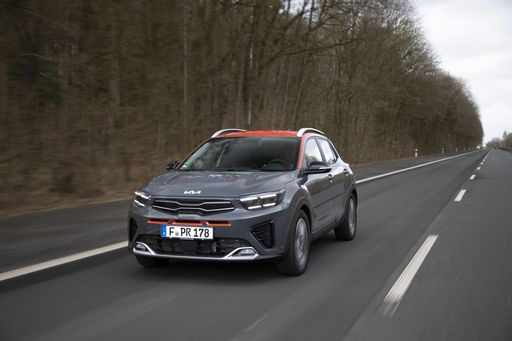
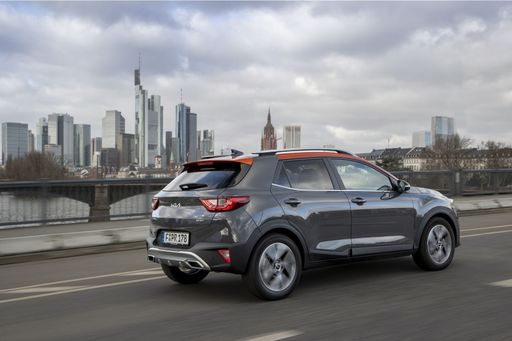
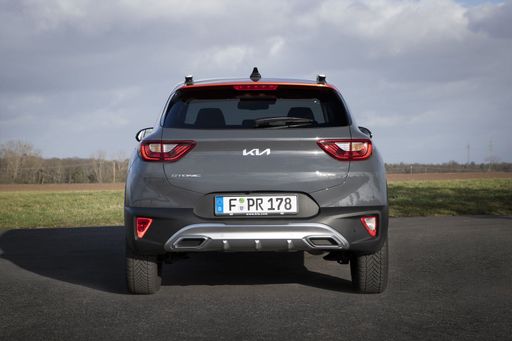
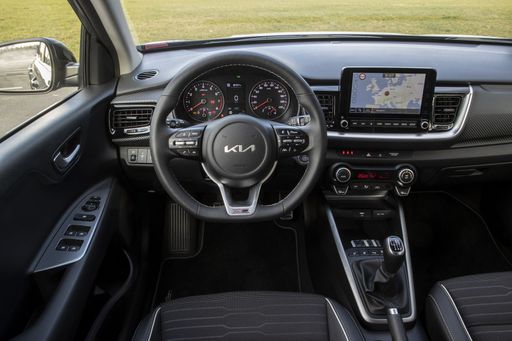
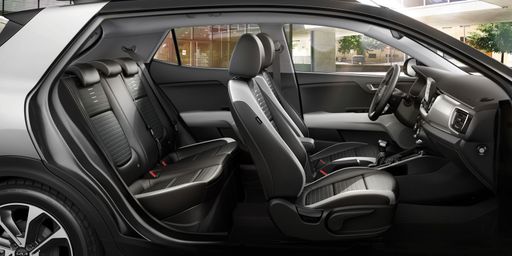
The Kia Stonic is a compact crossover that pairs nimble city manners with a surprisingly spacious and comfortable cabin. It’s a practical, well-equipped choice for buyers who value sensible features, approachable styling and easy everyday usability.

details
Kia Sportage
Kia Stonic

Costs and Consumption

Price
29,100 - 47,100 £
Price
20,400 - 26,800 £
Consumption L/100km
2.9 - 7.8 L/100km
Consumption L/100km
5.6 - 5.7 L/100km
Consumption kWh/100km
-
Consumption kWh/100km
-
Electric Range
63 - 66 km
Electric Range
-
Battery Capacity
-
Battery Capacity
-
co2
67 - 177 g/km
co2
126 - 128 g/km
Fuel tank capacity
-
Fuel tank capacity
-

Dimensions and Body

Body Type
SUV
Body Type
SUV
Seats
5
Seats
5
Doors
-
Doors
-
Curb weight
1,552 - 1,896 kg
Curb weight
1,205 - 1,270 kg
Trunk capacity
526 - 587 L
Trunk capacity
352 L
Length
-
Length
-
Width
1,865 mm
Width
1,760 mm
Height
-
Height
-
Max trunk capacity
-
Max trunk capacity
-
Payload
533 - 580 kg
Payload
440 - 445 kg

Engine and Performance

Engine Type
Petrol, Full Hybrid, Diesel MHEV, Plugin Hybrid
Engine Type
Petrol, Petrol MHEV
Transmission
Manuel, Automatic
Transmission
Manuel, Automatic
Transmission Detail
Manual Gearbox, Dual-Clutch Automatic, Automatic Gearbox
Transmission Detail
Manual Gearbox, Dual-Clutch Automatic
Drive Type
Front-Wheel Drive, All-Wheel Drive
Drive Type
Front-Wheel Drive
Power HP
136 - 288 HP
Power HP
100 - 115 HP
Acceleration 0-100km/h
7.5 - 11.6 s
Acceleration 0-100km/h
10.7 - 12.1 s
Max Speed
-
Max Speed
-
Torque
250 - 380 Nm
Torque
172 - 200 Nm
Number of Cylinders
4
Number of Cylinders
3
Power kW
100 - 212 kW
Power kW
74 - 85 kW
Engine capacity
1,598 cm3
Engine capacity
998 cm3

General

Model Year
2,025 - 2,026
Model Year
2025
CO2 Efficiency Class
F, D, E, G, B
CO2 Efficiency Class
D
Brand
Kia
Brand
Kia
DriveDuel uses data analysis and artificial intelligence to evaluate vehicle data and create content. Content is regularly reviewed and improved. The displayed prices are estimates based on German list prices, adjusted to the respective country’s VAT. Country-specific registration taxes are not included. This information is not legally binding.