VS

Kia EV3 vs Kia Sportage comparison

Compare performance (204 HP vs 288 HP), boot space and price (30,800 £ vs 30,200 £ ) at a glance. Find out which car is the better choice for you – Kia EV3 or Kia Sportage?

Kia EV3 vs Kia Sportage: Key differences

Kia EV3

4.7 (3 Reviews)
rate
  • considerably more electric range

Kia Sportage

4.9 (2 Reviews)
rate
  • only slightly cheaper
  • visibly more power
  • somewhat lighter
  • clearly more trunk space

All details on performance, efficiency, range and trunk space can be found in the technical comparison below – including user reviews for both models.

EV3

Head-to-Head: Kia EV3 vs. Kia Sportage

The automotive landscape is shifting rapidly towards electrification, and Kia is evolving along with this trend. In the spotlight today are two of Kia's prominent offerings: the all-electric EV3 and the versatile Sportage. Both SUVs cater to different audiences and preferences, making the comparison intriguing for prospective buyers. Let’s delve into the technical aspects and innovations that set these two models apart.

Sportage

Performance Overview

The Kia EV3 boasts an electric powertrain, delivering an impressive 204 HP via a front-wheel-drive system. It features a notable acceleration time of 0-100 km/h in just 7.5 seconds, thanks in part to its torque of 283 Nm. This electric SUV offers two battery options: 58.3 kWh and 81.4 kWh, presenting an electric range between 436 km and a remarkable 605 km depending on the selected configuration. With a top speed of 170 km/h, the EV3 is engineered for both efficiency and a spirited driving experience.

On the other hand, the Kia Sportage provides a broader engine lineup, including options like diesel MHEV, petrol hybrid, full hybrid, and traditional petrol engines, with power outputs ranging from 136 HP up to 252 HP. The Sportage’s acceleration performance varies by engine type, with the quickest models achieving 0-100 km/h in 8.3 seconds. While the top speed caps at 194 km/h, the Sportage provides a diverse array of driving experiences, including both front-wheel and all-wheel drive options, catering to a wider audience.

EV3

Fuel Efficiency and Eco-Friendly Options

As expected from an electric vehicle, the Kia EV3 delivers outstanding energy consumption figures, with an impressive efficiency of 14.9 to 16.2 kWh/100 km. In contrast, the Kia Sportage presents a mixed bag of fuel consumption, with its most efficient variants consuming as little as 5 L/100 km. For eco-conscious buyers, both vehicles score high in sustainability, with the EV3 achieving a CO2 efficiency class of A, while the Sportage’s CO2 output varies across its models from classes B to E, influenced by engine choice.

Sportage

Interior and Space Considerations

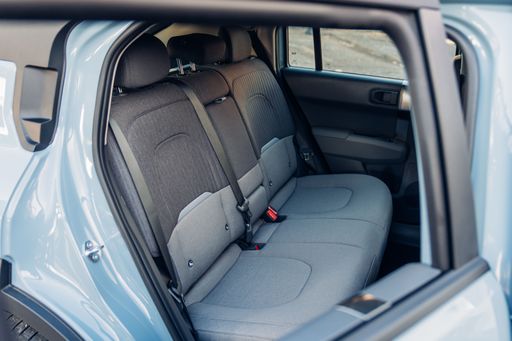
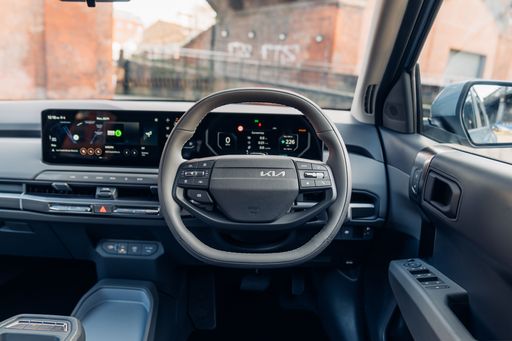
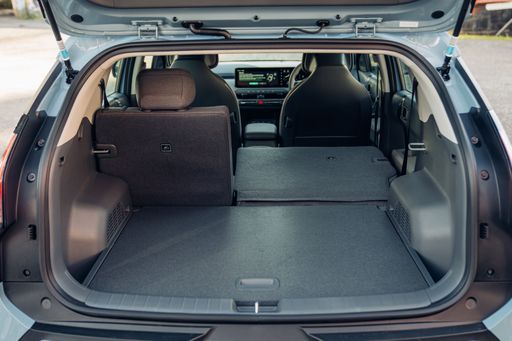
Inside, the Kia EV3 comfortably seats five, with a trunk capacity of 460 liters, maximizing practicality for everyday use. The minimalistic and tech-forward interior is designed to create a seamless blend of comfort and innovation.

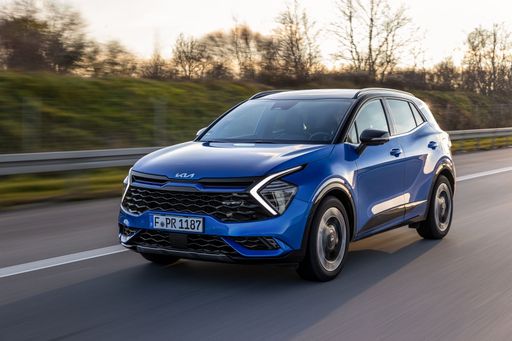
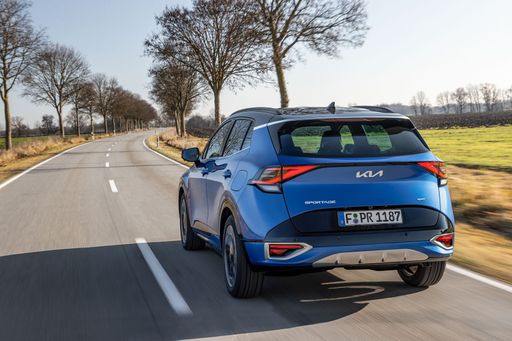
The Sportage, however, takes the lead in cargo space, providing between 526 to 587 liters of trunk capacity, depending on the variant, making it an appealing option for families or those needing extra storage. Moreover, the Sportage’s wider body (1865 mm) and higher height (1650 mm) enhance overall passenger comfort and space.

EV3

Innovative Features

Both SUVs are packed with innovative features, although in different realms. The Kia EV3 embraces cutting-edge electric vehicle technology with features such as regenerative braking, adjustable drive modes, and an advanced infotainment system that displays vital electric range and energy consumption metrics. Its sleek electric architecture and intuitive user interface make every drive a modern experience.

Similarly, the Kia Sportage does not fall short in terms of technology. Equipped with a range of driver assistance features, including smart cruise control, lane-keeping assist, and a premium sound system, the Sportage aims to deliver comfort and safety. Furthermore, its hybrid and plug-in hybrid options reflect Kia’s commitment to sustainability while ensuring performance is never compromised.

Sportage

Pricing and Value Proposition

The pricing for the Kia EV3 starts at €35,990 and ranges up to €48,690, a competitive price considering its status as an electric SUV. The Sportage, while starting slightly higher at €36,550, varies across its multiple variants, with prices reaching up to €52,190, depending on the engine type and features. This aggregated pricing structure signifies that buyers can select a model that best fits their budget and specific needs.

Conclusion

In conclusion, the choice between the Kia EV3 and the Kia Sportage ultimately comes down to individual preferences. If you prioritize sustainability and cutting-edge electric technology, the EV3 would be an ideal choice. Alternatively, if versatility and a range of traditional engine options appeal to you, the Sportage stands out with its advanced driver features and spacious cabin.

Both vehicles exemplify Kia's dedication to innovation, performance, and eco-friendliness, solidifying their positions in the competitive automotive market.

Here’s where it gets real: The technical differences in detail

EV3

Costs and Efficiency:

When it comes to price and running costs, the biggest differences usually appear. This is often where you see which car fits your budget better in the long run.

Kia Sportage is only slightly cheaper – starting at 30,200 £ , while the Kia EV3 costs 30,800 £ . That’s a price difference of around 686 £.

As for electric range, the Kia EV3 offers considerably more range – reaching up to 605 km, about 539 km more than the Kia Sportage.

Sportage

Engine and Performance:

Under the bonnet, it becomes clear which model is tuned for sportiness and which one takes the lead when you hit the accelerator.

When it comes to engine power, the Kia Sportage offers visibly more power – delivering 288 HP compared to 204 HP. That’s roughly 84 HP more horsepower.

Both models accelerate almost equally fast – 7.5 s from 0 to 100 km/h.

There’s also a difference in torque: the Kia Sportage delivers markedly more torque with 380 Nm compared to 283 Nm. That’s about 97 Nm more.

EV3

Space and Everyday Use:

Whether family car or daily driver – which one offers more room, flexibility and comfort?

Both vehicles offer seating for 5 people.

In terms of curb weight, Kia Sportage is somewhat lighter – 1,552 kg compared to 1,800 kg. The difference is around 248 kg.

Looking at boot space, the Kia Sportage offers clearly more boot space – 587 L compared to 460 L. That’s a difference of about 127 L.

When it comes to payload, the Kia Sportage carries a bit more – 580 kg compared to 470 kg. That’s a difference of about 110 kg.

Who wins the race in the data check?

The Kia EV3 holds a solid overall lead in the objective data comparison.
This result only shows which model scores more points on paper – not which of the two cars feels right for you.

from £30,800
EV3

Kia EV3

  • Engine Type : Electric
  • Transmission : Automatic
  • Drive Type : Front-Wheel Drive
  • Power HP : 204 HP
  • Consumption kWh/100km : 14.9 - 16.2 kWh/100km
  • Electric Range : 436 - 605 km
Kia EV3
Kia Sportage

Costs and Consumption

View detailed analysis

Engine and Performance

View detailed analysis

Dimensions and Body

View detailed analysis

Kia EV3

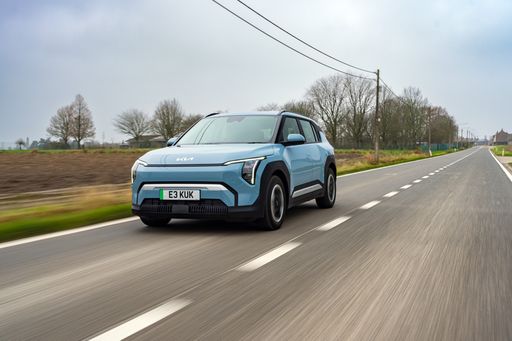
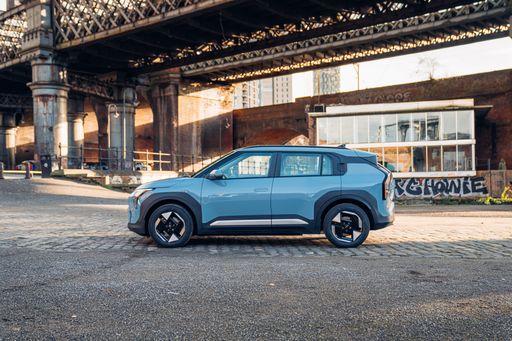
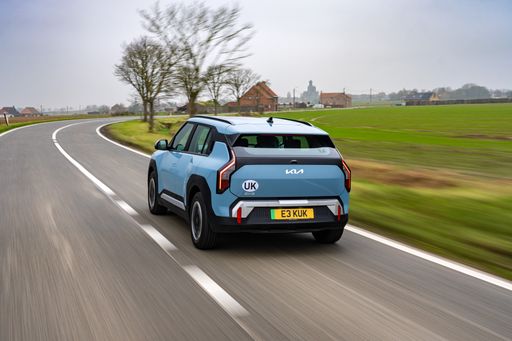
The Kia EV3 arrives as a cheeky, practical electric compact that manages to feel both premium and playful, delivering crisp handling and a roomy cabin that's perfect for urban life. With smart tech, friendly styling and sensible pricing, the EV3 is the kind of car that makes switching to electric feel like a no-brainer without asking you to give anything important up.

details

Kia Sportage

The Kia Sportage proves you don't have to choose between style and sensible family motoring, wrapping modern, confident looks around a roomy, well-equipped cabin. It's an easy car to live with — comfortable on daily runs, pleasantly engaging when you want a bit of fun, and kind to your wallet so you can keep smiling at the fuel pump.

details
Kia EV3
Kia Sportage

Costs and Consumption

Price
30,800 - 41,700 £
Price
30,200 - 47,100 £
Consumption L/100km
-
Consumption L/100km
2.9 - 7.8 L/100km
Consumption kWh/100km
14.9 - 16.2 kWh/100km
Consumption kWh/100km
-
Electric Range
436 - 605 km
Electric Range
63 - 66 km
Battery Capacity
58.3 - 81.4 kWh
Battery Capacity
-
co2
0 g/km
co2
67 - 177 g/km
Fuel tank capacity
-
Fuel tank capacity
-

Dimensions and Body

Body Type
SUV
Body Type
SUV
Seats
5
Seats
5
Doors
5
Doors
-
Curb weight
1,800 - 1,885 kg
Curb weight
1,552 - 1,896 kg
Trunk capacity
460 L
Trunk capacity
526 - 587 L
Length
4,300 - 4,310 mm
Length
-
Width
1,850 mm
Width
1,865 mm
Height
1,560 - 1,570 mm
Height
-
Max trunk capacity
1,251 L
Max trunk capacity
-
Payload
470 kg
Payload
533 - 580 kg

Engine and Performance

Engine Type
Electric
Engine Type
Petrol, Full Hybrid, Diesel MHEV, Plugin Hybrid
Transmission
Automatic
Transmission
Manuel, Automatic
Transmission Detail
Reduction Gearbox
Transmission Detail
Manual Gearbox, Dual-Clutch Automatic, Automatic Gearbox
Drive Type
Front-Wheel Drive
Drive Type
Front-Wheel Drive, All-Wheel Drive
Power HP
204 HP
Power HP
136 - 288 HP
Acceleration 0-100km/h
7.5 - 7.9 s
Acceleration 0-100km/h
7.5 - 11.6 s
Max Speed
170 km/h
Max Speed
-
Torque
283 Nm
Torque
250 - 380 Nm
Number of Cylinders
-
Number of Cylinders
4
Power kW
150 kW
Power kW
100 - 212 kW
Engine capacity
-
Engine capacity
1,598 cm3

General

Model Year
2,024
Model Year
2,025 - 2,026
CO2 Efficiency Class
A
CO2 Efficiency Class
F, D, E, G, B
Brand
Kia
Brand
Kia
DriveDuel uses data analysis and artificial intelligence to evaluate vehicle data and create content. Content is regularly reviewed and improved. The displayed prices are estimates based on German list prices, adjusted to the respective country’s VAT. Country-specific registration taxes are not included. This information is not legally binding.