VS

Kia EV3 vs Toyota C-HR+ comparison

Compare performance (204 HP vs 343 HP), boot space and price (30,800 £ vs 36,000 £ ) at a glance. Find out which car is the better choice for you – Kia EV3 or Toyota C-HR+?

Kia EV3 vs Toyota C-HR+: Key differences

Kia EV3

4.7 (3 Reviews)
rate
  • slightly cheaper
  • marginally lighter
  • marginally more trunk space

Toyota C-HR+

  • considerably more power
  • moderately more efficient
  • very slightly more electric range
  • considerably quicker 0–100 km/h

All details on performance, efficiency, range and trunk space can be found in the technical comparison below – including user reviews for both models.

EV3

Face-off at the curb: Kia EV3 vs Toyota C-HR+ comparison

The Kia EV3 and the Toyota C-HR+ go head-to-head in this compact electric crossover vs compact coupe-SUV comparison so you can spot real-world differences at a glance. This comparison strips away marketing gloss to focus on everyday character, perceived comfort and owner practicality. We’re outlining how each car behaves in daily life rather than drowning you in spec sheets. If you care about how a car feels in the driveway, on the commute and at the school run, keep reading.

C-HR+

Two moods on the same street

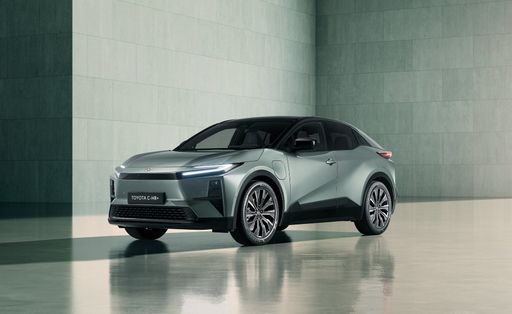
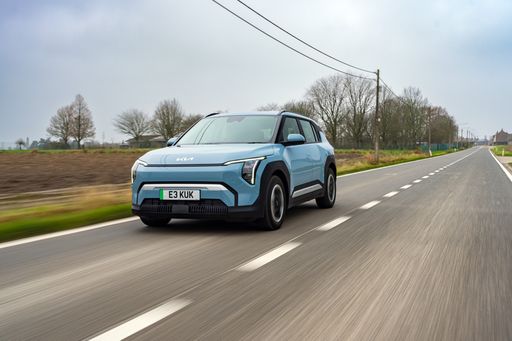
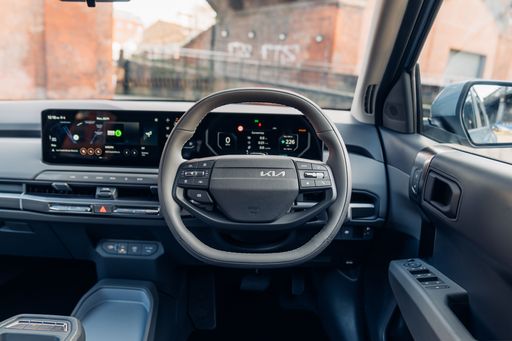
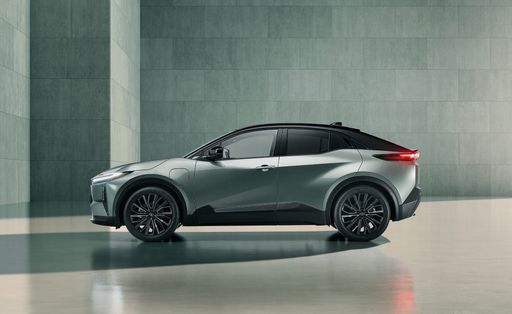
The Kia EV3 presents a calm, sensible mood—friendly lines, approachable tech and a temperament built for low-stress driving. The Toyota C-HR+ is louder in personality, with sharper styling and a stance that wants to be noticed in urban traffic. On the move the Kia relaxes the passenger, while the Toyota stirs the driver; it’s understatement versus showmanship. That contrast sets the tone for how each will sit in your life and your garage.

EV3

How they behave in day-to-day life

For daily commuting and family chores the Kia EV3 aims to simplify: easy ergonomics, forgiving ride and packaging that prioritises usable space. The Toyota C-HR+ tilts toward driver engagement and dynamic composure, which feels brilliant on longer hauls or when you want a sharper turn-in around town. Both are compact enough for city living, but one leans into comfort and the other into technique. So your regular routes and passengers will quickly reveal which approach suits you.

C-HR+

Buying for reasons, not specs

Picking the Kia EV3 is a defensible, pragmatic choice—you’ll justify it with routine, economy and everyday calm. Choosing the Toyota C-HR+ is a statement: you’re buying on emotion as much as need, valuing looks and a livelier driving feel. One answers a practical checklist, the other feeds a desire to be seen and enjoyed behind the wheel. Both are sensible purchases in different registers; it’s about what you enjoy every morning when you unlock the car.

EV3

Who should be shopping the Kia EV3?

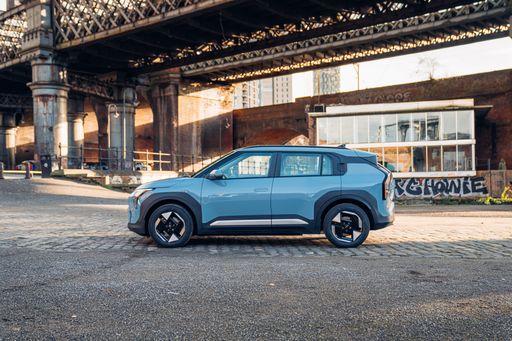
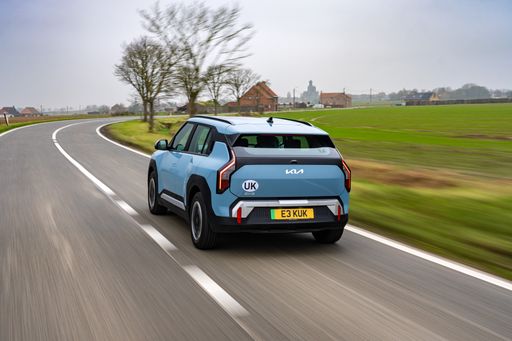
The Kia EV3 will click with buyers who prioritise sensible running, straightforward usability and a comfortable, undemanding ride—think commuters who dislike fuss and small families who need reliability. It’s for the person who wants modern electric convenience without theatrical styling or sharp edges. Compared with the Toyota C-HR+, the Kia trades headline-grabbing looks for day-to-day friendliness and lower stress ownership. If your list begins with predictable behaviour and sensible packaging, the EV3 is the one to shortlist.

C-HR+

Who should be shopping the Toyota C-HR+ (and remember the Kia EV3)

The Toyota C-HR+ suits drivers who want presence, sharper handling and a more expressive design—buyers who enjoy a bit more performance and a car that makes an impression at the kerb. It rewards those who put driving feel and curb appeal higher up their priorities than absolute simplicity. If you were leaning toward the Kia EV3, keep in mind that the trade-off is more drama and a firmer on-road character with the Toyota. Read on into the data section below to see the exact trade-offs on range, efficiency and running costs and turn those impressions into practical buying ammunition.

Here’s where it gets real: The technical differences in detail

EV3

Costs and Efficiency:

Price and efficiency are key factors when choosing a car – and this is often where the real differences emerge.

Kia EV3 is slightly cheaper – starting at 30,800 £ , while the Toyota C-HR+ costs 36,000 £ . That’s a price difference of around 5,143 £.

In terms of energy consumption, the Toyota C-HR+ is moderately more efficient: consuming 13.4 kWh/100km compared to 14.9 kWh/100km for the Kia EV3. That’s a difference of about 1.5 kWh/100km.

As for electric range, the Toyota C-HR+ offers very slightly more range – reaching up to 607 km, about 2 km more than the Kia EV3.

C-HR+

Engine and Performance:

Under the bonnet, it becomes clear which model is tuned for sportiness and which one takes the lead when you hit the accelerator.

When it comes to engine power, the Toyota C-HR+ offers considerably more power – delivering 343 HP compared to 204 HP. That’s roughly 139 HP more horsepower.

When accelerating from 0 to 100 km/h, the Toyota C-HR+ is considerably quicker – completing the sprint in 5.2 s, while the Kia EV3 takes 7.5 s. That’s about 2.3 s quicker.

There’s also a difference in torque: the Toyota C-HR+ delivers slightly more torque with 338 Nm compared to 283 Nm. That’s about 55 Nm more.

EV3

Space and Everyday Use:

Cabin size, boot volume and payload all play a role in everyday practicality. Here, comfort and flexibility make the difference.

Both vehicles offer seating for 5 people.

In terms of curb weight, Kia EV3 is marginally lighter – 1,800 kg compared to 1,810 kg. The difference is around 10 kg.

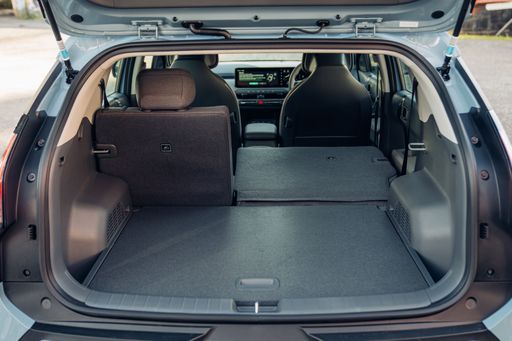
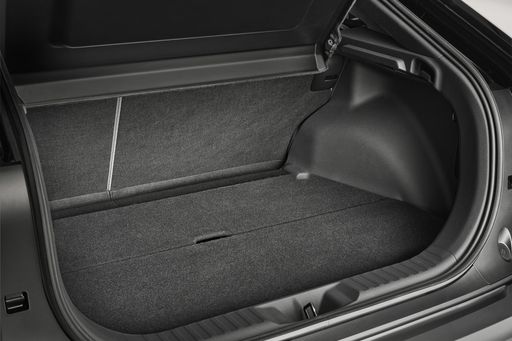
Looking at boot space, the Kia EV3 offers marginally more boot space – 460 L compared to 416 L. That’s a difference of about 44 L.

When it comes to payload, the Toyota C-HR+ carries markedly more – 655 kg compared to 470 kg. That’s a difference of about 185 kg.

Who wins the race in the data check?

The Toyota C-HR+ stands well ahead of its rival in the objective data comparison.
This result only shows which model scores more points on paper – not which of the two cars feels right for you.

from £36,000
C-HR+

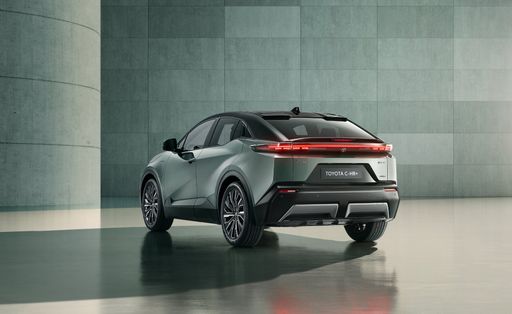
Toyota C-HR+

  • Engine Type : Electric
  • Transmission : Automatic
  • Drive Type : Front-Wheel Drive, All-Wheel Drive
  • Power HP : 167 - 343 HP
  • Consumption kWh/100km : 13.4 - 15.5 kWh/100km
  • Electric Range : 458 - 607 km
Kia EV3
Toyota C-HR+

Costs and Consumption

View detailed analysis

Engine and Performance

View detailed analysis

Dimensions and Body

View detailed analysis

Kia EV3

The Kia EV3 arrives as a cheeky, practical electric compact that manages to feel both premium and playful, delivering crisp handling and a roomy cabin that's perfect for urban life. With smart tech, friendly styling and sensible pricing, the EV3 is the kind of car that makes switching to electric feel like a no-brainer without asking you to give anything important up.

details

Toyota C-HR+

The Toyota C-HR+ mixes sharp, coupe-like styling with comfortable, surprisingly practical packaging, making a bold statement around town and on the weekend run. It’s aimed at drivers who value standout looks and fuss-free ownership over sports-car thrills, so if you want personality and reliability in one tidy package, book a test drive.

details
Kia EV3
Toyota C-HR+

Costs and Consumption

Price
30,800 - 41,700 £
Price
36,000 - 46,300 £
Consumption L/100km
-
Consumption L/100km
-
Consumption kWh/100km
14.9 - 16.2 kWh/100km
Consumption kWh/100km
13.4 - 15.5 kWh/100km
Electric Range
436 - 605 km
Electric Range
458 - 607 km
Battery Capacity
58.3 - 81.4 kWh
Battery Capacity
-
co2
0 g/km
co2
0 g/km
Fuel tank capacity
-
Fuel tank capacity
-

Dimensions and Body

Body Type
SUV
Body Type
SUV
Seats
5
Seats
5
Doors
5
Doors
-
Curb weight
1,800 - 1,885 kg
Curb weight
1,810 - 2,010 kg
Trunk capacity
460 L
Trunk capacity
416 L
Length
4,300 - 4,310 mm
Length
-
Width
1,850 mm
Width
1,870 mm
Height
1,560 - 1,570 mm
Height
-
Max trunk capacity
1,251 L
Max trunk capacity
-
Payload
470 kg
Payload
550 - 655 kg

Engine and Performance

Engine Type
Electric
Engine Type
Electric
Transmission
Automatic
Transmission
Automatic
Transmission Detail
Reduction Gearbox
Transmission Detail
Reduction Gearbox
Drive Type
Front-Wheel Drive
Drive Type
Front-Wheel Drive, All-Wheel Drive
Power HP
204 HP
Power HP
167 - 343 HP
Acceleration 0-100km/h
7.5 - 7.9 s
Acceleration 0-100km/h
5.2 - 8.4 s
Max Speed
170 km/h
Max Speed
-
Torque
283 Nm
Torque
268 - 338 Nm
Number of Cylinders
-
Number of Cylinders
-
Power kW
150 kW
Power kW
123 - 252 kW
Engine capacity
-
Engine capacity
-

General

Model Year
2,024
Model Year
2,026
CO2 Efficiency Class
A
CO2 Efficiency Class
A
Brand
Kia
Brand
Toyota
DriveDuel uses data analysis and artificial intelligence to evaluate vehicle data and create content. Content is regularly reviewed and improved. The displayed prices are estimates based on German list prices, adjusted to the respective country’s VAT. Country-specific registration taxes are not included. This information is not legally binding.