VS

Kia EV3 vs Kia EV4 Hatchback comparison

Compare performance (204 HP vs 204 HP), boot space and price (30,800 £ vs 32,200 £ ) at a glance. Find out which car is the better choice for you – Kia EV3 or Kia EV4 Hatchback?

Kia EV3 vs Kia EV4 Hatchback: Key differences

Kia EV3

4.7 (3 Reviews)
rate
  • only slightly cheaper
  • very slightly lighter
  • only slightly more trunk space

Kia EV4 Hatchback

  • marginally more electric range
  • marginally quicker 0–100 km/h

All details on performance, efficiency, range and trunk space can be found in the technical comparison below – including user reviews for both models.

EV3

First Glance, Lasting Impression

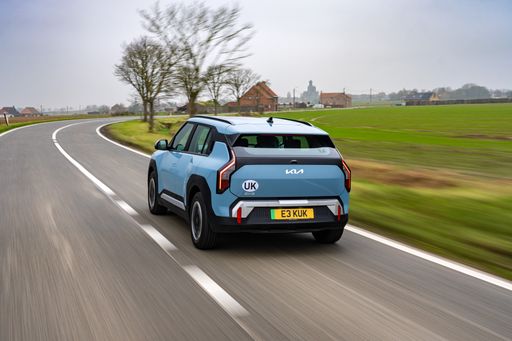
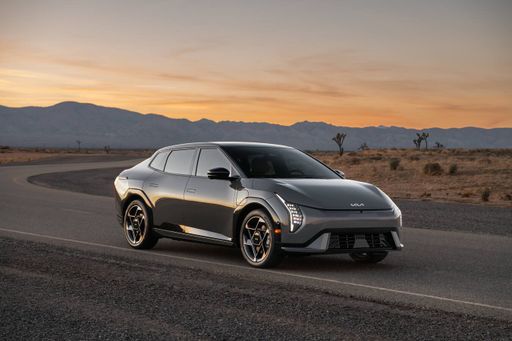
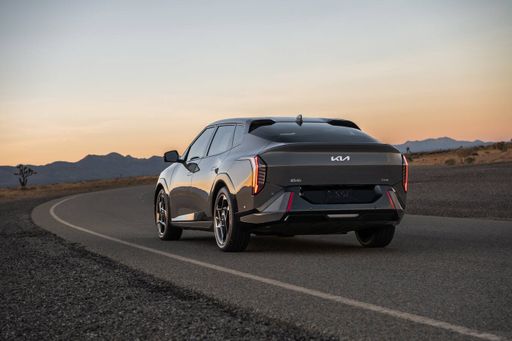
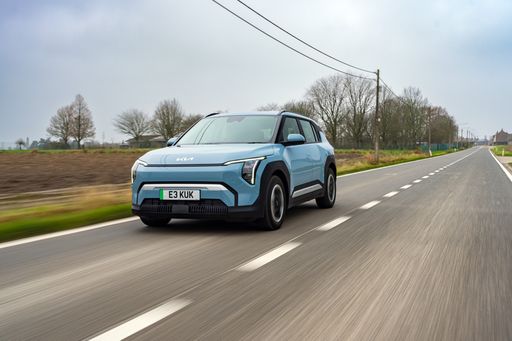
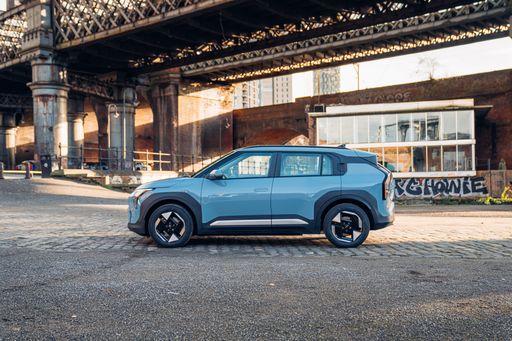
The EV3 and EV4 Hatchback dress the same brand language in different outfits: one feels playfully compact, the other takes a more accomplished, grown-up stance. Up close, finishes and detailing give each car its own character, with the EV3 leaning on youthful charm and the EV4 projecting a subtly more mature presence. Both will turn heads for different reasons — one for its urban cheek, the other for a balanced, understated confidence. It’s styling that tells you immediately who the cars are trying to appeal to.
EV4 Hatchback

City Ballet vs. Open-Road Poise

In town the EV3 dances—light-footed, easy to place and forgiving when the streets get tight—making it a natural for urban commuters who value agility. The EV4 Hatchback feels more planted at speed, with a composure that inspires confidence on longer stretches and when the road opens up. Neither feels precious; one simply prioritises city life while the other plays the all-rounder with an edge toward stability. Your daily routes will quickly tell which vibe suits you best.

EV3

Living Room on Wheels

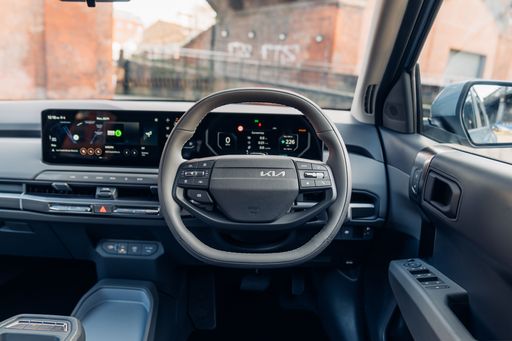
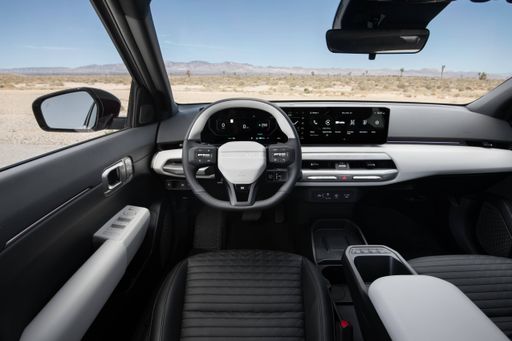
Both cabins strike a modern, uncluttered tone, but the differences are in the details: materials, seat shaping and the way controls fall to hand make each interior distinct. The EV3’s layout feels slightly more straightforward and friendly, ideal for drivers who want simple usability without fuss. The EV4 Hatchback nudges toward a quieter, more refined environment that rewards longer stints behind the wheel. Ergonomics and perceived quality are where you’ll most notice the cars’ different priorities.

EV4 Hatchback

Boot Time and Backseat Life

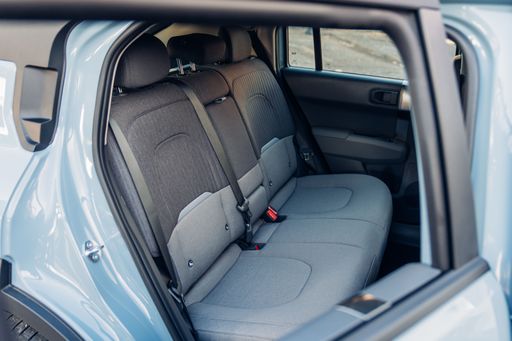
Practicality is a headline for both, yet they approach it differently — one offers an easier, more familiar loading experience while the other stretches its versatility when you need to shove in more gear or fold seats down. Rear comfort is solid in both, though taller passengers and families might prefer the slightly more accommodating layout of the larger-bodied option. If your life involves bikes, strollers or frequent weekend escapes, think about how you use space rather than just how much there is. The devil, as always, is in real-world usability when daypacks and grocery runs are in play.

EV3

Ownership: What It Feels Like to Live With

Running either car is more about convenience than drama: charging routines, low-maintenance drivetrains and predictable ownership rhythms dominate the experience. Perceived value comes from how each car integrates into daily life — ease of use, dealer support and long-term reliability impressions are where buyers form firm opinions. The EV3 paints a picture of economical, fuss-free ownership while the EV4 Hatchback leans into a more premium-feeling experience that can justify a little extra in upkeep expectations. Either way, the emotional cost of ownership is low compared with more demanding alternatives.

EV4 Hatchback

Personality Matchmaker

Choose the EV3 if your world is short hops, tight parking and a need for zippy, low-stress mobility; it’s a natural for city dwellers and second-car households. Opt for the EV4 Hatchback if you favour a composed feel on longer journeys, a roomier day-to-day environment and a slightly more grown-up image when you pull up at the school run or the client meeting. Style-conscious buyers who want a balance of practicality and presence will find the EV4’s demeanour appealing, while urban minimalists will appreciate the EV3’s nimble charm. Think about your week: which car would make the majority of your days easier and more pleasant?

Keep Reading — the Decision Gets Sharpened

We’ve walked through styling, daily usability, cabin comfort and ownership mood so you can picture each car in your life; the finer points and head-to-head impressions are still to come. Stick with us for the detailed drive impressions and ownership verdicts that follow, and decide which character fits your routine — the DriveDuel Champion will be revealed afterwards, so keep reading to find out which model takes the crown.

Here’s where it gets real: The technical differences in detail

EV3

Costs and Efficiency:

Price and efficiency are often the first things buyers look at. Here it becomes clear which model has the long-term edge – whether at the pump, the plug, or in purchase price.

Kia EV3 is only slightly cheaper – starting at 30,800 £ , while the Kia EV4 Hatchback costs 32,200 £ . That’s a price difference of around 1,372 £.

When it comes to electricity consumption, both models perform equally – each averaging 14.9 kWh/100km.

As for electric range, the Kia EV4 Hatchback offers marginally more range – reaching up to 625 km, about 20 km more than the Kia EV3.

EV4 Hatchback

Engine and Performance:

Power, torque and acceleration say a lot about how a car feels on the road. This is where you see which model delivers more driving dynamics.

Both models deliver identical power – 204 HP each.

When accelerating from 0 to 100 km/h, the Kia EV4 Hatchback is marginally quicker – completing the sprint in 7.4 s, while the Kia EV3 takes 7.5 s. That’s about 0.1 s quicker.

Both models offer the same torque – 283 Nm.

EV3

Space and Everyday Use:

Beyond pure performance, interior space and usability matter most in daily life. This is where you see which car is more practical and versatile.

Both vehicles offer seating for 5 people.

In terms of curb weight, Kia EV3 is very slightly lighter – 1,800 kg compared to 1,811 kg. The difference is around 11 kg.

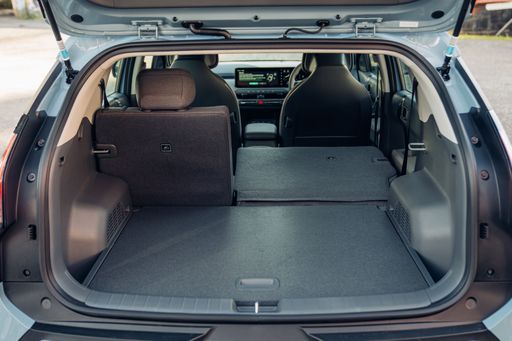
Looking at boot space, the Kia EV3 offers only slightly more boot space – 460 L compared to 435 L. That’s a difference of about 25 L.

When it comes to payload, the Kia EV3 carries barely more – 470 kg compared to 459 kg. That’s a difference of about 11 kg.

Who wins the race in the data check?

The Kia EV3 holds a slight edge in the objective data comparison.
This result only shows which model scores more points on paper – not which of the two cars feels right for you.

from £30,800
EV3

Kia EV3

  • Engine Type : Electric
  • Transmission : Automatic
  • Drive Type : Front-Wheel Drive
  • Power HP : 204 HP
  • Consumption kWh/100km : 14.9 - 16.2 kWh/100km
  • Electric Range : 436 - 605 km
Kia EV3
Kia EV4 Hatchback

Costs and Consumption

View detailed analysis

Engine and Performance

View detailed analysis

Dimensions and Body

View detailed analysis

Kia EV3

The Kia EV3 arrives as a cheeky, practical electric compact that manages to feel both premium and playful, delivering crisp handling and a roomy cabin that's perfect for urban life. With smart tech, friendly styling and sensible pricing, the EV3 is the kind of car that makes switching to electric feel like a no-brainer without asking you to give anything important up.

details

Kia EV4 Hatchback

The Kia EV4 Hatchback paves the way for a sleek and efficient driving experience, capturing attention with its modern design and eco-friendly performance. Built with comfort and sustainability in mind, this hatchback redefines electric mobility for urban explorers and suburban commuters alike. Inside, the EV4 boasts a spacious and tech-savvy interior, offering drivers and passengers a seamless blend of innovation and practicality.

details
Kia EV3
Kia EV4 Hatchback

Costs and Consumption

Price
30,800 - 41,700 £
Price
32,200 - 42,400 £
Consumption L/100km
-
Consumption L/100km
-
Consumption kWh/100km
14.9 - 16.2 kWh/100km
Consumption kWh/100km
14.9 - 16.2 kWh/100km
Electric Range
436 - 605 km
Electric Range
440 - 625 km
Battery Capacity
58.3 - 81.4 kWh
Battery Capacity
-
co2
0 g/km
co2
0 g/km
Fuel tank capacity
-
Fuel tank capacity
-

Dimensions and Body

Body Type
SUV
Body Type
Hatchback
Seats
5
Seats
5
Doors
5
Doors
-
Curb weight
1,800 - 1,885 kg
Curb weight
1,811 - 1,910 kg
Trunk capacity
460 L
Trunk capacity
435 L
Length
4,300 - 4,310 mm
Length
-
Width
1,850 mm
Width
1,860 mm
Height
1,560 - 1,570 mm
Height
-
Max trunk capacity
1,251 L
Max trunk capacity
-
Payload
470 kg
Payload
445 - 459 kg

Engine and Performance

Engine Type
Electric
Engine Type
Electric
Transmission
Automatic
Transmission
Automatic
Transmission Detail
Reduction Gearbox
Transmission Detail
Reduction Gearbox
Drive Type
Front-Wheel Drive
Drive Type
Front-Wheel Drive
Power HP
204 HP
Power HP
204 HP
Acceleration 0-100km/h
7.5 - 7.9 s
Acceleration 0-100km/h
7.4 - 7.8 s
Max Speed
170 km/h
Max Speed
-
Torque
283 Nm
Torque
283 Nm
Number of Cylinders
-
Number of Cylinders
-
Power kW
150 kW
Power kW
150 kW
Engine capacity
-
Engine capacity
-

General

Model Year
2,024
Model Year
2,025
CO2 Efficiency Class
A
CO2 Efficiency Class
A
Brand
Kia
Brand
Kia
DriveDuel uses data analysis and artificial intelligence to evaluate vehicle data and create content. Content is regularly reviewed and improved. The displayed prices are estimates based on German list prices, adjusted to the respective country’s VAT. Country-specific registration taxes are not included. This information is not legally binding.