VS

Kia EV6 vs Kia EV4 Hatchback comparison

Compare performance (609 HP vs 204 HP), boot space and price (38,600 £ vs 32,200 £ ) at a glance. Find out which car is the better choice for you – Kia EV6 or Kia EV4 Hatchback?

Kia EV6 vs Kia EV4 Hatchback: Key differences

Kia EV6

5 (3 Reviews)
rate
  • considerably more power
  • clearly quicker 0–100 km/h
  • moderately more trunk space

Kia EV4 Hatchback

  • a bit cheaper
  • barely more efficient
  • marginally more electric range
  • only slightly lighter

All details on performance, efficiency, range and trunk space can be found in the technical comparison below – including user reviews for both models.

EV6

Street Presence vs. City Swagger

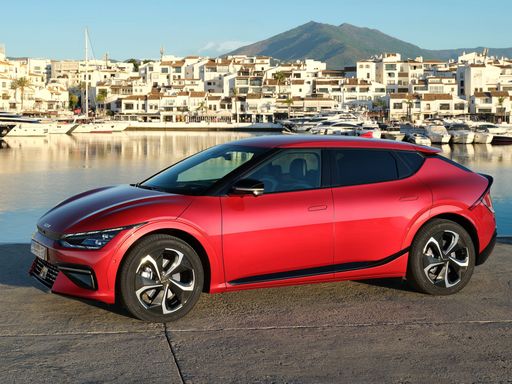
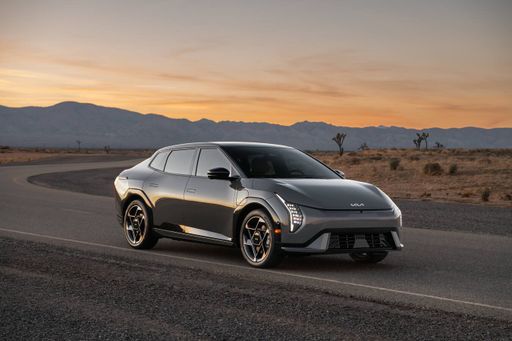
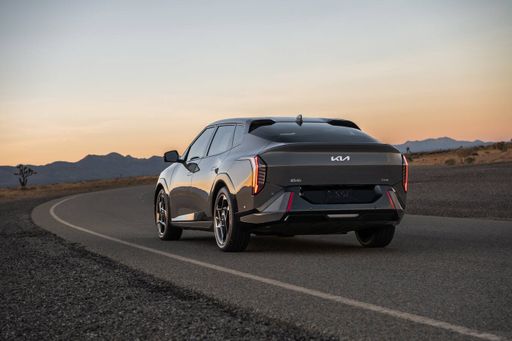
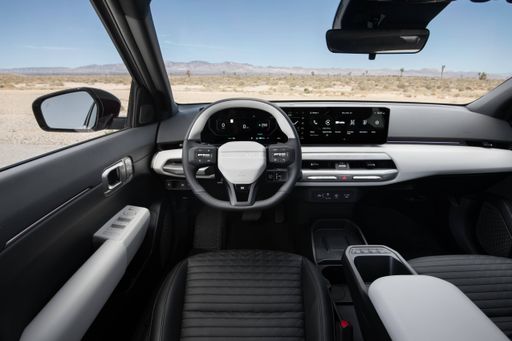
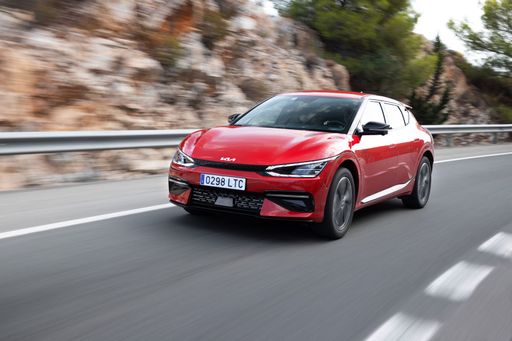
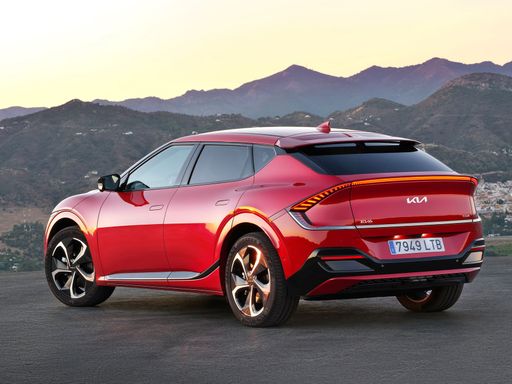
The Kia EV6 walks into a room like it owns the corner table—bold proportions, a planted stance and design cues that flirt with sportiness—while the Kia EV4 Hatchback prefers a fresher, more domestic charm that feels tailored for urban life. One reads as a grown-up halo model, the other as a clever, approachable hatch that doesn’t try too hard. Both have personality, but they dress it differently: one dramatic, one subtly confident.
EV4 Hatchback

Daily Drive: Composure or Nimbleness?

On the road the EV6 feels composed and assured, soaking up motorway miles with the kind of calm that encourages longer trips, whereas the EV4 feels lighter on its feet and more agile through traffic and tight parking situations. The larger platform brings a sense of solidity to the EV6, while the hatchback’s smaller footprint rewards quick lane changes and city weaving. Pick your daily rhythm and the car that matches it.

EV6

Cabin Life: Tech Theatre or Practical Calm?

The EV6’s interior leans into a slightly more atmospheric, tech-forward presentation that aims to impress occupants with a sense of occasion, while the EV4 keeps things straightforward and user-friendly with controls that feel intuitive for everyday use. Materials and layout in both are competent, but the EV6 edges toward a more premium vibe and the EV4 towards uncluttered practicality. If you like to be entertained on the commute, one will feel livelier; if you value simple usability, the other will be less fussy.

EV4 Hatchback

Packing and Practicality: Weekend Ready vs. Urban Flex

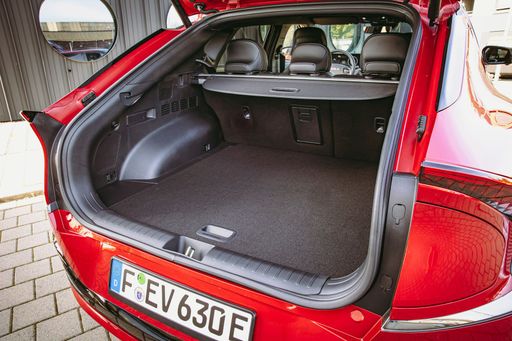
For families and weekend escape artists the EV6 offers a roomier feel and a trunk that’s easy to live with on longer trips, while the EV4’s hatchback form makes loading awkward items and manoeuvring in tight car parks delightfully straightforward. Rear seat versatility and everyday ergonomics favor the hatchback in the city, but the EV6’s proportions give it an edge when luggage and longer legs are frequent companions. Both are practical in their own lanes—your lifestyle decides which matters more.

EV6

Comfort and Long-Distance Ease

If your calendar is full of motorway mileage the EV6’s demeanour on long runs feels built for endurance, offering a more composed ride that reduces fatigue and keeps occupants comfortable over hours behind the wheel. The EV4 doesn’t feel taxed on a weekend trip, but its character is better suited to shorter hops and urban duties where responsiveness matters more than marathon comfort. Match the car to the miles you actually drive.

EV4 Hatchback

Value and Everyday Ownership

Ownership experience divides along simple lines: the EV4 is the sensible, wallet-conscious pick that prioritises efficiency and ease in town, while the EV6 positions itself as the more aspirational, fuller-featured option that aims to deliver a broader, more premium ownership feel. Running costs and real-world practicality will sway different buyers, but neither is trying to surprise you—each makes its priorities clear from the first drive. Choose the philosophy you want to live with day to day.

EV6

Who Should Buy Which Car?

Commuters who live in tight city grids and value parking ease and efficiency will find the Kia EV4 Hatchback comfortably aligns with their needs, while drivers who crave presence, longer-haul comfort and a slightly more premium package will be drawn to the Kia EV6. Families who mix city and country miles should test both to see which balance of space and agility suits them, and style-conscious buyers should pick based on whether they prefer restraint or drama. Keep reading—our DriveDuel Champion will be revealed afterwards.

Here’s where it gets real: The technical differences in detail

EV6

Costs and Efficiency:

Price and efficiency are often the first things buyers look at. Here it becomes clear which model has the long-term edge – whether at the pump, the plug, or in purchase price.

Kia EV4 Hatchback is a bit cheaper – starting at 32,200 £ , while the Kia EV6 costs 38,600 £ . That’s a price difference of around 6,342 £.

In terms of energy consumption, the Kia EV4 Hatchback is barely more efficient: consuming 14.9 kWh/100km compared to 15.9 kWh/100km for the Kia EV6. That’s a difference of about 1 kWh/100km.

As for electric range, the Kia EV4 Hatchback offers marginally more range – reaching up to 625 km, about 43 km more than the Kia EV6.

EV4 Hatchback

Engine and Performance:

Power, torque and acceleration are the classic benchmarks for car enthusiasts – and here, some clear differences start to show.

When it comes to engine power, the Kia EV6 offers considerably more power – delivering 609 HP compared to 204 HP. That’s roughly 405 HP more horsepower.

When accelerating from 0 to 100 km/h, the Kia EV6 is clearly quicker – completing the sprint in 3.5 s, while the Kia EV4 Hatchback takes 7.4 s. That’s about 3.9 s quicker.

There’s also a difference in torque: the Kia EV6 delivers significantly more torque with 770 Nm compared to 283 Nm. That’s about 487 Nm more.

EV6

Space and Everyday Use:

Beyond pure performance, interior space and usability matter most in daily life. This is where you see which car is more practical and versatile.

Both vehicles offer seating for 5 people.

In terms of curb weight, Kia EV4 Hatchback is only slightly lighter – 1,811 kg compared to 1,955 kg. The difference is around 144 kg.

Looking at boot space, the Kia EV6 offers moderately more boot space – 490 L compared to 435 L. That’s a difference of about 55 L.

When it comes to payload, the Kia EV4 Hatchback carries only slightly more – 459 kg compared to 450 kg. That’s a difference of about 9 kg.

Who wins the race in the data check?

The Kia EV6 stands well ahead of its rival in the objective data comparison.
This result only shows which model scores more points on paper – not which of the two cars feels right for you.

from £38,600
EV6

Kia EV6

  • Engine Type : Electric
  • Transmission : Automatic
  • Drive Type : Rear-Wheel Drive, All-Wheel Drive
  • Power HP : 170 - 609 HP
  • Consumption kWh/100km : 15.9 - 20.9 kWh/100km
  • Electric Range : 428 - 582 km
Kia EV6
Kia EV4 Hatchback

Costs and Consumption

View detailed analysis

Engine and Performance

View detailed analysis

Dimensions and Body

View detailed analysis

Kia EV6

The Kia EV6 looks like it sprinted off a concept stage, its bold, futuristic lines wrapping a surprisingly spacious and grown-up cabin. On the road it delivers crisp, immediate thrust and composed handling, with enough everyday practicality and slick tech to make ditching petrol feel like an upgrade rather than a compromise.

details

Kia EV4 Hatchback

The Kia EV4 Hatchback paves the way for a sleek and efficient driving experience, capturing attention with its modern design and eco-friendly performance. Built with comfort and sustainability in mind, this hatchback redefines electric mobility for urban explorers and suburban commuters alike. Inside, the EV4 boasts a spacious and tech-savvy interior, offering drivers and passengers a seamless blend of innovation and practicality.

details
Kia EV6
Kia EV4 Hatchback

Costs and Consumption

Price
38,600 - 60,000 £
Price
32,200 - 42,400 £
Consumption L/100km
-
Consumption L/100km
-
Consumption kWh/100km
15.9 - 20.9 kWh/100km
Consumption kWh/100km
14.9 - 16.2 kWh/100km
Electric Range
428 - 582 km
Electric Range
440 - 625 km
Battery Capacity
63 - 84 kWh
Battery Capacity
-
co2
0 g/km
co2
0 g/km
Fuel tank capacity
-
Fuel tank capacity
-

Dimensions and Body

Body Type
SUV
Body Type
Hatchback
Seats
5
Seats
5
Doors
5
Doors
-
Curb weight
1,955 - 2,220 kg
Curb weight
1,811 - 1,910 kg
Trunk capacity
480 - 490 L
Trunk capacity
435 L
Length
4,695 mm
Length
-
Width
1,880 - 1,890 mm
Width
1,860 mm
Height
1,550 mm
Height
-
Max trunk capacity
1,290 L
Max trunk capacity
-
Payload
440 - 450 kg
Payload
445 - 459 kg

Engine and Performance

Engine Type
Electric
Engine Type
Electric
Transmission
Automatic
Transmission
Automatic
Transmission Detail
Reduction Gearbox
Transmission Detail
Reduction Gearbox
Drive Type
Rear-Wheel Drive, All-Wheel Drive
Drive Type
Front-Wheel Drive
Power HP
170 - 609 HP
Power HP
204 HP
Acceleration 0-100km/h
3.5 - 8.7 s
Acceleration 0-100km/h
7.4 - 7.8 s
Max Speed
185 - 188 km/h
Max Speed
-
Torque
350 - 770 Nm
Torque
283 Nm
Number of Cylinders
-
Number of Cylinders
-
Power kW
125 - 448 kW
Power kW
150 kW
Engine capacity
-
Engine capacity
-

General

Model Year
2,024 - 2,025
Model Year
2,025
CO2 Efficiency Class
A
CO2 Efficiency Class
A
Brand
Kia
Brand
Kia
DriveDuel uses data analysis and artificial intelligence to evaluate vehicle data and create content. Content is regularly reviewed and improved. The displayed prices are estimates based on German list prices, adjusted to the respective country’s VAT. Country-specific registration taxes are not included. This information is not legally binding.