VS

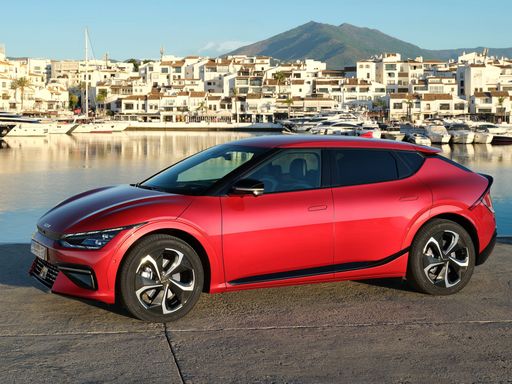
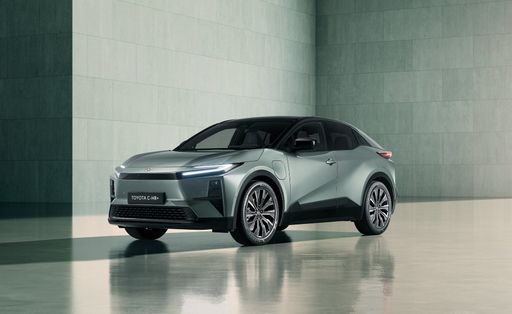
Kia EV6 vs Toyota C-HR+ comparison

Compare performance (609 HP vs 343 HP), boot space and price (38,600 £ vs 36,000 £ ) at a glance. Find out which car is the better choice for you – Kia EV6 or Toyota C-HR+?

Kia EV6 vs Toyota C-HR+: Key differences

Kia EV6

5 (3 Reviews)
rate
  • clearly more power
  • considerably quicker 0–100 km/h
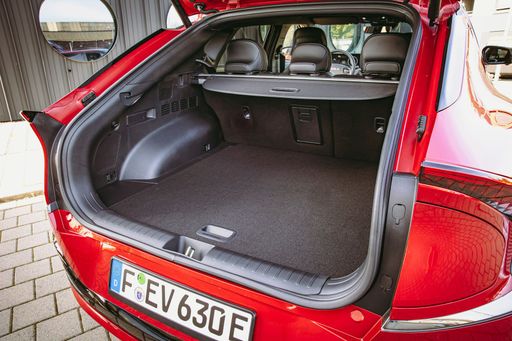
  • slightly more trunk space
details

Toyota C-HR+

  • barely cheaper
  • a bit more efficient
  • only slightly more electric range
  • barely lighter
details

All details on performance, efficiency, range and trunk space can be found in the technical comparison below – including user reviews for both models.

By Achim Sedelmaier

EV6

Kia EV6 and Toyota C-HR+ — a quick reality check

Kia EV6 and Toyota C‑HR+ arrive with very different briefs: the EV6 is a tech‑forward electric crossover built around rapid charging and rear‑seat space, while the C‑HR+ is a design‑led hybrid focused on everyday efficiency and city friendliness. In this comparison the contrast is obvious — one leans toward long‑distance capability and driving engagement, the other toward low running costs and compact usability. Expect the EV6 to feel more grown‑up on motorways and when you need overtaking shove, whereas the C‑HR+ shines on short commutes and in tight urban streets. Read on to see how those philosophical choices translate into cabin feel, comfort, usability and the everyday trade‑offs buyers actually notice in traffic and at home.
C-HR+

Driving character: sharper EV6 vs composed C‑HR+

The Kia EV6 drives with a firmer, more precise manner that rewards confident inputs and feels planted in corners, while the Toyota C‑HR+ prioritises calm, predictable responses for relaxed daily running. EV6 steering is more direct and the power delivery feels eager, which makes it more satisfying on winding roads and when you want immediate acceleration; the C‑HR+ prefers to mask aggression and trade outright pace for smoothness. In town the EV6’s width and turning circle demand more camera use and caution, whereas the C‑HR+’s compact footprint and lighter feel make it easier to thread through narrow streets. If you enjoy a dynamic, EV‑native driving experience the EV6 will appeal; if you want composed, effortless commuting the C‑HR+ will feel more forgiving.

EV6

Cabin feel and controls: modern tech vs tactile familiarity

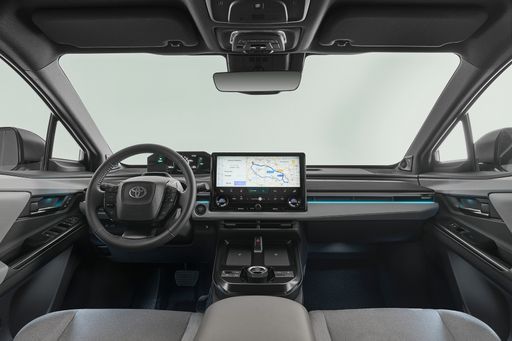
Inside, the Kia EV6 presents a futuristic atmosphere with sweeping screens and a tech‑heavy layout, whereas the Toyota C‑HR+ leans on a refined, tactile interior with clear controls and a premium touch. The EV6’s cabin feels high‑tech and roomy in the back, but some touch‑centric controls can be fiddly and demand acclimatisation; the C‑HR+ gives you solid physical buttons and an intuitive interface that’s quicker to use without hunting menus. Material quality is good in both, but the EV6 aims for a minimalist, modern aesthetic while the C‑HR+ aims for a warmer, more conventional premium feel. Buyers who value gadgetry and a spacious rear will prefer the EV6’s vibe, while those who want effortless, familiar ergonomics will favour the C‑HR+.

C-HR+

Practicality and daily usability: room versus convenience

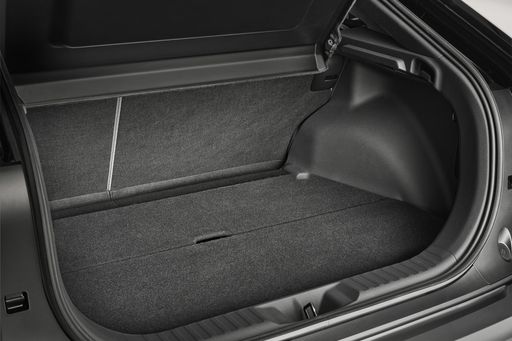
The Kia EV6 generally wins on usable rear legroom and flexible luggage options for everyday family life, making it the better choice for taller passengers and longer trips with people onboard. The Toyota C‑HR+ is easier to park and live with in dense urban areas thanks to a smaller exterior and friendlier maneuverability, but its luggage area — especially in plug‑in guise — is noticeably more compromised and has a higher loading sill. EV6 owners also get practical touches like a front storage bay on some versions, while C‑HR+ owners benefit from straightforward cabin layouts and excellent visibility forward. In short: pick the EV6 when people‑space and flexible loadability matter; pick the C‑HR+ when compactness and everyday convenience in the city are priorities.

EV6

Long trips, charging and running costs: opposite strengths

When the miles add up the Kia EV6’s rapid‑charging capability and stable motorway manners make it a better companion for long runs and highway overtakes, reducing downtime on multiday drives. The Toyota C‑HR+ answers a different question: for daily commutes and mixed use it will typically cost less to run thanks to efficient hybrid systems that can cover short trips electrically and sip fuel on longer hauls. That means the EV6 lowers travel time through fast recharges, while the C‑HR+ lowers fuel bills and often avoids public charging entirely — a clear trade‑off between travel speed and operating cost. Choose the EV6 if you prioritise time and long‑distance comfort; choose the C‑HR+ if you want minimal fuel bills and a guilt‑free urban commute.

C-HR+

Buyer fit: who should test which car next

If your weekly life includes motorway miles, taller passengers or an insistence on rapid charging, the Kia EV6 is the natural place to start because it’s built around range confidence and a more engaging drive. If you live in town, prioritise low running costs, easy parking and a stylish cabin you’ll enjoy every day, the Toyota C‑HR+ will likely feel like the smarter, more pragmatic companion. Both cars have compromises — the EV6 trades some urban agility and simple trunk ergonomics for space and speed, while the C‑HR+ trades outright room and power for efficiency and compactness — so the right choice depends on whether you value time saved on trips or money saved in daily life. The technical comparison that follows will map those trade‑offs onto charging, power, cargo and running‑cost specifics to help you make the final call.

Here’s where it gets real: The technical differences in detail

EV6

Costs and Efficiency:

Price and efficiency are key factors when choosing a car – and this is often where the real differences emerge.

Toyota C-HR+ is barely cheaper – starting at 36,000 £ , while the Kia EV6 costs 38,600 £ . That’s a price difference of around 2,571 £.

In terms of energy consumption, the Toyota C-HR+ is a bit more efficient: consuming 13.4 kWh/100km compared to 15.9 kWh/100km for the Kia EV6. That’s a difference of about 2.5 kWh/100km.

As for electric range, the Toyota C-HR+ offers only slightly more range – reaching up to 607 km, about 25 km more than the Kia EV6.

C-HR+

Engine and Performance:

Power, torque and acceleration are the classic benchmarks for car enthusiasts – and here, some clear differences start to show.

When it comes to engine power, the Kia EV6 offers clearly more power – delivering 609 HP compared to 343 HP. That’s roughly 266 HP more horsepower.

When accelerating from 0 to 100 km/h, the Kia EV6 is considerably quicker – completing the sprint in 3.5 s, while the Toyota C-HR+ takes 5.2 s. That’s about 1.7 s quicker.

There’s also a difference in torque: the Kia EV6 delivers substantially more torque with 770 Nm compared to 338 Nm. That’s about 432 Nm more.

EV6

Space and Everyday Use:

Whether family car or daily driver – which one offers more room, flexibility and comfort?

Both vehicles offer seating for 5 people.

In terms of curb weight, Toyota C-HR+ is barely lighter – 1,810 kg compared to 1,955 kg. The difference is around 145 kg.

Looking at boot space, the Kia EV6 offers slightly more boot space – 490 L compared to 416 L. That’s a difference of about 74 L.

When it comes to payload, the Toyota C-HR+ carries visibly more – 655 kg compared to 450 kg. That’s a difference of about 205 kg.

Who wins the race in the data check?

The Kia EV6 is far ahead overall in the objective data comparison.
This result only shows which model scores more points on paper – not which of the two cars feels right for you.

from £38,600
EV6

Kia EV6

  • Engine Type Electric
  • Transmission Automatic
  • Drive Type Rear-Wheel Drive, All-Wheel Drive
  • Power HP 170 - 609 HP
  • Consumption kWh/100km 15.9 - 20.9 kWh/100km
  • Electric Range 428 - 582 km
Kia EV6
Toyota C-HR+

Costs and Consumption

View detailed analysis

Engine and Performance

View detailed analysis

Dimensions and Body

View detailed analysis

Kia EV6

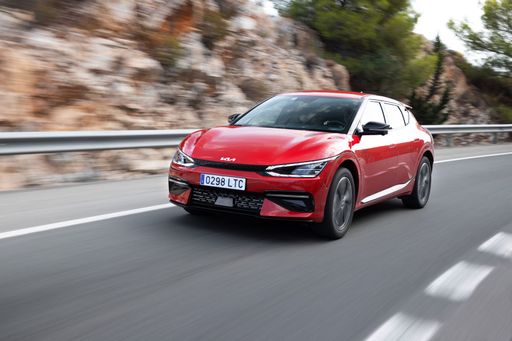
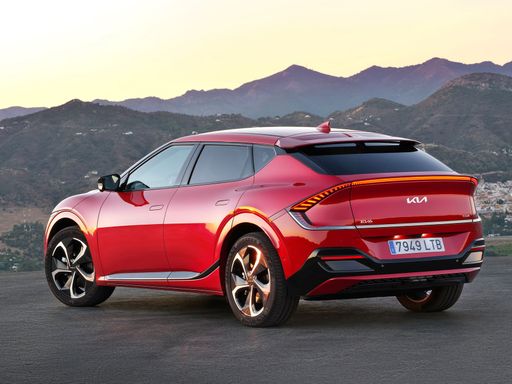
The Kia EV6 looks like it sprinted off a concept stage, its bold, futuristic lines wrapping a surprisingly spacious and grown-up cabin. On the road it delivers crisp, immediate thrust and composed handling, with enough everyday practicality and slick tech to make ditching petrol feel like an upgrade rather than a compromise.

details

Toyota C-HR+

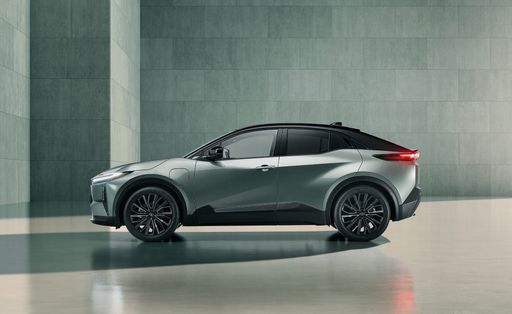
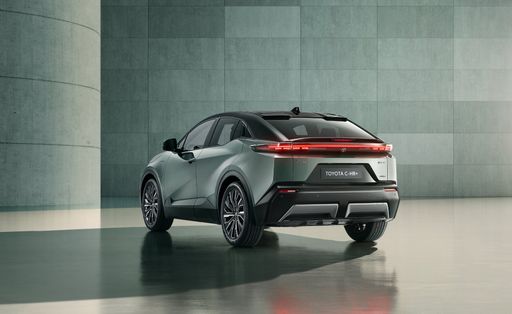
The Toyota C‑HR is a distinctive crossover that pairs bold, coupe‑like styling with a comfortable, composed ride suited to daily city and suburban driving. It appeals to buyers who value standout design, practical cabin packaging and a refined, easy‑to‑use experience rather than outright performance or rugged off‑road ability.

details
Kia EV6
Toyota C-HR+

Costs and Consumption

Price
38,600 - 60,000 £
Price
36,000 - 46,300 £
Consumption L/100km
-
Consumption L/100km
-
Consumption kWh/100km
15.9 - 20.9 kWh/100km
Consumption kWh/100km
13.4 - 15.5 kWh/100km
Electric Range
428 - 582 km
Electric Range
458 - 607 km
Battery Capacity
-
Battery Capacity
-
co2
0 g/km
co2
0 g/km
Fuel tank capacity
-
Fuel tank capacity
-

Dimensions and Body

Body Type
SUV
Body Type
SUV
Seats
5
Seats
5
Doors
-
Doors
-
Curb weight
1,955 - 2,220 kg
Curb weight
1,810 - 2,010 kg
Trunk capacity
480 - 490 L
Trunk capacity
416 L
Length
-
Length
-
Width
1,880 - 1,890 mm
Width
1,870 mm
Height
-
Height
-
Max trunk capacity
-
Max trunk capacity
-
Payload
440 - 450 kg
Payload
550 - 655 kg

Engine and Performance

Engine Type
Electric
Engine Type
Electric
Transmission
Automatic
Transmission
Automatic
Transmission Detail
Reduction Gearbox
Transmission Detail
Reduction Gearbox
Drive Type
Rear-Wheel Drive, All-Wheel Drive
Drive Type
Front-Wheel Drive, All-Wheel Drive
Power HP
170 - 609 HP
Power HP
167 - 343 HP
Acceleration 0-100km/h
3.5 - 8.7 s
Acceleration 0-100km/h
5.2 - 8.4 s
Max Speed
-
Max Speed
-
Torque
350 - 770 Nm
Torque
268 - 338 Nm
Number of Cylinders
-
Number of Cylinders
-
Power kW
125 - 448 kW
Power kW
123 - 252 kW
Engine capacity
-
Engine capacity
-

General

Model Year
2,024 - 2,025
Model Year
2026
CO2 Efficiency Class
A
CO2 Efficiency Class
A
Brand
Kia
Brand
Toyota
DriveDuel uses data analysis and artificial intelligence to evaluate vehicle data and create content. Content is regularly reviewed and improved. The displayed prices are estimates based on German list prices, adjusted to the respective country’s VAT. Country-specific registration taxes are not included. This information is not legally binding.