VS

Toyota Urban Cruiser vs Toyota C-HR+ comparison

Compare performance (184 HP vs 343 HP), boot space and price (33,400 £ vs 36,000 £ ) at a glance. Find out which car is the better choice for you – Toyota Urban Cruiser or Toyota C-HR+?

Toyota Urban Cruiser vs Toyota C-HR+: Key differences

Toyota Urban Cruiser

4 (1 Reviews)
rate
  • marginally cheaper
details

Toyota C-HR+

  • clearly more power
  • somewhat more efficient
  • markedly more electric range
  • clearly quicker 0–100 km/h
  • only slightly lighter
  • clearly more trunk space
details

By Achim Sedelmaier

Urban Cruiser

Toyota Urban Cruiser VS Toyota C-HR+: quick orientation

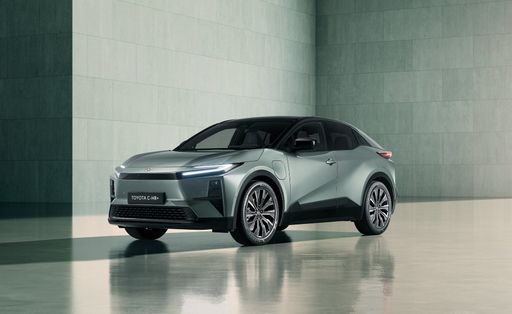
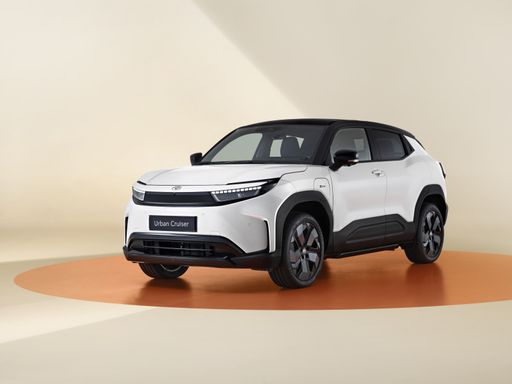
Toyota Urban Cruiser and Toyota C-HR+ arrive at the same crossover table with clearly different game plans: the Urban Cruiser aims for city agility and flexible rear-seat packaging, while the C-HR+ emphasises efficiency, refinement and a more premium cabin feeling. The Urban Cruiser feels compact and easy to live with in tight streets, whereas the C-HR+ projects a more composed, deliberate presence on open roads. Both cars carry Toyota’s safety and assistance breadth, but they prioritise different everyday compromises—one trades cargo depth for rear legroom versatility, the other trades interior space for low running costs and nicer materials. Read on to see which trade-offs matter most for your driving mix.
C-HR+

Character and driving feel

The Urban Cruiser drives like a true city specialist: light steering, a small turning circle and easy parking make the Toyota Urban Cruiser feel confidence‑inspiring in town, but the ride gets a bit fidgety and noisy when you stretch it beyond urban speeds. By contrast, the Toyota C-HR+ is the smoother, more settled companion for longer stretches; the C-HR+ rewards steady cruising with better refinement and a sense of momentum that feels less effortful. If you want sharper launch response or a more dynamic shove the C-HR+’s drivetrain gives a more eager impression, while the Urban Cruiser prizes manoeuvrability and predictability in low-speed traffic. Choose the Urban Cruiser if your days are stop‑start in the city; pick the C-HR+ if you spend more time on steady roads and value composure under load.

Comfort and long-distance behaviour

On long runs the two take different approaches: the Urban Cruiser keeps occupants comfortable for shorter commutes but lets wind and road noise intrude at motorway speeds, making long highway stints feel more tiring than they should. The C-HR+ rides with a quieter, more controlled demeanor at cruising speed and absorbs motorway rhythm better, so the Toyota C-HR+ offers a calmer cabin on longer trips. Both cars have their weak spots over poor surfaces—Urban Cruiser’s suspension can feel nervous over sharp edges, C-HR+ can feel firmer on bigger wheels—but the day‑to‑day impression is clear: the Urban Cruiser is a city‑first cruiser, the C-HR+ a more relaxed highway partner. If you regularly do long A‑road or motorway journeys, the C-HR+ will reduce fatigue; if most miles are urban hops, the Urban Cruiser will be easier to live with.

Practicality, packaging and family usability

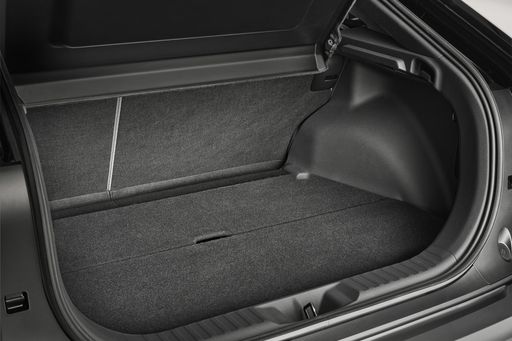
Practical differences matter more than badges here: the Toyota Urban Cruiser gives a genuine advantage with its sliding rear bench and clever 40:20:40 split, so rear legroom and the ability to balance passengers versus luggage are real fortes for the Urban Cruiser. The Toyota C-HR+ pushes design and drivetrain tech forward, but the C-HR+—especially in its electrified form—ends up with a compromised boot shape, high loading lip and less forgiving luggage space for family kit. Both cars will carry five, but fitting a bulky pushchair or a week’s holiday luggage is easier to manage in the Urban Cruiser when you prioritise rear-seat travel over boot depth. Families who need flexible rear legroom will prefer the Urban Cruiser; buyers who can live with tighter cargo space for the sake of efficiency and style will accept the C-HR+’s trade-offs.

Cabin feel, controls and perceived quality

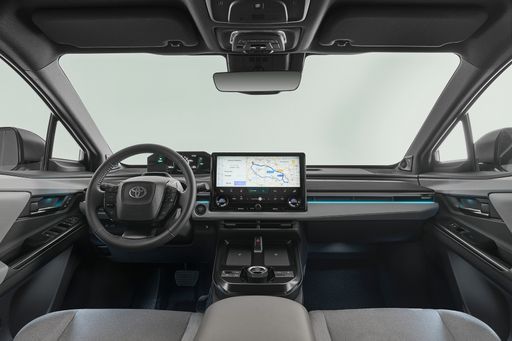
The Toyota C-HR+ clearly nudges ahead on interior polish: its materials, touchscreen responsiveness and a layout with real tactile climate controls give the C-HR+ a more premium, user-friendly feel. The Toyota Urban Cruiser feels more utilitarian inside—harder plastics, a more basic infotainment response and simpler switchgear—but it scores with practical touches like lots of physical buttons and useful app‑centric features. Both cabins are solidly built, yet the Toyota C-HR+ reads as the more refined, confidence‑inspiring environment for buyers who value finish and infotainment speed, while the Urban Cruiser will appeal to those who prefer straightforward, durable surfaces and well‑placed everyday controls. If perceived quality and a polished interface matter, the C-HR+ is the better match; if you prefer no‑nonsense ergonomics and functional practicality, the Urban Cruiser wins the day.

Who should choose which car — buyer fit and trade-offs

If your life is dominated by tight city streets, school runs and the need to rearrange rear seats around passengers and cargo, the Toyota Urban Cruiser makes a compelling, pragmatic case with its compact footprint and flexible bench. If your priority is lower running cost, cabin refinement and a calmer highway experience—plus a car that stands out stylistically—the Toyota C-HR+ fits better despite a smaller, fiddlier boot and tighter rear headroom. Both models share Toyota’s strengths in safety and reliability, so the decision comes down to whether you value urban agility and interior flexibility (Urban Cruiser) or efficiency, perceived quality and long‑distance composure (C-HR+). The technical comparison that follows will unpack charging, range, power delivery and trunk measurements so you can line those practical trade-offs up against the numbers.

Here’s where it gets real: The technical differences in detail

Urban Cruiser

Costs and Efficiency:

Price and efficiency are often the first things buyers look at. Here it becomes clear which model has the long-term edge – whether at the pump, the plug, or in purchase price.

Toyota Urban Cruiser is marginally cheaper – starting at 33,400 £ , while the Toyota C-HR+ costs 36,000 £ . That’s a price difference of around 2,571 £.

In terms of energy consumption, the Toyota C-HR+ is somewhat more efficient: consuming 13.4 kWh/100km compared to 15.1 kWh/100km for the Toyota Urban Cruiser. That’s a difference of about 1.7 kWh/100km.

As for electric range, the Toyota C-HR+ offers markedly more range – reaching up to 607 km, about 181 km more than the Toyota Urban Cruiser.

C-HR+

Engine and Performance:

Power, torque and acceleration say a lot about how a car feels on the road. This is where you see which model delivers more driving dynamics.

When it comes to engine power, the Toyota C-HR+ offers clearly more power – delivering 343 HP compared to 184 HP. That’s roughly 159 HP more horsepower.

When accelerating from 0 to 100 km/h, the Toyota C-HR+ is clearly quicker – completing the sprint in 5.2 s, while the Toyota Urban Cruiser takes 7.4 s. That’s about 2.2 s quicker.

There’s also a difference in torque: the Toyota C-HR+ delivers only slightly more torque with 338 Nm compared to 307 Nm. That’s about 31 Nm more.

Space and Everyday Use:

Whether family car or daily driver – which one offers more room, flexibility and comfort?

Both vehicles offer seating for 5 people.

In terms of curb weight, Toyota C-HR+ is only slightly lighter – 1,810 kg compared to 1,839 kg. The difference is around 29 kg.

Looking at boot space, the Toyota C-HR+ offers clearly more boot space – 416 L compared to 310 L. That’s a difference of about 106 L.

When it comes to payload, the Toyota C-HR+ carries clearly more – 655 kg compared to 421 kg. That’s a difference of about 234 kg.

Who wins the race in the data check?

The Toyota C-HR+ is clearly superior overall in the objective data comparison.
This result only shows which model scores more points on paper – not which of the two cars feels right for you.

from £36,000
C-HR+

Toyota C-HR+

  • Engine Type : Electric
  • Transmission : Automatic
  • Drive Type : Front-Wheel Drive, All-Wheel Drive
  • Power HP : 167 - 343 HP
  • Consumption kWh/100km : 13.4 - 15.5 kWh/100km
  • Electric Range : 458 - 607 km
Toyota Urban Cruiser
Toyota C-HR+

Costs and Consumption

View detailed analysis

Engine and Performance

View detailed analysis

Dimensions and Body

View detailed analysis

Toyota Urban Cruiser

The Toyota Urban Cruiser is a compact SUV that offers a blend of style and practicality, making it well-suited for urban living. It captures attention with its bold design, while providing a high driving position that enhances visibility and control on city roads. Inside, the Urban Cruiser offers comfortable seating and a range of features that cater to both driver and passengers, emphasizing convenience and everyday usability.

details

Toyota C-HR+

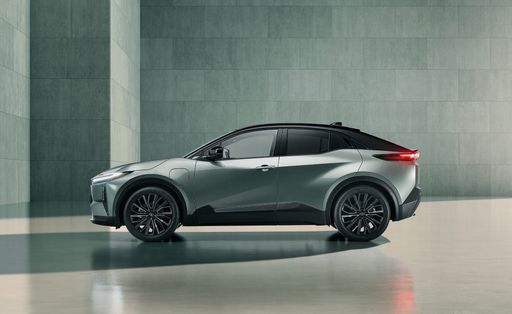
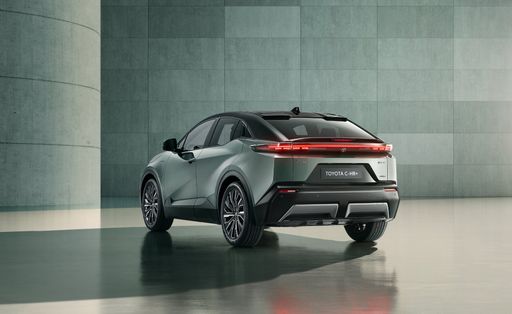
The Toyota C-HR+ mixes sharp, coupe-like styling with comfortable, surprisingly practical packaging, making a bold statement around town and on the weekend run. It’s aimed at drivers who value standout looks and fuss-free ownership over sports-car thrills, so if you want personality and reliability in one tidy package, book a test drive.

details
Toyota Urban Cruiser
Toyota C-HR+

Costs and Consumption

Price
33,400 - 38,600 £
Price
36,000 - 46,300 £
Consumption L/100km
-
Consumption L/100km
-
Consumption kWh/100km
15.1 - 16.6 kWh/100km
Consumption kWh/100km
13.4 - 15.5 kWh/100km
Electric Range
395 - 426 km
Electric Range
458 - 607 km
Battery Capacity
-
Battery Capacity
-
co2
0 g/km
co2
0 g/km
Fuel tank capacity
-
Fuel tank capacity
-

Dimensions and Body

Body Type
SUV
Body Type
SUV
Seats
5
Seats
5
Doors
-
Doors
-
Curb weight
1,839 - 1,939 kg
Curb weight
1,810 - 2,010 kg
Trunk capacity
306 - 310 L
Trunk capacity
416 L
Length
-
Length
-
Width
1,800 mm
Width
1,870 mm
Height
-
Height
-
Max trunk capacity
-
Max trunk capacity
-
Payload
411 - 421 kg
Payload
550 - 655 kg

Engine and Performance

Engine Type
Electric
Engine Type
Electric
Transmission
Automatic
Transmission
Automatic
Transmission Detail
Reduction Gearbox
Transmission Detail
Reduction Gearbox
Drive Type
Front-Wheel Drive, All-Wheel Drive
Drive Type
Front-Wheel Drive, All-Wheel Drive
Power HP
174 - 184 HP
Power HP
167 - 343 HP
Acceleration 0-100km/h
7.4 - 8.7 s
Acceleration 0-100km/h
5.2 - 8.4 s
Max Speed
-
Max Speed
-
Torque
193 - 307 Nm
Torque
268 - 338 Nm
Number of Cylinders
-
Number of Cylinders
-
Power kW
128 - 135 kW
Power kW
123 - 252 kW
Engine capacity
-
Engine capacity
-

General

Model Year
2026
Model Year
2026
CO2 Efficiency Class
A
CO2 Efficiency Class
A
Brand
Toyota
Brand
Toyota
DriveDuel uses data analysis and artificial intelligence to evaluate vehicle data and create content. Content is regularly reviewed and improved. The displayed prices are estimates based on German list prices, adjusted to the respective country’s VAT. Country-specific registration taxes are not included. This information is not legally binding.