VS

Ford Explorer EV vs Toyota C-HR+ comparison

Compare performance (340 HP vs 343 HP), boot space and price (34,200 £ vs 36,000 £ ) at a glance. Find out which car is the better choice for you – Ford Explorer EV or Toyota C-HR+?

Ford Explorer EV vs Toyota C-HR+: Key differences

Ford Explorer EV

4.8 (4 Reviews)
rate
  • marginally cheaper
  • a bit more trunk space
details

Toyota C-HR+

  • only slightly more power
  • barely more efficient
  • marginally more electric range
  • marginally quicker 0–100 km/h
  • a bit lighter
details

All details on performance, efficiency, range and trunk space can be found in the technical comparison below – including user reviews for both models.

By Achim Sedelmaier

Explorer EV

Head-to-head: a quick verdict for shoppers

If you're weighing the Ford Explorer EV VS Toyota C-HR+, the choice comes down to two different ideas of what an SUV should be rather than one being objectively better. The Ford Explorer EV presents itself as a roomier, more driver‑focused EV with strong highway composure and clever stowage, while the Toyota C‑HR+ answers with striking design, frugal hybrid technology and a city‑friendly footprint. The Explorer EV feels like a sensible family mover that still wants to be driven, whereas the C‑HR+ wants to be seen and to save you fuel on everyday runs. Read on to understand how those personalities play out in daily life and which compromises matter most to you.
C-HR+

Personality on the road: involvement vs. refinement

The Ford Explorer EV leans toward a taut, engaged driving character — steering that talks back and a chassis that prefers control over float, so you feel connected on twisty B‑roads and secure on motorways. The Toyota C‑HR+ trades some of that immediacy for a calmer, more composed demeanour in town; it’s designed to glide through stop‑start traffic and reward efficient driving rather than corner carving. When you ask the Explorer EV for pace it responds with authority, while the C‑HR+ keeps its cool until you demand a lot, at which point drivetrain noise becomes more noticeable. Both cars are safe and predictable, but the Ford is for drivers who want a bit more feel and the Toyota for buyers who prioritise smooth, economical urban commuting.

Explorer EV

Comfort and long‑distance manners

On long runs the Ford Explorer EV impresses with quiet cabin refinement and generous rear space that makes motorway miles less tiring for passengers, though its firmer suspension can transmit sharper impacts over poor surfaces. The Toyota C‑HR+ is pleasantly relaxed at steady speeds and offers a composed ride that suits regular commutes and motorway cruising, but taller passengers will notice the tighter rear headroom compared with the Ford Explorer EV. Seats and ergonomics feel tailored differently: the Explorer EV's layout supports a driver‑centric posture, while the C‑HR+ prioritises accessible controls and a cosy, quality‑feeling cockpit. If epic motorway serenity and rear‑seat comfort top your list, the Explorer EV leans in that direction; if you prize efficient cruising and a gentler, city‑biased ride, the C‑HR+ is the natural choice.

C-HR+

Everyday practicality: pockets, trunks and doorways

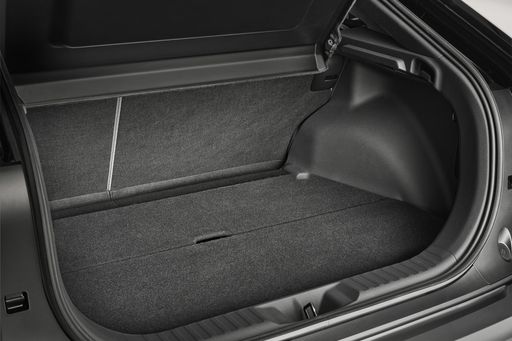
The Ford Explorer EV wins on clever interior storage and a genuinely usable rear space, with the kind of cubbies and compartments that make family life easier, though its boot isn’t the class champion some expect and there’s no frunk to sneak in extra bits. The Toyota C‑HR+ shows off with compact external dimensions that make parking and manoeuvring simpler in tight urban environments, but its PHEV packaging eats into luggage room and the load sill can be awkward for bulky items. Child seats and luggage are easier to juggle in the Explorer EV thanks to its more forgiving rear bench, while daily city tasks — short hops, easy entry, and brisk fuel economy — are where the C‑HR+ shines. Both cars are practical in different ways: Ford prioritises usable interior volume and storage cleverness, Toyota prioritises urban convenience and efficiency.

Explorer EV

Cabin vibe and how you interact with it

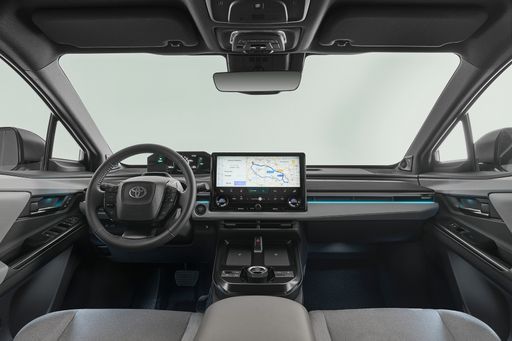
The Toyota C‑HR+ surprises with a noticeably upscale interior feel and a cockpit that favours physical buttons for climate and essential functions, making it instantly user‑friendly for drivers who want tactile control. The Ford Explorer EV opts for a more modern, streamlined interface with large screens and some touch‑focused controls, but its haptic sliders and fewer direct buttons can frustrate users who prefer quick, physical feedback. Material quality reads well in both cabins, though the C‑HR+ aims more for a premium impression while the Explorer EV emphasizes practicality and storage ingenuity. If you care about interface simplicity and perceived luxury, the C‑HR+ nudges ahead; if you value clever stowage and a driver‑oriented layout, the Explorer EV has the edge.

C-HR+

Which buyer should pick which car?

Choose the Ford Explorer EV if you need a family‑minded electric SUV that balances engaging driving with motorway calm, generous rear space and thoughtful everyday storage — ideal for active families and commuters who cover longer distances and want a car that feels planted. Opt for the Toyota C‑HR+ if you live and commute in the city, crave bold styling, value low running costs and prefer a cockpit with straightforward physical controls — perfect for design‑minded singles or couples who prioritise efficiency over luggage room. Both the Ford Explorer EV and Toyota C‑HR+ bring strong safety and assistance suites, so your final call should hinge on whether you prefer the Explorer EV’s space and driving poise or the C‑HR+’s economy and urban agility. Below you'll find the technical comparison to help match those practical trade‑offs to the numbers.

Here’s where it gets real: The technical differences in detail

Explorer EV

Costs and Efficiency:

Price and efficiency are key factors when choosing a car – and this is often where the real differences emerge.

Ford Explorer EV is marginally cheaper – starting at 34,200 £ , while the Toyota C-HR+ costs 36,000 £ . That’s a price difference of around 1,791 £.

In terms of energy consumption, the Toyota C-HR+ is barely more efficient: consuming 13.4 kWh/100km compared to 14.6 kWh/100km for the Ford Explorer EV. That’s a difference of about 1.2 kWh/100km.

As for electric range, the Toyota C-HR+ offers marginally more range – reaching up to 607 km, about 5 km more than the Ford Explorer EV.

C-HR+

Engine and Performance:

Power, torque and acceleration are the classic benchmarks for car enthusiasts – and here, some clear differences start to show.

When it comes to engine power, the Toyota C-HR+ offers only slightly more power – delivering 343 HP compared to 340 HP. That’s roughly 3 HP more horsepower.

When accelerating from 0 to 100 km/h, the Toyota C-HR+ is marginally quicker – completing the sprint in 5.2 s, while the Ford Explorer EV takes 5.3 s. That’s about 0.1 s quicker.

There’s also a difference in torque: the Ford Explorer EV delivers clearly more torque with 679 Nm compared to 338 Nm. That’s about 341 Nm more.

Explorer EV

Space and Everyday Use:

Beyond pure performance, interior space and usability matter most in daily life. This is where you see which car is more practical and versatile.

Both vehicles offer seating for 5 people.

In terms of curb weight, Toyota C-HR+ is a bit lighter – 1,810 kg compared to 1,996 kg. The difference is around 186 kg.

Looking at boot space, the Ford Explorer EV offers a bit more boot space – 472 L compared to 416 L. That’s a difference of about 56 L.

When it comes to payload, the Toyota C-HR+ carries somewhat more – 655 kg compared to 585 kg. That’s a difference of about 70 kg.

Who wins the race in the data check?

The Ford Explorer EV shows a few small advantages in the objective data comparison.
This result only shows which model scores more points on paper – not which of the two cars feels right for you.

from £34,200
Explorer EV

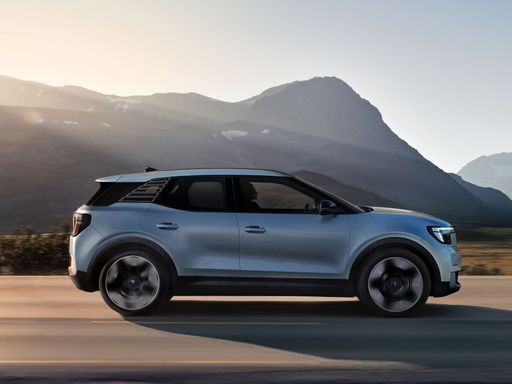
Ford Explorer EV

  • Engine Type Electric
  • Transmission Automatic
  • Drive Type Rear-Wheel Drive, All-Wheel Drive
  • Power HP 190 - 340 HP
  • Consumption kWh/100km 14.6 - 17.3 kWh/100km
  • Electric Range 417 - 602 km
Ford Explorer EV
Toyota C-HR+

Costs and Consumption

View detailed analysis

Engine and Performance

View detailed analysis

Dimensions and Body

View detailed analysis

Ford Explorer EV

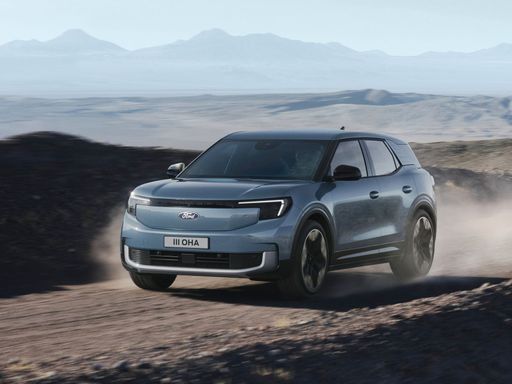
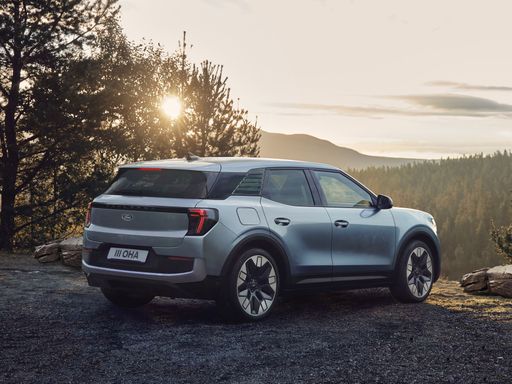
The Explorer EV brings the familiar presence and practicality of an Explorer into the electric age, offering roomy comfort and modern tech for everyday life and family trips. It feels composed on the road and serves as a straightforward, user-friendly alternative to conventional gas-powered SUVs.

details

Toyota C-HR+

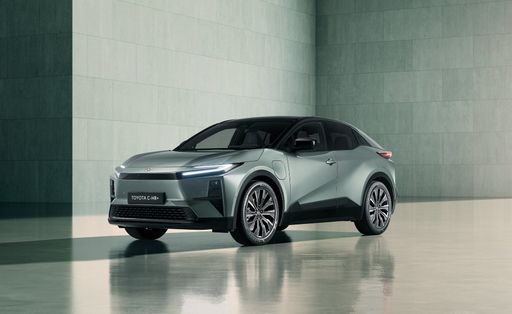
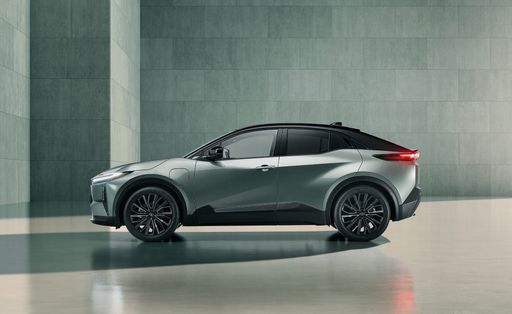
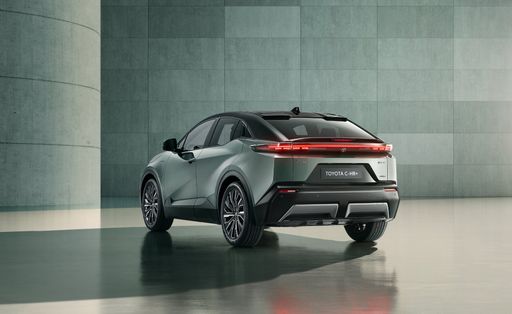
The Toyota C‑HR is a distinctive crossover that pairs bold, coupe‑like styling with a comfortable, composed ride suited to daily city and suburban driving. It appeals to buyers who value standout design, practical cabin packaging and a refined, easy‑to‑use experience rather than outright performance or rugged off‑road ability.

details
Ford Explorer EV
Toyota C-HR+

Costs and Consumption

Price
34,200 - 49,600 £
Price
36,000 - 46,300 £
Consumption L/100km
-
Consumption L/100km
-
Consumption kWh/100km
14.6 - 17.3 kWh/100km
Consumption kWh/100km
13.4 - 15.5 kWh/100km
Electric Range
417 - 602 km
Electric Range
458 - 607 km
Battery Capacity
-
Battery Capacity
-
co2
0 g/km
co2
0 g/km
Fuel tank capacity
-
Fuel tank capacity
-

Dimensions and Body

Body Type
SUV
Body Type
SUV
Seats
5
Seats
5
Doors
-
Doors
-
Curb weight
1,996 - 2,209 kg
Curb weight
1,810 - 2,010 kg
Trunk capacity
472 L
Trunk capacity
416 L
Length
-
Length
-
Width
1,872 mm
Width
1,870 mm
Height
-
Height
-
Max trunk capacity
-
Max trunk capacity
-
Payload
531 - 585 kg
Payload
550 - 655 kg

Engine and Performance

Engine Type
Electric
Engine Type
Electric
Transmission
Automatic
Transmission
Automatic
Transmission Detail
Reduction Gearbox
Transmission Detail
Reduction Gearbox
Drive Type
Rear-Wheel Drive, All-Wheel Drive
Drive Type
Front-Wheel Drive, All-Wheel Drive
Power HP
190 - 340 HP
Power HP
167 - 343 HP
Acceleration 0-100km/h
5.3 - 8 s
Acceleration 0-100km/h
5.2 - 8.4 s
Max Speed
-
Max Speed
-
Torque
350 - 679 Nm
Torque
268 - 338 Nm
Number of Cylinders
-
Number of Cylinders
-
Power kW
140 - 250 kW
Power kW
123 - 252 kW
Engine capacity
-
Engine capacity
-

General

Model Year
2026
Model Year
2026
CO2 Efficiency Class
A
CO2 Efficiency Class
A
Brand
Ford
Brand
Toyota
DriveDuel uses data analysis and artificial intelligence to evaluate vehicle data and create content. Content is regularly reviewed and improved. The displayed prices are estimates based on German list prices, adjusted to the respective country’s VAT. Country-specific registration taxes are not included. This information is not legally binding.