VS

Ford Capri vs Ford Explorer EV comparison

Compare performance (340 HP vs 340 HP), boot space and price (36,300 £ vs 34,200 £ ) at a glance. Find out which car is the better choice for you – Ford Capri or Ford Explorer EV?

Ford Capri vs Ford Explorer EV: Key differences

Ford Capri

4.8 (4 Reviews)
rate
  • very slightly more efficient
  • very slightly more electric range
  • moderately more trunk space
details

Ford Explorer EV

4.9 (3 Reviews)
rate
  • barely cheaper
  • marginally lighter
details

All details on performance, efficiency, range and trunk space can be found in the technical comparison below – including user reviews for both models.

By Achim Sedelmaier

Capri

Ford Capri vs Ford Explorer EV: which electric Ford fits your life?

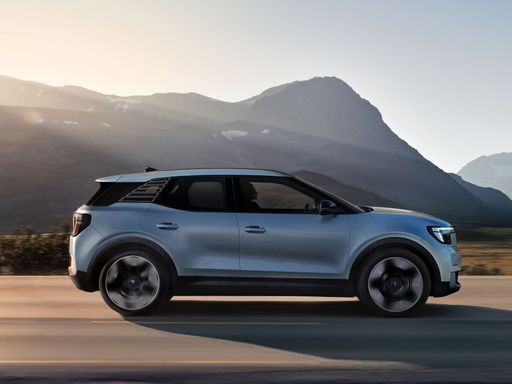
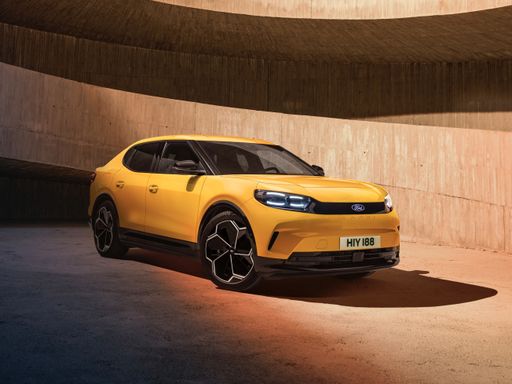
The Ford Capri and Ford Explorer EV serve similar needs in very different ways, and this Ford Capri VS Ford Explorer EV face‑off makes those differences clear. The Ford Capri leans into a sleeker SUV‑coupé vibe with a calmer, long‑legged feel and a bigger focus on luggage. The Ford Explorer EV plays the family SUV card harder, with a generous rear bench, clever cabin storage and a driver’s edge that keeps it feeling alert. Price tilts toward the Explorer EV, while the Capri trades some rear‑seat headroom for style and boot space. Your choice comes down to whether you value cargo and cruising serenity or rear‑seat room and sharper responses.
Explorer EV

Driving character: serene vs engaged

The Ford Capri feels composed and easygoing, with light steering and a secure, unflustered temperament that suits everyday driving and steady motorway work. The Ford Explorer EV is the more connected drive, with crisper steering and better body control that makes it feel keener in bends without becoming twitchy. If you expect sports‑car playfulness, neither delivers that, but the Explorer EV brings a touch more involvement. Conversely, the Capri’s relaxed setup will appeal if you prefer effortlessness to feedback. In short, Capri for calm confidence, Explorer EV for a bit more driver input.

Capri

Long trips: efficiency or shorter stops?

The Ford Capri tends to sip less energy in real use, so it stretches stints between chargers and lopes along quietly at speed. The Ford Explorer EV counters with stronger assistance features and a quieter cabin at a cruise, taking the sting out of big days behind the wheel. When you do stop, the Explorer EV’s charging strategy is typically quicker, especially in versions tuned for fast charging, trimming break times on busy routes. The Capri’s charging is more conservative on some versions, so its advantage comes from needing fewer stops rather than shorter ones. Frequent long‑distance drivers who value time‑efficient pit stops will lean Explorer EV; range‑minded cruisers may prefer the Capri.

Explorer EV

Space and practicality: boot-first or people-first

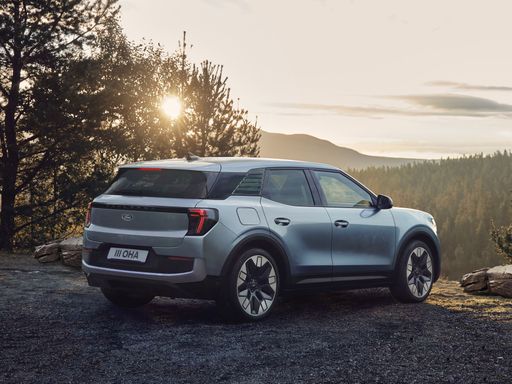
The Ford Capri gives you a noticeably larger, squarer boot that swallows family luggage with less Tetris, and its tailgate usability is a daily win. The flip side is the Capri’s rear bench sits a bit low and the roofline nibbles at headroom for taller passengers. The Ford Explorer EV flips that equation: the back seat is airier and more comfortable for bigger adults, and everyday storage is excellent thanks to the MegaConsole and the stash behind the sliding screen. Its luggage bay is fine for the weekly grind but offers less outright capacity than the Capri when you’re packing for a holiday. So, Capri if baggage dominates, Explorer EV if people space does.

Cabin feel and controls: neat tricks, mixed ergonomics

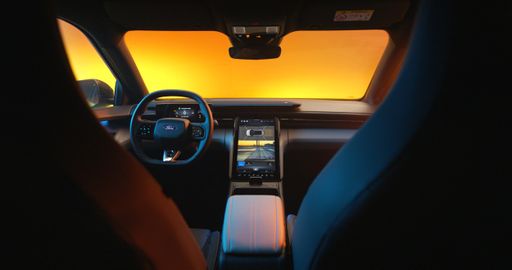
The Ford Capri’s tall portrait screen is easy to read and hides a handy locker, and the overall layout feels straightforward once you’ve lived with the menus. However, limited regen choices and some buried settings mean it’s not the most tweakable cabin on the move, and forward visibility is hampered by a high cowl. The Ford Explorer EV impresses with stronger driver assistance and similarly clever storage solutions, but its haptic wheel buttons and touch sliders can frustrate. Perceived quality sits in the same ballpark, yet differs in tone: the Capri feels functional and no‑nonsense, the Explorer EV a touch more modern but still robust. Choose the interface compromises you dislike least, because both have them.

City manners and buyer fit: choose by your everyday

In town, the Ford Capri’s light steering and tidy turning circle make it easy to slot into gaps, though limited one‑pedal feel and that high dashboard dent urban ease. The Ford Explorer EV is simple to place thanks to clear sightlines and precise steering, but its overall width and firmer reaction to speed humps ask for a gentler touch in tight streets. Value tips to the Explorer EV, while the Capri makes its case with a bigger boot and slightly thriftier day‑to‑day running. Put simply: the Capri suits style‑minded drivers who carry more luggage and like relaxed progress, while the Explorer EV fits families who want a roomier rear row, stronger assistance and snappier charging. From here, the technical comparison will help confirm which set of trade‑offs matches your priorities.

Here’s where it gets real: The technical differences in detail

Capri

Costs and Efficiency:

Looking at overall running costs, both models reveal some interesting differences in everyday economy.

Ford Explorer EV is barely cheaper – starting at 34,200 £ , while the Ford Capri costs 36,300 £ . That’s a price difference of around 2,142 £.

In terms of energy consumption, the Ford Capri is very slightly more efficient: consuming 13.8 kWh/100km compared to 14.6 kWh/100km for the Ford Explorer EV. That’s a difference of about 0.8 kWh/100km.

As for electric range, the Ford Capri offers very slightly more range – reaching up to 627 km, about 25 km more than the Ford Explorer EV.

Explorer EV

Engine and Performance:

Under the bonnet, it becomes clear which model is tuned for sportiness and which one takes the lead when you hit the accelerator.

Both models deliver identical power – 340 HP each.

Both models accelerate almost equally fast – 5.3 s from 0 to 100 km/h.

Both models offer the same torque – 679 Nm.

Capri

Space and Everyday Use:

Cabin size, boot volume and payload all play a role in everyday practicality. Here, comfort and flexibility make the difference.

Both vehicles offer seating for 5 people.

In terms of curb weight, Ford Explorer EV is marginally lighter – 1,996 kg compared to 2,001 kg. The difference is around 5 kg.

Looking at boot space, the Ford Capri offers moderately more boot space – 572 L compared to 472 L. That’s a difference of about 100 L.

When it comes to payload, the Ford Capri carries barely more – 587 kg compared to 585 kg. That’s a difference of about 2 kg.

Who wins the race in the data check?

The Ford Capri comes out modestly ahead in the objective data comparison.
This result only shows which model scores more points on paper – not which of the two cars feels right for you.

from £36,300
Capri

Ford Capri

  • Engine Type : Electric
  • Transmission : Automatic
  • Drive Type : Rear-Wheel Drive, All-Wheel Drive
  • Power HP : 190 - 340 HP
  • Consumption kWh/100km : 13.8 - 16.5 kWh/100km
  • Electric Range : 439 - 627 km
Ford Capri
Ford Explorer EV

Costs and Consumption

View detailed analysis

Engine and Performance

View detailed analysis

Dimensions and Body

View detailed analysis

Ford Capri

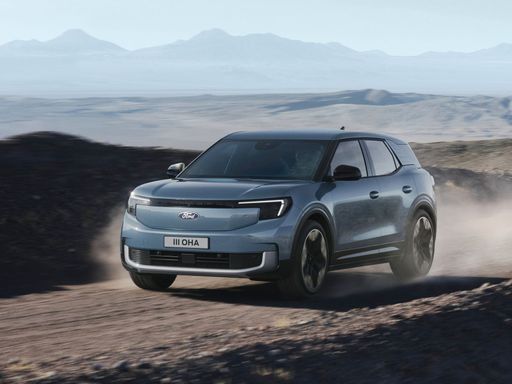
The Ford Capri turned the family car into something cheekily sporty, with a long, rakish profile that still promises fun at a glance. Today it lives on as a lovable classic — easy to tinker with, enjoyable to drive and guaranteed to raise smiles at any meet.

details

Ford Explorer EV

The Explorer EV brings the familiar presence and practicality of an Explorer into the electric age, offering roomy comfort and modern tech for everyday life and family trips. It feels composed on the road and serves as a straightforward, user-friendly alternative to conventional gas-powered SUVs.

details
Ford Capri
Ford Explorer EV

Costs and Consumption

Price
36,300 - 51,800 £
Price
34,200 - 49,600 £
Consumption L/100km
-
Consumption L/100km
-
Consumption kWh/100km
13.8 - 16.5 kWh/100km
Consumption kWh/100km
14.6 - 17.3 kWh/100km
Electric Range
439 - 627 km
Electric Range
417 - 602 km
Battery Capacity
-
Battery Capacity
-
co2
0 g/km
co2
0 g/km
Fuel tank capacity
-
Fuel tank capacity
-

Dimensions and Body

Body Type
SUV
Body Type
SUV
Seats
5
Seats
5
Doors
-
Doors
-
Curb weight
2,001 - 2,206 kg
Curb weight
1,996 - 2,209 kg
Trunk capacity
572 L
Trunk capacity
472 L
Length
-
Length
-
Width
1,872 mm
Width
1,872 mm
Height
-
Height
-
Max trunk capacity
-
Max trunk capacity
-
Payload
539 - 587 kg
Payload
531 - 585 kg

Engine and Performance

Engine Type
Electric
Engine Type
Electric
Transmission
Automatic
Transmission
Automatic
Transmission Detail
Reduction Gearbox
Transmission Detail
Reduction Gearbox
Drive Type
Rear-Wheel Drive, All-Wheel Drive
Drive Type
Rear-Wheel Drive, All-Wheel Drive
Power HP
190 - 340 HP
Power HP
190 - 340 HP
Acceleration 0-100km/h
5.3 - 8 s
Acceleration 0-100km/h
5.3 - 8 s
Max Speed
-
Max Speed
-
Torque
350 - 679 Nm
Torque
350 - 679 Nm
Number of Cylinders
-
Number of Cylinders
-
Power kW
140 - 250 kW
Power kW
140 - 250 kW
Engine capacity
-
Engine capacity
-

General

Model Year
2026
Model Year
2026
CO2 Efficiency Class
A
CO2 Efficiency Class
A
Brand
Ford
Brand
Ford
DriveDuel uses data analysis and artificial intelligence to evaluate vehicle data and create content. Content is regularly reviewed and improved. The displayed prices are estimates based on German list prices, adjusted to the respective country’s VAT. Country-specific registration taxes are not included. This information is not legally binding.