@ Ford Motor Company / Ford Media Center
VS

Ford Explorer EV vs Kia EV5 - Differences and prices compared

Compare performance (340 HP vs 218 HP), boot space and price (34200 £ vs 39400 £) at a glance. Find out which car is the better choice for you – Ford Explorer EV or Kia EV5?

Ford Explorer EV

5 (2 Reviews)
rate

Kia EV5

You can find all user reviews further down on this page.

Explorer EV @ Ford Motor Company / Ford Media Center

Street Stance and First Glance

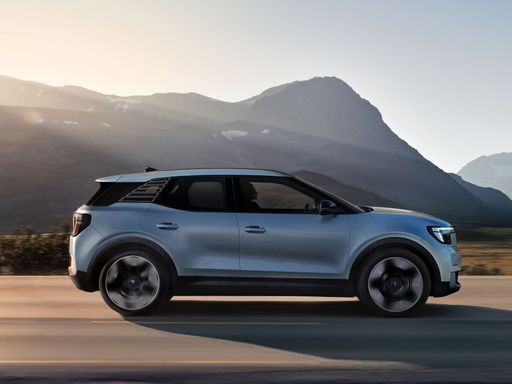
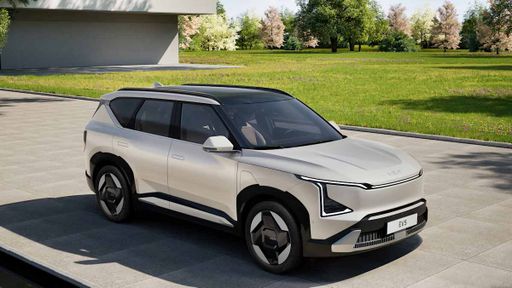
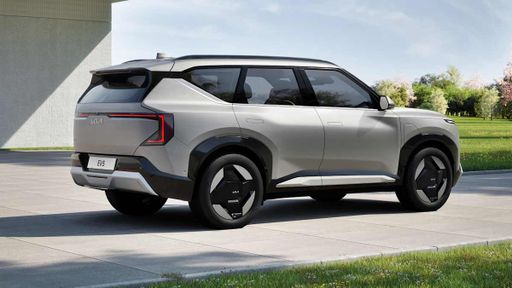
The bold, upright presence of the Ford Explorer EV walks into a room like it owns a corner office, while the Kia EV5 plays the role of the understated style star with sharper lines and a more urban-friendly silhouette. Both turn heads for different reasons: one for stature and the other for contemporary flair, so your choice starts with how you want to be seen at the school run or the city café. In short, one makes a statement, the other makes a fashion choice with practical intent.
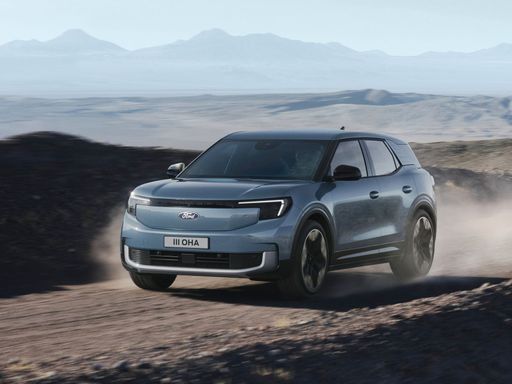
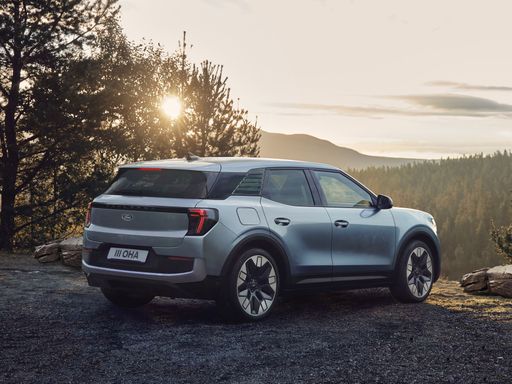
Explorer EV @ Ford Motor Company / Ford Media Center

Behind the Wheel

On the move, the Explorer feels like someone tuned its character toward confident shove and a purposeful sense of momentum, whereas the EV5 leans into composure and predictability, rewarding smooth inputs and calm progress through town. Steering and suspension tune give each a distinct personality — one is eager and assertive, the other more composed and forgiving — so drivers who prefer drama will lean one way and those after mellow efficiency will head the other. Both are civilized enough for daily commuting, but they reward different styles of driving.

Explorer EV @ Ford Motor Company / Ford Media Center

Cabin Comfort and Daily Usability

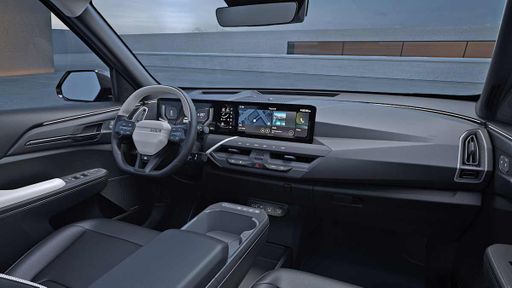
Step inside and you notice differing philosophies: the Ford prioritizes a driver-centric layout with tactile switches and a roomy feel, while the Kia emphasises modern minimalism and a cozier, well-finished environment. Materials and ergonomics are competitive on both sides, but the feel you prefer will depend on whether you like a more rugged, practical cabin or a slick, contemporary one. Controls are straightforward in each, though the user who values a simple, intuitive setup may find the EV5 slightly easier to live with day after day.

Practicality When It Matters

For family life and weekend chores the two offer sensible solutions but with different emphases: one leans toward a more utilitarian, load-it-and-go mindset while the other makes packaging feel clever and versatile for luggage and everyday items. Rear-seat comfort and the sense of space will suit long stints in either, yet those who regularly carry bulky gear might appreciate the more accommodating layout of one, whereas urban families who prize tidy packaging and flexible storage will warm to the other. Both make sensible daily companions; the deciding factor is how you use the space most often.

Ownership and Everyday Costs

Value is about more than the sticker — it’s about how ownership feels week to week, from charging habits to perceived running costs and the breadth of wet-weather or winter comfort equipment. One model aims to deliver a hard-nosed proposition that’s easy to live with, while the other leans on a slightly more premium feel and refined ownership experience. Consider which balance suits your lifestyle: budget-minded pragmatists or buyers who want a touch more polish for their daily routine.

Who Will It Suit?

Commuters who prioritize a composed, efficient city car will likely gravitate toward the model that rewards smooth, economical driving and city-friendly packaging, whereas buyers after expressive road manners and a more robust presence will prefer the option that feels punchier and more assertive on open roads. Families who need flexible load options and easy usability will find virtues in both, depending on whether they lean toward cargo volume or cabin ergonomics. In short, profile your life first — commute, cargo, or curb appeal — and the choice will become much clearer.

Turn the Page for the Verdict

We’ve unpacked how character, comfort and practicality differ between these two contenders; next, we’ll bring together the final verdict. Keep reading — the DriveDuel Champion will be revealed afterwards.

Here’s where it gets real: The technical differences in detail

Costs and Efficiency:

Price and efficiency are key factors when choosing a car – and this is often where the real differences emerge.

Ford Explorer EV has a to a small extent advantage in terms of price – it starts at 34200 £, while the Kia EV5 costs 39400 £. That’s a price difference of around 5220 £.

In terms of energy consumption, the advantage goes to the Ford Explorer EV: with 14.50 kWh per 100 km, it’s to a small extent more efficient than the Kia EV5 with 16.90 kWh. That’s a difference of about 2.40 kWh.

As for range, the Ford Explorer EV performs a bit better – achieving up to 602 km, about 72 km more than the Kia EV5.

Engine and Performance:

Under the bonnet, it becomes clear which model is tuned for sportiness and which one takes the lead when you hit the accelerator.

When it comes to engine power, the Ford Explorer EV has a evident edge – offering 340 HP compared to 218 HP. That’s roughly 122 HP more horsepower.

In acceleration from 0 to 100 km/h, the Ford Explorer EV is decisively quicker – completing the sprint in 5.30 s, while the Kia EV5 takes 8.40 s. That’s about 3.10 s faster.

In terms of top speed, the Ford Explorer EV performs slight better – reaching 180 km/h, while the Kia EV5 tops out at 165 km/h. The difference is around 15 km/h.

There’s also a difference in torque: Ford Explorer EV pulls decisively stronger with 679 Nm compared to 295 Nm. That’s about 384 Nm difference.

Space and Everyday Use:

Cabin size, boot volume and payload all play a role in everyday practicality. Here, comfort and flexibility make the difference.

Seats: offers more seating capacity – vs .

In curb weight, Ford Explorer EV is barely noticeable lighter – 1908 kg compared to 2069 kg. The difference is around 161 kg.

In terms of boot space, the Kia EV5 offers evident more room – 566 L compared to 450 L. That’s a difference of about 116 L.

In maximum load capacity, the Kia EV5 performs to a small extent better – up to 1650 L, which is about 228 L more than the Ford Explorer EV.

When it comes to payload, Ford Explorer EV a bit takes the win – 585 kg compared to 511 kg. That’s a difference of about 74 kg.

Who comes out on top?

Overall, the Ford Explorer EV shows itself to be dominates this comparison and secures the title of DriveDuel Champion.
It convinces with the more balanced overall package and proves to be the more versatile choice for everyday use.

from about £34,200
Explorer EV @ Ford Motor Company / Ford Media Center

Ford Explorer EV

  • Engine Type : Electric
  • Transmission : Automatic
  • Drive Type : Rear-Wheel Drive, All-Wheel Drive
  • Power HP : 170 - 340 HP
  • Consumption kWh/100km : 14.5 - 17.2 kWh
  • Electric Range : 360 - 602 km
Ford Explorer EV
Kia EV5

Costs and Consumption

View detailed analysis

Engine and Performance

View detailed analysis

Dimensions and Body

View detailed analysis

Ford Explorer EV

5 (2 Reviews)
rate

The Ford Explorer EV translates the familiar big‑American SUV presence into whisper‑quiet electric motoring, offering roomy seating and a tech‑forward cabin that will please families and road‑trippers alike. It drives with more composure than its boxy looks suggest, blending a comfortable ride and eager acceleration while undercutting the guilt of gas stops — a practical, modern alternative for buyers who want Explorer space with electric charm.

details

Kia EV5

Kia's EV5 is an exciting entry into the electric SUV market, showcasing the brand's commitment to sustainable mobility. With its modern design and advanced technology features, the EV5 promises to deliver a smooth and environmentally friendly driving experience. The interior offers a spacious and comfortable ride, making it an appealing choice for families and eco-conscious drivers alike.

details
Ford Explorer EV
Kia EV5
Explorer EV @ Ford Motor Company / Ford Media Center

Costs and Consumption

Price
34200 - 48800 £
Price
39400 - 45400 £
Consumption L/100km
-
Consumption L/100km
-
Consumption kWh/100km
14.5 - 17.2 kWh
Consumption kWh/100km
16.9 - 17.8 kWh
Electric Range
360 - 602 km
Electric Range
505 - 530 km
Battery Capacity
52 - 79 kWh
Battery Capacity
81.40 kWh
co2
0 g/km
co2
0 g/km
Fuel tank capacity
-
Fuel tank capacity
-

Dimensions and Body

Body Type
SUV
Body Type
SUV
Seats
5
Seats
5
Doors
5
Doors
5
Curb weight
1908 - 2179 kg
Curb weight
2069 kg
Trunk capacity
445 - 450 L
Trunk capacity
566 L
Length
4468 mm
Length
4610 mm
Width
1871 mm
Width
1875 mm
Height
1630 - 1639 mm
Height
1675 mm
Max trunk capacity
1417 - 1422 L
Max trunk capacity
1650 L
Payload
561 - 585 kg
Payload
511 kg

Engine and Performance

Engine Type
Electric
Engine Type
Electric
Transmission
Automatic
Transmission
Automatic
Transmission Detail
Reduction Gearbox
Transmission Detail
Reduction Gearbox
Drive Type
Rear-Wheel Drive, All-Wheel Drive
Drive Type
Front-Wheel Drive
Power HP
170 - 340 HP
Power HP
218 HP
Acceleration 0-100km/h
5.3 - 8.7 s
Acceleration 0-100km/h
8.40 s
Max Speed
160 - 180 km/h
Max Speed
165 km/h
Torque
310 - 679 Nm
Torque
295 Nm
Number of Cylinders
-
Number of Cylinders
-
Power kW
125 - 250 kW
Power kW
160 kW
Engine capacity
-
Engine capacity
-

General

Model Year
2024 - 2025
Model Year
2025
CO2 Efficiency Class
A
CO2 Efficiency Class
A
Brand
Ford
Brand
Kia
What drive types are available for the Ford Explorer EV?

The Ford Explorer EV is available as Rear-Wheel Drive or All-Wheel Drive.

The prices and data displayed are estimates based on German list prices and may vary by country. This information is not legally binding.