VS

Kia EV3 vs Kia EV5 comparison

Compare performance (204 HP vs 218 HP), boot space and price (30,800 £ vs 39,400 £ ) at a glance. Find out which car is the better choice for you – Kia EV3 or Kia EV5?

Kia EV3 vs Kia EV5: Key differences

Kia EV3

4.7 (3 Reviews)
rate
  • noticeably cheaper
  • slightly more efficient
  • a bit more electric range
  • a bit quicker 0–100 km/h
  • somewhat lighter

Kia EV5

  • only slightly more power

All details on performance, efficiency, range and trunk space can be found in the technical comparison below – including user reviews for both models.

EV3

City Sprinter, Country Cruiser

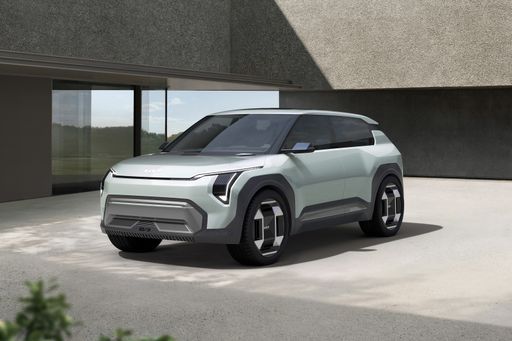
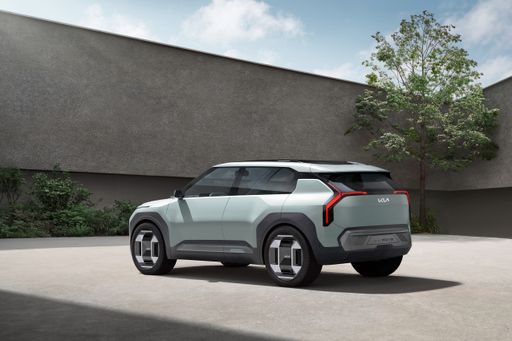
On tight urban routes, the Kia EV3 feels compact and eager, slipping through gaps with a light-footedness that suits daily commuters and city dwellers. The Kia EV5 leans more toward composed calm, preferring to cover distance with a settled gait that reassures on longer stretches. Neither is a caricature of itself — both balance quiet electric refinement with an identity you can feel behind the wheel. Pick the one that matches how much of your life is spent at traffic lights versus open roads.
EV5

What Driving It Actually Feels Like

Steering and response set the tone: the EV3 has a chirpier character that rewards quick direction changes and feels nimble in traffic, while the EV5 trades a touch of immediacy for a more planted, confidence-inspiring feel at pace. Ride quality mirrors those personalities, with one prioritizing agility and the other smoothing the miles into a calmer experience. Both deliver that satiny electric silence, but the emotional heartbeat they send back to the driver is distinctly different. Your choice depends on whether you want something playful or something composed.

EV3

Cabin Comfort and Practicality

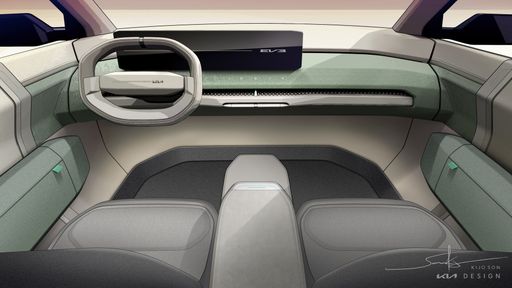
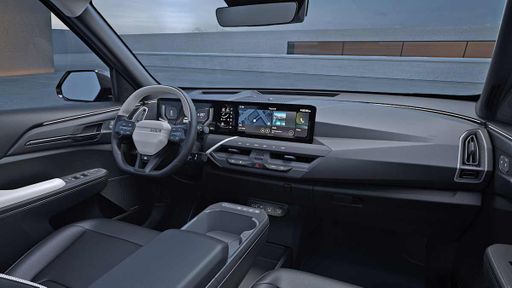
Inside, materials and ergonomics are where buyers notice value from day one: the EV3’s cabin feels modern and efficiently packaged, making everyday items easy to stow and reach, whereas the EV5 presents a slightly more generous ambiance that invites long journeys with less fatigue. Seat comfort and layout favor different priorities — one leans toward compact efficiency, the other toward a relaxed, lounge-like experience for passengers. Infotainment and controls are user-friendly across the board, though the way they integrate into each interior reinforces the car’s personality. Either way, both cabins speak to sensible design aimed at real life, not just showroom sheen.

EV5

Family Life and Loading Up

If family logistics are on the menu, the two Kias approach practicality differently: one is excellent for daily school runs and grocery raids with smart packaging, while the other stretches its usefulness for weekend gear and awkward loads with more flexible space. Getting child seats in and out, fitting buggies, and dealing with bags and boxes all feel intuitive in both, though the modes of convenience are not identical. Think about how often you haul large or bulky items versus frequent small loads. That will quickly point you to the one that suits your household rhythm.

EV3

Looks That Match Your Mood

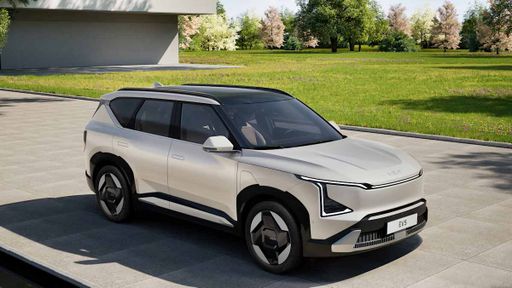
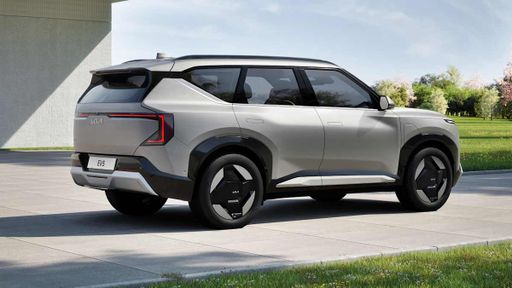
Styling is where personal taste steals the show: the EV3 carries a sprightly, contemporary look that reads as youthful and urban, while the EV5 projects a broader, more mature stance that draws admiring glances without shouting. Both wear their design cues with confidence, but they appeal to slightly different kinds of buyers — one chasing a fresh, city-friendly aesthetic, the other preferring a more substantial road presence. Pick the silhouette that makes you smile in the driveway.

EV5

Everyday Cost Sense and Ownership

Beyond purchase price, perceived running costs and convenience shape long-term satisfaction: both models deliver the lower operating feel you expect from electrics, but ownership impressions diverge when you factor in how you drive, charge, and live with the car. Charging ergonomics, warranty peace of mind, and anticipated maintenance all feed into which feels like the smarter buy for your pocket and lifestyle. Value here is less about headline figures and more about the match between car and daily routine.

The Teaser Before the Reveal

The differences between the two are less about right or wrong and more about fit — one suits compact, nimble daily life while the other favors comfort and carrying capacity for longer trips and bigger loads. Think about where you spend your miles, what you habitually carry, and how bold you want your design to be, and you’ll narrow the field fast. If you’re still undecided, keep reading — the DriveDuel Champion will be revealed afterwards.

Here’s where it gets real: The technical differences in detail

EV3

Costs and Efficiency:

Price and efficiency are often the first things buyers look at. Here it becomes clear which model has the long-term edge – whether at the pump, the plug, or in purchase price.

Kia EV3 is noticeably cheaper – starting at 30,800 £ , while the Kia EV5 costs 39,400 £ . That’s a price difference of around 8,572 £.

In terms of energy consumption, the Kia EV3 is slightly more efficient: consuming 14.9 kWh/100km compared to 16.9 kWh/100km for the Kia EV5. That’s a difference of about 2 kWh/100km.

As for electric range, the Kia EV3 offers a bit more range – reaching up to 605 km, about 75 km more than the Kia EV5.

EV5

Engine and Performance:

Power, torque and acceleration are the classic benchmarks for car enthusiasts – and here, some clear differences start to show.

When it comes to engine power, the Kia EV5 offers only slightly more power – delivering 218 HP compared to 204 HP. That’s roughly 14 HP more horsepower.

When accelerating from 0 to 100 km/h, the Kia EV3 is a bit quicker – completing the sprint in 7.5 s, while the Kia EV5 takes 8.4 s. That’s about 0.9 s quicker.

There’s also a difference in torque: the Kia EV5 delivers only slightly more torque with 295 Nm compared to 283 Nm. That’s about 12 Nm more.

EV3

Space and Everyday Use:

Cabin size, boot volume and payload all play a role in everyday practicality. Here, comfort and flexibility make the difference.

Both vehicles offer seating for 5 people.

In terms of curb weight, Kia EV3 is somewhat lighter – 1,800 kg compared to 2,069 kg. The difference is around 269 kg.

When it comes to payload, the Kia EV5 carries marginally more – 511 kg compared to 470 kg. That’s a difference of about 41 kg.

Who wins the race in the data check?

The Kia EV3 stands out in the key areas in the objective data comparison.
This result only shows which model scores more points on paper – not which of the two cars feels right for you.

from £30,800
EV3

Kia EV3

  • Engine Type : Electric
  • Transmission : Automatic
  • Drive Type : Front-Wheel Drive
  • Power HP : 204 HP
  • Consumption kWh/100km : 14.9 - 16.2 kWh/100km
  • Electric Range : 436 - 605 km
Kia EV3
Kia EV5

Costs and Consumption

View detailed analysis

Engine and Performance

View detailed analysis

Dimensions and Body

View detailed analysis

Kia EV3

The Kia EV3 arrives as a cheeky, practical electric compact that manages to feel both premium and playful, delivering crisp handling and a roomy cabin that's perfect for urban life. With smart tech, friendly styling and sensible pricing, the EV3 is the kind of car that makes switching to electric feel like a no-brainer without asking you to give anything important up.

details

Kia EV5

Kia's EV5 is an exciting entry into the electric SUV market, showcasing the brand's commitment to sustainable mobility. With its modern design and advanced technology features, the EV5 promises to deliver a smooth and environmentally friendly driving experience. The interior offers a spacious and comfortable ride, making it an appealing choice for families and eco-conscious drivers alike.

details
Kia EV3
Kia EV5

Costs and Consumption

Price
30,800 - 41,700 £
Price
39,400 - 44,600 £
Consumption L/100km
-
Consumption L/100km
-
Consumption kWh/100km
14.9 - 16.2 kWh/100km
Consumption kWh/100km
16.9 - 17.8 kWh/100km
Electric Range
436 - 605 km
Electric Range
505 - 530 km
Battery Capacity
58.3 - 81.4 kWh
Battery Capacity
-
co2
0 g/km
co2
0 g/km
Fuel tank capacity
-
Fuel tank capacity
-

Dimensions and Body

Body Type
SUV
Body Type
SUV
Seats
5
Seats
5
Doors
5
Doors
-
Curb weight
1,800 - 1,885 kg
Curb weight
2,069 kg
Trunk capacity
460 L
Trunk capacity
-
Length
4,300 - 4,310 mm
Length
-
Width
1,850 mm
Width
1,875 mm
Height
1,560 - 1,570 mm
Height
-
Max trunk capacity
1,251 L
Max trunk capacity
-
Payload
470 kg
Payload
511 kg

Engine and Performance

Engine Type
Electric
Engine Type
Electric
Transmission
Automatic
Transmission
Automatic
Transmission Detail
Reduction Gearbox
Transmission Detail
Reduction Gearbox
Drive Type
Front-Wheel Drive
Drive Type
Front-Wheel Drive
Power HP
204 HP
Power HP
218 HP
Acceleration 0-100km/h
7.5 - 7.9 s
Acceleration 0-100km/h
8.4 s
Max Speed
170 km/h
Max Speed
-
Torque
283 Nm
Torque
295 Nm
Number of Cylinders
-
Number of Cylinders
-
Power kW
150 kW
Power kW
160 kW
Engine capacity
-
Engine capacity
-

General

Model Year
2,024
Model Year
2,025
CO2 Efficiency Class
A
CO2 Efficiency Class
A
Brand
Kia
Brand
Kia
DriveDuel uses data analysis and artificial intelligence to evaluate vehicle data and create content. Content is regularly reviewed and improved. The displayed prices are estimates based on German list prices, adjusted to the respective country’s VAT. Country-specific registration taxes are not included. This information is not legally binding.