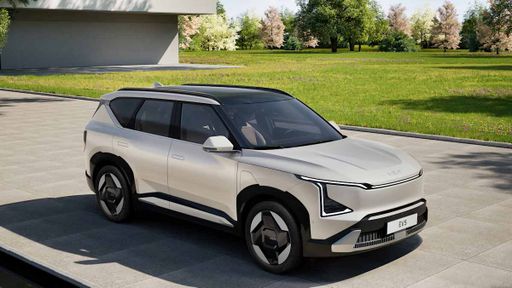
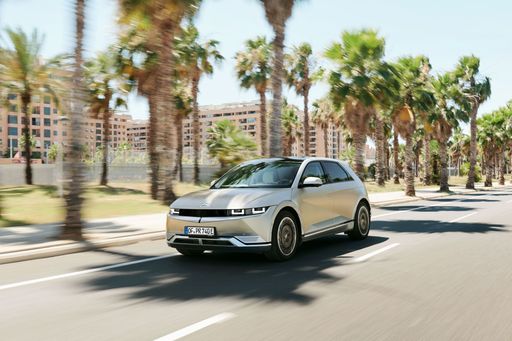
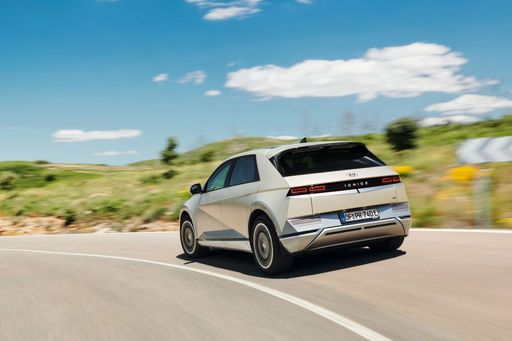
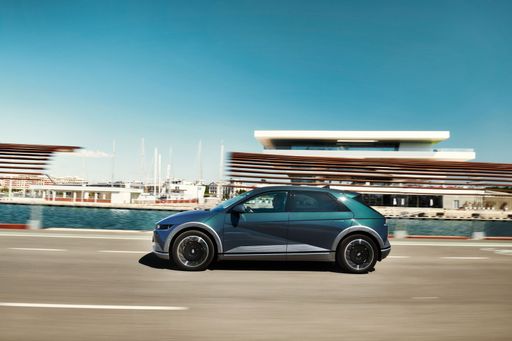
When it comes to price and running costs, the biggest differences usually appear. This is often where you see which car fits your budget better in the long run.
Hyundai IONIQ 5 has a slight advantage in terms of price – it starts at 38500 £, while the Kia EV5 costs 39400 £. That’s a price difference of around 935 £.
In terms of energy consumption, the advantage goes to the Hyundai IONIQ 5: with 15.60 kWh per 100 km, it’s minimal more efficient than the Kia EV5 with 16.90 kWh. That’s a difference of about 1.30 kWh.
As for range, the Hyundai IONIQ 5 performs barely noticeable better – achieving up to 570 km, about 40 km more than the Kia EV5.
Power, torque and acceleration say a lot about how a car feels on the road. This is where you see which model delivers more driving dynamics.
When it comes to engine power, the Hyundai IONIQ 5 has a decisively edge – offering 650 HP compared to 218 HP. That’s roughly 432 HP more horsepower.
In acceleration from 0 to 100 km/h, the Hyundai IONIQ 5 is convincingly quicker – completing the sprint in 3.50 s, while the Kia EV5 takes 8.40 s. That’s about 4.90 s faster.
In terms of top speed, the Hyundai IONIQ 5 performs evident better – reaching 260 km/h, while the Kia EV5 tops out at 165 km/h. The difference is around 95 km/h.
There’s also a difference in torque: Hyundai IONIQ 5 pulls clearly stronger with 770 Nm compared to 295 Nm. That’s about 475 Nm difference.
Whether family car or daily driver – which one offers more room, flexibility and comfort?
Seats: offers more seating capacity – vs .
In curb weight, Hyundai IONIQ 5 is slight lighter – 1955 kg compared to 2069 kg. The difference is around 114 kg.
In terms of boot space, the Kia EV5 offers barely noticeable more room – 566 L compared to 520 L. That’s a difference of about 46 L.
In maximum load capacity, the Kia EV5 performs slight better – up to 1650 L, which is about 70 L more than the Hyundai IONIQ 5.
When it comes to payload, Hyundai IONIQ 5 minimal takes the win – 530 kg compared to 511 kg. That’s a difference of about 19 kg.
Overall, the Hyundai IONIQ 5 shows itself to be dominates this comparison and secures the title of DriveDuel Champion.
It convinces with the more balanced overall package and proves to be the more versatile choice for everyday use.
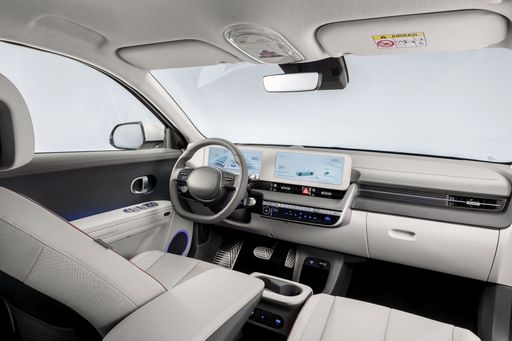
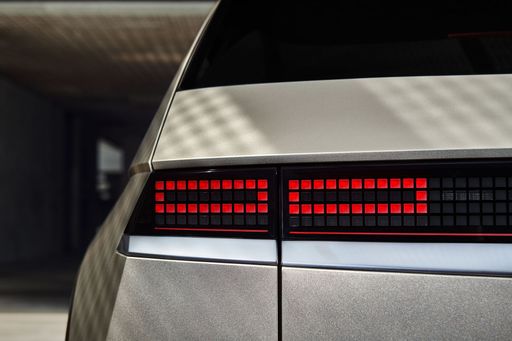
The Hyundai IONIQ 5 looks like a spaceship that moved into suburbia, pairing bold retro‑futuristic styling with a roomy, cleverly laid-out cabin that makes long trips surprisingly comfortable. Its electric character delivers instant, silky acceleration and low running costs, making it a smart, slightly cheeky pick for buyers who want tech, practicality and personality without the drama.
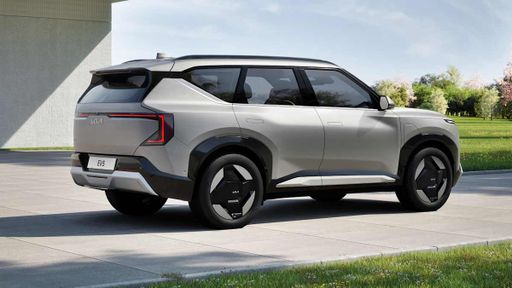
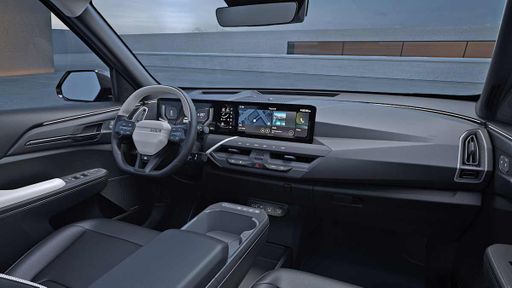
detailsKia's EV5 is an exciting entry into the electric SUV market, showcasing the brand's commitment to sustainable mobility. With its modern design and advanced technology features, the EV5 promises to deliver a smooth and environmentally friendly driving experience. The interior offers a spacious and comfortable ride, making it an appealing choice for families and eco-conscious drivers alike.
details|
|
|
|
|
|
Costs and Consumption |
|
|---|---|
|
Price
38500 - 64200 £
|
Price
39400 - 45400 £
|
|
Consumption L/100km
-
|
Consumption L/100km
-
|
|
Consumption kWh/100km
15.6 - 21.2 kWh
|
Consumption kWh/100km
16.9 - 17.8 kWh
|
|
Electric Range
440 - 570 km
|
Electric Range
505 - 530 km
|
|
Battery Capacity
63 - 84 kWh
|
Battery Capacity
81.40 kWh
|
|
co2
0 g/km
|
co2
0 g/km
|
|
Fuel tank capacity
-
|
Fuel tank capacity
-
|
Dimensions and Body |
|
|---|---|
|
Body Type
SUV
|
Body Type
SUV
|
|
Seats
5
|
Seats
5
|
|
Doors
5
|
Doors
5
|
|
Curb weight
1955 - 2275 kg
|
Curb weight
2069 kg
|
|
Trunk capacity
480 - 520 L
|
Trunk capacity
566 L
|
|
Length
4655 - 4715 mm
|
Length
4610 mm
|
|
Width
1890 - 1940 mm
|
Width
1875 mm
|
|
Height
1585 - 1605 mm
|
Height
1675 mm
|
|
Max trunk capacity
1540 - 1580 L
|
Max trunk capacity
1650 L
|
|
Payload
385 - 530 kg
|
Payload
511 kg
|
Engine and Performance |
|
|---|---|
|
Engine Type
Electric
|
Engine Type
Electric
|
|
Transmission
Automatic
|
Transmission
Automatic
|
|
Transmission Detail
Reduction Gearbox
|
Transmission Detail
Reduction Gearbox
|
|
Drive Type
Rear-Wheel Drive, All-Wheel Drive
|
Drive Type
Front-Wheel Drive
|
|
Power HP
170 - 650 HP
|
Power HP
218 HP
|
|
Acceleration 0-100km/h
3.5 - 8.5 s
|
Acceleration 0-100km/h
8.40 s
|
|
Max Speed
185 - 260 km/h
|
Max Speed
165 km/h
|
|
Torque
350 - 770 Nm
|
Torque
295 Nm
|
|
Number of Cylinders
-
|
Number of Cylinders
-
|
|
Power kW
125 - 478 kW
|
Power kW
160 kW
|
|
Engine capacity
-
|
Engine capacity
-
|
General |
|
|---|---|
|
Model Year
2024 - 2025
|
Model Year
2025
|
|
CO2 Efficiency Class
A
|
CO2 Efficiency Class
A
|
|
Brand
Hyundai
|
Brand
Kia
|
The Hyundai IONIQ 5 is available as Rear-Wheel Drive or All-Wheel Drive.
The prices and data displayed are estimates based on German list prices and may vary by country. This information is not legally binding.