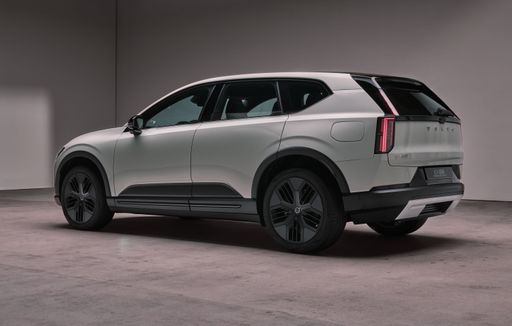
VS

Hyundai IONIQ 5 vs Volvo EX60 comparison

Compare performance (229 HP vs 680 HP), boot space and price (43,300 £ vs 54,000 £ ) at a glance. Find out which car is the better choice for you – Hyundai IONIQ 5 or Volvo EX60?

Hyundai IONIQ 5 vs Volvo EX60: Key differences

Hyundai IONIQ 5

5 (2 Reviews)
rate
  • markedly cheaper
  • somewhat lighter
details

Volvo EX60

  • clearly more power
  • marginally more efficient
  • markedly more electric range
  • clearly quicker 0–100 km/h
  • very slightly more trunk space
details

All details on performance, efficiency, range and trunk space can be found in the technical comparison below – including user reviews for both models.

By Achim Sedelmaier

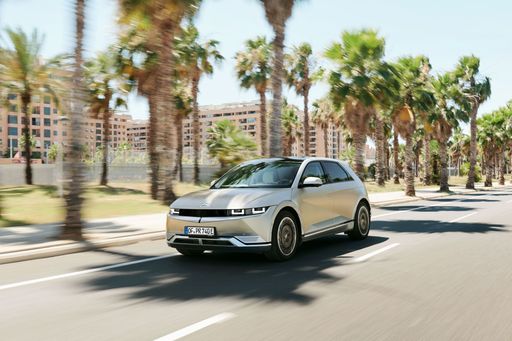
IONIQ 5

Head‑to‑head overview

Hyundai IONIQ 5 and Volvo EX60 are frequently compared by buyers seeking a roomy, long‑distance electric crossover. This matchup — Hyundai IONIQ 5 VS Volvo EX60 — sets the IONIQ 5’s lounge‑like practicality against the EX60’s quieter, more premium demeanour. The IONIQ 5 leans on exceptionally generous rear space and very fast top‑up capability to make journeys and family use straightforward, while the EX60 answers with a hushed cabin, refined damping and a feel that reduces fatigue. Price and perceived quality tilt in Volvo’s favour, but day‑to‑day usefulness and a few unique Hyundai features shift the balance back depending on your priorities. Below we break down how character, comfort, usability and buyer fit play out in real life so you can see which trade‑offs matter for you.
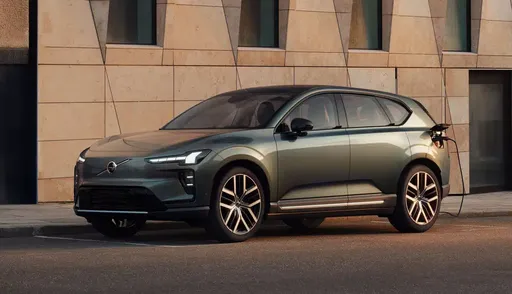
EX60

Cabin feel and practicality

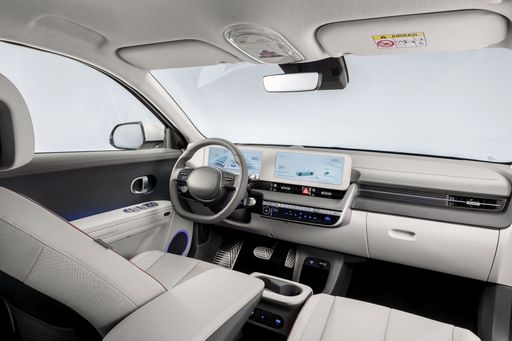
Inside the Hyundai IONIQ 5 the design reads as a spacious lounge: a sliding rear bench, vast legroom and a light, airy feel make the back seats a clear win for families and tall passengers. The Volvo EX60 presents a more Scandinavian, premium interior where materials and fit feel a step up and acoustic isolation is noticeably better, even if front shoulder freedom can feel a touch tighter in some positions. Practical differences show in load handling too — the IONIQ 5 has easy rear access but a flatter, higher‑lip load area that can make bulky items awkward, whereas the EX60’s packaging and front storage tend to swallow odd‑shaped luggage with fewer compromises. Both cars provide a flat floor and good rear footwell, yet the IONIQ 5 trades refinement for sheer flexibility while the EX60 trades space quirks for neater, more premium packaging. If rear‑seat comfort and adjustable seating matter most, the IONIQ 5 wins on everyday usability; if perceived quality and tidy luggage handling top your list, the EX60 feels more resolved.

IONIQ 5

Comfort and long‑distance behaviour

On the motorway the Hyundai IONIQ 5 behaves like a relaxed tourer: soft suspension and steady high‑speed composure keep long hours comfortable, though that softer setup can show body roll and a slightly higher appetite at sustained high speeds. The Volvo EX60 makes long drives feel quieter and less wearing thanks to thorough acoustic insulation and adaptive damping that smooths a wide range of surface imperfections. Both are built around fast‑charging systems that shorten required stops, but the EX60’s packaging and advertised range bias it toward fewer interruptions between destinations, whereas the IONIQ 5 shortens individual stops with very quick peak charging. In real use the IONIQ 5 will appeal if you value powerful brief top‑ups and rear‑seat comfort, while the EX60 appeals if you prize a calmer cabin and longer stretches between plugs. That trade‑off—speed of charging sessions versus overall calm and range—defines which car will suit your touring habits.

EX60

City driving and daily usability

Around town the Hyundai IONIQ 5 is pleasant to live with: a high seating position, direct physical controls and practical extras like onboard power outlets add useful everyday versatility. Its downside is size — the IONIQ 5’s broad stance and larger turning circle make parking and tight streets noticeably more challenging than smaller competitors. The Volvo EX60 is also a wide car but compensates with exhaustive parking aids, a 360° camera and very composed low‑speed manners that make it feel easier to place in tight spots despite its footprint. Infotainment and control philosophy diverge as well: Hyundai emphasises tactile buttons and straightforward ergonomics to reduce distraction, while Volvo leans on connected services and a modern interface that rewards those comfortable with software ecosystems. If short‑trip practicality and family‑oriented features are daily priorities, the IONIQ 5 will repay you; if you want a calmer, camera‑assisted urban experience and higher perceived refinement, the EX60 eases city life in a different way.

IONIQ 5

Technology, safety and controls

Technically the Hyundai IONIQ 5 favours familiar, physical controls, sensible in‑car charging logic and practical tools such as 230‑volt outlets that extend real‑world usefulness beyond driving. The Volvo EX60 counters with a modern, connected stack, deep Google integration and a suite of active safety innovations that feel cutting‑edge from day one. That means Hyundai provides a straightforward, less distracting cabin that many drivers find intuitive, while Volvo offers richer voice and cloud services that integrate your phone, maps and assistant more tightly but demand more learning. Both cars support over‑the‑air improvements, yet Volvo’s platform is geared toward continuous cloud services and assistant features whereas Hyundai’s strengths are immediate, pragmatic in‑car functions. Choose Hyundai for sensible controls and device utility; choose Volvo for seamless connected convenience and advanced safety tech.

Buyer fit — who should pick which

The Hyundai IONIQ 5 is best for buyers who prioritise family practicality, strong short‑stop charging performance and everyday utility at a relatively lower price, especially if rear‑seat room, sliding seats and device‑powering matter to you. The Volvo EX60 suits buyers who place cabin quietness, perceived premium quality and a connected, safety‑heavy package at the top of their list and who value longer‑range packaging that reduces charging frequency. Neither car is aimed at drivers seeking sharp sportiness—the IONIQ 5 behaves like a flexible people‑carrier while the EX60 behaves like a composed, safety‑focused executive SUV. When you move into the technical comparison below, focus on each car’s real‑world charging behaviour, range and cargo details to see how those characteristics map onto the routines we’ve outlined. That will make the practical trade‑offs clear: the right choice depends on whether you prize rear‑seat flexibility and quick top‑ups or a quieter, more premium travel experience.

Here’s where it gets real: The technical differences in detail

IONIQ 5

Costs and Efficiency:

When it comes to price and running costs, the biggest differences usually appear. This is often where you see which car fits your budget better in the long run.

Hyundai IONIQ 5 is markedly cheaper – starting at 43,300 £ , while the Volvo EX60 costs 54,000 £ . That’s a price difference of around 10,663 £.

In terms of energy consumption, the Volvo EX60 is marginally more efficient: consuming 14.7 kWh/100km compared to 15.6 kWh/100km for the Hyundai IONIQ 5. That’s a difference of about 0.9 kWh/100km.

As for electric range, the Volvo EX60 offers markedly more range – reaching up to 810 km, about 240 km more than the Hyundai IONIQ 5.

EX60

Engine and Performance:

Power, torque and acceleration say a lot about how a car feels on the road. This is where you see which model delivers more driving dynamics.

When it comes to engine power, the Volvo EX60 offers clearly more power – delivering 680 HP compared to 229 HP. That’s roughly 451 HP more horsepower.

When accelerating from 0 to 100 km/h, the Volvo EX60 is clearly quicker – completing the sprint in 3.9 s, while the Hyundai IONIQ 5 takes 7.5 s. That’s about 3.6 s quicker.

There’s also a difference in torque: the Volvo EX60 delivers substantially more torque with 790 Nm compared to 350 Nm. That’s about 440 Nm more.

IONIQ 5

Space and Everyday Use:

Cabin size, boot volume and payload all play a role in everyday practicality. Here, comfort and flexibility make the difference.

Both vehicles offer seating for 5 people.

In terms of curb weight, Hyundai IONIQ 5 is somewhat lighter – 1,955 kg compared to 2,190 kg. The difference is around 235 kg.

Looking at boot space, the Volvo EX60 offers very slightly more boot space – 523 L compared to 520 L. That’s a difference of about 3 L.

When it comes to payload, the Hyundai IONIQ 5 carries a bit more – 530 kg compared to 460 kg. That’s a difference of about 70 kg.

Who wins the race in the data check?

The Volvo EX60 holds a decisive overall lead in the objective data comparison.
This result only shows which model scores more points on paper – not which of the two cars feels right for you.

from £54,000
EX60

Volvo EX60

  • Engine Type : Electric
  • Transmission : Automatic
  • Drive Type : Rear-Wheel Drive, All-Wheel Drive
  • Power HP : 374 - 680 HP
  • Consumption kWh/100km : 14.7 - 16.2 kWh/100km
  • Electric Range : 620 - 810 km
Hyundai IONIQ 5
Volvo EX60

Costs and Consumption

View detailed analysis

Engine and Performance

View detailed analysis

Dimensions and Body

View detailed analysis

Hyundai IONIQ 5

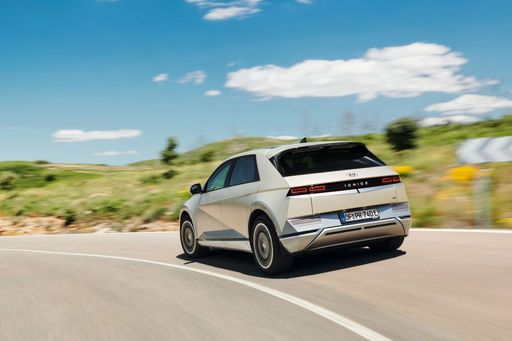
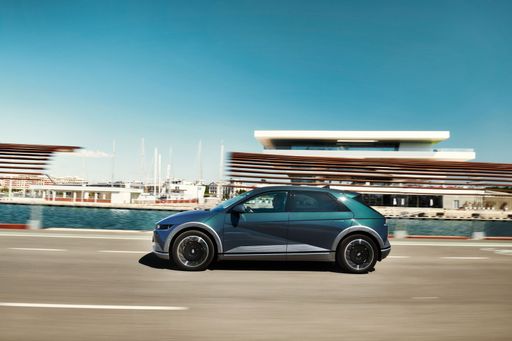
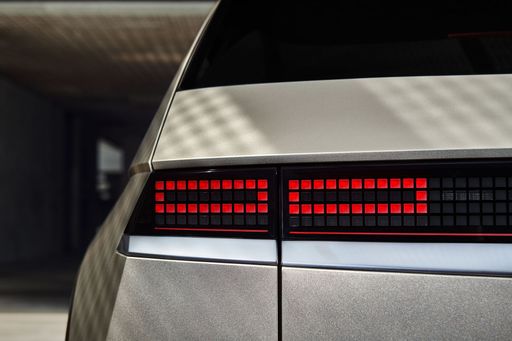
The Hyundai IONIQ 5 looks like a spaceship that moved into suburbia, pairing bold retro‑futuristic styling with a roomy, cleverly laid-out cabin that makes long trips surprisingly comfortable. Its electric character delivers instant, silky acceleration and low running costs, making it a smart, slightly cheeky pick for buyers who want tech, practicality and personality without the drama.

details

Volvo EX60

The Volvo EX60 is a stylish electric SUV that pairs Scandinavian minimalism with a high-quality, comfortable cabin and an intuitive infotainment experience. It delivers a composed, refined ride with advanced safety and driver-assist systems that make daily driving relaxed and confident.

details
Hyundai IONIQ 5
Volvo EX60

Costs and Consumption

Price
43,300 - 46,100 £
Price
54,000 - 70,100 £
Consumption L/100km
-
Consumption L/100km
-
Consumption kWh/100km
15.6 - 16 kWh/100km
Consumption kWh/100km
14.7 - 16.2 kWh/100km
Electric Range
440 - 570 km
Electric Range
620 - 810 km
Battery Capacity
-
Battery Capacity
-
co2
0 g/km
co2
0 g/km
Fuel tank capacity
-
Fuel tank capacity
-

Dimensions and Body

Body Type
SUV
Body Type
SUV
Seats
5
Seats
5
Doors
-
Doors
-
Curb weight
1,955 - 2,060 kg
Curb weight
2,190 - 2,425 kg
Trunk capacity
520 L
Trunk capacity
523 L
Length
-
Length
-
Width
1,890 mm
Width
1,899 mm
Height
-
Height
-
Max trunk capacity
-
Max trunk capacity
-
Payload
515 - 530 kg
Payload
435 - 460 kg

Engine and Performance

Engine Type
Electric
Engine Type
Electric
Transmission
Automatic
Transmission
Automatic
Transmission Detail
Reduction Gearbox
Transmission Detail
Reduction Gearbox
Drive Type
Rear-Wheel Drive
Drive Type
Rear-Wheel Drive, All-Wheel Drive
Power HP
170 - 229 HP
Power HP
374 - 680 HP
Acceleration 0-100km/h
7.5 - 8.5 s
Acceleration 0-100km/h
3.9 - 5.9 s
Max Speed
-
Max Speed
-
Torque
350 Nm
Torque
480 - 790 Nm
Number of Cylinders
-
Number of Cylinders
-
Power kW
125 - 168 kW
Power kW
275 - 500 kW
Engine capacity
-
Engine capacity
-

General

Model Year
2025
Model Year
2,026 - 2,027
CO2 Efficiency Class
A
CO2 Efficiency Class
A
Brand
Hyundai
Brand
Volvo
DriveDuel uses data analysis and artificial intelligence to evaluate vehicle data and create content. Content is regularly reviewed and improved. The displayed prices are estimates based on German list prices, adjusted to the respective country’s VAT. Country-specific registration taxes are not included. This information is not legally binding.