VS

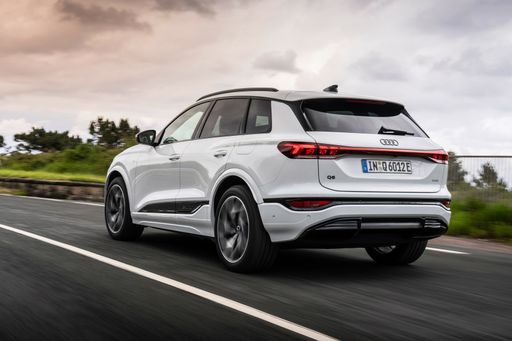
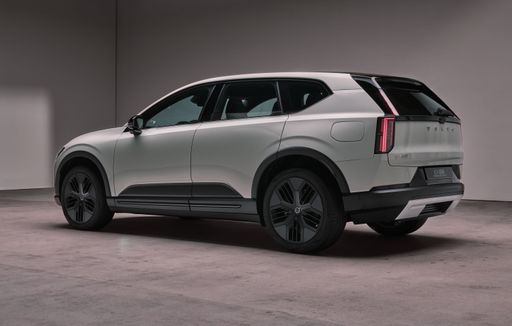
Audi Q6 e-tron vs Volvo EX60 comparison

Compare performance (490 HP vs 680 HP), boot space and price (54,400 £ vs 54,000 £ ) at a glance. Find out which car is the better choice for you – Audi Q6 e-tron or Volvo EX60?

Audi Q6 e-tron vs Volvo EX60: Key differences

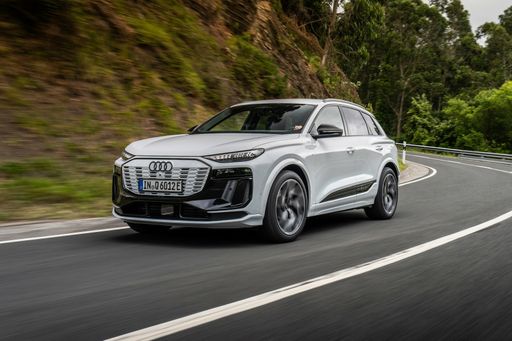
Audi Q6 e-tron

4.6 (4 Reviews)
rate
  • very slightly more trunk space
details

Volvo EX60

  • barely cheaper
  • visibly more power
  • marginally more efficient
  • moderately more electric range
  • moderately quicker 0–100 km/h
  • marginally lighter
details

All details on performance, efficiency, range and trunk space can be found in the technical comparison below – including user reviews for both models.

By Achim Sedelmaier

Q6 e-tron

Head-to-Head: Audi Q6 e-tron VS Volvo EX60 — the electric SUV comparison

Audi Q6 e-tron and Volvo EX60 face off in a direct, hard-edged duel that every premium EV buyer is asking about right now. This comparison isn't about theoretical specs on paper but about how two different takes on the electric SUV idea translate to daily life, design presence and ownership pride. The Audi Q6 e-tron reads like a tech-rich German tourer while the Volvo EX60 arrives with a bolder, more athletic posture — both claim premium status, but they go about it differently. If you want to know which one fits your lifestyle, we’ll tease out the character and the consequences beyond the showroom gloss.
EX60

Personality clash: composed precision versus muscular confidence

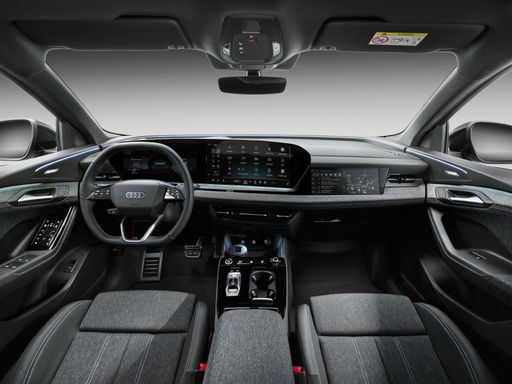
The Audi Q6 e-tron projects a restrained, measured elegance: tight surfaces, refined tech details and a driving feel that favours composure and steering precision. By contrast, the Volvo EX60 broadcasts a more extroverted, performance-leaning character — it’s physically expressive and feels like it wants to be noticed on the road. Inside, Audi aims for understated luxury with high-tech cues, while Volvo trades a touch of Scandinavian boldness and a more athletic seating posture. That difference in tone matters: one whispers premium competence, the other shouts dynamic capability.

Q6 e-tron

How they behave day-to-day: city runs, family duties and motorway miles

For daily commuting and tight-carpark manoeuvres the Audi Q6 e-tron feels like the more urbane companion, with controls and a driving position that reward calm, point-and-shoot use. The Volvo EX60 tends to shine on longer runs and when you want a bit more shove — its packaging leans toward those who value long-distance confidence and a strong on-road presence. Both will cope with family duties, but the Audi prioritises refinement and user-friendly tech, while the Volvo prioritises flexible usability and a reassuring, higher-energy driving experience. In real life, that means the Audi will appeal to those who value settled comfort in traffic, the Volvo to buyers who want a livelier, more go-anywhere attitude.

EX60

Buying it as a statement: what each car says about you

Choosing the Audi Q6 e-tron broadcasts a taste for polished tech and discreet prestige — you want the kit and finesse without being overbearing about it. Picking the Volvo EX60 signals that you prize substance and sporty capability; it’s a statement car that aims to impress with presence as much as content. Both offer modern luxury, but the motivation changes: Audi is about refinement and a modern, subtle image, Volvo about athleticism and a “I want both performance and practicality” message. That self-justification matters when you park outside the office or hand the keys to the family.

Q6 e-tron

Who should consider the Audi Q6 e-tron?

If you lean toward the Tech and Design/Brand mindsets, the Audi Q6 e-tron will feel like it was built for you: precise execution, slick interfaces and a cabin that feels tailored rather than theatrical. Urban commuters and buyers who prize an elegantly finished interior and a stress-free daily routine will appreciate how Audi packages its strengths. It’s also for drivers who want a premium badge that plays well in boardrooms without shouting. If you’re torn, compare how the Volvo EX60’s punch and long-run demeanour change your priorities before deciding.

Who should consider the Volvo EX60 (and how the Audi factors in)

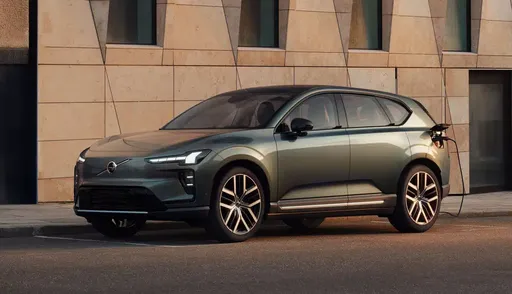
The Volvo EX60 suits buyers who skew toward the Comfort and Rational archetypes: people who want reassuring performance, usable range and an engaging presence that covers family duties and longer journeys. If you crave a bit more athleticism and a bolder design statement, the EX60 answers that call in a way the Audi Q6 e-tron deliberately does not. That doesn’t make the Audi irrelevant — it simply points to a different set of priorities, so weigh how much you value calm refinement versus energetic capability. Dig into the detailed numbers and feature deltas below to see where the trade-offs really land.

Here’s where it gets real: The technical differences in detail

Q6 e-tron

Costs and Efficiency:

Looking at overall running costs, both models reveal some interesting differences in everyday economy.

Volvo EX60 is barely cheaper – starting at 54,000 £ , while the Audi Q6 e-tron costs 54,400 £ . That’s a price difference of around 437 £.

In terms of energy consumption, the Volvo EX60 is marginally more efficient: consuming 14.7 kWh/100km compared to 15.6 kWh/100km for the Audi Q6 e-tron. That’s a difference of about 0.9 kWh/100km.

As for electric range, the Volvo EX60 offers moderately more range – reaching up to 810 km, about 154 km more than the Audi Q6 e-tron.

EX60

Engine and Performance:

Power, torque and acceleration are the classic benchmarks for car enthusiasts – and here, some clear differences start to show.

When it comes to engine power, the Volvo EX60 offers visibly more power – delivering 680 HP compared to 490 HP. That’s roughly 190 HP more horsepower.

When accelerating from 0 to 100 km/h, the Volvo EX60 is moderately quicker – completing the sprint in 3.9 s, while the Audi Q6 e-tron takes 4.4 s. That’s about 0.5 s quicker.

There’s also a difference in torque: the Audi Q6 e-tron delivers very slightly more torque with 855 Nm compared to 790 Nm. That’s about 65 Nm more.

Q6 e-tron

Space and Everyday Use:

Cabin size, boot volume and payload all play a role in everyday practicality. Here, comfort and flexibility make the difference.

Both vehicles offer seating for 5 people.

In terms of curb weight, Volvo EX60 is marginally lighter – 2,190 kg compared to 2,200 kg. The difference is around 10 kg.

Looking at boot space, the Audi Q6 e-tron offers very slightly more boot space – 526 L compared to 523 L. That’s a difference of about 3 L.

When it comes to payload, the Audi Q6 e-tron carries a bit more – 540 kg compared to 460 kg. That’s a difference of about 80 kg.

Who wins the race in the data check?

The Volvo EX60 holds a decisive overall lead in the objective data comparison.
This result only shows which model scores more points on paper – not which of the two cars feels right for you.

from £54,000
EX60

Volvo EX60

  • Engine Type : Electric
  • Transmission : Automatic
  • Drive Type : Rear-Wheel Drive, All-Wheel Drive
  • Power HP : 374 - 680 HP
  • Consumption kWh/100km : 14.7 - 16.2 kWh/100km
  • Electric Range : 620 - 810 km
Audi Q6 e-tron
Volvo EX60

Costs and Consumption

View detailed analysis

Engine and Performance

View detailed analysis

Dimensions and Body

View detailed analysis

Audi Q6 e-tron

The Audi Q6 e-tron balances sleek, coupe-like styling with a roomy, upscale interior that feels modern without being showy. It delivers refined electric performance and smart tech that make daily driving effortless — the sort of EV that might make petrolheads grudgingly admit they fancy the future.

details

Volvo EX60

The Volvo EX60 arrives as a sleek, family-friendly electric SUV that blends Scandinavian restraint with a surprising dash of personality, wrapping a calm, premium cabin around practical everyday usability. It’s aimed at buyers who prize safety and comfort but still want a car that rewards an enthusiastic drive, proving that sensible can be quietly fun.

details
Audi Q6 e-tron
Volvo EX60

Costs and Consumption

Price
54,400 - 82,500 £
Price
54,000 - 70,100 £
Consumption L/100km
-
Consumption L/100km
-
Consumption kWh/100km
15.6 - 18.4 kWh/100km
Consumption kWh/100km
14.7 - 16.2 kWh/100km
Electric Range
535 - 656 km
Electric Range
620 - 810 km
Battery Capacity
75.8 - 94.9 kWh
Battery Capacity
-
co2
0 g/km
co2
0 g/km
Fuel tank capacity
-
Fuel tank capacity
-

Dimensions and Body

Body Type
SUV
Body Type
SUV
Seats
5
Seats
5
Doors
5
Doors
-
Curb weight
2,200 - 2,425 kg
Curb weight
2,190 - 2,425 kg
Trunk capacity
499 - 526 L
Trunk capacity
523 L
Length
4,771 mm
Length
-
Width
1,939 - 1,965 mm
Width
1,899 mm
Height
1,665 - 1,685 mm
Height
-
Max trunk capacity
1,361 - 1,373 L
Max trunk capacity
-
Payload
540 kg
Payload
435 - 460 kg

Engine and Performance

Engine Type
Electric
Engine Type
Electric
Transmission
Automatic
Transmission
Automatic
Transmission Detail
Reduction Gearbox
Transmission Detail
Reduction Gearbox
Drive Type
Rear-Wheel Drive, All-Wheel Drive
Drive Type
Rear-Wheel Drive, All-Wheel Drive
Power HP
252 - 490 HP
Power HP
374 - 680 HP
Acceleration 0-100km/h
4.4 - 7.6 s
Acceleration 0-100km/h
3.9 - 5.9 s
Max Speed
210 - 230 km/h
Max Speed
-
Torque
450 - 855 Nm
Torque
480 - 790 Nm
Number of Cylinders
-
Number of Cylinders
-
Power kW
185 - 360 kW
Power kW
275 - 500 kW
Engine capacity
-
Engine capacity
-

General

Model Year
2,024 - 2,025
Model Year
2,026 - 2,027
CO2 Efficiency Class
A
CO2 Efficiency Class
A
Brand
Audi
Brand
Volvo
DriveDuel uses data analysis and artificial intelligence to evaluate vehicle data and create content. Content is regularly reviewed and improved. The displayed prices are estimates based on German list prices, adjusted to the respective country’s VAT. Country-specific registration taxes are not included. This information is not legally binding.