VS

CUPRA Tavascan vs Toyota C-HR+ comparison

Compare performance (340 HP vs 343 HP), boot space and price (42,800 £ vs 36,000 £ ) at a glance. Find out which car is the better choice for you – CUPRA Tavascan or Toyota C-HR+?

CUPRA Tavascan vs Toyota C-HR+: Key differences

CUPRA Tavascan

4.5 (3 Reviews)
rate
  • clearly more trunk space
details

Toyota C-HR+

  • slightly cheaper
  • marginally more power
  • a bit more efficient
  • barely more electric range
  • marginally quicker 0–100 km/h
  • slightly lighter
details

All details on performance, efficiency, range and trunk space can be found in the technical comparison below – including user reviews for both models.

By Achim Sedelmaier

Tavascan

Head-to-head: CUPRA Tavascan vs Toyota C-HR+ — electric coupe-SUV meets compact crossover

The CUPRA Tavascan and the Toyota C-HR+ are pitched against each other in a classic style-versus-sense comparison, with the Tavascan wearing coupe‑SUV ambition and the C-HR+ playing compact crossover pragmatism. This is a direct comparison for shoppers weighing presence and performance against everyday usability and running costs. If you’re searching for “CUPRA Tavascan vs Toyota C-HR+” in your feed, you want the trade-offs up front — roofline, cabin feel, and real-world temperament matter more than badges. Expect the Tavascan to read like a statement piece and the C-HR+ to read like a clever, city-friendly choice.
C-HR+

Character clash: presence and personality

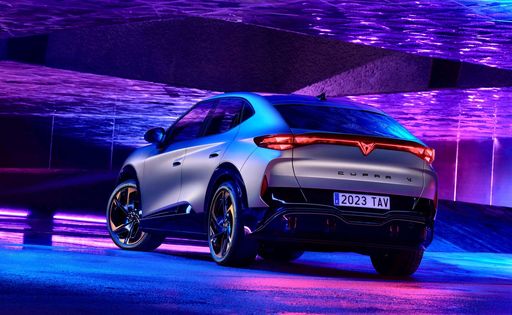
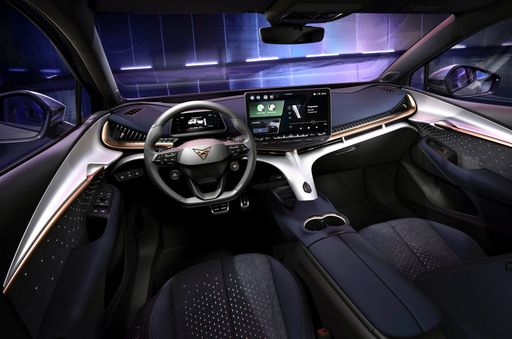
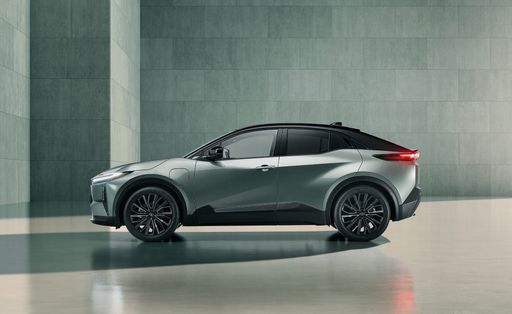
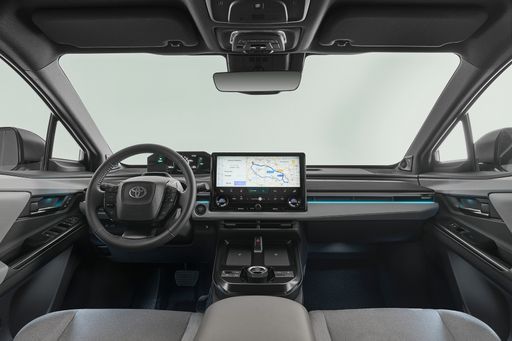
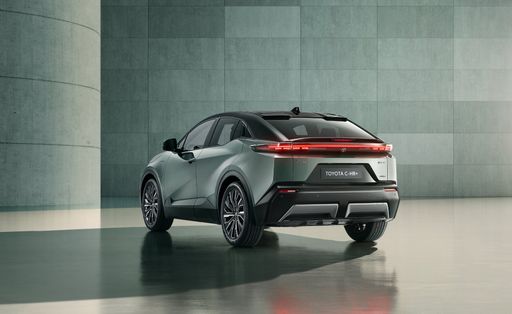
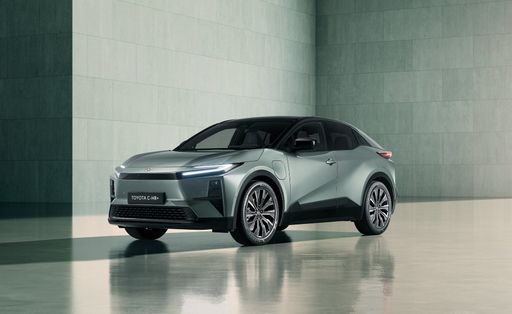
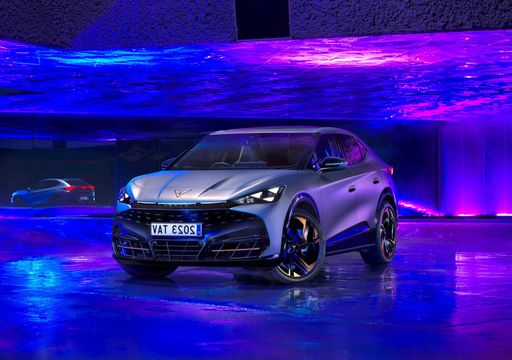
The CUPRA Tavascan brings a noticeably sporty, design-forward character that wants to be noticed, while the Toyota C-HR+ trades drama for a more restrained, purpose-built aura. Inside, the Tavascan aims for a premium, driver-focused cockpit vibe; the C-HR+ feels simpler and more intuitive, built around everyday use rather than theatrical gestures. If you like a car that announces arrival, the CUPRA leans into that; if you prefer to blend smartly into traffic with fewer theatrics, the Toyota is quieter and more diplomatic. Both have personality, but they speak to very different tastes.

Tavascan

Daily life: city nimble vs motorway calm

For tight urban runs the Toyota C-HR+ feels lighter on its feet and easier to live with day-to-day, while the CUPRA Tavascan settles into longer drives with a composed, planted demeanor that rewards highway miles. Families and weekend packers will notice the Tavascan’s more grown-up cruising manners, whereas solo commuters and city dwellers will value the C-HR+ for its straightforward, fuss-free approach. Practicality shows differently: one prioritises comfort and composure, the other trades some of that for agility and thrift. In short, your journey pattern will tell you which car will feel less like a compromise.

C-HR+

What you’re really buying: image or pragmatism?

Buy the CUPRA Tavascan when you want something that feels modern, a bit daring, and a touch premium — it’s a car that validates a lifestyle as much as it transports you. Buy the Toyota C-HR+ when you want a sensible, well-sorted compact crossover that keeps running costs and daily headaches to a minimum. The Tavascan lets you justify some indulgence in exchange for flair; the C-HR+ answers with sensible packaging and lower fuss. Neither choice is shy about what it offers — it’s your priorities that decide which feels like home.

Tavascan

Who should consider the CUPRA Tavascan?

The CUPRA Tavascan will suit buyers who lean toward Design/Brand and Status/Expression — people who enjoy a strong visual identity and want a car that reflects that. If you value cabin materials that feel upscale, sharper handling, and a presence on the road, the Tavascan speaks your language, while the Toyota C-HR+ might feel too mild in comparison. It’s a good pick for those who see a car as part of their personal statement rather than only as a tool. Expect to trade a little everyday simplicity for a car that makes more of a statement.

C-HR+

Who should consider the Toyota C-HR+ (and how it compares to the Tavascan)

The Toyota C-HR+ maps neatly to the Rational and Pragmatist archetypes: economy, ease of use, and sensible packaging are its strengths, whereas the CUPRA Tavascan asks you to pay more attention to style and driving feel. If low-stress ownership, urban agility, and predictable practicality top your list, the C-HR+ is the clear call; if you want more drama and refinement, the Tavascan is the temptation. No overall winner here — just different answers to different questions. Read on into the delta section below for the spec-by-spec breakdown to see which one ticks your boxes on paper.

Here’s where it gets real: The technical differences in detail

Tavascan

Costs and Efficiency:

Price and efficiency are key factors when choosing a car – and this is often where the real differences emerge.

Toyota C-HR+ is slightly cheaper – starting at 36,000 £ , while the CUPRA Tavascan costs 42,800 £ . That’s a price difference of around 6,780 £.

In terms of energy consumption, the Toyota C-HR+ is a bit more efficient: consuming 13.4 kWh/100km compared to 15.4 kWh/100km for the CUPRA Tavascan. That’s a difference of about 2 kWh/100km.

As for electric range, the Toyota C-HR+ offers barely more range – reaching up to 607 km, about 50 km more than the CUPRA Tavascan.

C-HR+

Engine and Performance:

Power, torque and acceleration say a lot about how a car feels on the road. This is where you see which model delivers more driving dynamics.

When it comes to engine power, the Toyota C-HR+ offers marginally more power – delivering 343 HP compared to 340 HP. That’s roughly 3 HP more horsepower.

When accelerating from 0 to 100 km/h, the Toyota C-HR+ is marginally quicker – completing the sprint in 5.2 s, while the CUPRA Tavascan takes 5.5 s. That’s about 0.3 s quicker.

There’s also a difference in torque: the CUPRA Tavascan delivers markedly more torque with 545 Nm compared to 338 Nm. That’s about 207 Nm more.

Tavascan

Space and Everyday Use:

Cabin size, boot volume and payload all play a role in everyday practicality. Here, comfort and flexibility make the difference.

Both vehicles offer seating for 5 people.

In terms of curb weight, Toyota C-HR+ is slightly lighter – 1,810 kg compared to 2,096 kg. The difference is around 286 kg.

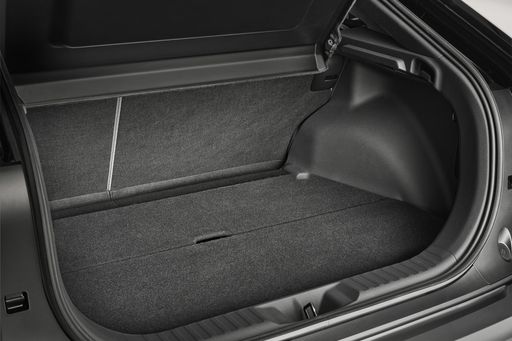
Looking at boot space, the CUPRA Tavascan offers clearly more boot space – 540 L compared to 416 L. That’s a difference of about 124 L.

When it comes to payload, the Toyota C-HR+ carries noticeably more – 655 kg compared to 518 kg. That’s a difference of about 137 kg.

Who wins the race in the data check?

The Toyota C-HR+ has the upper hand in the objective data comparison.
This result only shows which model scores more points on paper – not which of the two cars feels right for you.

from £36,000
C-HR+

Toyota C-HR+

  • Engine Type Electric
  • Transmission Automatic
  • Drive Type Front-Wheel Drive, All-Wheel Drive
  • Power HP 167 - 343 HP
  • Consumption kWh/100km 13.4 - 15.5 kWh/100km
  • Electric Range 458 - 607 km
CUPRA Tavascan
Toyota C-HR+

Costs and Consumption

View detailed analysis

Engine and Performance

View detailed analysis

Dimensions and Body

View detailed analysis

CUPRA Tavascan

The Cupra Tavascan blends athletic styling with a premium, driver-focused cabin, giving the electric crossover a distinctly sporty character. It feels poised and engaging on the road while standing out with bold design cues and a modern, high-quality finish.

details

Toyota C-HR+

The Toyota C‑HR is a distinctive crossover that pairs bold, coupe‑like styling with a comfortable, composed ride suited to daily city and suburban driving. It appeals to buyers who value standout design, practical cabin packaging and a refined, easy‑to‑use experience rather than outright performance or rugged off‑road ability.

details
CUPRA Tavascan
Toyota C-HR+

Costs and Consumption

Price
42,800 - 50,500 £
Price
36,000 - 46,300 £
Consumption L/100km
-
Consumption L/100km
-
Consumption kWh/100km
15.4 - 17.1 kWh/100km
Consumption kWh/100km
13.4 - 15.5 kWh/100km
Electric Range
441 - 557 km
Electric Range
458 - 607 km
Battery Capacity
-
Battery Capacity
-
co2
0 g/km
co2
0 g/km
Fuel tank capacity
-
Fuel tank capacity
-

Dimensions and Body

Body Type
SUV
Body Type
SUV
Seats
5
Seats
5
Doors
-
Doors
-
Curb weight
2,096 - 2,273 kg
Curb weight
1,810 - 2,010 kg
Trunk capacity
540 L
Trunk capacity
416 L
Length
-
Length
-
Width
1,861 mm
Width
1,870 mm
Height
-
Height
-
Max trunk capacity
-
Max trunk capacity
-
Payload
507 - 518 kg
Payload
550 - 655 kg

Engine and Performance

Engine Type
Electric
Engine Type
Electric
Transmission
Automatic
Transmission
Automatic
Transmission Detail
Reduction Gearbox
Transmission Detail
Reduction Gearbox
Drive Type
Rear-Wheel Drive, All-Wheel Drive
Drive Type
Front-Wheel Drive, All-Wheel Drive
Power HP
190 - 340 HP
Power HP
167 - 343 HP
Acceleration 0-100km/h
5.5 - 8.6 s
Acceleration 0-100km/h
5.2 - 8.4 s
Max Speed
-
Max Speed
-
Torque
350 - 545 Nm
Torque
268 - 338 Nm
Number of Cylinders
-
Number of Cylinders
-
Power kW
140 - 250 kW
Power kW
123 - 252 kW
Engine capacity
-
Engine capacity
-

General

Model Year
2026
Model Year
2026
CO2 Efficiency Class
A
CO2 Efficiency Class
A
Brand
CUPRA
Brand
Toyota
DriveDuel uses data analysis and artificial intelligence to evaluate vehicle data and create content. Content is regularly reviewed and improved. The displayed prices are estimates based on German list prices, adjusted to the respective country’s VAT. Country-specific registration taxes are not included. This information is not legally binding.