VS

BMW iX1 vs Toyota C-HR+ comparison

Compare performance (313 HP vs 343 HP), boot space and price (42,300 £ vs 36,000 £ ) at a glance. Find out which car is the better choice for you – BMW iX1 or Toyota C-HR+?

BMW iX1 vs Toyota C-HR+: Key differences

BMW iX1

4.5 (5 Reviews)
rate
  • slightly more trunk space
details

Toyota C-HR+

  • moderately cheaper
  • marginally more power
  • only slightly more efficient
  • slightly more electric range
  • barely quicker 0–100 km/h
  • only slightly lighter
details

All details on performance, efficiency, range and trunk space can be found in the technical comparison below – including user reviews for both models.

By Achim Sedelmaier

iX1

BMW iX1 VS Toyota C-HR+: an executive summary for buyers

The BMW iX1 and Toyota C‑HR+ make very different promises in the compact crossover field: the iX1 leans into a premium, full‑electric ownership experience while the C‑HR+ angles for efficiency, bold design and hybrid practicality. That difference shapes everything buyers feel day to day — from how the cabin materials land under your hand to how the car behaves on a motorway run or a tight city street. The iX1 trades a firmer ride and a more expensive price tag for a quieter, more composed long‑distance companion and a very usable boot. The C‑HR+ trades some rear seat and luggage flexibility for lower running costs in urban use and simpler, more traditional controls. Below we unpack cabin, comfort, practicality, city manners and who each car will suit best before moving into the technical details.
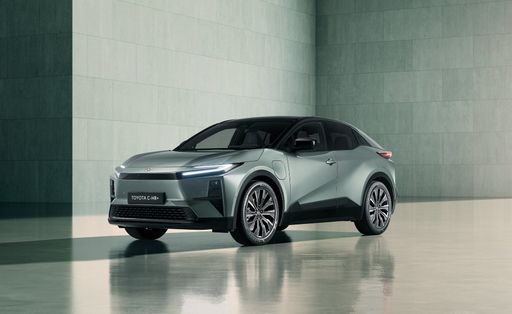
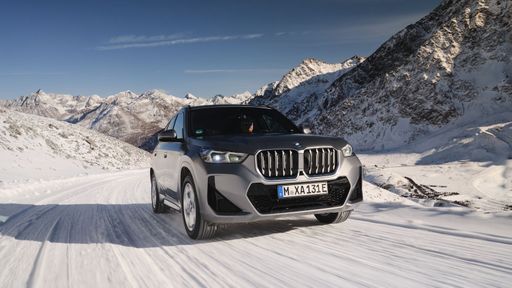
C-HR+

Cabin feel and perceived quality

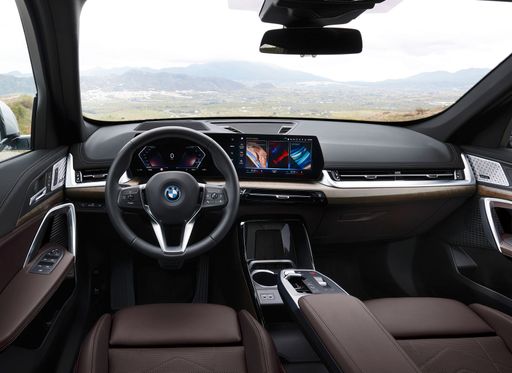
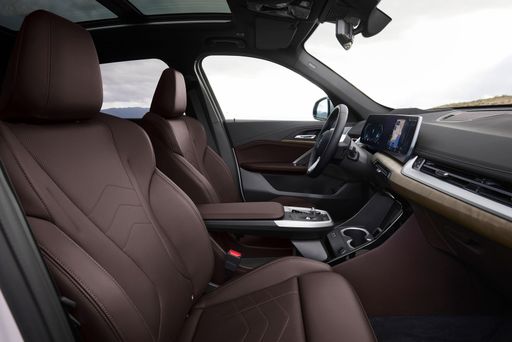
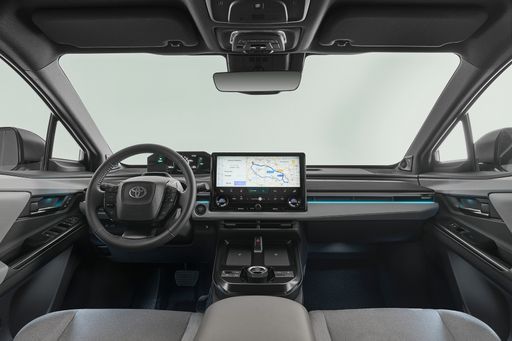
The BMW iX1 feels like it belongs in a higher tier: materials, panel fit and overall tactile quality give a clear premium impression that reassures daily. Toyota C‑HR+ has come a long way — the interior looks modern and clean, and its physical climate controls feel sensible — but it still reads a touch more utilitarian in the rear and lower‑trim areas. The iX1’s quieter cabin and more planted presence amplify the premium impression on longer drives, whereas the C‑HR+ uses straightforward ergonomics and fewer touchscreen layers to win points for usability. If surface quality and that “I paid up for this” feeling matter, the iX1 has the edge; if intuitive switches and a tidy, less fussy layout are your priority, the C‑HR+ will feel more straightforward and less attention‑seeking.

iX1

Comfort and long‑distance behavior

On motorways the BMW iX1 comes across as the more composed, quieter companion — its electric drivetrain and wind‑noise control make long stints less tiring, though its suspension can feel firm, especially with larger wheels. The Toyota C‑HR+ is comfortable and relaxed at steady cruise speeds and rewards mixed‑use driving with excellent real‑world efficiency, but its hybrid drivetrain can become audibly busy under strong acceleration. In practice that means the iX1 is better for buyers who spend more time at higher speeds and value silence and stability, while the C‑HR+ suits those who do lots of town and short‑to‑medium commutes and prioritise low running costs. Both are competent on longer trips, but they get there with different compromises: BMW through refinement, Toyota through economy.

C-HR+

Practicality and everyday usability

Practicality is an area where the BMW iX1 shows real strengths: a large, well‑shaped boot and a 40:20:40 split make loading awkward items and family gear easier than in the C‑HR+. The Toyota C‑HR+ pays for its efficient packaging with a smaller, higher‑lip luggage area (especially in PHEV form) and a tighter feeling in the rear seat, which can be awkward with bulky child seats or strollers. In tight garages and urban parking the C‑HR+’s compact footprint and nimble manners feel more forgiving, but the iX1’s parking cameras and assistants level the playing field if you value cargo capacity and flexible cabin layouts. Buyers who prioritise weekend gear, frequent luggage and a more versatile boot will find the iX1 more satisfying; buyers who mostly carry two people and care about running costs will accept the C‑HR+’s compromises.

iX1

City friendliness and daily driving traits

In the city the Toyota C‑HR+ feels at home: easy steering, a smaller turning circle and an efficient hybrid drive make short trips cheap and uncomplicated, and the cabin controls are refreshingly simple. The BMW iX1 remains usable in town thanks to one‑pedal driving and good driver aids, but its larger turn radius and firmer suspension make kerb‑to‑kerb manoeuvres slightly more demanding. The C‑HR+’s PHEV setup rewards owners who can plug in regularly, turning commutes into near‑silent electric runs, while the iX1 delivers the full EV experience without the routine of charging a petrol engine — a different kind of convenience. If most of your miles are urban and you want the lowest day‑to‑day costs, the C‑HR+ is the friendlier choice; if you prefer the simplicity of a full EV and a quieter urban cabin, the iX1 earns that vote.

C-HR+

Who each car suits — clear buyer fit before the numbers

Choose the BMW iX1 if you want a compact EV with a genuinely premium cabin, a roomy and practical boot for family life, and calm, composed long‑distance behavior even if you accept a firmer ride and higher purchase price. Opt for the Toyota C‑HR+ if your priority is urban efficiency, lower running costs when you charge regularly, easier parking and simpler controls, accepting tighter rear seats and a smaller PHEV boot as the trade‑off. Both cars have solid safety and assistance packages, so the decision comes down to whether you favour refinement and luggage flexibility (iX1) or day‑to‑day economy and city agility (C‑HR+). Below you’ll find the technical comparison that quantifies these trade‑offs so you can match the numbers to the lifestyle fit you just read about.

Here’s where it gets real: The technical differences in detail

iX1

Costs and Efficiency:

Price and efficiency are often the first things buyers look at. Here it becomes clear which model has the long-term edge – whether at the pump, the plug, or in purchase price.

Toyota C-HR+ is moderately cheaper – starting at 36,000 £ , while the BMW iX1 costs 42,300 £ . That’s a price difference of around 6,351 £.

In terms of energy consumption, the Toyota C-HR+ is only slightly more efficient: consuming 13.4 kWh/100km compared to 14.3 kWh/100km for the BMW iX1. That’s a difference of about 0.9 kWh/100km.

As for electric range, the Toyota C-HR+ offers slightly more range – reaching up to 607 km, about 93 km more than the BMW iX1.

C-HR+

Engine and Performance:

Under the bonnet, it becomes clear which model is tuned for sportiness and which one takes the lead when you hit the accelerator.

When it comes to engine power, the Toyota C-HR+ offers marginally more power – delivering 343 HP compared to 313 HP. That’s roughly 30 HP more horsepower.

When accelerating from 0 to 100 km/h, the Toyota C-HR+ is barely quicker – completing the sprint in 5.2 s, while the BMW iX1 takes 5.6 s. That’s about 0.4 s quicker.

There’s also a difference in torque: the BMW iX1 delivers clearly more torque with 494 Nm compared to 338 Nm. That’s about 156 Nm more.

iX1

Space and Everyday Use:

Cabin size, boot volume and payload all play a role in everyday practicality. Here, comfort and flexibility make the difference.

Both vehicles offer seating for 5 people.

In terms of curb weight, Toyota C-HR+ is only slightly lighter – 1,810 kg compared to 1,940 kg. The difference is around 130 kg.

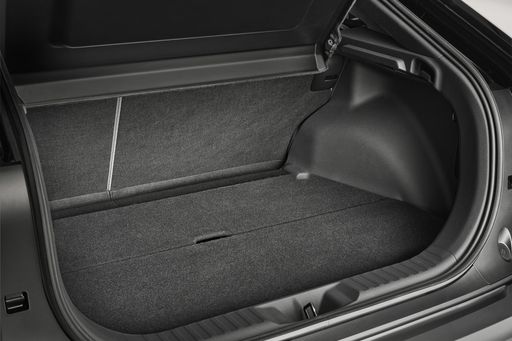
Looking at boot space, the BMW iX1 offers slightly more boot space – 490 L compared to 416 L. That’s a difference of about 74 L.

When it comes to payload, the Toyota C-HR+ carries markedly more – 655 kg compared to 495 kg. That’s a difference of about 160 kg.

Who wins the race in the data check?

The Toyota C-HR+ comes out clearly ahead in the objective data comparison.
This result only shows which model scores more points on paper – not which of the two cars feels right for you.

from £36,000
C-HR+

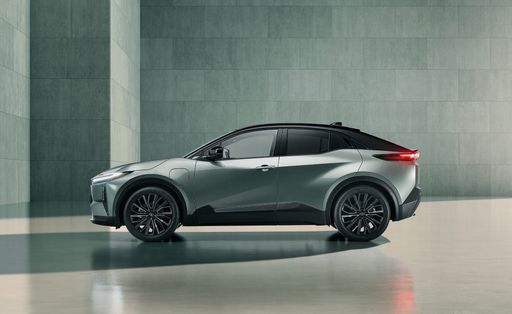
Toyota C-HR+

  • Engine Type : Electric
  • Transmission : Automatic
  • Drive Type : Front-Wheel Drive, All-Wheel Drive
  • Power HP : 167 - 343 HP
  • Consumption kWh/100km : 13.4 - 15.5 kWh/100km
  • Electric Range : 458 - 607 km
BMW iX1
Toyota C-HR+

Costs and Consumption

View detailed analysis

Engine and Performance

View detailed analysis

Dimensions and Body

View detailed analysis

BMW iX1

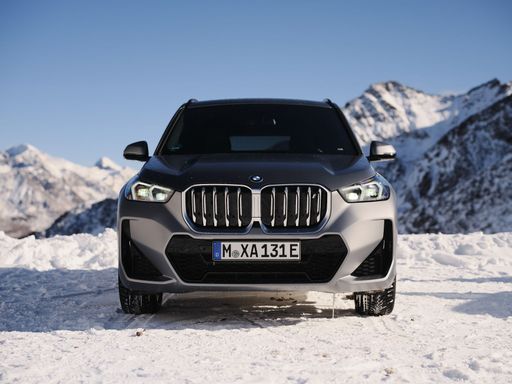
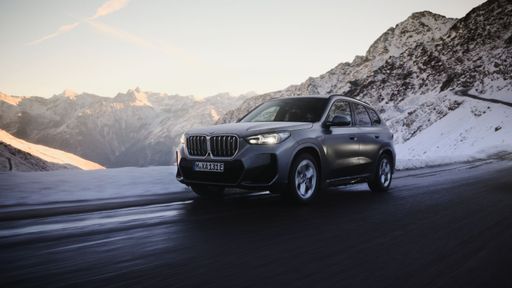
The BMW iX1 is a compact electric crossover that blends BMW's characteristic driving dynamics with a practical, premium interior, making it a strong choice for buyers who want an upscale daily driver with electric efficiency. It delivers composed handling for city and motorway use, while its clean, modern styling and intuitive tech give the cabin an inviting, contemporary feel.

details

Toyota C-HR+

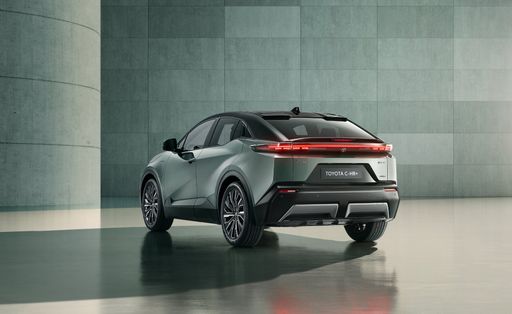
The Toyota C‑HR is a distinctive crossover that pairs bold, coupe‑like styling with a comfortable, composed ride suited to daily city and suburban driving. It appeals to buyers who value standout design, practical cabin packaging and a refined, easy‑to‑use experience rather than outright performance or rugged off‑road ability.

details
BMW iX1
Toyota C-HR+

Costs and Consumption

Price
42,300 - 55,200 £
Price
36,000 - 46,300 £
Consumption L/100km
-
Consumption L/100km
-
Consumption kWh/100km
14.3 - 15.7 kWh/100km
Consumption kWh/100km
13.4 - 15.5 kWh/100km
Electric Range
466 - 514 km
Electric Range
458 - 607 km
Battery Capacity
-
Battery Capacity
-
co2
0 g/km
co2
0 g/km
Fuel tank capacity
-
Fuel tank capacity
-

Dimensions and Body

Body Type
SUV
Body Type
SUV
Seats
5
Seats
5
Doors
-
Doors
-
Curb weight
1,940 - 2,085 kg
Curb weight
1,810 - 2,010 kg
Trunk capacity
490 L
Trunk capacity
416 L
Length
-
Length
-
Width
1,845 mm
Width
1,870 mm
Height
-
Height
-
Max trunk capacity
-
Max trunk capacity
-
Payload
495 kg
Payload
550 - 655 kg

Engine and Performance

Engine Type
Electric
Engine Type
Electric
Transmission
Automatic
Transmission
Automatic
Transmission Detail
Reduction Gearbox
Transmission Detail
Reduction Gearbox
Drive Type
Front-Wheel Drive, All-Wheel Drive
Drive Type
Front-Wheel Drive, All-Wheel Drive
Power HP
204 - 313 HP
Power HP
167 - 343 HP
Acceleration 0-100km/h
5.6 - 8.6 s
Acceleration 0-100km/h
5.2 - 8.4 s
Max Speed
-
Max Speed
-
Torque
250 - 494 Nm
Torque
268 - 338 Nm
Number of Cylinders
-
Number of Cylinders
-
Power kW
150 - 230 kW
Power kW
123 - 252 kW
Engine capacity
-
Engine capacity
-

General

Model Year
2026
Model Year
2026
CO2 Efficiency Class
A
CO2 Efficiency Class
A
Brand
BMW
Brand
Toyota
DriveDuel uses data analysis and artificial intelligence to evaluate vehicle data and create content. Content is regularly reviewed and improved. The displayed prices are estimates based on German list prices, adjusted to the respective country’s VAT. Country-specific registration taxes are not included. This information is not legally binding.