VS

Kia EV6 vs VW ID.7 Touring comparison

Compare performance (609 HP vs 340 HP), boot space and price (38,600 £ vs 47,100 £ ) at a glance. Find out which car is the better choice for you – Kia EV6 or VW ID.7 Touring?

Kia EV6 vs VW ID.7 Touring: Key differences

Kia EV6

5 (3 Reviews)
rate
  • clearly cheaper
  • significantly more power
  • substantially quicker 0–100 km/h
  • a bit lighter
details

VW ID.7 Touring

5 (2 Reviews)
rate
  • somewhat more efficient
  • somewhat more electric range
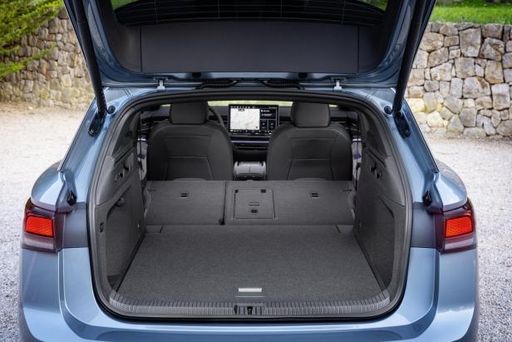
  • a bit more trunk space
details

All details on performance, efficiency, range and trunk space can be found in the technical comparison below – including user reviews for both models.

By Achim Sedelmaier

EV6

Quick take: Kia EV6 and VW ID.7 Touring

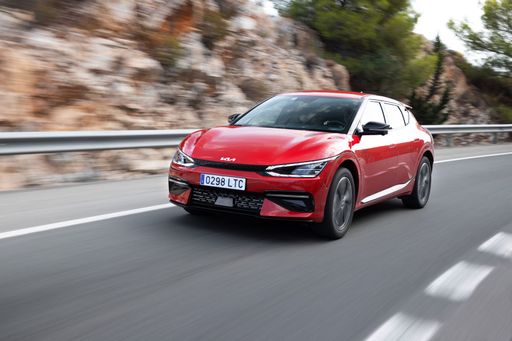
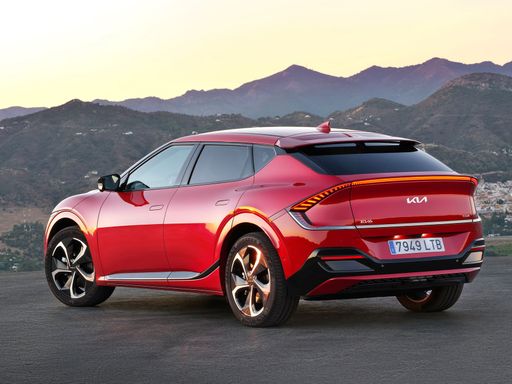
Kia EV6 and VW ID.7 Touring start from very different briefs, and the contrast matters to buyers weighing style, space and long‑distance comfort. The matchup — Kia EV6 VS VW ID.7 Touring — is really about a sporty, tech‑forward crossover against a sober, room‑first electric touring wagon. The EV6 sells itself on energetic driving, rapid charging and a more futuristic cabin feel, while the ID.7 Touring trades flash for exceptional highway composure and load‑carrying practicality. Read on to see which strengths matter more for daily life, family trips and frequent motorway miles.
ID.7 Touring

Driving character: sportiness versus serenity

The Kia EV6 feels alert and engaging on the road, with direct steering and a chassis that rewards a confident input; it’s the one you’ll choose when you want the car to respond. The VW ID.7 Touring is quieter and more planted, engineered to swallow miles without fuss rather than to excite on twisty roads. That means the EV6 delivers sharper, more communicative feedback, whereas the ID.7 Touring smooths out road irregularities and keeps occupants insulated from speed and wind. Drivers who prioritise involvement will prefer the EV6’s vibe, while frequent motorway commuters will favour the calm, settled behaviour of the ID.7 Touring.

EV6

Comfort and long‑distance behavior

On long hauls the difference becomes very tangible: the EV6 can feel firmer, especially on larger wheels, so it rewards those who accept a sportier ride for better body control. The ID.7 Touring leans into plush suspension and very low interior noise, turning extended drives into relaxed, less tiring journeys. Regenerative braking and assist systems are effective in both, but the EV6’s charging profile shortens necessary stops, which changes how you plan trips. If your priority is seated comfort and a whisper‑quiet cabin for many hours at a time, the ID.7 Touring is the more restful companion; the EV6 suits drivers who trade a bit of softness for dynamism and quicker recharge windows.

ID.7 Touring

Practicality and everyday usability

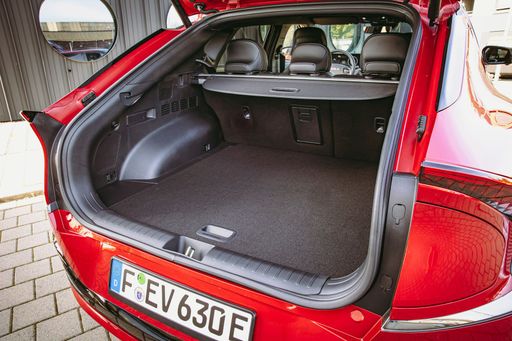
Functionally the two take different approaches: the EV6’s packaging gives excellent legroom and clever touches like a forward storage compartment, but its boot is shallower and the sloping roofline trims tall loads. The ID.7 Touring is deliberately more utilitarian with a larger, squareer load area, an adjustable floor and a wide tailgate that make loading buggies, boxes or suitcases far easier. Families will notice the ID.7 Touring’s simpler access and more forgiving cargo space when fitting child seats or a dog crate, whereas the EV6 asks a little more thought about how to stack bulkier items. In short, choose the EV6 for roomy rear seats and clever extras; choose the ID.7 Touring if maximum, practical luggage space and accessibility are priorities.

EV6

Cabin feel, controls and perceived quality

The EV6 presents a modern, slightly techy interior with tidy materials and a more driver‑focused layout, but some touch‑sensitive controls can be a nuisance in daily use. The VW ID.7 Touring feels calmer and more classically organised; materials are solid and the recent software tweaks make common tasks less fiddly, yet much of the car’s logic still runs through touchscreens. Visibility and parking behaviour differ too: the EV6 benefits from good camera systems to offset restricted rear sightlines, while the ID.7 Touring gives a more traditional, open feel around occupants and eases child‑seat installation. Both cabins feel well put together, but the EV6 leans futuristic and active, the ID.7 Touring towards sober refinement and ease of use.

ID.7 Touring

Buyer fit and the trade‑offs to consider before diving into specs

If you’re a tech‑minded driver who values brisk performance, very rapid charging and a modern crossover stance, the Kia EV6 will likely match your expectations better. If your life is filled with long motorway runs, family loading chores and a need for the calmest possible cabin, the VW ID.7 Touring is the more natural fit. The choice comes down to trade‑offs: sportier, quicker recharge cycles and rear‑seat space with the EV6, versus supreme highway comfort, a more usable boot and easier day‑to‑day family practicality with the ID.7 Touring. Next up, the technical comparison breaks down range, charging behaviour, weights and cargo details to help you decide which package aligns with how you actually drive and live.

Here’s where it gets real: The technical differences in detail

EV6

Costs and Efficiency:

Price and efficiency are key factors when choosing a car – and this is often where the real differences emerge.

Kia EV6 is clearly cheaper – starting at 38,600 £ , while the VW ID.7 Touring costs 47,100 £ . That’s a price difference of around 8,499 £.

In terms of energy consumption, the VW ID.7 Touring is somewhat more efficient: consuming 14 kWh/100km compared to 15.9 kWh/100km for the Kia EV6. That’s a difference of about 1.9 kWh/100km.

As for electric range, the VW ID.7 Touring offers somewhat more range – reaching up to 689 km, about 107 km more than the Kia EV6.

ID.7 Touring

Engine and Performance:

Power, torque and acceleration are the classic benchmarks for car enthusiasts – and here, some clear differences start to show.

When it comes to engine power, the Kia EV6 offers significantly more power – delivering 609 HP compared to 340 HP. That’s roughly 269 HP more horsepower.

When accelerating from 0 to 100 km/h, the Kia EV6 is substantially quicker – completing the sprint in 3.5 s, while the VW ID.7 Touring takes 5.5 s. That’s about 2 s quicker.

There’s also a difference in torque: the Kia EV6 delivers somewhat more torque with 770 Nm compared to 679 Nm. That’s about 91 Nm more.

EV6

Space and Everyday Use:

Whether family car or daily driver – which one offers more room, flexibility and comfort?

Both vehicles offer seating for 5 people.

In terms of curb weight, Kia EV6 is a bit lighter – 1,955 kg compared to 2,191 kg. The difference is around 236 kg.

Looking at boot space, the VW ID.7 Touring offers a bit more boot space – 605 L compared to 490 L. That’s a difference of about 115 L.

When it comes to payload, the VW ID.7 Touring carries only slightly more – 465 kg compared to 450 kg. That’s a difference of about 15 kg.

Who wins the race in the data check?

The Kia EV6 holds a decisive overall lead in the objective data comparison.
This result only shows which model scores more points on paper – not which of the two cars feels right for you.

from £38,600
EV6

Kia EV6

  • Engine Type : Electric
  • Transmission : Automatic
  • Drive Type : Rear-Wheel Drive, All-Wheel Drive
  • Power HP : 170 - 609 HP
  • Consumption kWh/100km : 15.9 - 20.9 kWh/100km
  • Electric Range : 428 - 582 km
Kia EV6
VW ID.7 Touring

Costs and Consumption

View detailed analysis

Engine and Performance

View detailed analysis

Dimensions and Body

View detailed analysis

Kia EV6

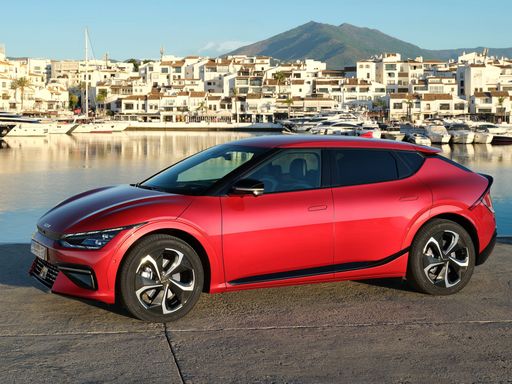
The Kia EV6 looks like it sprinted off a concept stage, its bold, futuristic lines wrapping a surprisingly spacious and grown-up cabin. On the road it delivers crisp, immediate thrust and composed handling, with enough everyday practicality and slick tech to make ditching petrol feel like an upgrade rather than a compromise.

details

VW ID.7 Touring

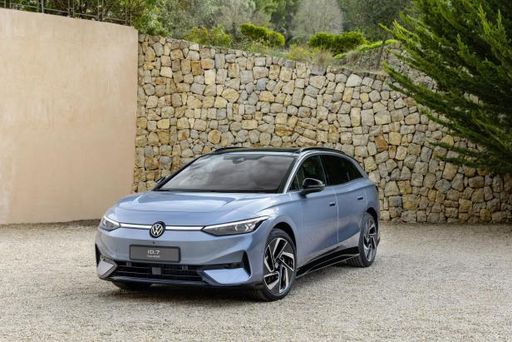
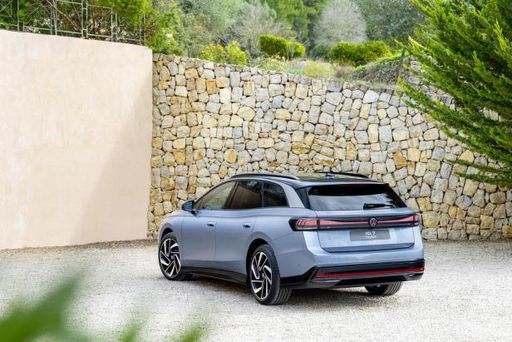
The VW ID.7 Touring blends sleek, aerodynamic fastback looks with estate practicality, delivering an electric family car that looks grown-up and feels refined. Inside it's calm and spacious with clever storage and modern tech, swallowing suitcases and weekend plans with ease — a sensible, slightly flashy choice for buyers who want electric comfort without giving up practicality.

details
Kia EV6
VW ID.7 Touring

Costs and Consumption

Price
38,600 - 60,000 £
Price
47,100 - 54,900 £
Consumption L/100km
-
Consumption L/100km
-
Consumption kWh/100km
15.9 - 20.9 kWh/100km
Consumption kWh/100km
14 - 16.6 kWh/100km
Electric Range
428 - 582 km
Electric Range
584 - 689 km
Battery Capacity
-
Battery Capacity
77 - 86 kWh
co2
0 g/km
co2
0 g/km
Fuel tank capacity
-
Fuel tank capacity
-

Dimensions and Body

Body Type
SUV
Body Type
Estate
Seats
5
Seats
5
Doors
-
Doors
5
Curb weight
1,955 - 2,220 kg
Curb weight
2,191 - 2,336 kg
Trunk capacity
480 - 490 L
Trunk capacity
605 L
Length
-
Length
4,961 mm
Width
1,880 - 1,890 mm
Width
1,862 mm
Height
-
Height
1,549 - 1,551 mm
Max trunk capacity
-
Max trunk capacity
1,714 L
Payload
440 - 450 kg
Payload
459 - 465 kg

Engine and Performance

Engine Type
Electric
Engine Type
Electric
Transmission
Automatic
Transmission
Automatic
Transmission Detail
Reduction Gearbox
Transmission Detail
Reduction Gearbox
Drive Type
Rear-Wheel Drive, All-Wheel Drive
Drive Type
Rear-Wheel Drive, All-Wheel Drive
Power HP
170 - 609 HP
Power HP
286 - 340 HP
Acceleration 0-100km/h
3.5 - 8.7 s
Acceleration 0-100km/h
5.5 - 6.7 s
Max Speed
-
Max Speed
180 km/h
Torque
350 - 770 Nm
Torque
545 - 679 Nm
Number of Cylinders
-
Number of Cylinders
-
Power kW
125 - 448 kW
Power kW
210 - 250 kW
Engine capacity
-
Engine capacity
-

General

Model Year
2,024 - 2,025
Model Year
2024
CO2 Efficiency Class
A
CO2 Efficiency Class
A
Brand
Kia
Brand
VW
DriveDuel uses data analysis and artificial intelligence to evaluate vehicle data and create content. Content is regularly reviewed and improved. The displayed prices are estimates based on German list prices, adjusted to the respective country’s VAT. Country-specific registration taxes are not included. This information is not legally binding.