VS

Audi Q4 e-tron vs Kia EV3 comparison

Compare performance (340 HP vs 265 HP), boot space and price (40,700 £ vs 40,200 £ ) at a glance. Find out which car is the better choice for you – Audi Q4 e-tron or Kia EV3?

Audi Q4 e-tron vs Kia EV3: Key differences

Audi Q4 e-tron

4.9 (2 Reviews)
rate
  • clearly more power
  • very slightly more efficient
  • barely more electric range
  • markedly quicker 0–100 km/h
  • visibly more trunk space
details

Kia EV3

4.6 (5 Reviews)
rate
  • very slightly cheaper
  • very slightly lighter
details

All details on performance, efficiency, range and trunk space can be found in the technical comparison below – including user reviews for both models.

By Achim Sedelmaier

Q4 e-tron

Overview: Audi Q4 e-tron vs Kia EV3 — two sensible electric SUVs with different priorities

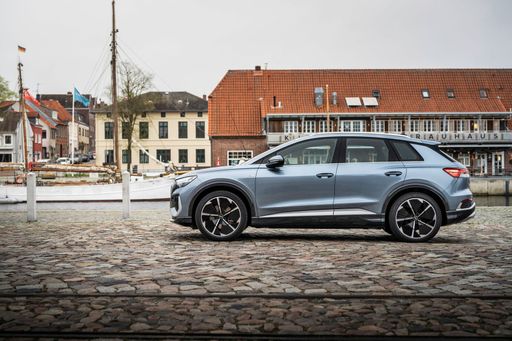
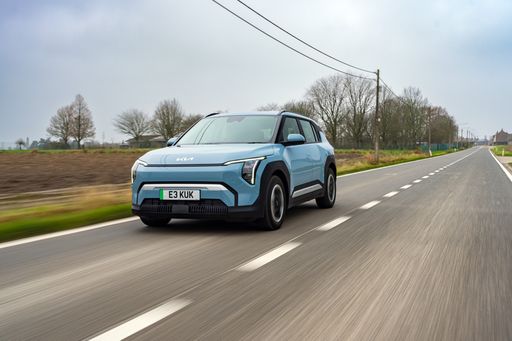
Audi Q4 e-tron vs Kia EV3 pits a quietly refined, comfort-first compact EV against a pragmatic, efficiency-minded rival that prioritizes space and running costs. The Audi Q4 e-tron leans into a calm, premium experience that feels like “an Audi turned electric,” whereas the Kia EV3 prefers utility, straightforward tech and a better value proposition. Both are family-friendly compact SUVs, but they arrive at that goal from different angles: the Q4 with polish and motorway composure, the EV3 with pragmatic packaging and lower ongoing cost. Choosing between them comes down to whether you value cultivated refinement or everyday usefulness more.
EV3

Character and driving feel

The Audi Q4 e-tron feels composed, linear and deliberately engineered to smooth out motorway miles; its steering and suspension emphasize stability over excitement. The Kia EV3 is more workmanlike—light, predictable and built around efficiency—so it never feels sporty but is effortless in town and on steady trips. Where the Q4 masks mass and soothes occupants, the EV3 trades that hush for sharper economy and very usable regenerative braking that makes one-pedal driving genuinely practical. If you want plush, settled cruising choose the Audi Q4 e-tron; if you want uncomplicated, economical urban and commuter manners pick the Kia EV3.

Q4 e-tron

Comfort, cabin feel and perceived quality

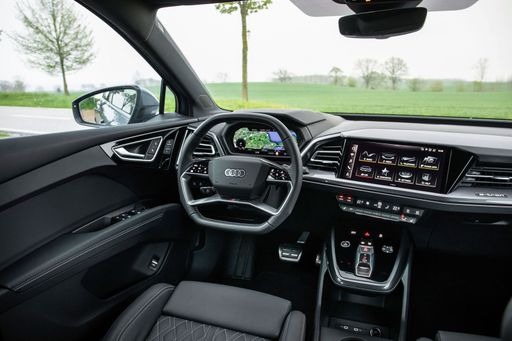
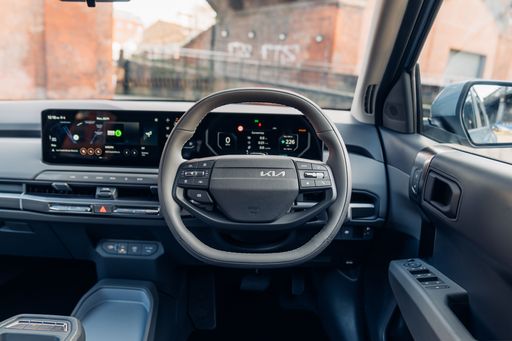
Inside, the Audi Q4 e-tron projects a quieter, more composed cabin at speed, with controls and ergonomics that feel familiar to premium buyers, though some hard plastics temper the “luxury” impression. The Kia EV3 offers comfortable seats and a high, confident driving position with better outward visibility, and its materials have improved—yet it still reads as value-focused rather than sumptuous. Noise-wise the Q4 generally keeps wind and road intrusion lower on long runs, while the EV3 can show more tyre roar on rough surfaces. For buyers who prize a hushed, premium ambience the Audi Q4 e-tron will appeal; those prioritizing clear sightlines, supportive seats and an honest value feel will prefer the Kia EV3.

EV3

Practicality and everyday usability

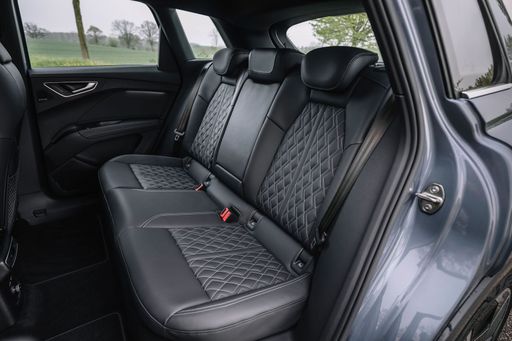
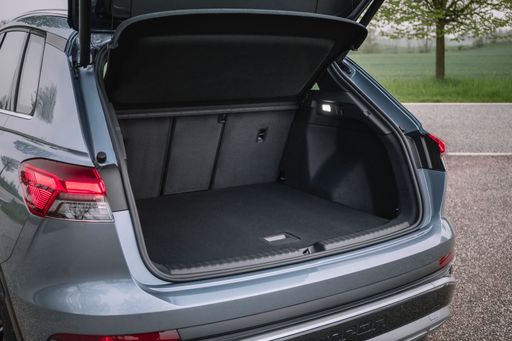
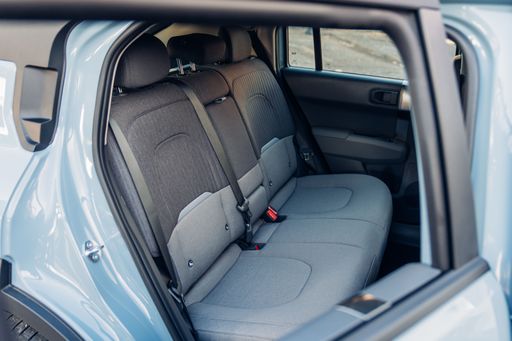
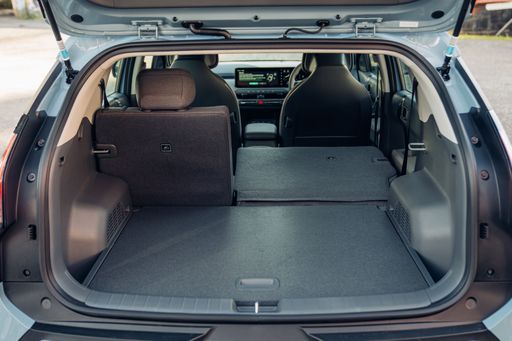
Both cars are family-capable, but they solve packaging differently: the Audi Q4 e-tron gives a very usable rear floor and abundant legroom that makes child seats and long back-seat stretches less fussy. The Kia EV3 counters with clever luggage flexibility and a small front storage compartment that adds day-to-day convenience, plus a generally more generous feature list for the money. The Q4’s larger boot and flat load area feel less cluttered for bulky grocery runs, whereas the EV3’s layout and lower running costs win when you’re juggling school runs and longer errands. If you frequently carry wide loads or taller adults in the rear, the Audi Q4 e-tron nudges ahead; if you want sensible storage options and a frunk for cables, the Kia EV3 is the more practical pick.

Q4 e-tron

City friendliness versus long-distance behavior

The Kia EV3’s compact manners, one-pedal capability and light steering make it an easy city partner and economical commuter; its efficiency stretches your real-world range and reduces daily charging needs. The Audi Q4 e-tron, while still city-capable, really shines on the motorway where its calmness, insulation and charging pace make long legs less tiring and stops more predictable. EV3 owners will enjoy fewer charges and lower running costs for mixed commutes, but drivers who spend lots of time at higher speeds or who prefer shorter high‑power charging stops will appreciate what the Q4 brings. In short, pick the EV3 for efficient urban and mixed use, pick the Q4 e-tron for relaxed long-distance touring.

EV3

Buyer fit and the trade-offs that matter

If your priority is a composed, premium-feeling daily with extra rear comfort and motorway composure, the Audi Q4 e-tron is the better match; it rewards drivers who value refinement and straightforward controls even if the option list adds cost. If you’re budget- and practicality-minded—wanting strong real-world range, clever luggage solutions and a lower cost of ownership—the Kia EV3 is the sensible, no-nonsense choice that covers most family needs. Both cars are solid all-rounders, but they suit different lives: the Q4 for comfort-oriented commuters and small families who do long runs, the EV3 for pragmatic buyers who want space and efficiency without the premium price. The technical comparison that follows will unpack how power, charging behavior, range and cargo figures translate into everyday use for each model.

Here’s where it gets real: The technical differences in detail

Q4 e-tron

Costs and Efficiency:

Price and efficiency are key factors when choosing a car – and this is often where the real differences emerge.

Kia EV3 is very slightly cheaper – starting at 40,200 £ , while the Audi Q4 e-tron costs 40,700 £ . That’s a price difference of around 532 £.

In terms of energy consumption, the Audi Q4 e-tron is very slightly more efficient: consuming 14.8 kWh/100km compared to 15.8 kWh/100km for the Kia EV3. That’s a difference of about 1 kWh/100km.

As for electric range, the Audi Q4 e-tron offers barely more range – reaching up to 592 km, about 20 km more than the Kia EV3.

EV3

Engine and Performance:

Power, torque and acceleration say a lot about how a car feels on the road. This is where you see which model delivers more driving dynamics.

When it comes to engine power, the Audi Q4 e-tron offers clearly more power – delivering 340 HP compared to 265 HP. That’s roughly 75 HP more horsepower.

When accelerating from 0 to 100 km/h, the Audi Q4 e-tron is markedly quicker – completing the sprint in 5.4 s, while the Kia EV3 takes 6.6 s. That’s about 1.2 s quicker.

There’s also a difference in torque: the Audi Q4 e-tron delivers clearly more torque with 679 Nm compared to 385 Nm. That’s about 294 Nm more.

Q4 e-tron

Space and Everyday Use:

Whether family car or daily driver – which one offers more room, flexibility and comfort?

Both vehicles offer seating for 5 people.

In terms of curb weight, Kia EV3 is very slightly lighter – 1,995 kg compared to 2,035 kg. The difference is around 40 kg.

Looking at boot space, the Audi Q4 e-tron offers visibly more boot space – 535 L compared to 413 L. That’s a difference of about 122 L.

When it comes to payload, the Audi Q4 e-tron carries barely more – 515 kg compared to 485 kg. That’s a difference of about 30 kg.

Who wins the race in the data check?

The Audi Q4 e-tron is decisively ahead in the objective data comparison.
This result only shows which model scores more points on paper – not which of the two cars feels right for you.

from £40,700
Q4 e-tron

Audi Q4 e-tron

  • Engine Type : Electric
  • Transmission : Automatic
  • Drive Type : Rear-Wheel Drive, All-Wheel Drive
  • Power HP : 204 - 340 HP
  • Consumption kWh/100km : 14.8 - 16.2 kWh/100km
  • Electric Range : 440 - 592 km
Audi Q4 e-tron
Kia EV3

Costs and Consumption

View detailed analysis

Engine and Performance

View detailed analysis

Dimensions and Body

View detailed analysis

Audi Q4 e-tron

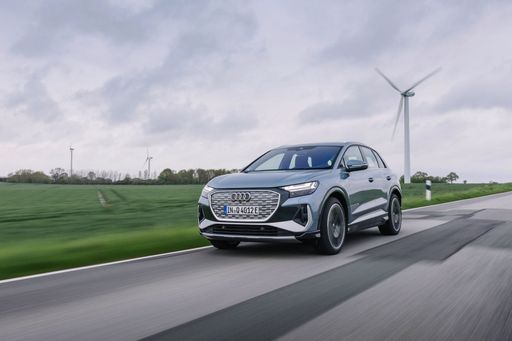
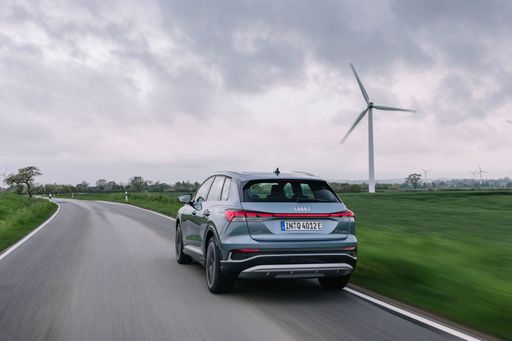
The Audi Q4 e-tron blends Audi’s clean, modern styling with a practical, well-built interior, making it a refined option for buyers who want a premium electric compact SUV. It offers a quiet, composed ride and intuitive tech, so it’s well suited to daily commuting and family duties while keeping the switch to electric straightforward.

details

Kia EV3

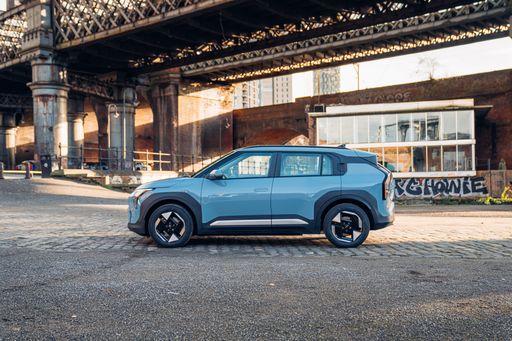
The Kia EV3 is a stylish, user-friendly electric crossover that focuses on practicality and a roomy, well-equipped cabin. It delivers a comfortable ride with intuitive technology and efficient everyday performance, making it a sensible choice for city and family use.

details
Audi Q4 e-tron
Kia EV3

Costs and Consumption

Price
40,700 - 53,100 £
Price
40,200 - 43,900 £
Consumption L/100km
-
Consumption L/100km
-
Consumption kWh/100km
14.8 - 16.2 kWh/100km
Consumption kWh/100km
15.8 kWh/100km
Electric Range
440 - 592 km
Electric Range
572 km
Battery Capacity
-
Battery Capacity
-
co2
0 g/km
co2
0 g/km
Fuel tank capacity
-
Fuel tank capacity
-

Dimensions and Body

Body Type
SUV
Body Type
SUV
Seats
5
Seats
5
Doors
-
Doors
-
Curb weight
2,035 - 2,235 kg
Curb weight
1,995 kg
Trunk capacity
515 - 535 L
Trunk capacity
413 L
Length
-
Length
-
Width
1,865 mm
Width
1,850 mm
Height
-
Height
-
Max trunk capacity
-
Max trunk capacity
-
Payload
505 - 515 kg
Payload
485 kg

Engine and Performance

Engine Type
Electric
Engine Type
Electric
Transmission
Automatic
Transmission
Automatic
Transmission Detail
Reduction Gearbox
Transmission Detail
Reduction Gearbox
Drive Type
Rear-Wheel Drive, All-Wheel Drive
Drive Type
All-Wheel Drive
Power HP
204 - 340 HP
Power HP
265 HP
Acceleration 0-100km/h
5.4 - 8.1 s
Acceleration 0-100km/h
6.6 s
Max Speed
-
Max Speed
-
Torque
350 - 679 Nm
Torque
385 Nm
Number of Cylinders
-
Number of Cylinders
-
Power kW
150 - 250 kW
Power kW
195 kW
Engine capacity
-
Engine capacity
-

General

Model Year
2026
Model Year
2026
CO2 Efficiency Class
A
CO2 Efficiency Class
A
Brand
Audi
Brand
Kia
DriveDuel uses data analysis and artificial intelligence to evaluate vehicle data and create content. Content is regularly reviewed and improved. The displayed prices are estimates based on German list prices, adjusted to the respective country’s VAT. Country-specific registration taxes are not included. This information is not legally binding.