VS

Kia EV3 vs MINI Countryman comparison

Compare performance (265 HP vs 313 HP), boot space and price (40,200 £ vs 30,100 £ ) at a glance. Find out which car is the better choice for you – Kia EV3 or MINI Countryman?

Kia EV3 vs MINI Countryman: Key differences

Kia EV3

4.7 (3 Reviews)
rate
  • a bit more electric range
details

MINI Countryman

5 (1 Reviews)
rate
  • visibly cheaper
  • slightly more power
  • very slightly more efficient
  • somewhat quicker 0–100 km/h
  • noticeably lighter
  • slightly more trunk space
details

All details on performance, efficiency, range and trunk space can be found in the technical comparison below – including user reviews for both models.

By Achim Sedelmaier

EV3

Overview: Kia EV3 and MINI Countryman at a glance

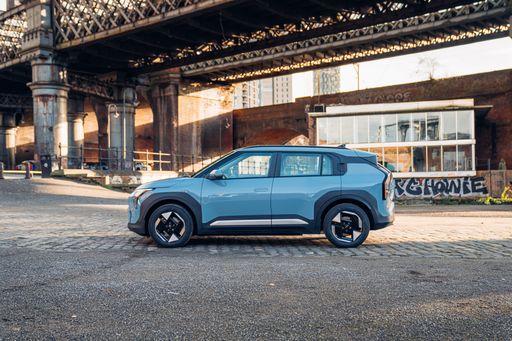
Kia EV3 and the MINI Countryman arrive as very different answers to the compact‑SUV buyer’s question: the Kia EV3 is built around pragmatic electric range and cargo practicality, while the MINI Countryman trades on style, cabin polish and a more premium on‑road demeanour. The contrast is easy to spot in everyday life — the EV3 feels engineered for useful miles and luggage, the Countryman for a quieter, more curated cabin experience. In this head‑to‑head the Kia EV3 VS MINI Countryman debate becomes a choice of compromises: range and utility versus refinement and brand character. Below we unpick how those choices matter for comfort, usability and real‑world ownership.
Countryman

Driving character: relaxed efficiency versus composed shove

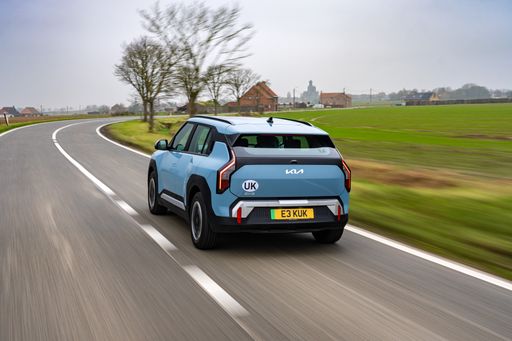
Driving character marks the clearest divide: the Kia EV3 prefers a relaxed, comfort‑first mood, soaking up imperfections and delivering composed motorway miles with minimal fuss. The MINI Countryman, by contrast, feels firmer and more collected, its chassis prioritising control over float and its stronger drivetrains give a more decisive shove when you need to merge or overtake. If you like a quiet, sedate cruiser that stretches a battery’s range, the EV3’s calm demeanour will feel sensible; if you want sharper throttle response and a more assured shove down the motorway, the Countryman leans that way. Neither car is aimed at track excess — the EV3 trades engagement for stability, and the Countryman, while more assured, won’t recreate classic MINI go‑kart antics.

EV3

Comfort and long‑distance behaviour: seats, noise and cabin tone

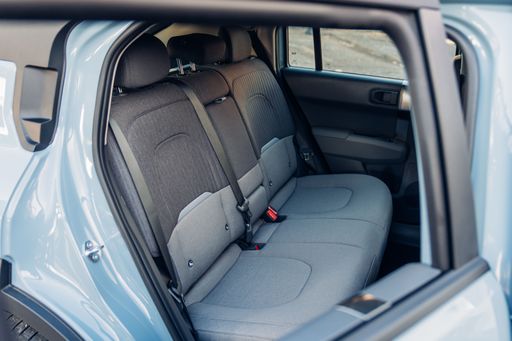
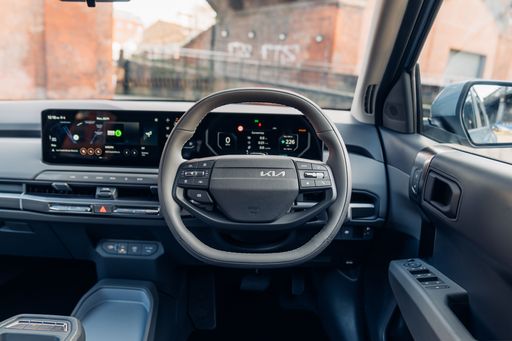
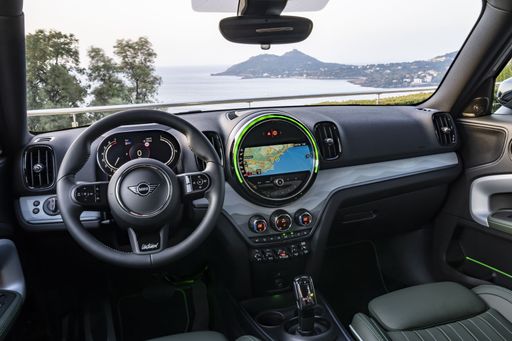
On long runs the Kia EV3’s softer suspension and comfortable front seats keep fatigue at bay, but the high battery floor means taller rear passengers can feel compromised thigh support after hours on the road. The MINI Countryman impresses with a quieter cabin at speed and a generally more premium ambience — materials and lighting give it a grown‑up feel that rewards motorway miles. That said, the Countryman’s firmer setup transmits sharper bumps and curb hits more readily, so rough secondary roads reveal its limits compared with the EV3’s cushioning. Both cars have infotainment quirks that can grate on long trips — the EV3 with assistant chimes and nested menus, the Countryman with a charming but occasionally fussy round OLED — so expect some screen fiddling en route.

Countryman

Practicality and family usability: cargo, seating and everyday chores

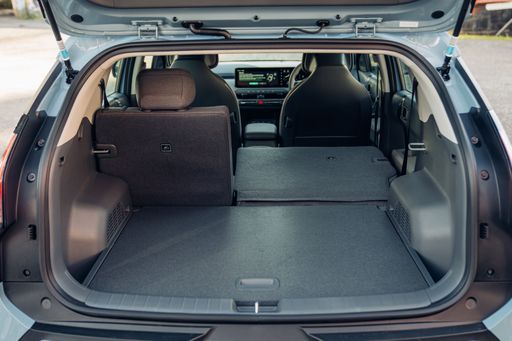
Practicality is where the Kia EV3 makes a strong case: a genuinely large boot, a small frunk and wide rear doors mean child seats, pushchairs and luggage fit with minimal drama. The MINI Countryman gives more rear headroom and, in non‑electric versions, a sliding bench for extra flexibility, which will appeal to families who frequently shift passengers and gear. However, the Countryman’s higher loading lip and some loss of cargo volume in electric variants make bulky items slightly more awkward to stow than in the Kia EV3. Both score well on safety tech and ISOFIX provision, but the everyday winner depends on whether you move tall people or bulky boxes more often.

EV3

City friendliness and daily usability: parking, visibility and controls

In town the Kia EV3 feels smaller and simpler to live with — tight turning, excellent visibility from a higher seat and one‑pedal regen make stop‑start commuting less fiddly. The MINI Countryman is still very city‑capable thanks to good front visibility and parking aids, but its firmer suspension and screen‑centric controls can make short hops feel less relaxed. Both cars have tech trade‑offs: the EV3’s driver assistance can be chatty with warnings, while the Countryman’s round display looks great but sometimes forces extra taps to reach common functions. If most of your miles are urban loops, the EV3’s ease of use and usable storage give it a practical edge; if you split days between town and motorway and want a more composed cabin, the Countryman is the more polished companion.

Countryman

Buyer fit and where to look next

Which is right depends on priorities: choose the Kia EV3 if straightforward value, long real‑world electric range and a capacious boot top your list; pick the MINI Countryman if quieter motorway miles, rear passenger space and cabin ambience matter more. Budget‑minded buyers will appreciate the EV3’s sensible equipment and ownership economics, while shoppers chasing a personalised interior and stronger mid‑range performance should expect to spend on MINI options. Also weigh charging and trip habits: the EV3’s efficient range eases planning but comes with middling peak charging behaviour, whereas the Countryman rewards those who prioritise refinement and on‑road confidence. The technical comparison that follows breaks down the systems that create these real‑world differences so you can match spec to need without guessing how each car will behave day after day.

Here’s where it gets real: The technical differences in detail

EV3

Costs and Efficiency:

Looking at overall running costs, both models reveal some interesting differences in everyday economy.

MINI Countryman is visibly cheaper – starting at 30,100 £ , while the Kia EV3 costs 40,200 £ . That’s a price difference of around 10,097 £.

In terms of energy consumption, the MINI Countryman is very slightly more efficient: consuming 14.8 kWh/100km compared to 15.8 kWh/100km for the Kia EV3. That’s a difference of about 1 kWh/100km.

As for electric range, the Kia EV3 offers a bit more range – reaching up to 572 km, about 75 km more than the MINI Countryman.

Countryman

Engine and Performance:

Power, torque and acceleration are the classic benchmarks for car enthusiasts – and here, some clear differences start to show.

When it comes to engine power, the MINI Countryman offers slightly more power – delivering 313 HP compared to 265 HP. That’s roughly 48 HP more horsepower.

When accelerating from 0 to 100 km/h, the MINI Countryman is somewhat quicker – completing the sprint in 5.6 s, while the Kia EV3 takes 6.6 s. That’s about 1 s quicker.

There’s also a difference in torque: the MINI Countryman delivers noticeably more torque with 494 Nm compared to 385 Nm. That’s about 109 Nm more.

EV3

Space and Everyday Use:

Cabin size, boot volume and payload all play a role in everyday practicality. Here, comfort and flexibility make the difference.

Both vehicles offer seating for 5 people.

In terms of curb weight, MINI Countryman is noticeably lighter – 1,570 kg compared to 1,995 kg. The difference is around 425 kg.

Looking at boot space, the MINI Countryman offers slightly more boot space – 460 L compared to 413 L. That’s a difference of about 47 L.

When it comes to payload, the MINI Countryman carries only slightly more – 500 kg compared to 485 kg. That’s a difference of about 15 kg.

Who wins the race in the data check?

The MINI Countryman is decisively ahead in the objective data comparison.
This result only shows which model scores more points on paper – not which of the two cars feels right for you.

from £30,100
Countryman

MINI Countryman

  • Engine Type : Petrol MHEV, Electric
  • Transmission : Automatic
  • Drive Type : Front-Wheel Drive, All-Wheel Drive
  • Power HP : 122 - 313 HP
  • Consumption L/100km : 5.9 - 6.5 L/100km
  • Consumption kWh/100km : 14.8 - 15.9 kWh/100km
  • Electric Range : 463 - 497 km
Kia EV3
MINI Countryman

Costs and Consumption

View detailed analysis

Engine and Performance

View detailed analysis

Dimensions and Body

View detailed analysis

Kia EV3

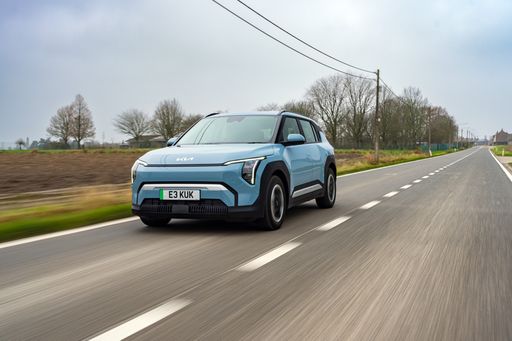
The Kia EV3 arrives as a cheeky, practical electric compact that manages to feel both premium and playful, delivering crisp handling and a roomy cabin that's perfect for urban life. With smart tech, friendly styling and sensible pricing, the EV3 is the kind of car that makes switching to electric feel like a no-brainer without asking you to give anything important up.

details

MINI Countryman

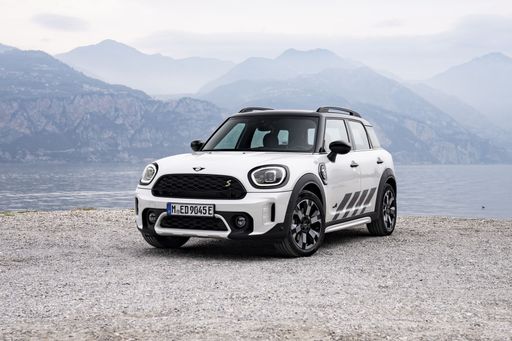
The MINI Countryman turns the cheeky charm of a classic MINI into a proper all-rounder, blending playful styling with surprisingly usable space for everyday life. It still grins at city lights but will happily tackle muddy lanes, perfect for buyers who want character without sacrificing practicality.

details
Kia EV3
MINI Countryman

Costs and Consumption

Price
40,200 - 43,900 £
Price
30,100 - 39,900 £
Consumption L/100km
-
Consumption L/100km
5.9 - 6.5 L/100km
Consumption kWh/100km
15.8 kWh/100km
Consumption kWh/100km
14.8 - 15.9 kWh/100km
Electric Range
572 km
Electric Range
463 - 497 km
Battery Capacity
-
Battery Capacity
-
co2
0 g/km
co2
0 - 149 g/km
Fuel tank capacity
-
Fuel tank capacity
-

Dimensions and Body

Body Type
SUV
Body Type
SUV
Seats
5
Seats
5
Doors
-
Doors
-
Curb weight
1,995 kg
Curb weight
1,570 - 2,075 kg
Trunk capacity
413 L
Trunk capacity
450 - 460 L
Length
-
Length
-
Width
1,850 mm
Width
1,843 mm
Height
-
Height
-
Max trunk capacity
-
Max trunk capacity
-
Payload
485 kg
Payload
475 - 500 kg

Engine and Performance

Engine Type
Electric
Engine Type
Petrol MHEV, Electric
Transmission
Automatic
Transmission
Automatic
Transmission Detail
Reduction Gearbox
Transmission Detail
Dual-Clutch Automatic, Reduction Gearbox
Drive Type
All-Wheel Drive
Drive Type
Front-Wheel Drive, All-Wheel Drive
Power HP
265 HP
Power HP
122 - 313 HP
Acceleration 0-100km/h
6.6 s
Acceleration 0-100km/h
5.6 - 10.5 s
Max Speed
-
Max Speed
-
Torque
385 Nm
Torque
230 - 494 Nm
Number of Cylinders
-
Number of Cylinders
3
Power kW
195 kW
Power kW
90 - 230 kW
Engine capacity
-
Engine capacity
1,499 cm3

General

Model Year
2026
Model Year
2026
CO2 Efficiency Class
A
CO2 Efficiency Class
D, A, E
Brand
Kia
Brand
MINI
DriveDuel uses data analysis and artificial intelligence to evaluate vehicle data and create content. Content is regularly reviewed and improved. The displayed prices are estimates based on German list prices, adjusted to the respective country’s VAT. Country-specific registration taxes are not included. This information is not legally binding.