VS

Kia Sportage vs Renault Austral comparison

Compare performance (288 HP vs 200 HP), boot space and price (30,200 £ vs 29,900 £ ) at a glance. Find out which car is the better choice for you – Kia Sportage or Renault Austral?

Kia Sportage vs Renault Austral: Key differences

Kia Sportage

4.9 (2 Reviews)
rate
  • visibly more power
  • significantly more efficient
  • a bit quicker 0–100 km/h
  • slightly more trunk space

Renault Austral

4.9 (5 Reviews)
rate
  • only slightly cheaper
  • very slightly lighter

All details on performance, efficiency, range and trunk space can be found in the technical comparison below – including user reviews for both models.

By Achim Sedelmaier

Sportage

Morning Commute, Evening Escape

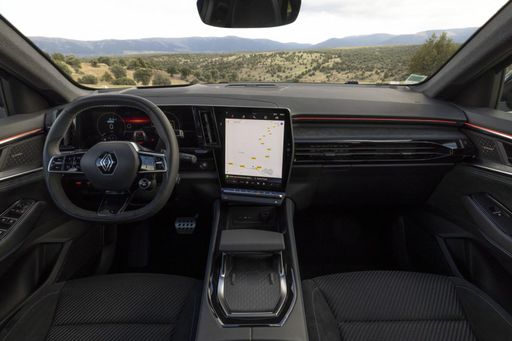
On the daily grind both cars aim to make the commute bearable, but they bring different temperaments to the job: the Kia Sportage arrives with a perkier, more assured shove that makes traffic and onramps feel less like chores, while the Renault Austral prefers to cocoon occupants with a composed, effortless glide that soothes long motorway miles. City manoeuvres and parking feel lighter in one, while the other rewards you on sweeping B-roads with composed progress. Whichever way you travel, each car caters to a different idea of what “easy to live with” should feel like.
Austral

Cabin Comfort and Material Feel

The interiors tell the story before you turn the key: the Renault Austral leans into refinement with a calm, modern layout and a quiet, premium ambience that makes long trips feel grown-up, whereas the Kia Sportage trades some of that hush for a more lively, feature-packed environment that feels like bang-for-buck. Controls and screen menus are more intuitive in one and more tactile in the other, so your preference will depend on whether you prioritise fuss-free luxury or straightforward usability. Both cabins are thoughtfully executed, but they aim at slightly different emotional tones.

Sportage

Seat of Power: How They Drive

If driving is part of your daily joy, the Kia Sportage tends to reward with sportier responses and a more planted feel through bends, while the Renault Austral puts comfort and composure first, smoothing out road imperfections in a way that preserves passenger serenity. Steering weight and chassis tuning create two distinct personalities: one eager and alert, the other relaxed and measured. Pick based on whether you want a car that engages or one that pampers.

Austral

Family Life and Weekend Practicality

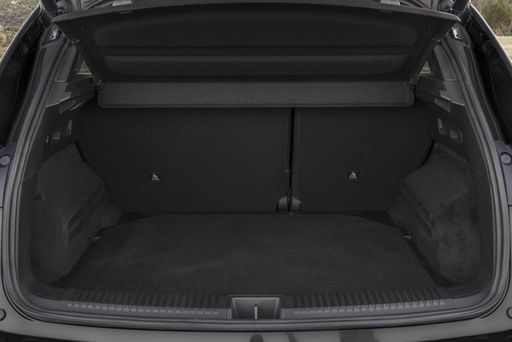
Both SUVs are pragmatic companions for grocery runs, school runs and the occasional flat-pack rescue mission, but they balance practicality differently: one prioritises flexible load space and user-friendly cargo solutions, while the other focuses on passenger comfort and refinement in everyday use. Rear-seat space and access feel adult-friendly, and both manage to accommodate family life without fuss. Small touches—like storage nooks and simple latch points—make a big difference in week-to-week usability.

Sportage

Style That Turns Heads

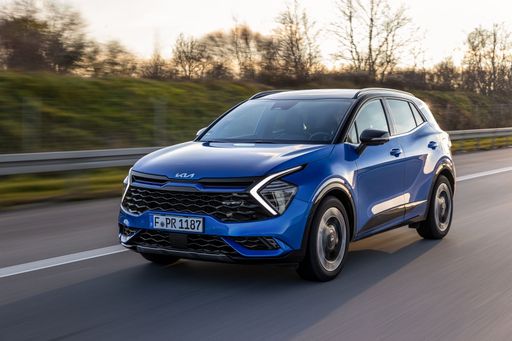
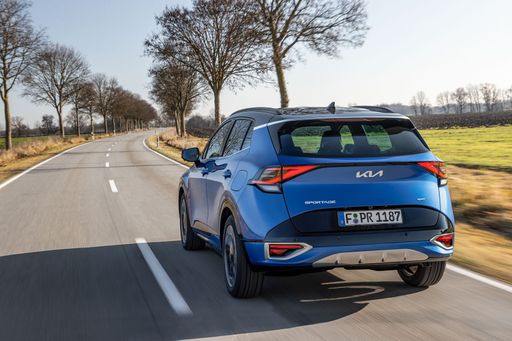
Design is subjective, yet both models project confidence: the Kia Sportage makes a bold, athletic statement with sharper creases and a more assertive stance, while the Renault Austral opts for classier, understated lines that hint at elegance rather than aggression. Interiors follow suit, one skewing toward sporty drama and the other toward modern restraint. If aesthetics are high on your shopping list, think about whether you want to be loudly noticed or quietly admired.

Austral

Ownership Mood

Living with either car will be shaped by how you feel about equipment, perceived value and everyday running — one model gives the impression of packing more kit for the money and a no-nonsense approach to ownership, while the other cultivates a more premium, buttoned-up ownership experience that aims to reward calm, long-term satisfaction. Service experiences and dealer networks will colour the relationship, too, so factor in how you like to be looked after between drives. In short, consider whether you want pragmatic reassurance or refined comfort as your default mood.

Sportage

Which Shopper Will Sleep Best at Night?

Practical families and buyers who value straightforward value and an engaging personality will find themselves drawn to one car, while style-conscious drivers and long-distance commuters who prize cabin calm and a premium feel will likely lean toward the other. Each car suits a clear lifestyle: one emphasizes dynamism and kit, the other emphasises refinement and serenity. Match the car’s character to your weekly routine, and you’ll wake up happy when it’s time to drive.

Austral

Keep Reading — the DriveDuel Champion Awaits

If you enjoy the comparison so far, stay with us: we’ll dig deeper into the details and reveal which model takes the DriveDuel crown in the next chapter. Your ideal choice is closer than you think — turn the page to find out which car fits your life best.

Here’s where it gets real: The technical differences in detail

Sportage

Costs and Efficiency:

Looking at overall running costs, both models reveal some interesting differences in everyday economy.

Renault Austral is only slightly cheaper – starting at 29,900 £ , while the Kia Sportage costs 30,200 £ . That’s a price difference of around 248 £.

Fuel consumption also shows a difference: the Kia Sportage uses 2.9 L/100km and is significantly more efficient than the Renault Austral with 4.8 L/100km. The difference is about 1.9 L/100km.

Austral

Engine and Performance:

Power, torque and acceleration say a lot about how a car feels on the road. This is where you see which model delivers more driving dynamics.

When it comes to engine power, the Kia Sportage offers visibly more power – delivering 288 HP compared to 200 HP. That’s roughly 88 HP more horsepower.

When accelerating from 0 to 100 km/h, the Kia Sportage is a bit quicker – completing the sprint in 7.5 s, while the Renault Austral takes 8.4 s. That’s about 0.9 s quicker.

There’s also a difference in torque: the Kia Sportage delivers clearly more torque with 380 Nm compared to 270 Nm. That’s about 110 Nm more.

Sportage

Space and Everyday Use:

Whether family car or daily driver – which one offers more room, flexibility and comfort?

Both vehicles offer seating for 5 people.

In terms of curb weight, Renault Austral is very slightly lighter – 1,548 kg compared to 1,552 kg. The difference is around 4 kg.

Looking at boot space, the Kia Sportage offers slightly more boot space – 587 L compared to 527 L. That’s a difference of about 60 L.

When it comes to payload, the Kia Sportage carries somewhat more – 580 kg compared to 477 kg. That’s a difference of about 103 kg.

Who wins the race in the data check?

The Kia Sportage is clearly superior overall in the objective data comparison.
This result only shows which model scores more points on paper – not which of the two cars feels right for you.

from £30,200
Sportage

Kia Sportage

  • Engine Type : Petrol, Full Hybrid, Diesel MHEV, Plugin Hybrid
  • Transmission : Manuel, Automatic
  • Drive Type : Front-Wheel Drive, All-Wheel Drive
  • Power HP : 136 - 288 HP
  • Consumption L/100km : 2.9 - 7.8 L/100km
  • Electric Range : 63 - 66 km
Kia Sportage
Renault Austral

Costs and Consumption

View detailed analysis

Engine and Performance

View detailed analysis

Dimensions and Body

View detailed analysis

Kia Sportage

The Kia Sportage proves you don't have to choose between style and sensible family motoring, wrapping modern, confident looks around a roomy, well-equipped cabin. It's an easy car to live with — comfortable on daily runs, pleasantly engaging when you want a bit of fun, and kind to your wallet so you can keep smiling at the fuel pump.

details

Renault Austral

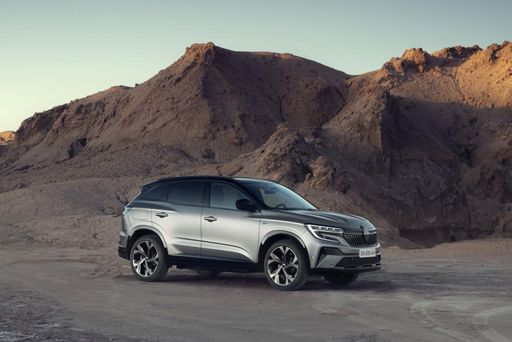
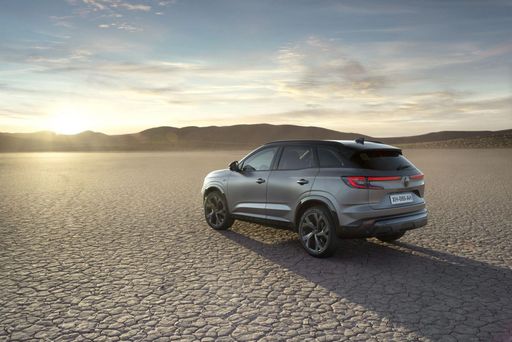
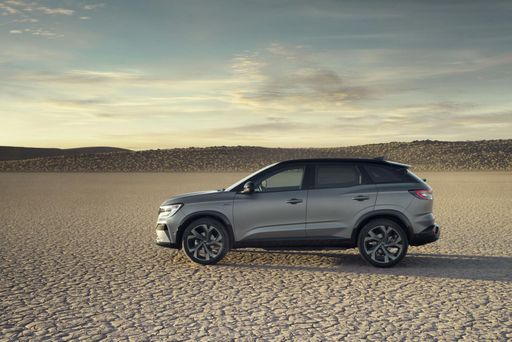
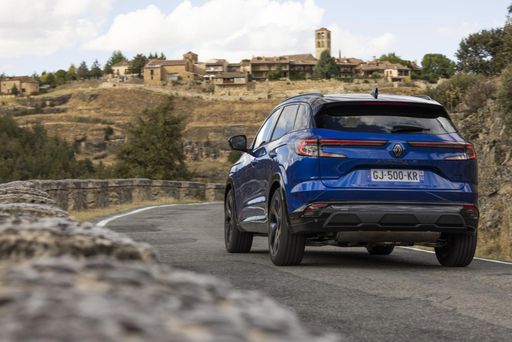
The Renault Austral dresses the family SUV in elegant modern looks and a surprisingly grown-up cabin that feels thoughtful and livable. It balances comfort and clever technology with a relaxed road presence—an appealing choice for buyers who want style and everyday sense without fuss.

details
Kia Sportage
Renault Austral

Costs and Consumption

Price
30,200 - 47,100 £
Price
29,900 - 37,800 £
Consumption L/100km
2.9 - 7.8 L/100km
Consumption L/100km
4.8 - 6.4 L/100km
Consumption kWh/100km
-
Consumption kWh/100km
-
Electric Range
63 - 66 km
Electric Range
-
Battery Capacity
-
Battery Capacity
-
co2
67 - 177 g/km
co2
109 - 145 g/km
Fuel tank capacity
-
Fuel tank capacity
55 L

Dimensions and Body

Body Type
SUV
Body Type
SUV
Seats
5
Seats
5
Doors
-
Doors
5
Curb weight
1,552 - 1,896 kg
Curb weight
1,548 - 1,613 kg
Trunk capacity
526 - 587 L
Trunk capacity
527 L
Length
-
Length
4,533 mm
Width
1,865 mm
Width
1,825 mm
Height
-
Height
1,645 mm
Max trunk capacity
-
Max trunk capacity
1,736 L
Payload
533 - 580 kg
Payload
455 - 477 kg

Engine and Performance

Engine Type
Petrol, Full Hybrid, Diesel MHEV, Plugin Hybrid
Engine Type
Full Hybrid, Petrol MHEV
Transmission
Manuel, Automatic
Transmission
Automatic
Transmission Detail
Manual Gearbox, Dual-Clutch Automatic, Automatic Gearbox
Transmission Detail
Automatic Gearbox, CVT
Drive Type
Front-Wheel Drive, All-Wheel Drive
Drive Type
Front-Wheel Drive
Power HP
136 - 288 HP
Power HP
148 - 200 HP
Acceleration 0-100km/h
7.5 - 11.6 s
Acceleration 0-100km/h
8.4 - 9.9 s
Max Speed
-
Max Speed
180 km/h
Torque
250 - 380 Nm
Torque
270 Nm
Number of Cylinders
4
Number of Cylinders
3 - 4
Power kW
100 - 212 kW
Power kW
109 - 147 kW
Engine capacity
1,598 cm3
Engine capacity
1,199 - 1,332 cm3

General

Model Year
2,025 - 2,026
Model Year
2,025
CO2 Efficiency Class
F, D, E, G, B
CO2 Efficiency Class
C, E
Brand
Kia
Brand
Renault
DriveDuel uses data analysis and artificial intelligence to evaluate vehicle data and create content. Content is regularly reviewed and improved. The displayed prices are estimates based on German list prices, adjusted to the respective country’s VAT. Country-specific registration taxes are not included. This information is not legally binding.