VS

Kia Sportage vs Dacia Bigster comparison

Compare performance (288 HP vs 158 HP), boot space and price (29,100 £ vs 20,600 £ ) at a glance. Find out which car is the better choice for you – Kia Sportage or Dacia Bigster?

Kia Sportage vs Dacia Bigster: Key differences

Kia Sportage

5 (4 Reviews)
rate
  • significantly more power
  • clearly more efficient
  • noticeably quicker 0–100 km/h
details

Dacia Bigster

4.5 (13 Reviews)
rate
  • significantly cheaper
  • barely lighter
  • moderately more trunk space
details

All details on performance, efficiency, range and trunk space can be found in the technical comparison below – including user reviews for both models.

Sportage

Head-to-head overview

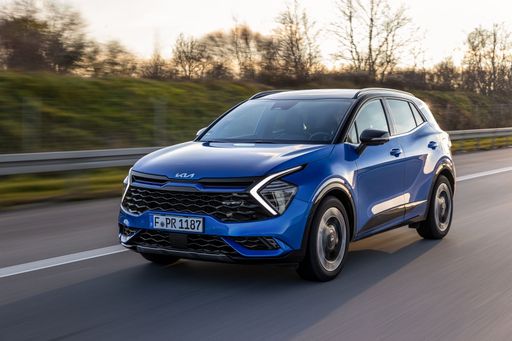
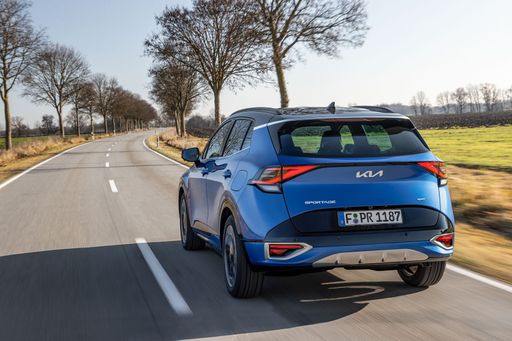
Kia Sportage VS Dacia Bigster: the Kia Sportage and the Dacia Bigster take two different tacks through the compact SUV market. The Sportage favors refinement, quieter motorway miles and a more polished cabin, while the Bigster trades finesse for an enormous boot, simple practicality and a much lower purchase price. That means the Sportage feels like a comfortable family cruiser and the Bigster like a pragmatic tool for hauling people and kit. This comparison is about choosing which set of daily compromises — refinement versus raw usable space — fits your life.
Bigster

Character and driving manners

The Kia Sportage drives like a composed cruiser: composed at speed, with engines and chassis tuned toward a steady, confidence-inspiring feel, whereas the Dacia Bigster comes across as honest and utilitarian rather than refined. Sportage generally accelerates with more composure and keeps its cool under load, while Bigster prioritizes economy and carrying capacity over sporty responses. On twisty roads the Sportage controls body motion more neatly; the Bigster accepts a looser, more boat‑like ride in exchange for comfort and simplicity. If you want measured progress and composure choose the Sportage; if you favour big-range economy and practicality, the Bigster is the pragmatic pick.

Sportage

Long-distance comfort and highway behavior

For long trips the Kia Sportage leans into noise suppression and supportive seating to reduce fatigue, while the Dacia Bigster becomes noticeably louder at higher speeds and can feel more tiring over many hours. Sportage’s suspension and cabin insulation keep motorway stress low, making it an easier choice for frequent highway miles and family vacations. The Bigster repays with huge luggage space and efficient cruising that stretches range and cuts running cost, but the trade-off is more engine and wind intrusion. In short: Sportage wins on serenity and long-haul comfort, Bigster wins when you need volume and low running costs.

Bigster

Everyday practicality and family usability

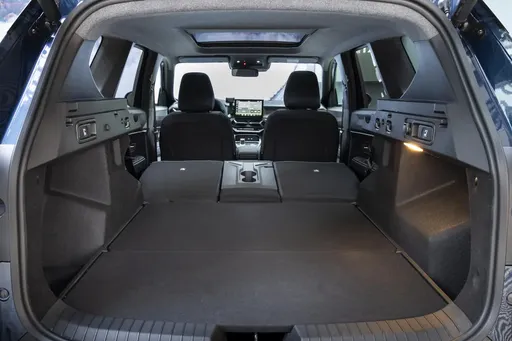
Both cars target families, but the Dacia Bigster is the clear space specialist while the Kia Sportage packs smarter small details and a more refined layout. Bigster’s huge boot, wide openings and practical add-ons make loading bikes, pushchairs or camping gear straightforward, whereas Sportage offers a clever double floor, neat storage and rear comfort that feel better for passengers. The Sportage sacrifices a little cargo maximum for tidier ergonomics and perceived solidity; the Bigster sacrifices some surface quality for sheer usability. Your decision should hinge on whether daily life is defined by how much you carry or by how comfortably you carry passengers.

Sportage

Cabin feel, tech and perceived quality

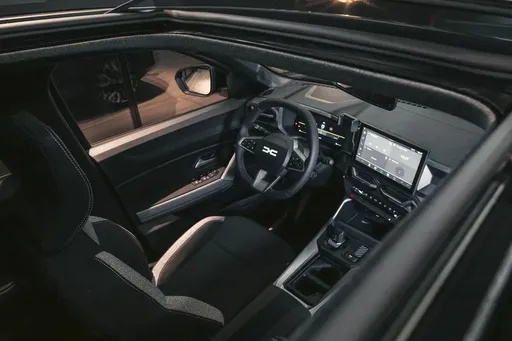
Open the doors and the Kia Sportage reads as the more upmarket interior: softer touchpoints, quieter ambience and more sophisticated trims give it a sense of polish, while the Dacia Bigster is plainly built with durable plastics and a no-nonsense layout. Sportage often wires in more driver aids and a tech-heavy presentation that looks and feels refined, though some touch-based controls can be fiddly in motion; Bigster keeps controls physical and straightforward, which many buyers find easier in everyday use. The Bigster’s cabin wins on resilience and simplicity; the Sportage wins on perceived quality and long-term comfort. That contrast is a real daily-life divider, not just a styling choice.

Bigster

Who each car suits — buyer fit and next steps

If your life is full of motorway miles, passengers who value quiet and a reassuring warranty package, the Kia Sportage will usually be the better match; if your budget prioritises maximum boot space, simple robust kit and the lowest cost per kilometre, the Dacia Bigster will likely suit you better. Sportage appeals to buyers who want refinement, long-distance comfort and a slightly more premium cabin; Bigster appeals to families, outdoor users and budget-conscious owners who measure value by usable space. These are practical trade-offs you notice every day, so weigh which set of strengths you actually use. Now move into the technical comparison to see how those real-world differences are realised in drivetrains, dimensions and equipment.

Here’s where it gets real: The technical differences in detail

Sportage

Costs and Efficiency:

Looking at overall running costs, both models reveal some interesting differences in everyday economy.

Dacia Bigster is significantly cheaper – starting at 20,600 £ , while the Kia Sportage costs 29,100 £ . That’s a price difference of around 8,572 £.

Fuel consumption also shows a difference: the Kia Sportage uses 2.9 L/100km and is clearly more efficient than the Dacia Bigster with 4.7 L/100km. The difference is about 1.8 L/100km.

Bigster

Engine and Performance:

Under the bonnet, it becomes clear which model is tuned for sportiness and which one takes the lead when you hit the accelerator.

When it comes to engine power, the Kia Sportage offers significantly more power – delivering 288 HP compared to 158 HP. That’s roughly 130 HP more horsepower.

When accelerating from 0 to 100 km/h, the Kia Sportage is noticeably quicker – completing the sprint in 7.5 s, while the Dacia Bigster takes 9.7 s. That’s about 2.2 s quicker.

There’s also a difference in torque: the Kia Sportage delivers clearly more torque with 380 Nm compared to 230 Nm. That’s about 150 Nm more.

Sportage

Space and Everyday Use:

Beyond pure performance, interior space and usability matter most in daily life. This is where you see which car is more practical and versatile.

Both vehicles offer seating for 5 people.

In terms of curb weight, Dacia Bigster is barely lighter – 1,425 kg compared to 1,552 kg. The difference is around 127 kg.

Looking at boot space, the Dacia Bigster offers moderately more boot space – 667 L compared to 587 L. That’s a difference of about 80 L.

When it comes to payload, the Kia Sportage carries moderately more – 580 kg compared to 465 kg. That’s a difference of about 115 kg.

Who wins the race in the data check?

The Kia Sportage stands well ahead of its rival in the objective data comparison.
This result only shows which model scores more points on paper – not which of the two cars feels right for you.

from £29,100
Sportage

Kia Sportage

  • Engine Type Petrol, Full Hybrid, Diesel MHEV, Plug-in Hybrid
  • Transmission Manual, Automatic
  • Drive Type Front-Wheel Drive, All-Wheel Drive
  • Power HP 136 - 288 HP
  • Consumption L/100km 2.9 - 7.8 L/100km
  • Electric Range 63 - 66 km
Kia Sportage
Dacia Bigster

Costs and Consumption

View detailed analysis

Engine and Performance

View detailed analysis

Dimensions and Body

View detailed analysis

Kia Sportage

The Kia Sportage is a roomy, well-equipped compact SUV that balances comfort and practicality for daily driving. It delivers a modern interior, composed ride, and strong value for buyers who want versatility without fuss.

details

Dacia Bigster

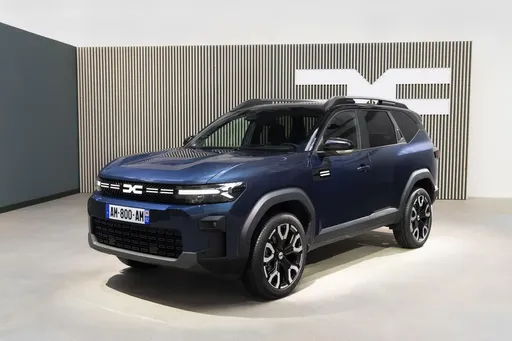
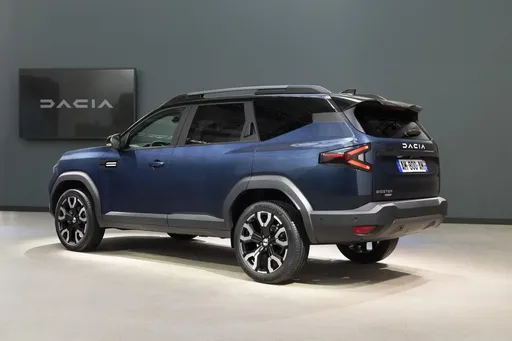
The Dacia Bigster is a straightforward, value-driven SUV that emphasizes space, practicality and low running costs rather than flashy tech. It’s a sensible choice for buyers who want a roomy, well-built family car with rugged styling and easy-to-use features at an affordable price.

details
Kia Sportage
Dacia Bigster

Costs and Consumption

Price
29,100 - 47,100 £
Price
20,600 - 28,100 £
Consumption L/100km
2.9 - 7.8 L/100km
Consumption L/100km
4.7 - 7.2 L/100km
Consumption kWh/100km
-
Consumption kWh/100km
-
Electric Range
63 - 66 km
Electric Range
-
Battery Capacity
-
Battery Capacity
-
co2
67 - 177 g/km
co2
106 - 134 g/km
Fuel tank capacity
-
Fuel tank capacity
-

Dimensions and Body

Body Type
SUV
Body Type
SUV
Seats
5
Seats
5
Doors
-
Doors
-
Curb weight
1,552 - 1,896 kg
Curb weight
1,425 - 1,611 kg
Trunk capacity
526 - 587 L
Trunk capacity
444 - 667 L
Length
-
Length
-
Width
1,865 mm
Width
1,813 mm
Height
-
Height
-
Max trunk capacity
-
Max trunk capacity
-
Payload
533 - 580 kg
Payload
434 - 465 kg

Engine and Performance

Engine Type
Petrol, Full Hybrid, Diesel MHEV, Plug-in Hybrid
Engine Type
Petrol MHEV, Full Hybrid, LPG
Transmission
Manual, Automatic
Transmission
Manual, Automatic
Transmission Detail
Manual Gearbox, Dual-Clutch Automatic, Automatic Gearbox
Transmission Detail
Manual Gearbox, Automated Manual, Dual-Clutch Automatic
Drive Type
Front-Wheel Drive, All-Wheel Drive
Drive Type
Front-Wheel Drive, All-Wheel Drive
Power HP
136 - 288 HP
Power HP
140 - 158 HP
Acceleration 0-100km/h
7.5 - 11.6 s
Acceleration 0-100km/h
9.7 - 10.5 s
Max Speed
-
Max Speed
-
Torque
250 - 380 Nm
Torque
230 Nm
Number of Cylinders
4
Number of Cylinders
3 - 4
Power kW
100 - 212 kW
Power kW
103 - 116 kW
Engine capacity
1,598 cm3
Engine capacity
1,199 - 1,789 cm3

General

Model Year
2,025 - 2,026
Model Year
2025
CO2 Efficiency Class
F, D, E, G, B
CO2 Efficiency Class
D, C
Brand
Kia
Brand
Dacia
DriveDuel uses data analysis and artificial intelligence to evaluate vehicle data and create content. Content is regularly reviewed and improved. The displayed prices are estimates based on German list prices, adjusted to the respective country’s VAT. Country-specific registration taxes are not included. This information is not legally binding.