VS

Dacia Jogger vs Dacia Bigster comparison

Compare performance (158 HP vs 158 HP), boot space and price (15,400 £ vs 20,600 £ ) at a glance. Find out which car is the better choice for you – Dacia Jogger or Dacia Bigster?

Dacia Jogger vs Dacia Bigster: Key differences

Dacia Jogger

4.4 (2 Reviews)
rate
  • visibly cheaper
  • barely more efficient
  • marginally quicker 0–100 km/h
  • a bit lighter
details

Dacia Bigster

4.6 (9 Reviews)
rate
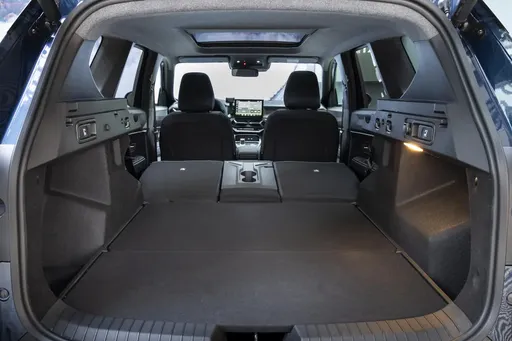
  • marginally more trunk space
details

All details on performance, efficiency, range and trunk space can be found in the technical comparison below – including user reviews for both models.

By Achim Sedelmaier

Jogger

Dacia Jogger vs Dacia Bigster: which one fits your life?

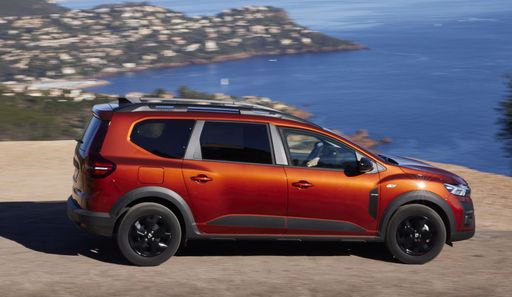
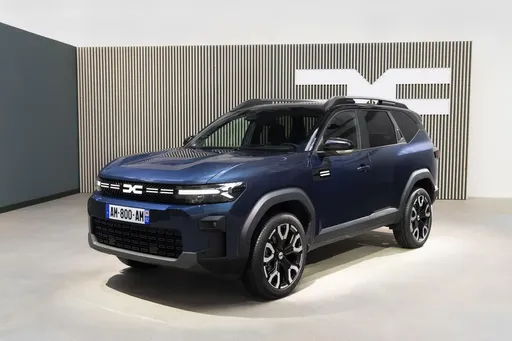
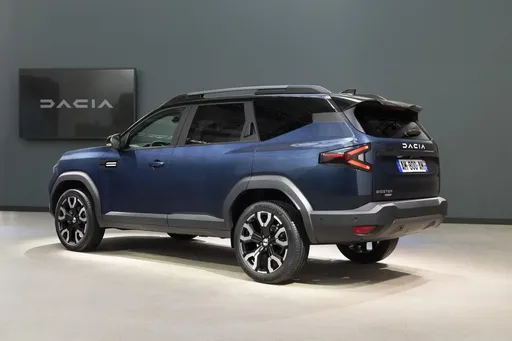
The Dacia Jogger and Dacia Bigster chase the same budget‑sensible buyer, but they solve family life in very different ways. In this Dacia Jogger VS Dacia Bigster matchup, the Jogger plays the pragmatic 7‑seat wagon, while the Bigster goes full‑size SUV with a vast boot and a tougher stance. The Jogger trades visual drama for pure versatility and price, suiting people who prioritize seats and simplicity over show. The Bigster feels more modern and adventurous, with thoughtful outdoor touches and a bit more cabin polish. Both are refreshingly honest, but they’ll suit different households the moment you start packing people and kit.
Bigster

Space and everyday usability

The Dacia Jogger’s party trick is its third row: you can actually carry seven when needed, then remove that rear pair to free up a long, useful load bay. Access to row three is still a squeeze and luggage space shrinks when all seats are up, but the low loading edge and square opening make family life easy. The Dacia Bigster counters with five seats only, yet offers a huge, flat cargo area and a clever 40:20:40 split, so skis or a stroller go in without sacrificing two seats. Its boot feels built for bulkier gear, and add‑ons like rotating roof bars or the Sleep Pack push its adventure appeal further. If your weekend is people‑heavy, pick the Jogger; if it’s gear‑heavy, the Bigster simply swallows more with less faff.

Jogger

Cabin feel and tech

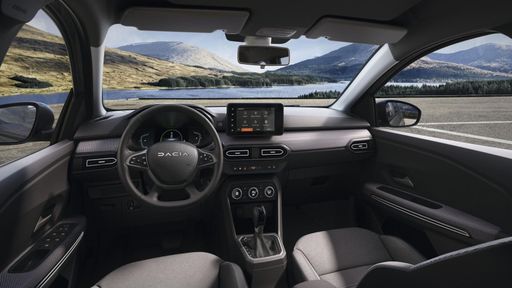
Inside, the Dacia Jogger is functional and hard‑wearing, with big controls and minimal distraction; on lower trims you’ll lean on your phone for infotainment. The Dacia Bigster looks and feels a step newer, with an integrated screen as standard and rear air vents that ease family trips, though camera quality and graphics remain basic. Both cabins use honest, wipe‑clean plastics, but the Bigster’s design and storage touches lift perceived quality a notch. If you want the simplest, least fussy interface, the Jogger’s straightforward setup suits; if you prefer built‑in connectivity and a slightly richer ambiance, the Bigster edges it.

Bigster

City manners and ease of use

The Dacia Jogger is narrow‑feeling and easy to place, with excellent visibility that takes the strain out of tight streets and school runs. Its light controls and low tailgate help when juggling kids, buggies and parking sensors. The Dacia Bigster gives you a higher seating position and clear bonnet corners, so you see out well, but its larger footprint and higher loading edge demand a touch more care in crowded car parks. Hybrids in both tend to glide around town smoothly, but the Jogger’s lighter feel makes it the more relaxed urban tool.

Jogger

Long‑distance comfort and refinement

Settle into a motorway cruise and the Dacia Bigster feels the more planted of the pair, with easy straight‑line stability and a relaxed, torque‑rich pull when loaded. Noise insulation is still modest and wind rush builds at speed, while the front seats can feel soft for some on very long hauls. The Dacia Jogger is steady enough, but road and wind noise are more noticeable, and with a full house it can feel short on reserve unless you plan overtakes. If you chase range and a calmer, weightier stride, the Bigster suits; if you accept more noise in exchange for value and flexibility, the Jogger delivers.

Bigster

Running costs, value and who should buy which

The Dacia Jogger undercuts the Bigster and much of the market, bringing seven seats within reach for buyers who thought they were priced out. The Dacia Bigster costs more but still feels like strong value given its size, integrated tech and enormous boot, especially for outdoor‑minded owners. Assistance systems on both are straightforward rather than lavish, underscoring their focus on price and practicality. In short, choose the Dacia Jogger if your must‑have is seven seats and city‑friendly ease on a tight budget; choose the Dacia Bigster if your life is five people, big cargo and long stretches between fill‑ups—now let’s look at how their specs inform those differences.

Here’s where it gets real: The technical differences in detail

Jogger

Costs and Efficiency:

Looking at overall running costs, both models reveal some interesting differences in everyday economy.

Dacia Jogger is visibly cheaper – starting at 15,400 £ , while the Dacia Bigster costs 20,600 £ . That’s a price difference of around 5,142 £.

Fuel consumption also shows a difference: the Dacia Jogger uses 4.5 L/100km and is barely more efficient than the Dacia Bigster with 4.7 L/100km. The difference is about 0.2 L/100km.

Bigster

Engine and Performance:

Power, torque and acceleration say a lot about how a car feels on the road. This is where you see which model delivers more driving dynamics.

Both models deliver identical power – 158 HP each.

When accelerating from 0 to 100 km/h, the Dacia Jogger is marginally quicker – completing the sprint in 8.9 s, while the Dacia Bigster takes 9.7 s. That’s about 0.8 s quicker.

There’s also a difference in torque: the Dacia Bigster delivers slightly more torque with 230 Nm compared to 200 Nm. That’s about 30 Nm more.

Jogger

Space and Everyday Use:

Whether family car or daily driver – which one offers more room, flexibility and comfort?

Seats: Dacia Jogger offers more seats – 7 vs 5.

In terms of curb weight, Dacia Jogger is a bit lighter – 1,268 kg compared to 1,425 kg. The difference is around 157 kg.

Looking at boot space, the Dacia Bigster offers marginally more boot space – 667 L compared to 607 L. That’s a difference of about 60 L.

When it comes to payload, the Dacia Jogger carries a bit more – 559 kg compared to 465 kg. That’s a difference of about 94 kg.

Who wins the race in the data check?

The Dacia Jogger is clearly superior overall in the objective data comparison.
This result only shows which model scores more points on paper – not which of the two cars feels right for you.

from £15,400
Jogger

Dacia Jogger

  • Engine Type : Petrol, Full Hybrid, LPG
  • Transmission : Manuel, Automatic
  • Drive Type : Front-Wheel Drive
  • Power HP : 110 - 158 HP
  • Consumption L/100km : 4.5 - 7.6 L/100km
Dacia Jogger
Dacia Bigster

Costs and Consumption

View detailed analysis

Engine and Performance

View detailed analysis

Dimensions and Body

View detailed analysis

Dacia Jogger

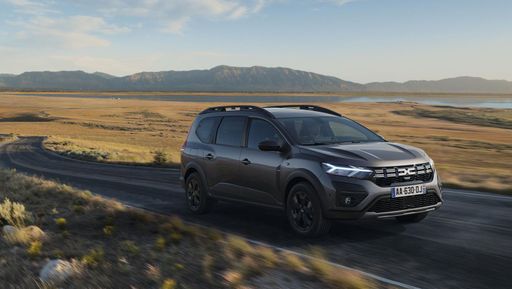
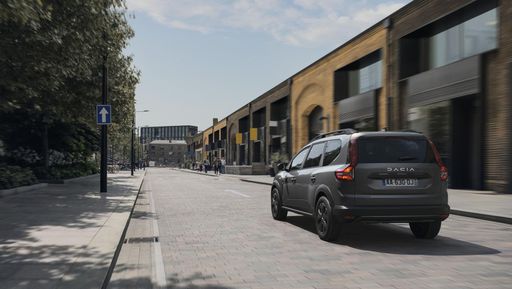
The Dacia Jogger is a no-nonsense family mover that stretches the idea of value with cavernous practicality and flexible space, perfect for buyers who need a sensible, everyday Swiss Army knife on wheels. It doesn’t try to be glamorous — instead it wins hearts with cheerful thrift, durable materials and honest engineering, giving you useful transport without the pretence.

details

Dacia Bigster

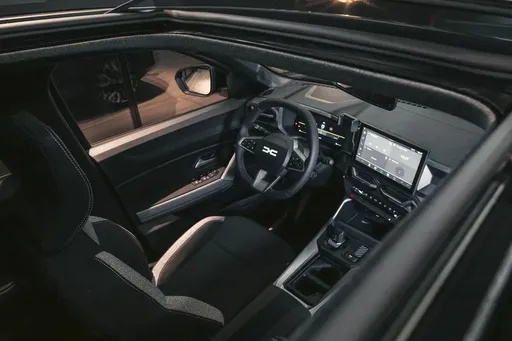
The Dacia Bigster is a straightforward, value-driven SUV that emphasizes space, practicality and low running costs rather than flashy tech. It’s a sensible choice for buyers who want a roomy, well-built family car with rugged styling and easy-to-use features at an affordable price.

details
Dacia Jogger
Dacia Bigster

Costs and Consumption

Price
15,400 - 23,500 £
Price
20,600 - 28,100 £
Consumption L/100km
4.5 - 7.6 L/100km
Consumption L/100km
4.7 - 7.2 L/100km
Consumption kWh/100km
-
Consumption kWh/100km
-
Electric Range
-
Electric Range
-
Battery Capacity
-
Battery Capacity
-
co2
103 - 138 g/km
co2
106 - 134 g/km
Fuel tank capacity
-
Fuel tank capacity
-

Dimensions and Body

Body Type
MPV
Body Type
SUV
Seats
5 - 7
Seats
5
Doors
-
Doors
-
Curb weight
1,268 - 1,463 kg
Curb weight
1,425 - 1,611 kg
Trunk capacity
160 - 607 L
Trunk capacity
546 - 667 L
Length
-
Length
-
Width
1,784 mm
Width
1,813 mm
Height
-
Height
-
Max trunk capacity
-
Max trunk capacity
-
Payload
384 - 559 kg
Payload
434 - 465 kg

Engine and Performance

Engine Type
Petrol, Full Hybrid, LPG
Engine Type
Petrol MHEV, Full Hybrid, LPG
Transmission
Manuel, Automatic
Transmission
Manuel, Automatic
Transmission Detail
Manual Gearbox, Automatic Gearbox, Dual-Clutch Automatic
Transmission Detail
Manual Gearbox, Automated Manual, Dual-Clutch Automatic
Drive Type
Front-Wheel Drive
Drive Type
Front-Wheel Drive, All-Wheel Drive
Power HP
110 - 158 HP
Power HP
140 - 158 HP
Acceleration 0-100km/h
8.9 - 12 s
Acceleration 0-100km/h
9.7 - 10.5 s
Max Speed
-
Max Speed
-
Torque
190 - 200 Nm
Torque
230 Nm
Number of Cylinders
3 - 4
Number of Cylinders
3 - 4
Power kW
81 - 116 kW
Power kW
103 - 116 kW
Engine capacity
999 - 1,789 cm3
Engine capacity
1,199 - 1,799 cm3

General

Model Year
2025
Model Year
2025
CO2 Efficiency Class
D, E, C
CO2 Efficiency Class
D, C
Brand
Dacia
Brand
Dacia
DriveDuel uses data analysis and artificial intelligence to evaluate vehicle data and create content. Content is regularly reviewed and improved. The displayed prices are estimates based on German list prices, adjusted to the respective country’s VAT. Country-specific registration taxes are not included. This information is not legally binding.