VS

Dacia Bigster vs MG HS comparison

Compare performance (158 HP vs 272 HP), boot space and price (20,600 £ vs 30,000 £ ) at a glance. Find out which car is the better choice for you – Dacia Bigster or MG HS?

Dacia Bigster vs MG HS: Key differences

Dacia Bigster

4.6 (10 Reviews)
rate
  • clearly cheaper
  • markedly lighter
  • visibly more trunk space
details

MG HS

4.8 (9 Reviews)
rate
  • considerably more power
  • clearly more efficient
  • clearly quicker 0–100 km/h
details

All details on performance, efficiency, range and trunk space can be found in the technical comparison below – including user reviews for both models.

By Achim Sedelmaier

Bigster

Overview: Dacia Bigster VS MG HS — space and simplicity versus equipment and electrified range

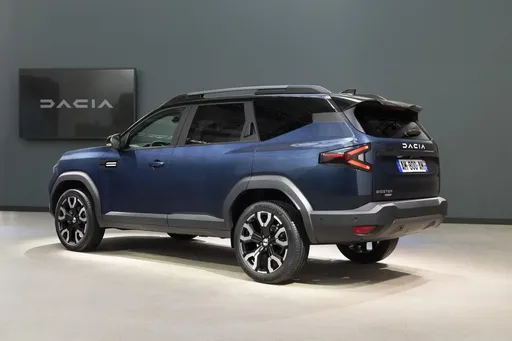
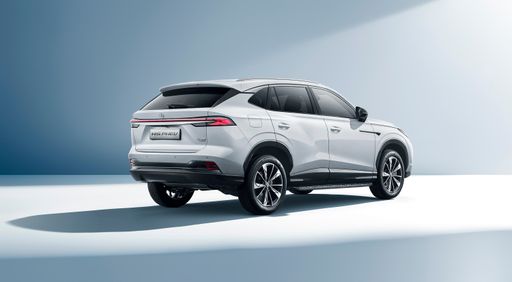
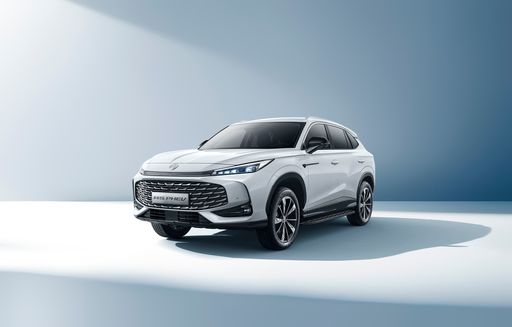
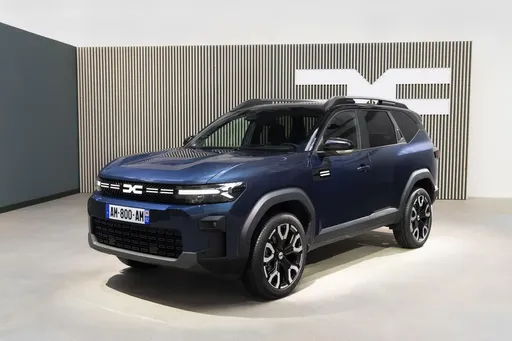
Dacia Bigster VS MG HS sets up a simple choice: the Bigster trades price and stupendous usable space for a very straightforward, no-nonsense experience, while the MG HS buys you kit, safety equipment and an electrified driving rhythm at a higher cost. The Bigster is the pragmatic, utility‑first C‑SUV that prioritises luggage, easy controls and rugged details for outdoor life. The MG HS is the more feature‑rich alternative, offering long electric stints in everyday use and a stronger safety/assistance package. Read on for how those differences play out where they matter to real buyers.
HS

Character and on-road behaviour

The Dacia Bigster feels deliberately mellow: light steering, a calm cruising posture and a suspension that soaks longer undulations but allows some body roll, which suits relaxed family driving rather than sporty cornering. On motorways the Bigster’s engine and aero noise become more obvious, so it feels less composed at higher sustained speeds. The MG HS, particularly as a plug‑in hybrid, delivers a quieter powertrain under everyday loads and the electric capability makes town runs genuinely refined. That said, the MG HS never becomes engaging to drive—its steering is vague and the suspension can be twitchy on broken surfaces—so you’re buying convenience and calm rather than driving excitement.

Bigster

Comfort and long-distance behaviour

For long trips the Dacia Bigster is a mixed bag: generous rear legroom and a relaxed seating position make it agreeable for passengers, but the front seats can feel soft with limited thigh support for taller drivers, and highway noise makes long stints less serene. The MG HS tends to feel more settled in terms of perceived refinement up front and benefits from the PHEV’s ability to cruise with little engine intrusion when charged. However, the MG HS shows its own compromises on the road—noticeable tyre and surface noise at speed and a firmer ride on city‑to‑country transitions. In short, Bigster favours people who prize space and a forgiving rear seat, while MG HS favours those who want a quieter powertrain and more kit for motorway commuting when they can use electric range.

HS

Practicality and everyday usability

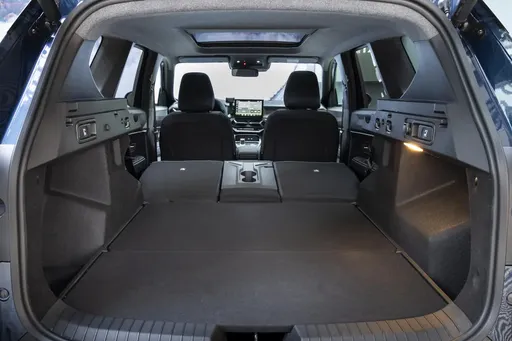
This is where the Dacia Bigster really stakes its claim: a cavernous, cleverly laid‑out loadbay, a 40:20:40 rear split and outdoor‑friendly touches make it the obvious pick for families, DIY runs or adventure gear. MG HS offers a very roomy rear cabin for adults and plenty of creature comforts, but the plug‑in packaging sacrifices some usable boot space and introduces a higher loading sill that makes awkward items harder to stow. Bigster’s pragmatic accessories and payload friendliness give it a tangible edge for active owners who regularly move bulky items. If you prioritise rear passenger comfort over maximum luggage volume, the MG HS still presents a compelling, more polished compromise.

Bigster

Cabin feel, tech and perceived quality

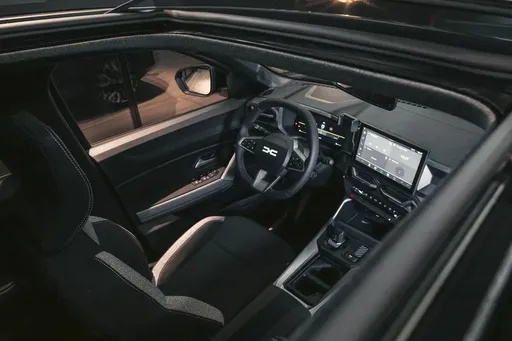
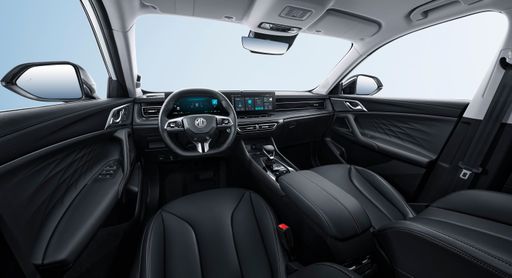
The Dacia Bigster leans into functionality: straightforward switches, robust finishes and an interior that communicates durability rather than luxury. The MG HS moves closer to a premium feel with more soft‑touch surfaces, a richer kit list and a fuller complement of driver aids that increase perceived value. Yet MG HS’s infotainment can feel sluggish and cluttered, making some of that added tech less pleasant in day‑to‑day use compared with the Bigster’s simpler, more direct controls. If you want a clean, hassle‑free cabin the Bigster wins on usability; if you want more equipment, safety tech and a nicer tactile impression, the MG HS is the better fit despite some software niggles.

HS

Buyer fit: who should pick which and why

Choose the Dacia Bigster if your priorities are maximum usable space, low purchase cost and rugged practicality—families who carry a lot of kit, outdoor enthusiasts and buyers who prefer simple, honest engineering will appreciate its strengths. Opt for the MG HS if you value a well‑equipped cabin, extensive safety and assistance systems and the everyday benefits of a plug‑in powertrain for electric commuting—buyers with access to charging who want more tech and perceived refinement will lean that way. Both make sense for cost‑conscious buyers, but they reward different compromises: Bigster for cargo and simplicity, MG HS for kit, safety and electrified running. With those trade‑offs clear, the detailed technical comparison below will help you match specific engines, ranges and practical measurements to your needs.

Here’s where it gets real: The technical differences in detail

Bigster

Costs and Efficiency:

Price and efficiency are key factors when choosing a car – and this is often where the real differences emerge.

Dacia Bigster is clearly cheaper – starting at 20,600 £ , while the MG HS costs 30,000 £ . That’s a price difference of around 9,429 £.

Fuel consumption also shows a difference: the MG HS uses 0.5 L/100km and is clearly more efficient than the Dacia Bigster with 4.7 L/100km. The difference is about 4.2 L/100km.

HS

Engine and Performance:

Power, torque and acceleration are the classic benchmarks for car enthusiasts – and here, some clear differences start to show.

When it comes to engine power, the MG HS offers considerably more power – delivering 272 HP compared to 158 HP. That’s roughly 114 HP more horsepower.

When accelerating from 0 to 100 km/h, the MG HS is clearly quicker – completing the sprint in 6.8 s, while the Dacia Bigster takes 9.7 s. That’s about 2.9 s quicker.

There’s also a difference in torque: the MG HS delivers markedly more torque with 350 Nm compared to 230 Nm. That’s about 120 Nm more.

Bigster

Space and Everyday Use:

Beyond pure performance, interior space and usability matter most in daily life. This is where you see which car is more practical and versatile.

Both vehicles offer seating for 5 people.

In terms of curb weight, Dacia Bigster is markedly lighter – 1,425 kg compared to 1,735 kg. The difference is around 310 kg.

Looking at boot space, the Dacia Bigster offers visibly more boot space – 667 L compared to 507 L. That’s a difference of about 160 L.

When it comes to payload, the Dacia Bigster carries somewhat more – 465 kg compared to 400 kg. That’s a difference of about 65 kg.

Who wins the race in the data check?

The MG HS is decisively ahead in the objective data comparison.
This result only shows which model scores more points on paper – not which of the two cars feels right for you.

from £30,000
HS

MG HS

  • Engine Type Full Hybrid, Plugin Hybrid
  • Transmission Automatic
  • Drive Type Front-Wheel Drive
  • Power HP 224 - 272 HP
  • Consumption L/100km 0.5 - 5.5 L/100km
  • Electric Range 100 km
Dacia Bigster
MG HS

Costs and Consumption

View detailed analysis

Engine and Performance

View detailed analysis

Dimensions and Body

View detailed analysis

Dacia Bigster

The Dacia Bigster is a straightforward, value-driven SUV that emphasizes space, practicality and low running costs rather than flashy tech. It’s a sensible choice for buyers who want a roomy, well-built family car with rugged styling and easy-to-use features at an affordable price.

details

MG HS

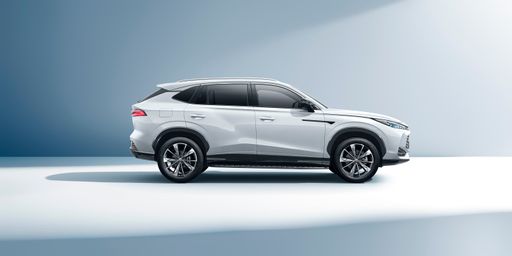
The MG HS, also known as the EHS in its hybrid variant, is a midsize SUV that combines modern design with a focus on comfort and technology. Its spacious interior offers a premium feel, enhanced by quality materials and an array of advanced features aimed at ensuring a smooth driving experience. Known for its efficiency, the MG HS/EHS delivers an enjoyable ride whether navigating city streets or taking on longer road trips.

details
Dacia Bigster
MG HS

Costs and Consumption

Price
20,600 - 28,100 £
Price
30,000 - 36,000 £
Consumption L/100km
4.7 - 7.2 L/100km
Consumption L/100km
0.5 - 5.5 L/100km
Consumption kWh/100km
-
Consumption kWh/100km
-
Electric Range
-
Electric Range
100 km
Battery Capacity
-
Battery Capacity
-
co2
106 - 134 g/km
co2
14 - 126 g/km
Fuel tank capacity
-
Fuel tank capacity
-

Dimensions and Body

Body Type
SUV
Body Type
SUV
Seats
5
Seats
5
Doors
-
Doors
-
Curb weight
1,425 - 1,611 kg
Curb weight
1,735 - 1,930 kg
Trunk capacity
444 - 667 L
Trunk capacity
441 - 507 L
Length
-
Length
-
Width
1,813 mm
Width
1,890 mm
Height
-
Height
-
Max trunk capacity
-
Max trunk capacity
-
Payload
434 - 465 kg
Payload
400 kg

Engine and Performance

Engine Type
Petrol MHEV, Full Hybrid, LPG
Engine Type
Full Hybrid, Plugin Hybrid
Transmission
Manuel, Automatic
Transmission
Automatic
Transmission Detail
Manual Gearbox, Automated Manual, Dual-Clutch Automatic
Transmission Detail
Automatic Gearbox
Drive Type
Front-Wheel Drive, All-Wheel Drive
Drive Type
Front-Wheel Drive
Power HP
140 - 158 HP
Power HP
224 - 272 HP
Acceleration 0-100km/h
9.7 - 10.5 s
Acceleration 0-100km/h
6.8 - 7.9 s
Max Speed
-
Max Speed
-
Torque
230 Nm
Torque
340 - 350 Nm
Number of Cylinders
3 - 4
Number of Cylinders
4
Power kW
103 - 116 kW
Power kW
165 - 200 kW
Engine capacity
1,199 - 1,789 cm3
Engine capacity
1,496 cm3

General

Model Year
2025
Model Year
2025
CO2 Efficiency Class
D, C
CO2 Efficiency Class
D, B
Brand
Dacia
Brand
MG
DriveDuel uses data analysis and artificial intelligence to evaluate vehicle data and create content. Content is regularly reviewed and improved. The displayed prices are estimates based on German list prices, adjusted to the respective country’s VAT. Country-specific registration taxes are not included. This information is not legally binding.