VS

MG HS vs MG MGS9 comparison

Compare performance (272 HP vs 299 HP), boot space and price (30,000 £ vs 38,600 £ ) at a glance. Find out which car is the better choice for you – MG HS or MG MGS9?

MG HS vs MG MGS9: Key differences

MG HS

4.8 (10 Reviews)
rate
  • clearly cheaper
  • significantly more efficient
  • substantially quicker 0–100 km/h
  • noticeably lighter
  • clearly more trunk space
details

MG MGS9

5 (1 Reviews)
rate
  • very slightly more power
details

All details on performance, efficiency, range and trunk space can be found in the technical comparison below – including user reviews for both models.

By Achim Sedelmaier

HS

Overview — MG HS and MG MGS9 in direct comparison

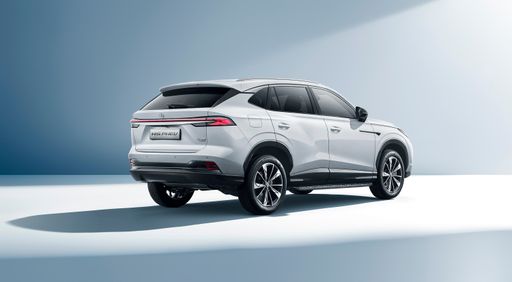
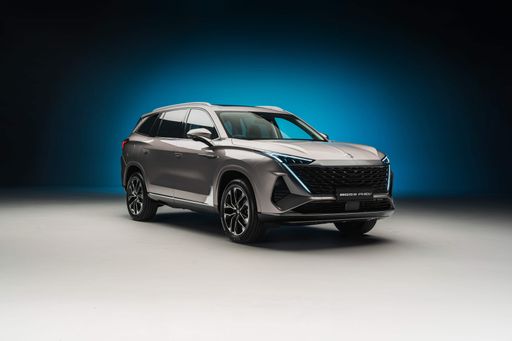
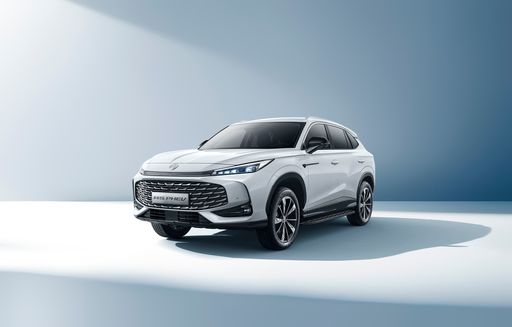
MG HS and MG MGS9 start from the same brand promise but aim at different buyers, so a head‑to‑head — MG HS VS MG MGS9 — quickly clarifies the trade‑offs that matter in daily life. The MG HS presents itself as the compact, value‑driven five‑seater that surprises with a very long plug‑in electric capability and strong equipment for the price. The MG MGS9 is the larger three‑row alternative that trades compactness for true seven‑seat flexibility, quieter electric running and a more composed long‑distance demeanour. This comparison focuses on how those differences feel in real use rather than piling up numbers on paper.
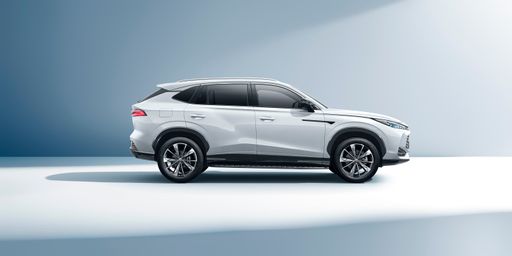
MGS9

Driving character and road manners

The MG HS feels lighter and more willing when you ask for brisk responses, making it the more alert car around town or at junctions. The MG MGS9 drives like a big family cruiser: heavier, steadier and built to absorb motorway miles rather than excite on back roads. That said, the HS’s steering lacks sharpness and the ride can become fidgety on broken surfaces, whereas the MGS9 keeps its composure and feels more confidence‑inspiring when loaded. If you prioritise a sprightlier, city‑oriented car the HS will please; if you want relaxed, composed progress under load, the MGS9 is the more natural choice.

HS

Comfort and cabin feel

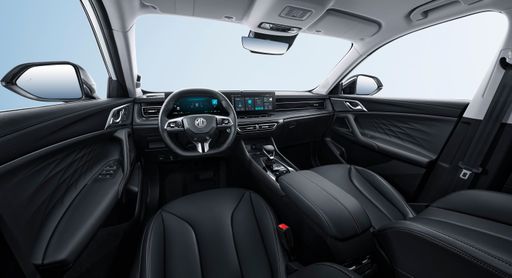
On material quality and seating comfort the MG MGS9 edges ahead thanks to larger seats, optional comfort extras and a cabin that reads more premium on long drives. The MG HS still offers generous rear legroom for a five‑seat SUV and a competitive trim level, but its infotainment lag and smaller on‑screen graphics dent the perceived refinement. Noise control also favours the MGS9 in everyday electric driving, while the HS tends to let more tyre and road noise in at speed. In short, the MGS9 feels like a grown‑up interior for longer trips, the HS a practical space with noticeable compromises in finesse.

Practicality and usability

Practical differences are where you’ll make the clearest choice: the MG HS is tuned as an everyday five‑seater with useful luggage capacity for weekly life, though the PHEV packaging introduces a higher load lip and some limits to how you can stow awkward items. The MG MGS9 wins on versatility with genuine seven‑seat capability and a sliding second row that makes switching between passengers and cargo straightforward. That versatility isn’t perfect — the third row is best for children and there are only two ISOFIX anchors in the middle row — but it’s invaluable for larger families. If you tow or regularly need seven seats the MGS9 gives far more real‑world flexibility; if you mostly carry people and cargo in five‑seat mode, the HS will often be simpler and cheaper to live with.

City friendliness and long‑distance behaviour

In urban use the MG HS’s smaller footprint, eager low‑speed response and standard camera/sensor package make it easier to place in tight spaces and feel quicker off the line. The MG MGS9 is bigger to manoeuvre but rewards inner‑city silence in EV mode and a calmer cabin for passengers; its bulk, however, can become tiresome in tight parking or narrow streets. On long motorway hauls the MGS9’s calmer ride and seat comfort reduce fatigue, while the HS gets you there briskly but with more road‑noise and a firmer ride that becomes noticeable over hours. Choose the HS for sharper city manners, choose the MGS9 for less tiring long‑distance travel with a full load.

Buyer fit and trade‑offs

Put simply: the MG HS suits buyers seeking a compact, well‑equipped five‑seat SUV with an unusually useful plug‑in electric mode and a strong price proposition for everyday commuting. The MG MGS9 suits larger families or active owners who need true seven seats, extra towing or a more tranquil cabin for long trips and passengers. Your likely regrets differ: the HS will frustrate those wanting taut steering and motorway serenity, while the MGS9 will annoy buyers who need frequent rapid public charging or three child‑seat mounts. The technical section that follows will explain why these practical contrasts exist so you can map the spec sheet to the real‑world trade‑offs that will shape ownership.

Here’s where it gets real: The technical differences in detail

HS

Costs and Efficiency:

When it comes to price and running costs, the biggest differences usually appear. This is often where you see which car fits your budget better in the long run.

MG HS is clearly cheaper – starting at 30,000 £ , while the MG MGS9 costs 38,600 £ . That’s a price difference of around 8,571 £.

Fuel consumption also shows a difference: the MG HS uses 0.5 L/100km and is significantly more efficient than the MG MGS9 with 2.4 L/100km. The difference is about 1.9 L/100km.

The electric range is almost identical – both manage about 100 km on a single charge.

MGS9

Engine and Performance:

Power, torque and acceleration are the classic benchmarks for car enthusiasts – and here, some clear differences start to show.

When it comes to engine power, the MG MGS9 offers very slightly more power – delivering 299 HP compared to 272 HP. That’s roughly 27 HP more horsepower.

When accelerating from 0 to 100 km/h, the MG HS is substantially quicker – completing the sprint in 6.8 s, while the MG MGS9 takes 9.6 s. That’s about 2.8 s quicker.

There’s also a difference in torque: the MG MGS9 delivers somewhat more torque with 390 Nm compared to 350 Nm. That’s about 40 Nm more.

HS

Space and Everyday Use:

Cabin size, boot volume and payload all play a role in everyday practicality. Here, comfort and flexibility make the difference.

Seats: MG MGS9 offers more seats – 7 vs 5.

In terms of curb weight, MG HS is noticeably lighter – 1,735 kg compared to 2,160 kg. The difference is around 425 kg.

Looking at boot space, the MG HS offers clearly more boot space – 507 L compared to 332 L. That’s a difference of about 175 L.

When it comes to payload, the MG MGS9 carries visibly more – 557 kg compared to 400 kg. That’s a difference of about 157 kg.

Who wins the race in the data check?

The MG HS is decisively ahead in the objective data comparison.
This result only shows which model scores more points on paper – not which of the two cars feels right for you.

from £30,000
HS

MG HS

  • Engine Type Full Hybrid, Plugin Hybrid
  • Transmission Automatic
  • Drive Type Front-Wheel Drive
  • Power HP 224 - 272 HP
  • Consumption L/100km 0.5 - 5.5 L/100km
  • Electric Range 100 km
MG HS
MG MGS9

Costs and Consumption

View detailed analysis

Engine and Performance

View detailed analysis

Dimensions and Body

View detailed analysis

MG HS

The MG HS, also known as the EHS in its hybrid variant, is a midsize SUV that combines modern design with a focus on comfort and technology. Its spacious interior offers a premium feel, enhanced by quality materials and an array of advanced features aimed at ensuring a smooth driving experience. Known for its efficiency, the MG HS/EHS delivers an enjoyable ride whether navigating city streets or taking on longer road trips.

details

MG MGS9

The MG MGS9 presents itself as a stylish, value-focused flagship SUV with a roomy, well-equipped cabin and contemporary infotainment. It balances a comfortable ride with engaging handling, making it a compelling choice for buyers seeking a feature-rich alternative to established rivals.

details
MG HS
MG MGS9

Costs and Consumption

Price
30,000 - 36,000 £
Price
38,600 - 41,800 £
Consumption L/100km
0.5 - 5.5 L/100km
Consumption L/100km
2.4 L/100km
Consumption kWh/100km
-
Consumption kWh/100km
-
Electric Range
100 km
Electric Range
100 km
Battery Capacity
-
Battery Capacity
-
co2
14 - 126 g/km
co2
54 g/km
Fuel tank capacity
-
Fuel tank capacity
-

Dimensions and Body

Body Type
SUV
Body Type
SUV
Seats
5
Seats
7
Doors
-
Doors
-
Curb weight
1,735 - 1,930 kg
Curb weight
2,160 kg
Trunk capacity
441 - 507 L
Trunk capacity
332 L
Length
-
Length
-
Width
1,890 mm
Width
1,967 mm
Height
-
Height
-
Max trunk capacity
-
Max trunk capacity
-
Payload
400 kg
Payload
557 kg

Engine and Performance

Engine Type
Full Hybrid, Plugin Hybrid
Engine Type
Plugin Hybrid
Transmission
Automatic
Transmission
Automatic
Transmission Detail
Automatic Gearbox
Transmission Detail
Automatic Gearbox
Drive Type
Front-Wheel Drive
Drive Type
Front-Wheel Drive
Power HP
224 - 272 HP
Power HP
299 HP
Acceleration 0-100km/h
6.8 - 7.9 s
Acceleration 0-100km/h
9.6 s
Max Speed
-
Max Speed
-
Torque
340 - 350 Nm
Torque
390 Nm
Number of Cylinders
4
Number of Cylinders
4
Power kW
165 - 200 kW
Power kW
220 kW
Engine capacity
1,496 cm3
Engine capacity
1,496 cm3

General

Model Year
2025
Model Year
2026
CO2 Efficiency Class
D, B
CO2 Efficiency Class
B
Brand
MG
Brand
MG
DriveDuel uses data analysis and artificial intelligence to evaluate vehicle data and create content. Content is regularly reviewed and improved. The displayed prices are estimates based on German list prices, adjusted to the respective country’s VAT. Country-specific registration taxes are not included. This information is not legally binding.