VS

Volvo XC90 vs MG MGS9 comparison

Compare performance (406 HP vs 299 HP), boot space and price (74,300 £ vs 38,600 £ ) at a glance. Find out which car is the better choice for you – Volvo XC90 or MG MGS9?

Volvo XC90 vs MG MGS9: Key differences

Volvo XC90

5 (2 Reviews)
rate
  • noticeably more power
  • clearly quicker 0–100 km/h
  • barely lighter
details

MG MGS9

5 (1 Reviews)
rate
  • substantially cheaper
  • clearly more efficient
  • clearly more electric range
details

All details on performance, efficiency, range and trunk space can be found in the technical comparison below – including user reviews for both models.

By Achim Sedelmaier

XC90

Overview: Volvo XC90 vs MG MGS9

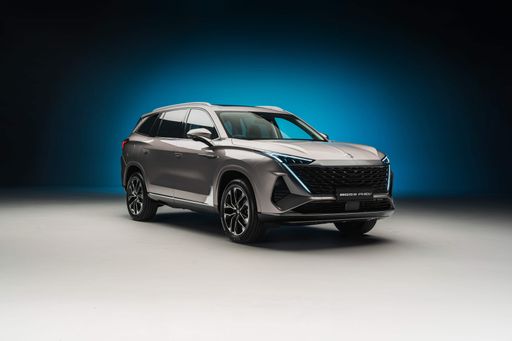
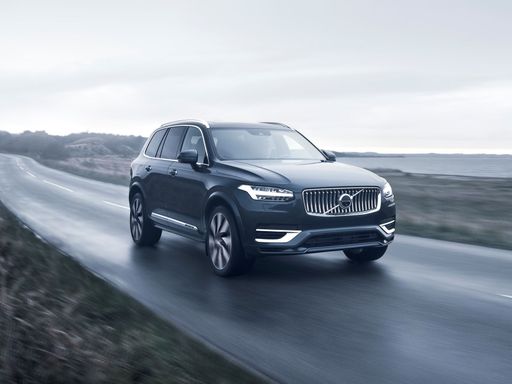
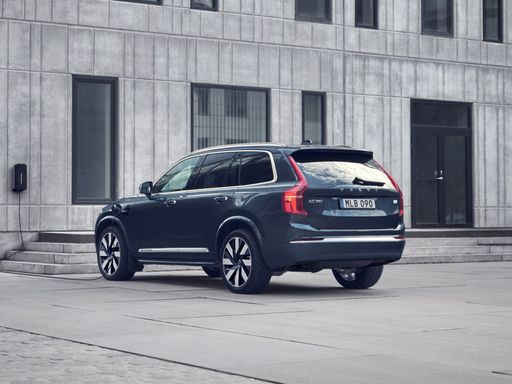
Volvo XC90 and MG MGS9 are both seven-seat SUVs that answer family needs from opposite ends of the spectrum. The Volvo XC90 leans into premium materials, long-distance serenity and a comfort-first character, while the MG MGS9 trades badge prestige for a very competitive package of space, equipment and an unusually long everyday electric range for a PHEV. That makes the XC90 feel like a calm, composed executive wagon for long trips, and the MGS9 feel like a practical, value-driven people-mover for daily life. Choosing between the Volvo XC90 and MG MGS9 is therefore a question of whether you prioritise long-haul refinement and perceived quality or outright value, usable EV miles and spec for the money. Below we highlight where each car fits better in real-world use rather than on the spec sheet.
MGS9

Comfort and long-distance behaviour

The Volvo XC90 is tuned around composure and cushioning: long motorway runs feel effortless and quiet, and optional air suspension further softens rough patches, so fatigue drops on multi-hour trips. The MG MGS9 is pleasantly quiet in electric mode and very relaxed for daily commuting, but it doesn’t match the XC90’s isolation and composure at sustained high speeds where road and wind noise are more noticeable. Volvo’s seats and suspension prioritise sustained comfort for adults in all three rows on long journeys, whereas MG’s ride and seats aim for broad comfort at a very accessible price, with some sharper responses on imperfect surfaces. For buyers who live on the motorway and value serenity, the Volvo XC90 has the edge; for families who mostly do local and mid-range EV-first runs, the MG MGS9 often feels more economical and suitably comfortable.

XC90

Cabin feel and perceived quality

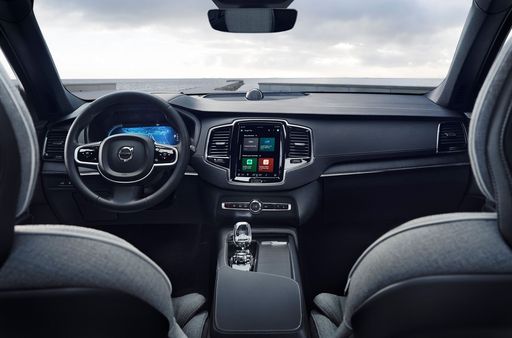
Step into the Volvo XC90 and the cabin announces itself with clean Scandinavian lines, tactile materials and a calm, premium presence that keeps its value in daily use. The MG MGS9 surprises for its price with a well-equipped, modern interior and generous technology, but close inspection reveals softer plastics and a less refined finish compared with the Volvo XC90’s higher-grade surfaces. Infotainment is a trade-off: the Volvo XC90’s interface prioritises a sleek look but asks for some learning, while the MG MGS9 offers tangible buttons and a feature-heavy spec that can feel more straightforward even if the system occasionally lags. If cabin prestige and long-term perceived quality matter, the Volvo XC90 feels like an investment; if immediate equipment and usable tech at a lower cost matter more, the MG MGS9 is the pragmatic choice.

Practicality, seating and family usability

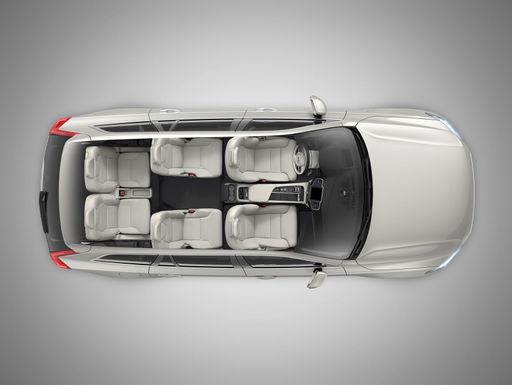
Both the Volvo XC90 and the MG MGS9 are true seven-seaters, but they approach family life differently: the Volvo XC90 offers a very flexible second row and multiple child-seat solutions that make it inherently family-focused. The MG MGS9 gives excellent legroom across rows and a sliding second row that benefits taller passengers, yet it limits you with fewer ISOFIX anchor positions, which can be a decisive shortcoming for families juggling several child seats. Access to the third row and everyday luggage management highlight more trade-offs: the Volvo XC90’s load area is roomy and practical but has a higher lip and lacks a tidy cable recess for PHEV owners, whereas the MG MGS9 packs seats tightly and yields usable EV-mode luggage flexibility when you keep fewer occupants. For parents who need flexible, long-term family usability the Volvo XC90 tends to feel more mature; for budget-conscious large families who prioritise raw space and electric commuting the MG MGS9 often wins on day-to-day practicality.

City friendliness and driving dynamics

In urban environments the MG MGS9’s silent EV mode and lower entry cost make it an attractive, easy-to-live-with choice for short trips, but the MGS9 remains a sizable vehicle to park and manoeuvre. The Volvo XC90 is larger and wider, and its presence in tight garages or narrow streets is more demanding, yet camera systems and refined steering make slow-speed control predictable and confidence-building. On the move the Volvo XC90 accelerates and pulls with greater composure, rewarding highway overtakes and towing chores, while the MG MGS9 drives in a relaxed, front-wheel-drive manner and can show brief traction quirks under hard throttle. If your life is mostly urban with occasional highway hops and you can charge at home, MG MGS9’s EV-first manners shine; if you need confident high-speed poise and towing or spend a lot of time in mixed driving, the Volvo XC90 feels better suited.

Buyer fit and what to consider next

Think of the Volvo XC90 as the premium, comfort-centric family cruiser: it’s for buyers who accept higher upfront cost for superior cabin ambience, long-range composure and stronger towing or heavy-load capability. Consider the MG MGS9 if you want maximum seating and equipment for a tighter budget, a genuinely useful electric daily range and aggressive value-per-pound—provided you’re willing to accept some infotainment lag, limited ISOFIX flexibility and less premium finish. For buyers who charge regularly at home and prioritise running costs, the MG MGS9’s EV capability can be decisive; for buyers who value perceived quality, long-distance comfort and a more composed highway personality, the Volvo XC90 will feel right. If you want a closer look at how those differences translate into performance, efficiency and real-world numbers, the technical comparison section that follows will map those trade-offs in detail so you can match features to daily needs.

Here’s where it gets real: The technical differences in detail

XC90

Costs and Efficiency:

When it comes to price and running costs, the biggest differences usually appear. This is often where you see which car fits your budget better in the long run.

MG MGS9 is substantially cheaper – starting at 38,600 £ , while the Volvo XC90 costs 74,300 £ . That’s a price difference of around 35,743 £.

Fuel consumption also shows a difference: the MG MGS9 uses 2.4 L/100km and is clearly more efficient than the Volvo XC90 with 3.4 L/100km. The difference is about 1 L/100km.

As for electric range, the MG MGS9 offers clearly more range – reaching up to 100 km, about 31 km more than the Volvo XC90.

MGS9

Engine and Performance:

Power, torque and acceleration are the classic benchmarks for car enthusiasts – and here, some clear differences start to show.

When it comes to engine power, the Volvo XC90 offers noticeably more power – delivering 406 HP compared to 299 HP. That’s roughly 107 HP more horsepower.

When accelerating from 0 to 100 km/h, the Volvo XC90 is clearly quicker – completing the sprint in 5.4 s, while the MG MGS9 takes 9.6 s. That’s about 4.2 s quicker.

There’s also a difference in torque: the Volvo XC90 delivers considerably more torque with 669 Nm compared to 390 Nm. That’s about 279 Nm more.

XC90

Space and Everyday Use:

Whether family car or daily driver – which one offers more room, flexibility and comfort?

Both vehicles offer seating for 7 people.

In terms of curb weight, Volvo XC90 is barely lighter – 2,080 kg compared to 2,160 kg. The difference is around 80 kg.

When it comes to payload, the Volvo XC90 carries markedly more – 710 kg compared to 557 kg. That’s a difference of about 153 kg.

Who wins the race in the data check?

The Volvo XC90 is slightly ahead in the objective data comparison.
This result only shows which model scores more points on paper – not which of the two cars feels right for you.

from £74,300
XC90

Volvo XC90

  • Engine Type Petrol MHEV, Plugin Hybrid
  • Transmission Automatic
  • Drive Type All-Wheel Drive
  • Power HP 250 - 406 HP
  • Consumption L/100km 3.4 - 8.3 L/100km
  • Electric Range 69 km
Volvo XC90
MG MGS9

Costs and Consumption

View detailed analysis

Engine and Performance

View detailed analysis

Dimensions and Body

View detailed analysis

Volvo XC90

The Volvo XC90 is a serene Scandinavian SUV that mixes minimalist luxury with a composed, confidence-inspiring presence — ideal for buyers who want family practicality without sacrificing style. Inside it serves up a calm, well-crafted cabin and user-friendly tech that keeps long journeys pleasant and tantrums to a minimum, making the XC90 a smart, stylish pick for sensible drivers.

details

MG MGS9

The MG MGS9 presents itself as a stylish, value-focused flagship SUV with a roomy, well-equipped cabin and contemporary infotainment. It balances a comfortable ride with engaging handling, making it a compelling choice for buyers seeking a feature-rich alternative to established rivals.

details
Volvo XC90
MG MGS9

Costs and Consumption

Price
74,300 - 84,600 £
Price
38,600 - 41,800 £
Consumption L/100km
3.4 - 8.3 L/100km
Consumption L/100km
2.4 L/100km
Consumption kWh/100km
-
Consumption kWh/100km
-
Electric Range
69 km
Electric Range
100 km
Battery Capacity
-
Battery Capacity
-
co2
71 - 188 g/km
co2
54 g/km
Fuel tank capacity
-
Fuel tank capacity
-

Dimensions and Body

Body Type
SUV
Body Type
SUV
Seats
7
Seats
7
Doors
-
Doors
-
Curb weight
2,080 - 2,350 kg
Curb weight
2,160 kg
Trunk capacity
-
Trunk capacity
332 L
Length
-
Length
-
Width
1,923 mm
Width
1,967 mm
Height
-
Height
-
Max trunk capacity
-
Max trunk capacity
-
Payload
600 - 710 kg
Payload
557 kg

Engine and Performance

Engine Type
Petrol MHEV, Plugin Hybrid
Engine Type
Plugin Hybrid
Transmission
Automatic
Transmission
Automatic
Transmission Detail
Automatic Gearbox
Transmission Detail
Automatic Gearbox
Drive Type
All-Wheel Drive
Drive Type
Front-Wheel Drive
Power HP
250 - 406 HP
Power HP
299 HP
Acceleration 0-100km/h
5.4 - 7.7 s
Acceleration 0-100km/h
9.6 s
Max Speed
-
Max Speed
-
Torque
360 - 669 Nm
Torque
390 Nm
Number of Cylinders
4
Number of Cylinders
4
Power kW
184 - 299 kW
Power kW
220 kW
Engine capacity
1,969 cm3
Engine capacity
1,496 cm3

General

Model Year
2,025 - 2,026
Model Year
2026
CO2 Efficiency Class
G, B
CO2 Efficiency Class
B
Brand
Volvo
Brand
MG
DriveDuel uses data analysis and artificial intelligence to evaluate vehicle data and create content. Content is regularly reviewed and improved. The displayed prices are estimates based on German list prices, adjusted to the respective country’s VAT. Country-specific registration taxes are not included. This information is not legally binding.