
VS

MG MGS9 vs Jaecoo 7 comparison

Compare performance (299 HP vs 279 HP), boot space and price (38,600 £ vs 31,600 £ ) at a glance. Find out which car is the better choice for you – MG MGS9 or Jaecoo 7?

MG MGS9 vs Jaecoo 7: Key differences

MG MGS9

5 (1 Reviews)
rate
  • only slightly more power
  • barely more electric range
details

Jaecoo 7

  • visibly cheaper
  • slightly quicker 0–100 km/h
  • somewhat lighter
  • only slightly more trunk space
details

By Achim Sedelmaier

MGS9

MG MGS9 VS Jaecoo 7 — quick take for buyers

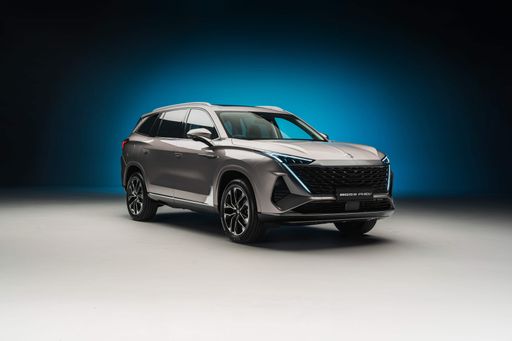
MG MGS9 VS Jaecoo 7 frames a classic choice between space-and-range practicality and high‑kit, value‑focused polish. The MG MGS9 arrives as the more obvious family hauler, offering genuine seven‑seat flexibility and a long electric‑first commute for those who can charge regularly. The Jaecoo 7 trades some of that space for a sharper equipment list, a quieter city experience and a cabin that tries to feel a touch more premium for less money. For anyone deciding between them, the real question is whether you need extra seats and electric range more than extra kit and showroom presence.
7

Character on the road: calm long‑legs vs composed city cruiser

The MG MGS9 drives like a large, composed PHEV designed to settle into motorway miles without fuss, its power delivery and ride tuned toward calm rather than thrills. The Jaecoo 7 feels lighter and easier to hustle around town thanks to very good camera coverage and light steering, but it isn’t aimed at drivers who want taut handling or sharp feedback. Where MG soothes and masks distance, Jaecoo rewards short trips with refinement and convenience features that make urban life easier. Pick MG if relaxed long runs and quiet EV commuting matter; pick Jaecoo if you prioritise everyday agility, parking ease and a wallet‑friendly equipment haul.

Comfort and long‑distance behavior: stability versus mixed high‑speed manners

On the motorway the MG MGS9 tends to feel steadier and more settled, with a suspension and cabin setup that favour relaxed cruising and lower fatigue over long stretches. The Jaecoo 7 is comfortable in town and on short runs, but several reports note it can feel more susceptible to waver over highway ripples and can show more wind and tyre noise at speed. Interiors and seat design support long trips in both cars, yet the MG’s three‑zone climate and higher noise composure make extended journeys easier for multiple occupants. If you do a lot of miles with family aboard, the MG’s long‑run manners are the practical advantage; Jaecoo is fine for mixed commutes but less confident at sustained autobahn speeds.

Practicality and everyday usability: seven seats and towing versus a smarter five‑seat layout

The MG MGS9’s defining practical edge is its true seven‑seat layout and a sliding second row that actually makes life easier with kids, luggage and occasional adult passengers in the third row. The Jaecoo 7, while roomy for four and cleverly packaged, leans toward a five‑seat family life — that means easier day‑to‑day cargo management but less flexibility for larger families or car‑pooling. MG’s ability to tow and carry heavier payloads also plays for buyers who need weekends with a trailer or bikes, whereas Jaecoo asks you to plan packing more carefully. In short: choose the MGS9 when seat count and load versatility matter, choose the Jaecoo when you want tidy daily usability and a more compact cargo compromise.

Cabin feel and perceived quality: premium cues against generous kit

The Jaecoo 7 aims to impress inside, with a material mix, layout and camera tech that create a more upscale first impression than its price suggests. The MG MGS9 gives a very convincing value interior too, but its strengths are more about space and thoughtful comfort features than outright luxury detailing. Both cars suffer from menu‑heavy infotainment quirks—MG’s system can feel sluggish while Jaecoo buries functions behind touch menus—but Jaecoo’s cameras and nicer finishes better sell the “premium for less” idea. If tactile quality and a showier cabin are priorities, Jaecoo nudges ahead; if spacious ergonomics and straightforward comfort trump boutique finishes, the MG is the more convincing everyday space.

Who should pick which car — buyer fit and trade‑offs before the numbers

Families who genuinely need seven seats, regular towing capability or a longer electric‑first commute will find the MG MGS9 the more practical, cost‑effective choice in daily life. Buyers who want the maximum equipment, a stronger perceived cabin, longer warranty peace of mind and a lower entry cost will be drawn to the Jaecoo 7, especially if their travel is mostly city and short‑to‑medium trips. Each car makes a clear trade‑off: MG trades some showroom polish for room and electric range, Jaecoo trades a full third row and brute luggage space for kit and refinement. The technical comparison that follows will unpack those trade‑offs in more detail so you can map them to your routine and budget.

Here’s where it gets real: The technical differences in detail

MGS9

Costs and Efficiency:

Looking at overall running costs, both models reveal some interesting differences in everyday economy.

Jaecoo 7 is visibly cheaper – starting at 31,600 £ , while the MG MGS9 costs 38,600 £ . That’s a price difference of around 6,934 £.

Both cars consume an average of 2.4 L/100km – no difference here.

As for electric range, the MG MGS9 offers barely more range – reaching up to 100 km, about 10 km more than the Jaecoo 7.

7

Engine and Performance:

Under the bonnet, it becomes clear which model is tuned for sportiness and which one takes the lead when you hit the accelerator.

When it comes to engine power, the MG MGS9 offers only slightly more power – delivering 299 HP compared to 279 HP. That’s roughly 20 HP more horsepower.

When accelerating from 0 to 100 km/h, the Jaecoo 7 is slightly quicker – completing the sprint in 8.5 s, while the MG MGS9 takes 9.6 s. That’s about 1.1 s quicker.

There’s also a difference in torque: the MG MGS9 delivers very slightly more torque with 390 Nm compared to 365 Nm. That’s about 25 Nm more.

Space and Everyday Use:

Whether family car or daily driver – which one offers more room, flexibility and comfort?

Seats: MG MGS9 offers more seats – 7 vs 5.

In terms of curb weight, Jaecoo 7 is somewhat lighter – 1,870 kg compared to 2,160 kg. The difference is around 290 kg.

Looking at boot space, the Jaecoo 7 offers only slightly more boot space – 340 L compared to 332 L. That’s a difference of about 8 L.

When it comes to payload, the MG MGS9 carries noticeably more – 557 kg compared to 440 kg. That’s a difference of about 117 kg.

Who wins the race in the data check?

The MG MGS9 shows a few small advantages in the objective data comparison.
This result only shows which model scores more points on paper – not which of the two cars feels right for you.

from £38,600
MGS9

MG MGS9

  • Engine Type Plugin Hybrid
  • Transmission Automatic
  • Drive Type Front-Wheel Drive
  • Power HP 299 HP
  • Consumption L/100km 2.4 L/100km
  • Electric Range 100 km
MG MGS9
Jaecoo 7

Costs and Consumption

View detailed analysis

Engine and Performance

View detailed analysis

Dimensions and Body

View detailed analysis

MG MGS9

The MG MGS9 presents itself as a stylish, value-focused flagship SUV with a roomy, well-equipped cabin and contemporary infotainment. It balances a comfortable ride with engaging handling, making it a compelling choice for buyers seeking a feature-rich alternative to established rivals.

details

Jaecoo 7

The Jaecoo 7 is a striking compact SUV that pairs bold, modern styling with a spacious, well-equipped cabin aimed at families and tech-minded buyers. It offers strong value, a comfortable ride and plenty of gadgetry, though you should weigh dealer support and long-term ownership reputation when deciding.

details
MG MGS9
Jaecoo 7

Costs and Consumption

Price
38,600 - 41,800 £
Price
31,600 - 33,800 £
Consumption L/100km
2.4 L/100km
Consumption L/100km
2.4 L/100km
Consumption kWh/100km
-
Consumption kWh/100km
-
Electric Range
100 km
Electric Range
90 km
Battery Capacity
-
Battery Capacity
-
co2
54 g/km
co2
54 g/km
Fuel tank capacity
-
Fuel tank capacity
-

Dimensions and Body

Body Type
SUV
Body Type
SUV
Seats
7
Seats
5
Doors
-
Doors
-
Curb weight
2,160 kg
Curb weight
1,870 kg
Trunk capacity
332 L
Trunk capacity
340 L
Length
-
Length
-
Width
1,967 mm
Width
1,865 mm
Height
-
Height
-
Max trunk capacity
-
Max trunk capacity
-
Payload
557 kg
Payload
440 kg

Engine and Performance

Engine Type
Plugin Hybrid
Engine Type
Plugin Hybrid
Transmission
Automatic
Transmission
Automatic
Transmission Detail
Automatic Gearbox
Transmission Detail
Automatic Gearbox
Drive Type
Front-Wheel Drive
Drive Type
Front-Wheel Drive
Power HP
299 HP
Power HP
279 HP
Acceleration 0-100km/h
9.6 s
Acceleration 0-100km/h
8.5 s
Max Speed
-
Max Speed
-
Torque
390 Nm
Torque
365 Nm
Number of Cylinders
4
Number of Cylinders
4
Power kW
220 kW
Power kW
205 kW
Engine capacity
1,496 cm3
Engine capacity
1,499 cm3

General

Model Year
2026
Model Year
2026
CO2 Efficiency Class
B
CO2 Efficiency Class
B
Brand
MG
Brand
Jaecoo
DriveDuel uses data analysis and artificial intelligence to evaluate vehicle data and create content. Content is regularly reviewed and improved. The displayed prices are estimates based on German list prices, adjusted to the respective country’s VAT. Country-specific registration taxes are not included. This information is not legally binding.








