VS

Renault Austral vs Renault Symbioz comparison

Compare performance (200 HP vs 158 HP), boot space and price (29,900 £ vs 24,400 £ ) at a glance. Find out which car is the better choice for you – Renault Austral or Renault Symbioz?

Renault Austral vs Renault Symbioz: Key differences

Renault Austral

4.9 (4 Reviews)
rate
  • visibly more power
  • only slightly quicker 0–100 km/h

Renault Symbioz

5 (3 Reviews)
rate
  • noticeably cheaper
  • marginally more efficient
  • moderately lighter
  • marginally more trunk space

All details on performance, efficiency, range and trunk space can be found in the technical comparison below – including user reviews for both models.

Austral

Street Presence: The Look That Stops You

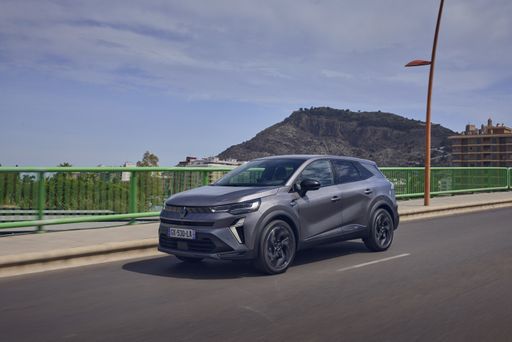
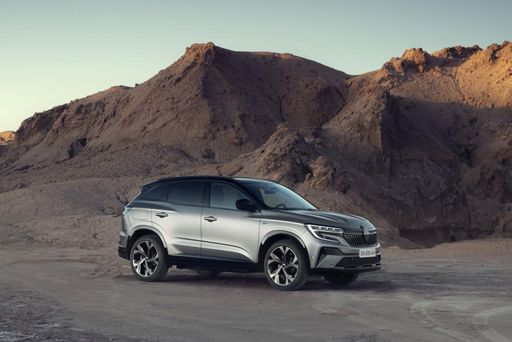
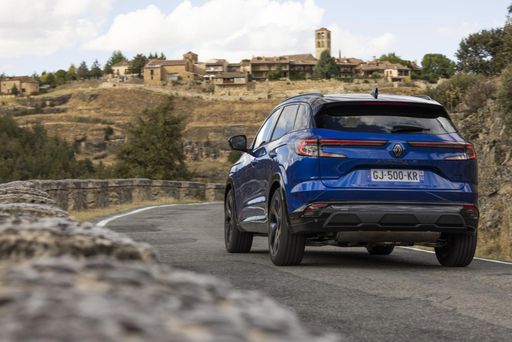
The Renault Austral plays the confident sibling in a crowded car park, with a familiar but well-sculpted stance that reads as practical luxury rather than attention-seeking flash. By contrast the Renault Symbioz flirts with futurism, sporting details that suggest a concept-car pedigree and a designer who enjoyed breaking a few rules. Both have distinct personalities on the curb, so which one turns your head will say as much about you as it does about the cars.

Symbioz

City Attitude: How They Behave on the Daily

In town the Austral feels reassuringly settled, its responses tuned to make commuting unremarkable in the best possible way, shrugging off potholes and lane changes with calm. The Symbioz prefers light-footed agility, rewarding a playful driving style and squeezing into tighter gaps with an air of confidence. If your daily grind is stop-start traffic you’ll appreciate composure; if it’s winding backroads and quick errands you’ll notice the livelier temperament.

Austral

Long Runs: Comfort When the Miles Add Up

When the journey stretches beyond the daily commute, the Austral projects steadiness and a sense of being in command — an ally for sustained motorway miles. The Symbioz leans more towards a composed, whisper-quiet cabin that makes long stints feel less tiring and more luxurious, with an emphasis on serenity over theatrics. Both can carry you in comfort, but they sell different kinds of long-distance promises.

Symbioz

Living With It: Practical Usability

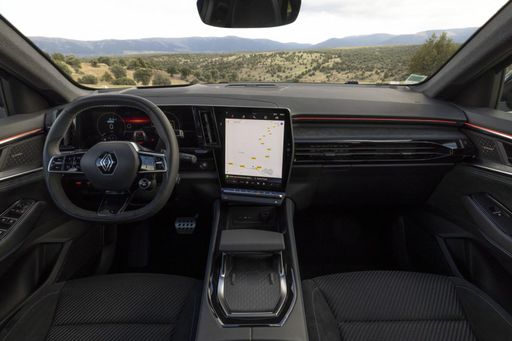
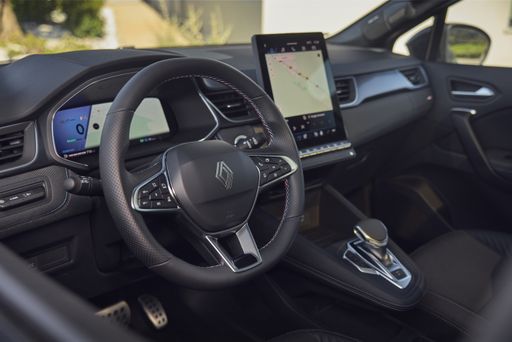
Practicality is where the rubber meets the road: the Austral presents an intuitive, family-friendly layout with easy controls and a no-nonsense approach to space that suits real-world chores. The Symbioz brings clever packaging and a slightly more boutique feel inside, where styling choices sometimes double as useful features and sometimes demand a second look. Either way, ergonomics and day-to-day convenience have been clearly considered, so pick based on how you pack, drive and live.

Austral

Character and Who It’s For

The Austral will appeal to buyers who prize sensible refinement — families, commuters and buyers after a dependable all-rounder who doesn’t shout but performs. The Symbioz will seduce those who value design-led flair and a softer, more modern driving experience — think style-conscious couples or tech-minded urbanites. Both have honest characters; it’s a question of whether you want to blend in with confidence or stand out with nuance.

Symbioz

Value and Ownership Feel

Ownership is as much about perception as it is about spreadsheets, and both cars offer clear propositions: one feels like a grounded, mainstream companion while the other positions itself as a forward-looking selection with a bit more personality. Running and servicing should feel familiar in Renault’s ecosystem, but your personal priorities — upfront equipment versus long-term ownership comfort — will tip the scales. Consider how much emphasis you place on initial outlay, everyday operating ease and how you want the car to feel after a few years on the road.

Austral

Ready for the Final Lap?

Ultimately these two Renaults trade different strengths — one leans into assured practicality and the other into fresh, design-forward thinking — so choosing between them comes down to lifestyle and taste more than absolutes. Read on for our full breakdown of how they compare side-by-side, and weigh the trade-offs that matter most to you. Keep reading — the DriveDuel Champion will be revealed afterwards.

Here’s where it gets real: The technical differences in detail

Austral

Costs and Efficiency:

Price and efficiency are key factors when choosing a car – and this is often where the real differences emerge.

Renault Symbioz is noticeably cheaper – starting at 24,400 £ , while the Renault Austral costs 29,900 £ . That’s a price difference of around 5,486 £.

Fuel consumption also shows a difference: the Renault Symbioz uses 4.5 L/100km and is marginally more efficient than the Renault Austral with 4.8 L/100km. The difference is about 0.3 L/100km.

Symbioz

Engine and Performance:

Power, torque and acceleration say a lot about how a car feels on the road. This is where you see which model delivers more driving dynamics.

When it comes to engine power, the Renault Austral offers visibly more power – delivering 200 HP compared to 158 HP. That’s roughly 42 HP more horsepower.

When accelerating from 0 to 100 km/h, the Renault Austral is only slightly quicker – completing the sprint in 8.4 s, while the Renault Symbioz takes 9.1 s. That’s about 0.7 s quicker.

There’s no difference in top speed – both reach 180 km/h.

There’s also a difference in torque: the Renault Austral delivers very slightly more torque with 270 Nm compared to 265 Nm. That’s about 5 Nm more.

Austral

Space and Everyday Use:

Cabin size, boot volume and payload all play a role in everyday practicality. Here, comfort and flexibility make the difference.

Both vehicles offer seating for 5 people.

In terms of curb weight, Renault Symbioz is moderately lighter – 1,359 kg compared to 1,548 kg. The difference is around 189 kg.

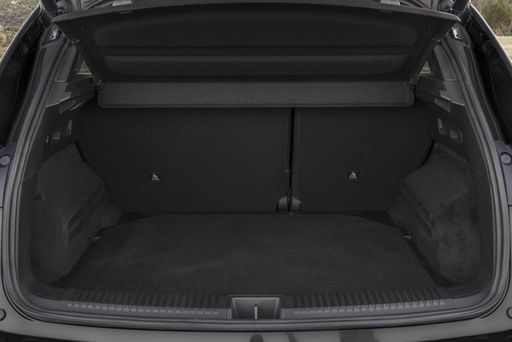
Looking at boot space, the Renault Symbioz offers marginally more boot space – 576 L compared to 527 L. That’s a difference of about 49 L.

For maximum load capacity, the Renault Austral offers marginally more capacity – up to 1,736 L, about 54 L more than the Renault Symbioz.

When it comes to payload, the Renault Austral carries marginally more – 477 kg compared to 459 kg. That’s a difference of about 18 kg.

Who wins the race in the data check?

The Renault Symbioz is narrowly ahead in the objective data comparison.
This result only shows which model scores more points on paper – not which of the two cars feels right for you.

from £24,400
Symbioz

Renault Symbioz

  • Engine Type : Full Hybrid, Petrol MHEV
  • Transmission : Automatic, Manuel
  • Drive Type : Front-Wheel Drive
  • Power HP : 140 - 158 HP
  • Consumption L/100km : 4.5 - 6 L/100km
Renault Austral
Renault Symbioz

Costs and Consumption

View detailed analysis

Engine and Performance

View detailed analysis

Dimensions and Body

View detailed analysis

Renault Austral

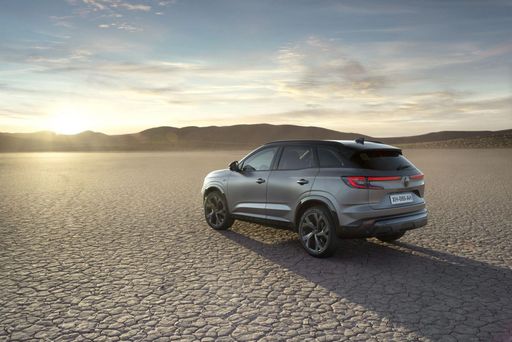
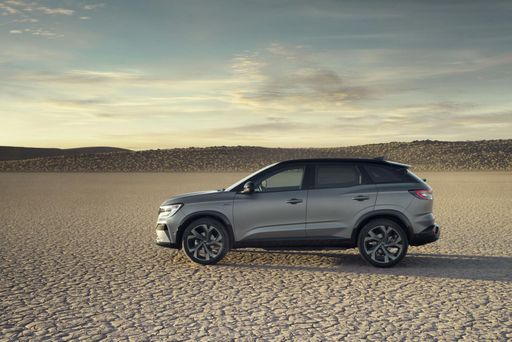
The Renault Austral dresses the family SUV in elegant modern looks and a surprisingly grown-up cabin that feels thoughtful and livable. It balances comfort and clever technology with a relaxed road presence—an appealing choice for buyers who want style and everyday sense without fuss.

details

Renault Symbioz

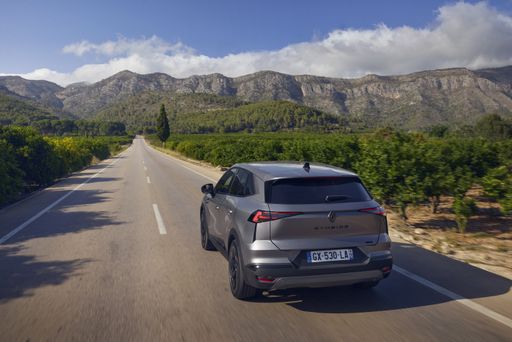
The Renault Symbioz feels less like a traditional car and more like a rolling living room that's been told it's allowed to drive — its flowing lines and minimalist cabin are pure concept-car theatre that teases the future of everyday transport. For buyers with an eye for design and a taste for tech-forward ideas, the Symbioz is an alluring vision of what Renault could offer tomorrow, even if it's not yet a model you can park in your driveway.

details
Renault Austral
Renault Symbioz

Costs and Consumption

Price
29,900 - 37,800 £
Price
24,400 - 30,700 £
Consumption L/100km
4.8 - 6.4 L/100km
Consumption L/100km
4.5 - 6 L/100km
Consumption kWh/100km
-
Consumption kWh/100km
-
Electric Range
-
Electric Range
-
Battery Capacity
-
Battery Capacity
-
co2
109 - 145 g/km
co2
102 - 136 g/km
Fuel tank capacity
55 L
Fuel tank capacity
48 L

Dimensions and Body

Body Type
SUV
Body Type
SUV
Seats
5
Seats
5
Doors
5
Doors
5
Curb weight
1,548 - 1,613 kg
Curb weight
1,359 - 1,465 kg
Trunk capacity
527 L
Trunk capacity
492 - 576 L
Length
4,533 mm
Length
4,413 mm
Width
1,825 mm
Width
1,797 mm
Height
1,645 mm
Height
1,575 mm
Max trunk capacity
1,736 L
Max trunk capacity
1,682 L
Payload
455 - 477 kg
Payload
455 - 459 kg

Engine and Performance

Engine Type
Full Hybrid, Petrol MHEV
Engine Type
Full Hybrid, Petrol MHEV
Transmission
Automatic
Transmission
Automatic, Manuel
Transmission Detail
Automatic Gearbox, CVT
Transmission Detail
Automatic Gearbox, Manual Gearbox, Dual-Clutch Automatic
Drive Type
Front-Wheel Drive
Drive Type
Front-Wheel Drive
Power HP
148 - 200 HP
Power HP
140 - 158 HP
Acceleration 0-100km/h
8.4 - 9.9 s
Acceleration 0-100km/h
9.1 - 11 s
Max Speed
180 km/h
Max Speed
180 km/h
Torque
270 Nm
Torque
250 - 265 Nm
Number of Cylinders
3 - 4
Number of Cylinders
4
Power kW
109 - 147 kW
Power kW
103 - 116 kW
Engine capacity
1,199 - 1,332 cm3
Engine capacity
1,332 - 1,789 cm3

General

Model Year
2,025
Model Year
2,025
CO2 Efficiency Class
C, E
CO2 Efficiency Class
C, D, E
Brand
Renault
Brand
Renault
DriveDuel uses data analysis and artificial intelligence to evaluate vehicle data and create content. Content is regularly reviewed and improved. The displayed prices are estimates based on German list prices, adjusted to the respective country’s VAT. Country-specific registration taxes are not included. This information is not legally binding.