VS

Renault Symbioz vs Mitsubishi Grandis comparison

Compare performance (158 HP vs 158 HP), boot space and price (24,700 £ vs 25,200 £ ) at a glance. Find out which car is the better choice for you – Renault Symbioz or Mitsubishi Grandis?

Renault Symbioz vs Mitsubishi Grandis: Key differences

Renault Symbioz

4.5 (5 Reviews)
rate
  • very slightly cheaper
details

Mitsubishi Grandis

4.1 (1 Reviews)
rate
  • barely more efficient
details

All details on performance, efficiency, range and trunk space can be found in the technical comparison below – including user reviews for both models.

By Achim Sedelmaier

Symbioz

Odd Couple on the Driveway

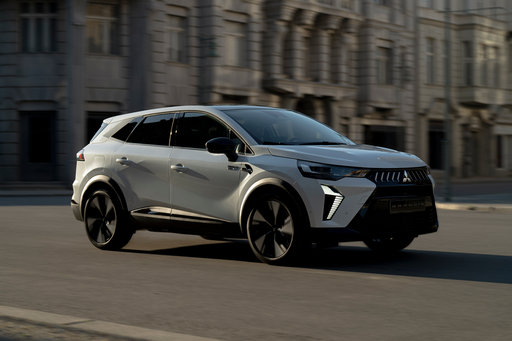
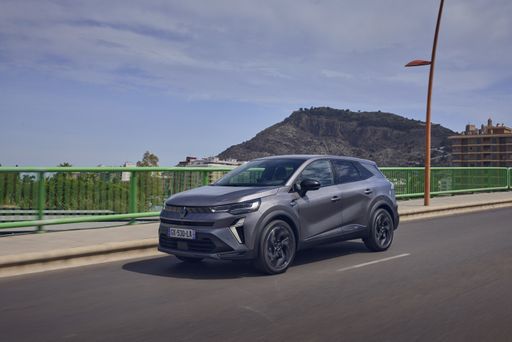
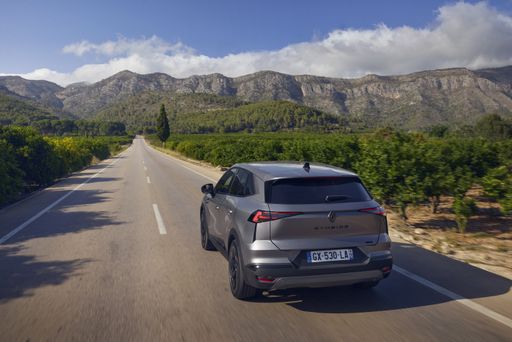
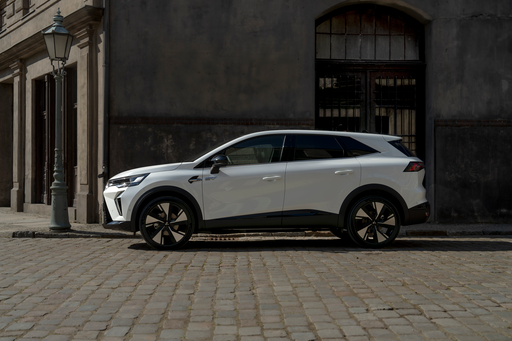
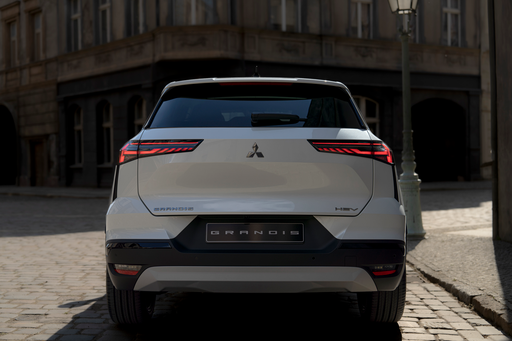
The Renault Symbioz arrives like a sculpted city suit—sleek, modern and eager to catch an admiring glance—while the Mitsubishi Grandis shows up as the sensible family van that quietly gets the job done. Park them side by side and you immediately understand this is less about specs and more about personality. It’s a duel of intent: one wants to be noticed, the other wants to be relied upon.

Grandis

Style vs. Substance — The First Impression

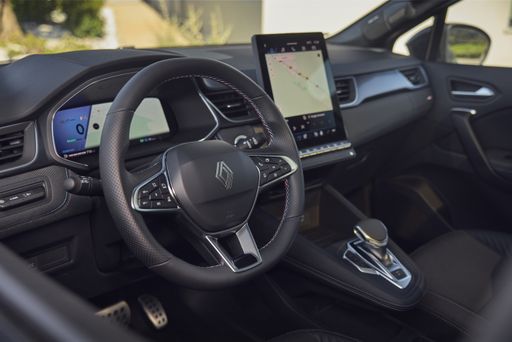
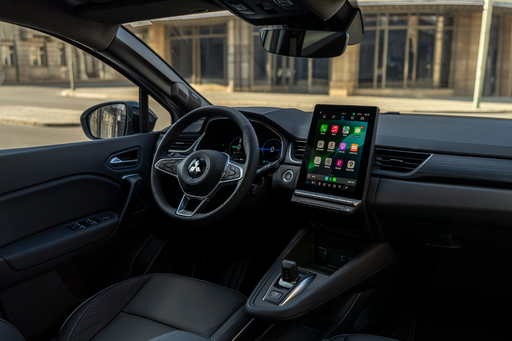
Symbioz trades on curated surfaces and a design-forward posture that makes the cabin feel like a small, considered theatre for driving. Grandis chooses broad shoulders and familiar ergonomics, broadcasting an intention to be usable, comfortable and undemanding. The contrast is tactile and emotional: statement-making flair against pragmatic calm.

Symbioz

Day-to-Day Reality Check

In the city the Symbioz feels nimble and engaged, the kind of car that turns parking into a minor triumph and commuting into something a little more enjoyable. On the other hand, Grandis shines when people, luggage and weekend activities pile up—it’s built for practical routines without fuss. Each car answers a different daily question: charm and agility, or space and simplicity.

Grandis

What You’re Saying When You Buy One

Choosing the Symbioz is a statement: you want a car that reflects taste and modernity, something that lifts ordinary drives into a small luxury. Picking the Grandis signals you value quiet competence and predictability—you prefer a car that supports life rather than competes for attention. Both choices tell a story about priorities, not a debate about merit.

Symbioz

Who Should Park the Symbioz in Their Lane

Symbioz will appeal to urban commuters, style-conscious drivers and anyone who enjoys a cabin that feels considered and a drive that’s engaging enough to be part of the morning ritual. If you prize presence and a car that acts like an extension of your lifestyle, this is the one that rewards those sensibilities. It’s the pick for buyers who measure value by daily pleasure as much as by practicality.

Grandis

Who the Grandis Speaks To

Grandis is aimed at practical families, long-distance travellers and buyers who want a calm, reliable companion that makes transporting people and gear straightforward and stress-free; it stands as a clear contrast to the Symbioz’s charisma. If you prefer low drama, flexible space and a car that disappears into usefulness, this is the sensible choice. Read on if you want to see how those personalities translate into the finer details.

Here’s where it gets real: The technical differences in detail

Symbioz

Costs and Efficiency:

Looking at overall running costs, both models reveal some interesting differences in everyday economy.

Renault Symbioz is very slightly cheaper – starting at 24,700 £ , while the Mitsubishi Grandis costs 25,200 £ . That’s a price difference of around 506 £.

Fuel consumption also shows a difference: the Mitsubishi Grandis uses 4.3 L/100km and is barely more efficient than the Renault Symbioz with 4.5 L/100km. The difference is about 0.2 L/100km.

Grandis

Engine and Performance:

Under the bonnet, it becomes clear which model is tuned for sportiness and which one takes the lead when you hit the accelerator.

Both models deliver identical power – 158 HP each.

Both models accelerate almost equally fast – 9.1 s from 0 to 100 km/h.

Both models offer the same torque – 265 Nm.

Symbioz

Space and Everyday Use:

Beyond pure performance, interior space and usability matter most in daily life. This is where you see which car is more practical and versatile.

Both vehicles offer seating for 5 people.

Both models weigh roughly the same – around 1,359 kg.

Boot capacity is identical – both offer 576 L of storage.

Maximum payload is identical – both can carry up to 459 kg.

Who wins the race in the data check?

The Mitsubishi Grandis is narrowly ahead in the objective data comparison.
This result only shows which model scores more points on paper – not which of the two cars feels right for you.

from £25,200
Grandis

Mitsubishi Grandis

  • Engine Type : Petrol MHEV, Full Hybrid
  • Transmission : Manuel, Automatic
  • Drive Type : Front-Wheel Drive
  • Power HP : 140 - 158 HP
  • Consumption L/100km : 4.3 - 6.1 L/100km
Renault Symbioz
Mitsubishi Grandis

Costs and Consumption

View detailed analysis

Engine and Performance

View detailed analysis

Dimensions and Body

View detailed analysis

Renault Symbioz

The Renault Symbioz feels less like a traditional car and more like a rolling living room that's been told it's allowed to drive — its flowing lines and minimalist cabin are pure concept-car theatre that teases the future of everyday transport. For buyers with an eye for design and a taste for tech-forward ideas, the Symbioz is an alluring vision of what Renault could offer tomorrow, even if it's not yet a model you can park in your driveway.

details

Mitsubishi Grandis

The Mitsubishi Grandis is a no-nonsense MPV that hides a surprisingly sleek profile, making family duty look almost stylish. It’s spacious, easy to drive, and built to shrug off daily chaos, though the cabin feels dated and it prefers a relaxed cruise to any hot-hatch antics.

details
Renault Symbioz
Mitsubishi Grandis

Costs and Consumption

Price
24,700 - 30,700 £
Price
25,200 - 35,300 £
Consumption L/100km
4.5 - 6 L/100km
Consumption L/100km
4.3 - 6.1 L/100km
Consumption kWh/100km
-
Consumption kWh/100km
-
Electric Range
-
Electric Range
-
Battery Capacity
-
Battery Capacity
-
co2
102 - 136 g/km
co2
98 - 138 g/km
Fuel tank capacity
-
Fuel tank capacity
-

Dimensions and Body

Body Type
SUV
Body Type
SUV
Seats
5
Seats
5
Doors
-
Doors
-
Curb weight
1,359 - 1,465 kg
Curb weight
1,359 - 1,525 kg
Trunk capacity
492 - 576 L
Trunk capacity
492 - 576 L
Length
-
Length
-
Width
1,797 mm
Width
1,797 mm
Height
-
Height
-
Max trunk capacity
-
Max trunk capacity
-
Payload
455 - 459 kg
Payload
395 - 459 kg

Engine and Performance

Engine Type
Full Hybrid, Petrol MHEV
Engine Type
Petrol MHEV, Full Hybrid
Transmission
Automatic, Manuel
Transmission
Manuel, Automatic
Transmission Detail
Automatic Gearbox, Manual Gearbox, Dual-Clutch Automatic
Transmission Detail
Manual Gearbox, Dual-Clutch Automatic, Automatic Gearbox
Drive Type
Front-Wheel Drive
Drive Type
Front-Wheel Drive
Power HP
140 - 158 HP
Power HP
140 - 158 HP
Acceleration 0-100km/h
9.1 - 11 s
Acceleration 0-100km/h
9.1 - 10.6 s
Max Speed
-
Max Speed
-
Torque
250 - 265 Nm
Torque
245 - 265 Nm
Number of Cylinders
4
Number of Cylinders
4
Power kW
103 - 116 kW
Power kW
104 - 116 kW
Engine capacity
1,332 - 1,789 cm3
Engine capacity
1,333 - 1,789 cm3

General

Model Year
2025
Model Year
2025
CO2 Efficiency Class
C, D, E
CO2 Efficiency Class
D, E, C
Brand
Renault
Brand
Mitsubishi
DriveDuel uses data analysis and artificial intelligence to evaluate vehicle data and create content. Content is regularly reviewed and improved. The displayed prices are estimates based on German list prices, adjusted to the respective country’s VAT. Country-specific registration taxes are not included. This information is not legally binding.