@ Renault Group Media
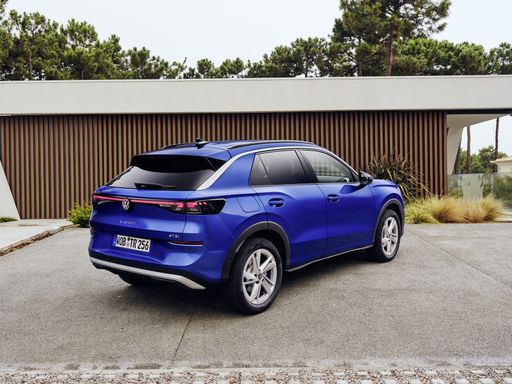
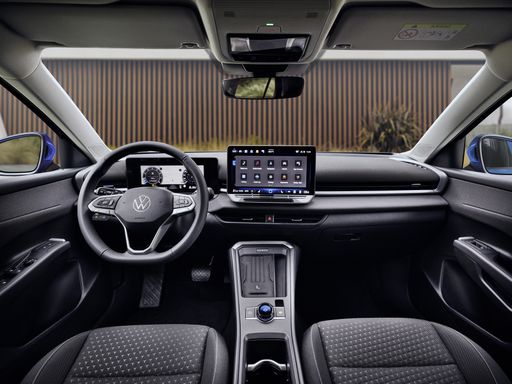
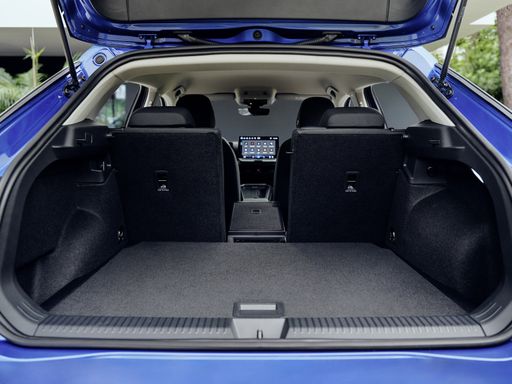
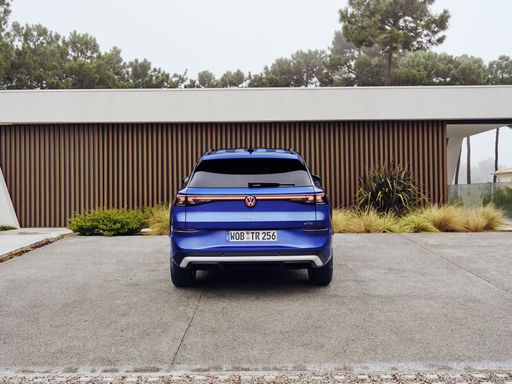
@ Volkswagen AG / VW Media
VS

Renault Symbioz vs VW T-Roc – Performance, range & efficiency compared

Two cars, one duel: Renault Symbioz meets VW T-Roc.
Which one wins in performance, efficiency and value for money? Find out now!

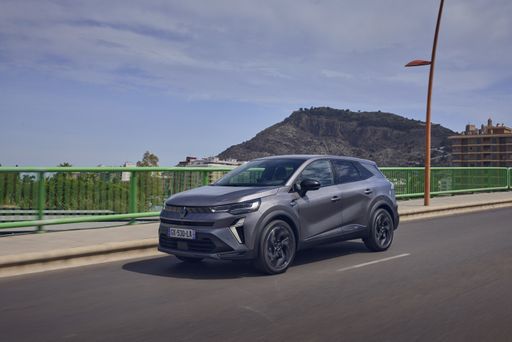
Symbioz @ Renault Group Media

The automotive world is abuzz with innovation and competition, and two standout models in the compact SUV category for 2024 are the Renault Symbioz and the Volkswagen T-Roc. Each vehicle brings a unique blend of technology, design, and performance to the table. This comparison dives deep into the technical aspects of both vehicles, highlighting their innovations and what sets them apart.

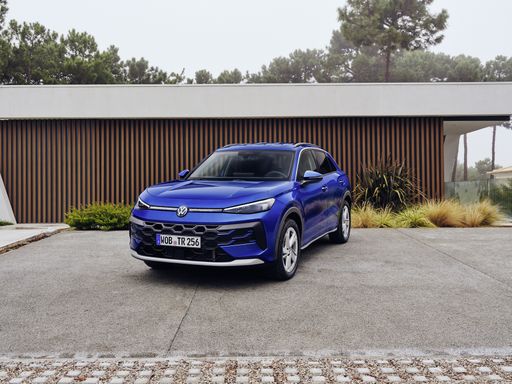
T-Roc @ Volkswagen AG / VW Media

Design and Dimensions

The Renault Symbioz boasts a contemporary SUV design with practical dimensions, measuring 4413 mm in length, 1797 mm in width, and standing 1575 mm tall. Its spacious 492 L trunk capacity is perfect for families or outdoor enthusiasts.

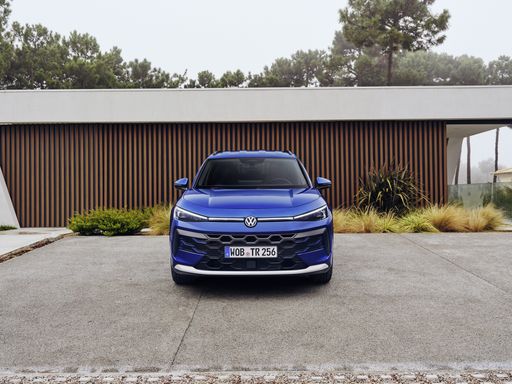
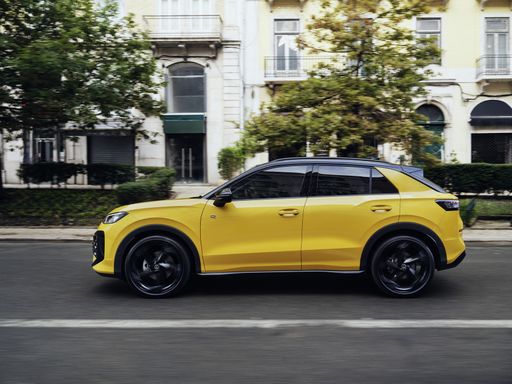
On the other hand, the Volkswagen T-Roc presents itself as a stylish and versatile option with two distinct lengths: 4236 mm and 4271 mm. The T-Roc is slightly wider at 1819 mm, providing a robust road presence, while its trunk capacity varies from 284 L to 445 L, making it flexible for different needs.

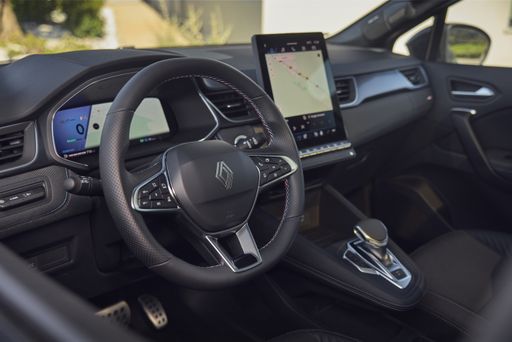
Symbioz @ Renault Group Media

Powertrains and Performance

Under the hood, the Renault Symbioz offers a Full Hybrid engine, delivering 143 HP (105 kW) with a torque of 250 Nm. This engine allows the Symbioz to accelerate from 0-100 km/h in a respectable 10.6 seconds and reaches a top speed of 170 km/h. With a fuel consumption rate of just 4.8 L/100 km, it positions itself as a fuel-efficient choice for eco-conscious drivers.

In contrast, the Volkswagen T-Roc provides a plethora of options for powertrains, including both petrol and diesel engines, with power outputs ranging from 115 HP to a staggering 300 HP. The T-Roc's impressive acceleration capabilities range from 4.9 seconds for its top performance variant to 12.3 seconds for its more economical choices, showcasing the versatility across its lineup. Fuel consumption varies significantly based on the engine choice, with the most efficient models consuming just 4.7 L/100 km.

T-Roc @ Volkswagen AG / VW Media

Transmission and Drive Type

The Symbioz comes equipped with an automatic gearbox, optimized for smooth gear changes and comfortable driving experiences. It features a front-wheel-drive layout, enhancing its agility and ease of use in urban environments.

The T-Roc offers greater diversity in both transmission and drive type. Depending on the variant, buyers can choose between manual and automatic gearboxes, including a dual-clutch option for seamless transitions. Additionally, the T-Roc is available in both front-wheel-drive and all-wheel-drive configurations, catering to drivers looking for flexibility in handling various road conditions.

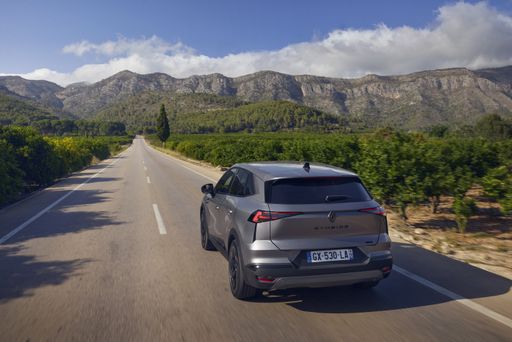
Symbioz @ Renault Group Media

Technological Innovations

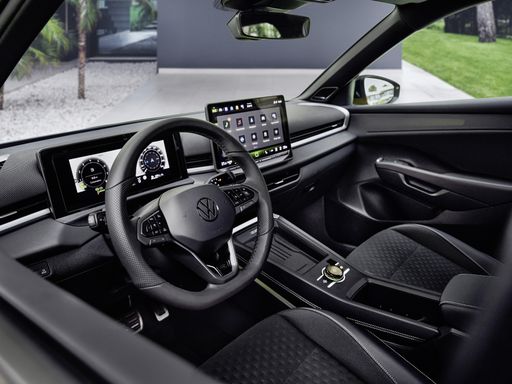
Renault's Symbioz emphasizes technological advancements with its intuitive in-car technology, focusing on integrating hybrid efficiencies into its driving experience. Features such as regenerative braking contribute to its hybrid efficiency, making it an attractive option for those seeking sustainability.

The VW T-Roc, meanwhile, showcases a more traditional yet technologically sophisticated approach, incorporating advanced infotainment systems, adaptive cruise control, and various driver assistance features. Its customizable interior and comfort-focused technology put an emphasis on a premium driving experience that appeals to a broader audience.

T-Roc @ Volkswagen AG / VW Media

Environmental Impact

With a CO2 efficiency class rated at C and emissions of 109 g/km, the Renault Symbioz stands as a strong contender in terms of environmental performance, ideal for eco-conscious buyers wanting to minimize their carbon footprint.

The Volkswagen T-Roc, depending on the variant, ranges from D to G in CO2 efficiency, with emissions peaking at 194 g/km. This indicates a wider range of environmental impacts based on the choice of engine and fuel type, highlighting the T-Roc’s versatility at the cost of higher emissions for its more powerful models.

Conclusion: Which One Wins?

Choosing between the Renault Symbioz and the Volkswagen T-Roc ultimately comes down to personal preference and specific needs. The Symbioz is a compelling option for those prioritizing fuel efficiency and hybrid technology, while the T-Roc offers unparalleled versatility in performance and features suited for more demanding drivers. Each model reflects the innovation and dedication of its manufacturer, making them both worthy competitors in the compact SUV segment for 2024.

Here’s where it gets real: The technical differences in detail

Costs and Efficiency:

Looking at overall running costs, both models reveal some interesting differences in everyday economy.

Renault Symbioz has a barely noticeable advantage in terms of price – it starts at 24400 £, while the VW T-Roc costs 26400 £. That’s a price difference of around 2010 £.

Fuel consumption also shows a difference: Renault Symbioz manages with 4.50 L and is therefore distinct more efficient than the VW T-Roc with 5.50 L. The difference is about 1 L per 100 km.

Engine and Performance:

Power, torque and acceleration are the classic benchmarks for car enthusiasts – and here, some clear differences start to show.

When it comes to engine power, the Renault Symbioz has a hardly perceptible edge – offering 158 HP compared to 150 HP. That’s roughly 8 HP more horsepower.

In acceleration from 0 to 100 km/h, the VW T-Roc is hardly perceptible quicker – completing the sprint in 8.90 s, while the Renault Symbioz takes 9.10 s. That’s about 0.20 s faster.

In terms of top speed, the VW T-Roc performs a bit better – reaching 212 km/h, while the Renault Symbioz tops out at 180 km/h. The difference is around 32 km/h.

There’s also a difference in torque: Renault Symbioz pulls hardly perceptible stronger with 265 Nm compared to 250 Nm. That’s about 15 Nm difference.

Space and Everyday Use:

Beyond pure performance, interior space and usability matter most in daily life. This is where you see which car is more practical and versatile.

Both vehicles offer seating for 5 people.

In curb weight, Renault Symbioz is barely noticeable lighter – 1359 kg compared to 1465 kg. The difference is around 106 kg.

In terms of boot space, the Renault Symbioz offers slightly more room – 576 L compared to 475 L. That’s a difference of about 101 L.

In maximum load capacity, the Renault Symbioz performs to a small extent better – up to 1682 L, which is about 332 L more than the VW T-Roc.

When it comes to payload, VW T-Roc slightly takes the win – 515 kg compared to 459 kg. That’s a difference of about 56 kg.

Who comes out on top?

Overall, the Renault Symbioz shows itself to be outperforms in nearly all aspects and secures the title of DriveDuel Champion.
It convinces with the more balanced overall package and proves to be the more versatile choice for everyday use.

from about £24,400
Symbioz @ Renault Group Media

Renault Symbioz

  • Engine Type : Full Hybrid, Petrol MHEV
  • Transmission : Automatic, Manuel
  • Drive Type : Front-Wheel Drive
  • Power HP : 140 - 158 HP
  • Consumption L/100km : 4.5 - 6 L

Renault Symbioz

The Renault Symbioz feels less like a traditional car and more like a rolling living room that's been told it's allowed to drive — its flowing lines and minimalist cabin are pure concept-car theatre that teases the future of everyday transport. For buyers with an eye for design and a taste for tech-forward ideas, the Symbioz is an alluring vision of what Renault could offer tomorrow, even if it's not yet a model you can park in your driveway.

details

VW T-Roc

5 (2)
rate

The VW T-Roc mixes cheeky, coupe-like styling with the everyday sense and space of an SUV, so it looks fun without sacrificing family sense. It’s a likeable all-rounder with tidy road manners and plenty of personality, ideal if you want a car that’s practical enough for chores but entertaining enough to enjoy.

details
Renault Symbioz
VW T-Roc
Symbioz @ Renault Group Media
T-Roc @ Volkswagen AG / VW Media

Costs and Consumption

Price
24400 - 30700 £
Price
26400 - 38000 £
Consumption L/100km
4.5 - 6 L
Consumption L/100km
5.5 - 6.3 L
Consumption kWh/100km
-
Consumption kWh/100km
-
Electric Range
-
Electric Range
-
Battery Capacity
-
Battery Capacity
-
co2
102 - 136 g/km
co2
126 - 143 g/km
Fuel tank capacity
48 L
Fuel tank capacity
50 L

Dimensions and Body

Body Type
SUV
Body Type
SUV
Seats
5
Seats
4 - 5
Doors
5
Doors
2 - 5
Curb weight
1359 - 1544 kg
Curb weight
1465 - 1539 kg
Trunk capacity
492 - 576 L
Trunk capacity
284 - 475 L
Length
4413 mm
Length
4271 - 4373 mm
Width
1797 mm
Width
1811 - 1828 mm
Height
1575 mm
Height
1527 - 1573 mm
Max trunk capacity
1582 - 1682 L
Max trunk capacity
1350 L
Payload
376 - 459 kg
Payload
368 - 515 kg

Engine and Performance

Engine Type
Full Hybrid, Petrol MHEV
Engine Type
Petrol, Petrol MHEV
Transmission
Automatic, Manuel
Transmission
Manuel, Automatic
Transmission Detail
Automatic Gearbox, Manual Gearbox, Dual-Clutch Automatic
Transmission Detail
Manual Gearbox, Dual-Clutch Automatic
Drive Type
Front-Wheel Drive
Drive Type
Front-Wheel Drive
Power HP
140 - 158 HP
Power HP
115 - 150 HP
Acceleration 0-100km/h
9.1 - 11 s
Acceleration 0-100km/h
8.9 - 12.3 s
Max Speed
180 km/h
Max Speed
187 - 212 km/h
Torque
250 - 265 Nm
Torque
200 - 250 Nm
Number of Cylinders
4
Number of Cylinders
3 - 4
Power kW
103 - 116 kW
Power kW
85 - 110 kW
Engine capacity
1332 - 1789 cm3
Engine capacity
999 - 1498 cm3

General

Model Year
2025
Model Year
2024 - 2025
CO2 Efficiency Class
C, D, E
CO2 Efficiency Class
E, D
Brand
Renault
Brand
VW
What drive types are available for the Renault Symbioz?

The Renault Symbioz is offered with Front-Wheel Drive.

The prices and data displayed are estimates based on German list prices and may vary by country. This information is not legally binding.