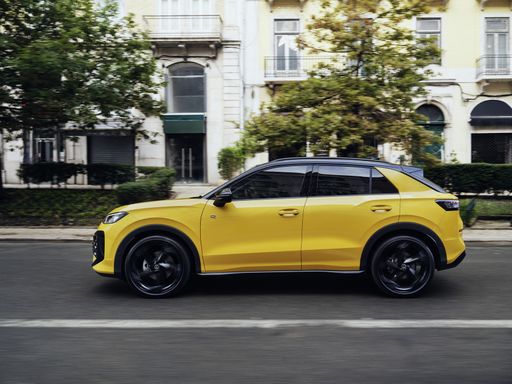
VS

SEAT Ateca vs VW T-Roc - Differences and prices compared

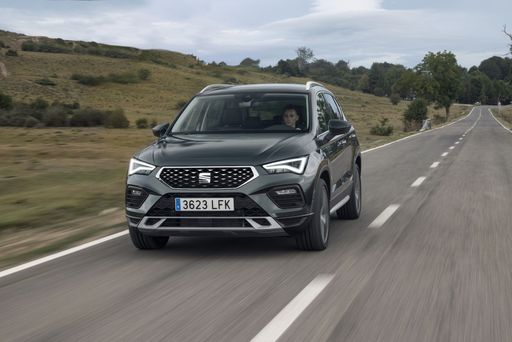
Compare performance (150 HP vs 150 HP), boot space and price (25100 £ vs 26400 £ ) at a glance. Find out which car is the better choice for you – SEAT Ateca or VW T-Roc?

Ateca

Two compact SUVs, two attitudes

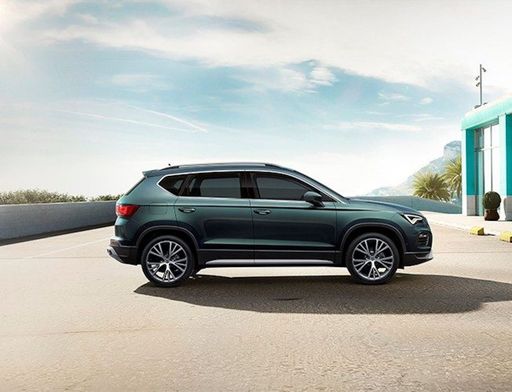
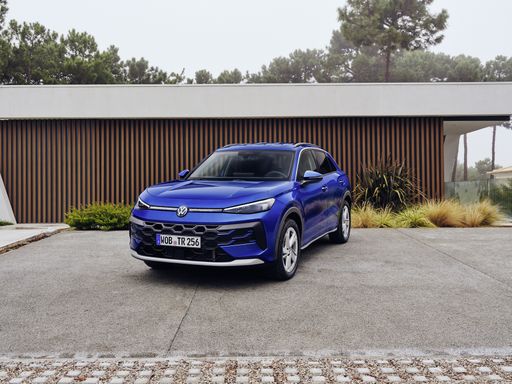
Step into the duel: the SEAT Ateca arrives with a pragmatic, no-fuss demeanour while the VW T‑Roc plays the role of the confident show-off in the compact-SUV ring. Both wear crossover DNA but they wear it differently — one looks like it wants to solve your day, the other looks like it wants to be noticed on your feed. This is less about raw numbers and more about who you want to be while driving home.

T-Roc

Understated utility vs. urban charisma

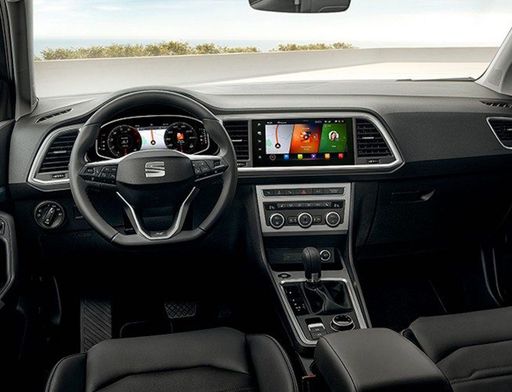
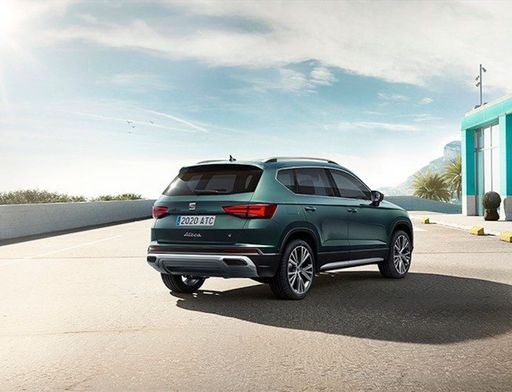
The Ateca projects quiet competence, a car that prioritises usable space, sensible ergonomics and a slightly down-to-earth personality that will age gracefully. The T‑Roc, by contrast, trades a touch of that understatement for sharper styling, bolder cabin cues and a deliberately livelier image that flirts with premium vibes. One feels engineered for everyday predictability; the other feels composed to spark smiles and small compliments at the lights.

Ateca

How they behave in daily life

For daily family runs, weekend kit-hauling and long stretches on the motorway, the Ateca’s practical layout and reassuring packaging make life simpler and less fiddly. The T‑Roc comes alive in tighter, city-centric routines — nimble steering, sharper manners and a personality that makes parking and short hops more entertaining. Comfort and calmness lean toward the Ateca, while the T‑Roc rewards those who prize involvement and urban agility.

T-Roc

Buying a story, not just a spec sheet

Choosing the Ateca is a tidy narrative: sensible decisions, useful features that pay dividends over time and a subtle, grown-up confidence that doesn’t beg for attention. Opting for the T‑Roc is a statement — you’re after style, a touch of swagger and an interior that feels slightly more tuned to lifestyle than to lugging family gear. Both choices are defensible; it comes down to whether you want to blend in with calm competence or stand out with charming panache.

Ateca

Who should pick the Ateca

If your list prioritises practicality, straightforward ergonomics and a quiet cabin for long commutes or regular family duty, the Ateca will likely tick the most boxes. Think the perfectionist who prefers a smart tool to a flashy toy — someone who values sensible packaging, predictable comfort and a low-fuss ownership story. It’s a car for people who want fewer surprises and more sensible days behind the wheel.

T-Roc

Who should pick the T‑Roc

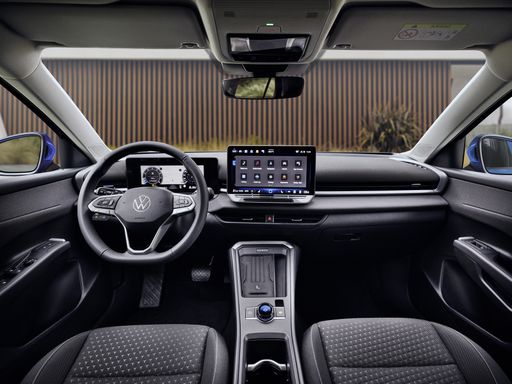
And if your checklist leans toward style, city-friendly agility and a cabin that feels modern and a little playful, the T‑Roc speaks directly to that mindset — especially if you glanced at the Ateca and thought it was a tad serious. It suits drivers who treat the car as part of their image, who like a livelier driving cue and interiors that feel contemporary. Read on to the figures section and you’ll see how their characters translate into the fine print.

SEAT Ateca

5 (1 Reviews)
rate

VW T-Roc

4.7 (4 Reviews)
rate

Here’s where it gets real: The technical differences in detail

Ateca

Costs and Efficiency:

Looking at overall running costs, both models reveal some interesting differences in everyday economy.

SEAT Ateca has a barely noticeable advantage in terms of price – it starts at 25100 £ , while the VW T-Roc costs 26400 £ . That’s a price difference of around 1333 £.

Fuel consumption also shows a difference: SEAT Ateca manages with 4.90 L and is therefore to a small extent more efficient than the VW T-Roc with 5.50 L. The difference is about 0.60 L per 100 km.

T-Roc

Engine and Performance:

Power, torque and acceleration are the classic benchmarks for car enthusiasts – and here, some clear differences start to show.

Both models deliver identical power – 150 HP each.

In acceleration from 0 to 100 km/h, the VW T-Roc is slight quicker – completing the sprint in 8.90 s, while the SEAT Ateca takes 9 s. That’s about 0.10 s faster.

There’s also a difference in torque: SEAT Ateca pulls evident stronger with 360 Nm compared to 250 Nm. That’s about 110 Nm difference.

Ateca

Space and Everyday Use:

Beyond pure performance, interior space and usability matter most in daily life. This is where you see which car is more practical and versatile.

Both vehicles offer seating for 5 people.

In curb weight, SEAT Ateca is minimal lighter – 1345 kg compared to 1465 kg. The difference is around 120 kg.

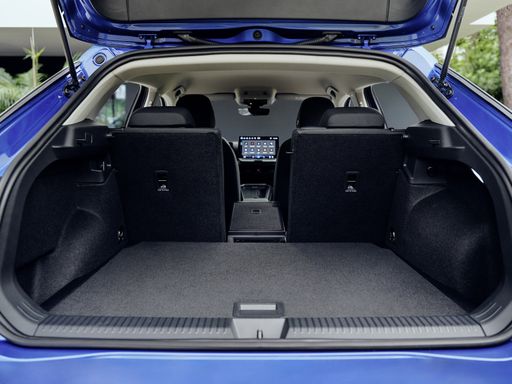
In terms of boot space, the SEAT Ateca offers barely noticeable more room – 510 L compared to 475 L. That’s a difference of about 35 L.

When it comes to payload, SEAT Ateca slight takes the win – 525 kg compared to 515 kg. That’s a difference of about 10 kg.

Who wins the race in the data check?

The SEAT Ateca is far ahead overall in the objective data comparison.
This result only shows which model scores more points on paper – not which of the two cars feels right for you.

SEAT Ateca
VW T-Roc

Costs and Consumption

View detailed analysis

Engine and Performance

View detailed analysis

Dimensions and Body

View detailed analysis
from about £25,100
Ateca

SEAT Ateca

  • Engine Type : Petrol, Diesel
  • Transmission : Manuel, Automatic
  • Drive Type : Front-Wheel Drive
  • Power HP : 116 - 150 HP
  • Consumption L/100km : 4.9 - 6.4 L

SEAT Ateca

5 (1 Reviews)
rate

The SEAT Ateca blends sharp, purposeful styling with practical space that turns everyday errands into something a bit more enjoyable. It’s poised and engaging to drive for its segment, offers solid value, and has just enough personality to make you smile on the school run.

details

VW T-Roc

4.7 (4 Reviews)
rate

The VW T-Roc mixes cheeky, coupe-like styling with the everyday sense and space of an SUV, so it looks fun without sacrificing family sense. It’s a likeable all-rounder with tidy road manners and plenty of personality, ideal if you want a car that’s practical enough for chores but entertaining enough to enjoy.

details
SEAT Ateca
VW T-Roc

Costs and Consumption

Price
25100 - 36900 £
Price
26400 - 38600 £
Consumption L/100km
4.9 - 6.4 L
Consumption L/100km
5.5 - 6.3 L
Consumption kWh/100km
-
Consumption kWh/100km
-
Electric Range
-
Electric Range
-
Battery Capacity
-
Battery Capacity
-
co2
129 - 144 g/km
co2
126 - 143 g/km
Fuel tank capacity
-
Fuel tank capacity
50 L

Dimensions and Body

Body Type
SUV
Body Type
SUV
Seats
5
Seats
4 - 5
Doors
-
Doors
5
Curb weight
1345 - 1514 kg
Curb weight
1465 - 1539 kg
Trunk capacity
510 L
Trunk capacity
284 - 475 L
Length
-
Length
4373 mm
Width
1841 mm
Width
1811 - 1828 mm
Height
-
Height
1573 mm
Max trunk capacity
-
Max trunk capacity
1350 L
Payload
516 - 525 kg
Payload
368 - 515 kg

Engine and Performance

Engine Type
Petrol, Diesel
Engine Type
Petrol, Petrol MHEV
Transmission
Manuel, Automatic
Transmission
Manuel, Automatic
Transmission Detail
Manual Gearbox, Dual-Clutch Automatic
Transmission Detail
Manual Gearbox, Dual-Clutch Automatic
Drive Type
Front-Wheel Drive
Drive Type
Front-Wheel Drive
Power HP
116 - 150 HP
Power HP
115 - 150 HP
Acceleration 0-100km/h
9 - 11 s
Acceleration 0-100km/h
8.9 - 12.3 s
Max Speed
-
Max Speed
196 - 212 km/h
Torque
200 - 360 Nm
Torque
200 - 250 Nm
Number of Cylinders
3 - 4
Number of Cylinders
3 - 4
Power kW
85 - 110 kW
Power kW
85 - 110 kW
Engine capacity
999 - 1968 cm3
Engine capacity
999 - 1498 cm3

General

Model Year
2025
Model Year
2024 - 2025
CO2 Efficiency Class
E, D
CO2 Efficiency Class
E, D
Brand
SEAT
Brand
VW
What drive types are available for the SEAT Ateca?

The SEAT Ateca is offered with Front-Wheel Drive.

The prices shown are estimates based on German list prices, adjusted for local VAT. Local registration taxes (e.g. NoVA, BPM or CO2 malus) are not included. This information is not legally binding.