VS

Omoda 5 vs Renault Symbioz comparison

Compare performance (224 HP vs 158 HP), boot space and price (24,800 £ vs 24,700 £ ) at a glance. Find out which car is the better choice for you – Omoda 5 or Renault Symbioz?

Omoda 5 vs Renault Symbioz: Key differences

Omoda 5

4.9 (5 Reviews)
rate
  • visibly more power
  • somewhat quicker 0–100 km/h
details

Renault Symbioz

4.5 (5 Reviews)
rate
  • only slightly cheaper
  • slightly more efficient
  • somewhat lighter
  • markedly more trunk space
details

All details on performance, efficiency, range and trunk space can be found in the technical comparison below – including user reviews for both models.

By Achim Sedelmaier

5

Omoda 5 VS Renault Symbioz: quick take

The Omoda 5 and the Renault Symbioz stake out two different takes on the compact SUV brief, and the Omoda 5 VS Renault Symbioz comparison comes down to equipment and assurance versus everyday efficiency and usability. The Omoda 5 leans into generous kit, bold design and long warranty cover that makes it an attractive showroom proposition. The Renault Symbioz responds with a more measured package: lower running costs, a sliding rear bench and a calm, easy-to-live-with cabin. Read on to see how those core differences affect driving manners, comfort, practicality and city use in everyday life.
Symbioz

Driving character and road manners

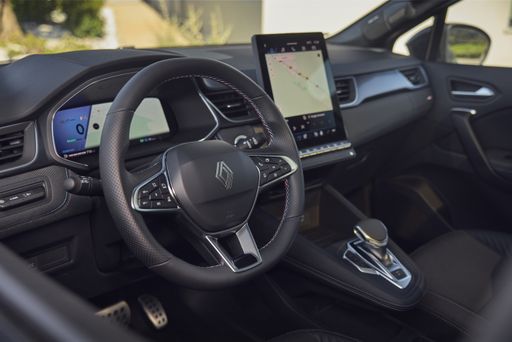
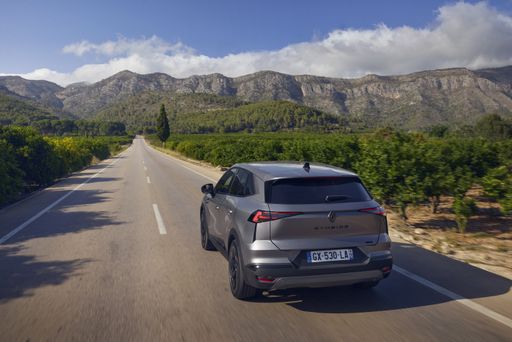
In motion the contrast is immediate: the Omoda 5 feels more assertive in its presentation but less refined in control, whereas the Renault Symbioz prefers a relaxed, undemanding demeanour. Omoda 5’s hybrid option soothes engine noise and adds punch, yet the chassis tends to exhibit body roll and a vague steering feel that leaves it short of true driver engagement. Renault Symbioz isn’t sporty either—its steering is light and slightly artificial—but it rewards composed, effortless driving and feels more predictable on long sweeps. If you want crisp feedback neither car will thrill, yet drivers who value calm cruising and predictable behavior will tilt toward the Symbioz, while buyers who want stronger kit and acceleration will favour the Omoda 5.

Comfort and long-distance behavior

On long trips both cars are surprisingly civilised, but they get there in different ways: Omoda 5 uses well-shaped front seats and decent insulation to create a reassuring cocoon, while Renault Symbioz pairs calm refinement with notably lower real-world consumption. The Omoda 5 hybrid is pleasantly quiet at speed, yet its soft, sometimes wobbly suspension can unsettle on poor surfaces and leave occupants feeling unsettled over rough patches. The Renault Symbioz delivers a steadier ride at motorway speeds and keeps fuel bills down, which reduces driver fatigue on frequent long runs. In short, for highway miles the Symbioz’s efficiency and composed manners are the more pragmatic choice, while the Omoda 5 rewards those who prioritise cabin kit and a quieter hybrid drivetrain over ride precision.

Practicality and family usability

Practical differences are where these two stop being interchangeable: the Renault Symbioz offers a genuinely flexible interior with a sliding rear bench that alters how people and luggage fit, whereas the Omoda 5 exposes tighter rear headroom and a smaller, shallower boot. That sliding bench makes the Symbioz a clearer winner for families juggling child seats, shopping and weekend bags because you can trade legroom for cargo space quickly. The Omoda 5 works well for two adults and occasional rear passengers, but larger adults or bulky items will feel the limits sooner and the flat, lower boot floor can be fiddly. If you live with regular rear-seat occupants or carry luggage often, the Symbioz’s adaptability pays off in day-to-day convenience, while the Omoda 5 keeps its appeal for buyers prioritising safety kit and standard features despite the compromise in space.

City friendliness, usability and cabin feel

In town the Renault Symbioz feels more at home thanks to often-electric city running, light steering and an OpenR Link infotainment system with Google that reduces fiddling and gets you where you’re going faster. The Omoda 5 brings striking interior design and a long equipment list, but buried menus, small touch targets and frequent assistant alerts can become annoying during stop‑start driving. Both cars suffer from restricted rear sightlines and depend on cameras to help, yet the Symbioz’s physical climate controls and cleaner software make quick adjustments less distracting than the Omoda’s touchscreen-first layout. Perceived quality splits the field: the Omoda 5 looks flashier and feels like it offers more kit for the money, while the Symbioz feels more pragmatic and easier to live with every day.

Buyer fit and what to look at next

Choosing between the Omoda 5 and the Renault Symbioz boils down to two clear buyer profiles: pick the Omoda 5 if you want generous standard equipment, strong safety credentials and long warranty cover and can accept a tighter rear and less precise chassis. Opt for the Renault Symbioz if low running costs, a variable rear bench and an intuitive Google‑based cabin are higher priorities than headline spec or showroom impact. Families needing flexible luggage space and economical running will usually prefer the Symbioz, while buyers focused on perceived value, kit and warranty peace will gravitate to the Omoda 5. Below this editorial section the technical comparison breaks down the powertrain, boot geometry and efficiency numbers that explain these real-world trade-offs so you can decide which compromises you can live with.

Here’s where it gets real: The technical differences in detail

5

Costs and Efficiency:

Price and efficiency are often the first things buyers look at. Here it becomes clear which model has the long-term edge – whether at the pump, the plug, or in purchase price.

Renault Symbioz is only slightly cheaper – starting at 24,700 £ , while the Omoda 5 costs 24,800 £ . That’s a price difference of around 86 £.

Fuel consumption also shows a difference: the Renault Symbioz uses 4.5 L/100km and is slightly more efficient than the Omoda 5 with 5.3 L/100km. The difference is about 0.8 L/100km.

Symbioz

Engine and Performance:

Power, torque and acceleration say a lot about how a car feels on the road. This is where you see which model delivers more driving dynamics.

When it comes to engine power, the Omoda 5 offers visibly more power – delivering 224 HP compared to 158 HP. That’s roughly 66 HP more horsepower.

When accelerating from 0 to 100 km/h, the Omoda 5 is somewhat quicker – completing the sprint in 7.6 s, while the Renault Symbioz takes 9.1 s. That’s about 1.5 s quicker.

There’s also a difference in torque: the Omoda 5 delivers noticeably more torque with 340 Nm compared to 265 Nm. That’s about 75 Nm more.

Space and Everyday Use:

Cabin size, boot volume and payload all play a role in everyday practicality. Here, comfort and flexibility make the difference.

Both vehicles offer seating for 5 people.

In terms of curb weight, Renault Symbioz is somewhat lighter – 1,359 kg compared to 1,621 kg. The difference is around 262 kg.

Looking at boot space, the Renault Symbioz offers markedly more boot space – 576 L compared to 350 L. That’s a difference of about 226 L.

When it comes to payload, the Omoda 5 carries slightly more – 536 kg compared to 459 kg. That’s a difference of about 77 kg.

Who wins the race in the data check?

The Omoda 5 is far ahead overall in the objective data comparison.
This result only shows which model scores more points on paper – not which of the two cars feels right for you.

from £24,800
5

Omoda 5

  • Engine Type Electric, Full Hybrid
  • Transmission Automatic
  • Drive Type Front-Wheel Drive
  • Power HP 204 - 224 HP
  • Consumption L/100km 5.3 L/100km
  • Consumption kWh/100km 15.9 kWh/100km
  • Electric Range 430 km
Omoda 5
Renault Symbioz

Costs and Consumption

View detailed analysis

Engine and Performance

View detailed analysis

Dimensions and Body

View detailed analysis

Omoda 5

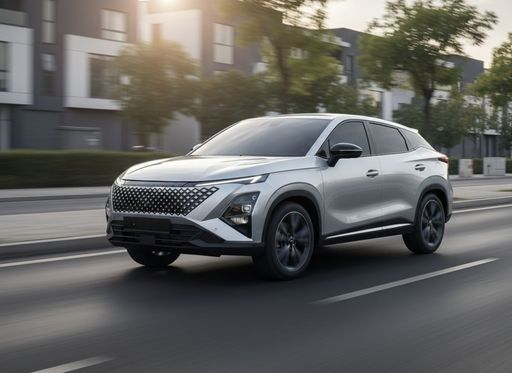
The Omoda 5 is a stylish compact crossover that catches the eye with a bold, contemporary look and a tech-forward cabin. It offers a comfortable ride and a surprisingly spacious interior, making it a practical yet distinctive choice for buyers who want modern features and solid value.

details

Renault Symbioz

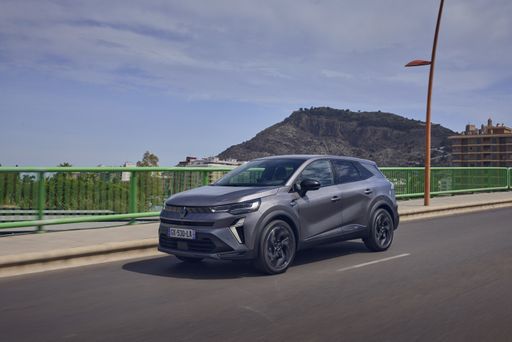
The Renault Symbioz is a forward-looking concept car that imagines a seamless link between vehicle and home, pairing a lounge-like cabin with striking, futuristic styling. More idea than production plan, it showcases Renault's vision for connected, autonomous and sustainable mobility while provoking debate about how we will live and travel.

details
Omoda 5
Renault Symbioz

Costs and Consumption

Price
24,800 - 31,600 £
Price
24,700 - 31,100 £
Consumption L/100km
5.3 L/100km
Consumption L/100km
4.5 - 6 L/100km
Consumption kWh/100km
15.9 kWh/100km
Consumption kWh/100km
-
Electric Range
430 km
Electric Range
-
Battery Capacity
-
Battery Capacity
-
co2
0 - 120 g/km
co2
102 - 136 g/km
Fuel tank capacity
-
Fuel tank capacity
-

Dimensions and Body

Body Type
SUV
Body Type
SUV
Seats
5
Seats
5
Doors
-
Doors
-
Curb weight
1,621 - 1,710 kg
Curb weight
1,359 - 1,465 kg
Trunk capacity
300 - 350 L
Trunk capacity
492 - 576 L
Length
-
Length
-
Width
1,824 - 1,830 mm
Width
1,797 mm
Height
-
Height
-
Max trunk capacity
-
Max trunk capacity
-
Payload
431 - 536 kg
Payload
455 - 459 kg

Engine and Performance

Engine Type
Electric, Full Hybrid
Engine Type
Full Hybrid, Petrol MHEV
Transmission
Automatic
Transmission
Automatic, Manuel
Transmission Detail
Reduction Gearbox, Automatic Gearbox
Transmission Detail
Automatic Gearbox, Manual Gearbox, Dual-Clutch Automatic
Drive Type
Front-Wheel Drive
Drive Type
Front-Wheel Drive
Power HP
204 - 224 HP
Power HP
140 - 158 HP
Acceleration 0-100km/h
7.6 - 7.9 s
Acceleration 0-100km/h
9.1 - 11 s
Max Speed
-
Max Speed
-
Torque
295 - 340 Nm
Torque
250 - 265 Nm
Number of Cylinders
4
Number of Cylinders
4
Power kW
150 - 165 kW
Power kW
103 - 116 kW
Engine capacity
1,499 cm3
Engine capacity
1,332 - 1,789 cm3

General

Model Year
2026
Model Year
2025
CO2 Efficiency Class
A, D
CO2 Efficiency Class
C, D, E
Brand
Omoda
Brand
Renault
DriveDuel uses data analysis and artificial intelligence to evaluate vehicle data and create content. Content is regularly reviewed and improved. The displayed prices are estimates based on German list prices, adjusted to the respective country’s VAT. Country-specific registration taxes are not included. This information is not legally binding.