VS

BYD Seal U vs BYD Seal comparison

Compare performance (324 HP vs 530 HP), boot space and price (34,300 £ vs 40,300 £ ) at a glance. Find out which car is the better choice for you – BYD Seal U or BYD Seal?

BYD Seal U vs BYD Seal: Key differences

BYD Seal U

4.1 (7 Reviews)
rate
  • moderately cheaper
  • noticeably more efficient
  • noticeably more trunk space

BYD Seal

  • clearly more power
  • a bit more electric range
  • considerably quicker 0–100 km/h
  • barely lighter

All details on performance, efficiency, range and trunk space can be found in the technical comparison below – including user reviews for both models.

Seal U

Two Seals, Two Attitudes

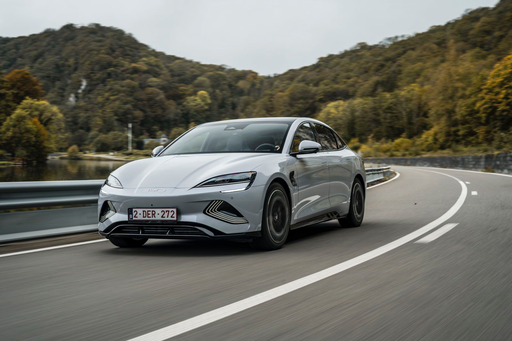
On paper they're siblings, on the road they behave like cousins who chose different careers: the BYD Seal U plays the pragmatic, no-nonsense role while the BYD Seal leans into athletic poise and presence. This is less about absolute superiority and more about personality — one wants to be useful, the other wants to be felt. Think of this as a character study in alloy wheels and upholstery: who you are behind the wheel matters more than who wins the stopwatch. The duel is as much about taste as it is about tech.
Seal

Under the Skin: Calm Utility vs. Assertive Dynamism

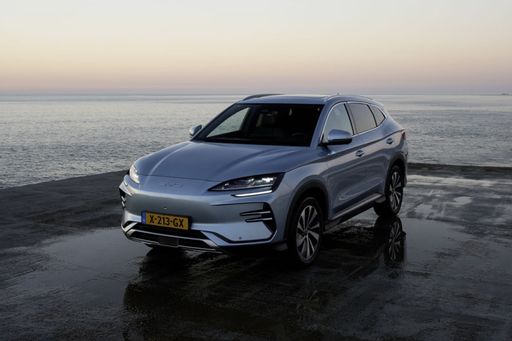
The Seal U projects quiet utility, the sort of car that prioritises sensible packaging and everyday composure over theatrical gestures. The Seal, meanwhile, wears its ambition on its grille — it’s taut, purposeful and a touch showy, the kind of car that telegraphs intent before you even turn the key. One soothes the commute, the other sharpens it; neither is apologetic about its role. That contrast is what gives this comparison its spicy center.

Seal U

Daily Reality: Cargo, Comfort and the Commute

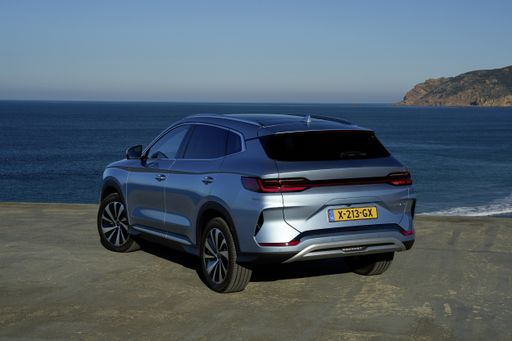
Practicality is where the Seal U earns its keep — it feels like a car designed to swallow shopping, sports kit and weekend projects without drama, and it settles into urban life with ease. The Seal prefers longer roads and firmer lines, rewarding open stretches and drivers who enjoy a tauter feel underfoot; it still handles daily chores, but with a different attitude. In traffic and school-run routines the Seal U is the low-fuss partner, while the Seal treats those same miles like chairs in a theatre—meant to be noticed. Comfort, agility and perceived refinement are distributed differently between them, so think about the rhythm of your days.

Seal

The Story You’ll Tell at Dinner

Buyers will justify these cars differently: the Seal U gets framed as the sensible upgrade, the car you chose because it fits your life without ceremony and doesn’t demand attention. The Seal is the one you mention when you want to sound tech-savvy or a little adventurous — it reads as a considered statement, not an afterthought. Both stories make sense depending on whether you want to be practical or make an entrance. Neither choice needs apologising for; they simply play different parts.

Seal U

Who Should Drive Home the BYD Seal U?

If you think in terms of usability and long-term value the Seal U will feel like a calm companion — ideal for commuters who prize space and fuss-free ownership, and families who need flexibility more than flash. It’s the car for the planners: weekend boaters, sports parents and anyone who likes clear utility without sacrificing modern comfort. You get a car that keeps life simple and predictable, which is a selling point in its own right. If that sounds like you, you’ll appreciate how it goes about its business.

Seal

Who Should Choose the BYD Seal?

The Seal speaks to buyers who want a blend of presence and progressive technology — people who enjoy being reminded they’re driving something with a little ambition under the skin. It suits long-distance cruisers who value a composed, engaged drive and drivers who treat the car as an expression of taste and a touch of status, especially compared with the more utilitarian Seal U. If you like your daily transport with a side of theatre, the Seal will reward that impulse. Read on if you want the cold facts to match the feelings.

Here’s where it gets real: The technical differences in detail

Seal U

Costs and Efficiency:

Price and efficiency are often the first things buyers look at. Here it becomes clear which model has the long-term edge – whether at the pump, the plug, or in purchase price.

BYD Seal U is moderately cheaper – starting at 34,300 £ , while the BYD Seal costs 40,300 £ . That’s a price difference of around 6,000 £.

In terms of energy consumption, the BYD Seal U is noticeably more efficient: consuming 12.1 kWh/100km compared to 15.4 kWh/100km for the BYD Seal. That’s a difference of about 3.3 kWh/100km.

As for electric range, the BYD Seal offers a bit more range – reaching up to 570 km, about 70 km more than the BYD Seal U.

Seal

Engine and Performance:

Power, torque and acceleration say a lot about how a car feels on the road. This is where you see which model delivers more driving dynamics.

When it comes to engine power, the BYD Seal offers clearly more power – delivering 530 HP compared to 324 HP. That’s roughly 206 HP more horsepower.

When accelerating from 0 to 100 km/h, the BYD Seal is considerably quicker – completing the sprint in 3.8 s, while the BYD Seal U takes 5.9 s. That’s about 2.1 s quicker.

Looking at top speed, the BYD Seal is very slightly faster – reaching 180 km/h, while the BYD Seal U tops out at 175 km/h. The difference is around 5 km/h.

There’s also a difference in torque: the BYD Seal delivers somewhat more torque with 670 Nm compared to 550 Nm. That’s about 120 Nm more.

Seal U

Space and Everyday Use:

Cabin size, boot volume and payload all play a role in everyday practicality. Here, comfort and flexibility make the difference.

Both vehicles offer seating for 5 people.

In terms of curb weight, BYD Seal is barely lighter – 1,907 kg compared to 1,940 kg. The difference is around 33 kg.

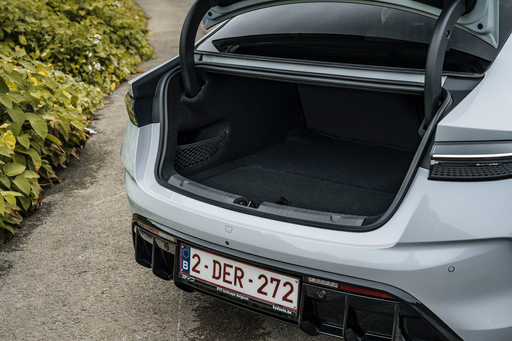
Looking at boot space, the BYD Seal U offers noticeably more boot space – 552 L compared to 400 L. That’s a difference of about 152 L.

When it comes to payload, the BYD Seal carries slightly more – 473 kg compared to 410 kg. That’s a difference of about 63 kg.

Who wins the race in the data check?

The BYD Seal is far ahead overall in the objective data comparison.
This result only shows which model scores more points on paper – not which of the two cars feels right for you.

from £40,300
Seal

BYD Seal

  • Engine Type : Electric
  • Transmission : Automatic
  • Drive Type : Rear-Wheel Drive, All-Wheel Drive
  • Power HP : 231 - 530 HP
  • Consumption kWh/100km : 15.4 - 18.2 kWh/100km
  • Electric Range : 460 - 570 km
BYD Seal U
BYD Seal

Costs and Consumption

View detailed analysis

Engine and Performance

View detailed analysis

Dimensions and Body

View detailed analysis

BYD Seal U

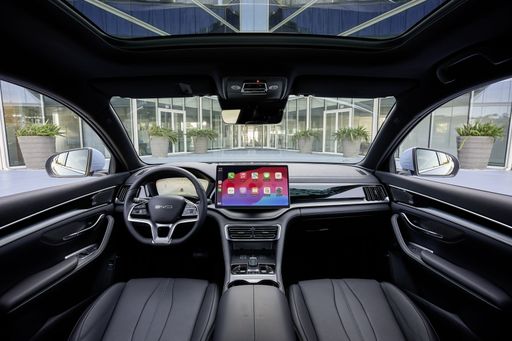
The BYD Seal U pairs a sleek fastback silhouette with a surprisingly roomy, tech-rich cabin, giving electric chic without the showroom pretension. It's a smart pick for buyers after confident handling, sensible practicality and standout value — all wrapped up with a cheeky grin when you put your foot down.

details

BYD Seal

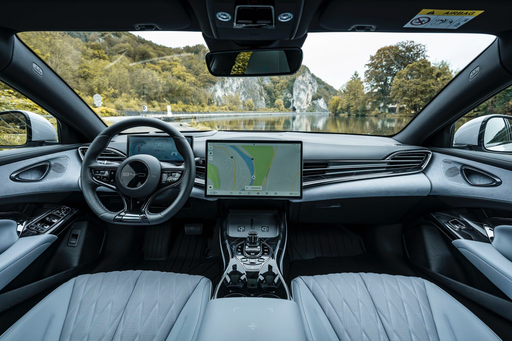
The BYD Seal is a sleek electric fastback that punches above its class with sporty looks and a surprisingly premium cabin, offering a very modern alternative for buyers who want style and substance without the badge snobbery. On the road it feels composed and eager, packed with tech and everyday practicality—ideal for shoppers after eco-friendly performance with a cheeky wink.

details
BYD Seal U
BYD Seal

Costs and Consumption

Price
34,300 - 39,800 £
Price
40,300 - 45,400 £
Consumption L/100km
-
Consumption L/100km
-
Consumption kWh/100km
12.1 - 20.5 kWh/100km
Consumption kWh/100km
15.4 - 18.2 kWh/100km
Electric Range
70 - 500 km
Electric Range
460 - 570 km
Battery Capacity
-
Battery Capacity
-
co2
0 - 71 g/km
co2
0 g/km
Fuel tank capacity
-
Fuel tank capacity
-

Dimensions and Body

Body Type
SUV
Body Type
Sedan
Seats
5
Seats
5
Doors
5
Doors
4
Curb weight
1,940 - 2,147 kg
Curb weight
1,907 - 2,185 kg
Trunk capacity
425 - 552 L
Trunk capacity
400 L
Length
4,785 mm
Length
4,800 mm
Width
1,890 mm
Width
1,875 mm
Height
1,668 mm
Height
1,460 mm
Max trunk capacity
1,440 L
Max trunk capacity
-
Payload
410 kg
Payload
446 - 473 kg

Engine and Performance

Engine Type
Electric, Plugin Hybrid
Engine Type
Electric
Transmission
Automatic
Transmission
Automatic
Transmission Detail
Reduction Gearbox, Automatic Gearbox
Transmission Detail
Reduction Gearbox
Drive Type
Front-Wheel Drive, All-Wheel Drive
Drive Type
Rear-Wheel Drive, All-Wheel Drive
Power HP
218 - 324 HP
Power HP
231 - 530 HP
Acceleration 0-100km/h
5.9 - 9.6 s
Acceleration 0-100km/h
3.8 - 7.5 s
Max Speed
175 km/h
Max Speed
180 km/h
Torque
300 - 550 Nm
Torque
360 - 670 Nm
Number of Cylinders
4
Number of Cylinders
-
Power kW
160 - 238 kW
Power kW
170 - 390 kW
Engine capacity
1,497 - 1,498 cm3
Engine capacity
-

General

Model Year
2,024 - 2,026
Model Year
2,023 - 2,025
CO2 Efficiency Class
A, B
CO2 Efficiency Class
A
Brand
BYD
Brand
BYD
DriveDuel uses data analysis and artificial intelligence to evaluate vehicle data and create content. Content is regularly reviewed and improved. The displayed prices are estimates based on German list prices, adjusted to the respective country’s VAT. Country-specific registration taxes are not included. This information is not legally binding.