@ BYD Auto / BYD Global Media
@ Dr. Ing. h.c. F. Porsche AG
VS

BYD Seal U vs Porsche Cayenne – Which car suits you better?

Both models have their strengths – but which one suits you more?
Compare performance, efficiency, price and space directly: BYD Seal U or Porsche Cayenne?

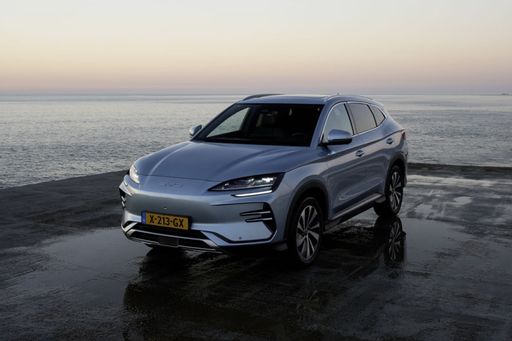
Seal U @ BYD Auto / BYD Global Media

BYD Seal U vs. Porsche Cayenne: A Clash of Modern Luxury SUVs

In the world of luxury SUVs, the names BYD Seal U and Porsche Cayenne are creating a buzz. Both vehicles exemplify cutting-edge technology, robust performance, and sleek design. However, they cater to slightly different markets and offer unique features that automobile enthusiasts crave. Let's delve into an in-depth comparison of these modern marvels to help potential buyers make an informed decision.

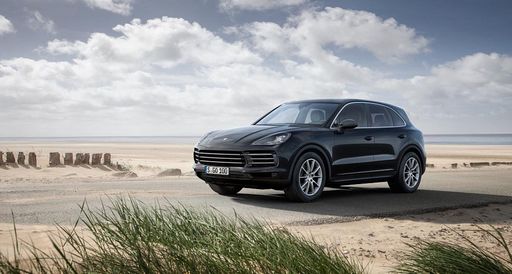
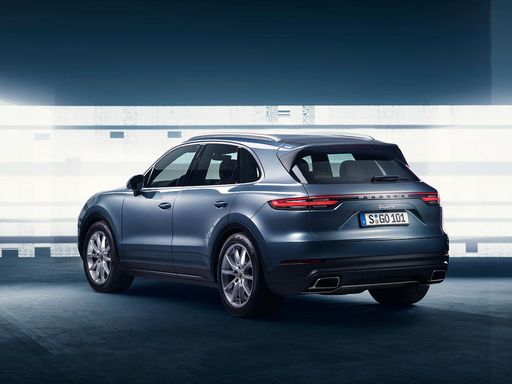
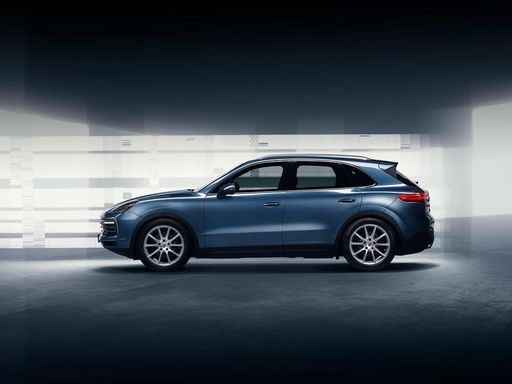
Cayenne @ Dr. Ing. h.c. F. Porsche AG

Engine and Performance

The BYD Seal U offers flexibility with both Plugin Hybrid and Electric options. Under the hood, the vehicle boasts a power range of 218 to 324 HP, achieving a swift acceleration from 0 to 100 km/h in 5.9 to 9.6 seconds, depending on the configuration. The car's maximum speed ranges from 170 to 180 km/h, making it a solid choice for those seeking efficient yet compelling performance.

On the other hand, the Porsche Cayenne is a powerhouse with Plugin Hybrid and Petrol engine types, offering a broader power spectrum from 353 to a staggering 739 HP. Acceleration is breathtaking with times as low as 3.6 seconds to 100 km/h, and a top speed reaching up to 305 km/h. This performance, paired with an all-wheel-drive system, provides more stability and precision.

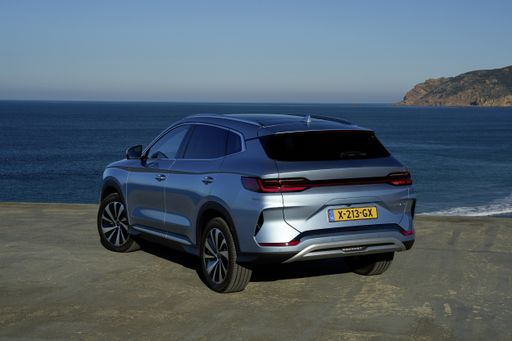
Seal U @ BYD Auto / BYD Global Media

Environmental Impact and Efficiency

Regarding environmental considerations, the Seal U shines with a CO2 efficiency class ranging from A to B. Its fuel consumption is remarkably low, from as little as 0.9 L/100km to 1.2 L/100km for hybrids, and 19.9-20.5 kWh/100km in electric mode, with an electric range extending up to 500 km. This vehicle would be appealing to eco-conscious drivers looking for a greener option.

Conversely, the Cayenne offers a balance between power and efficiency. Its CO2 efficiency class varies vastly from B to G, with consumption rates ranging between 1.4-1.8 L/100km for its hybrid variants, though going up to 12.6 L/100km for regular petrol versions. The battery capacity supports a fair electric range of up to 78 km, befitting urban commuters who want bursts of speed and eco-friendliness.

Cayenne @ Dr. Ing. h.c. F. Porsche AG

Innovative Designs and Features

BYD engineered the Seal U with practicality in mind. Measuring 4785mm in length, it provides sufficient cabin and trunk space of up to 552 liters, offering comfort and convenience to the user. The curb weight varies from 1940 to 2147 kg, and a payload capacity of 410 kg, reflecting its focus on lighter, efficient builds.

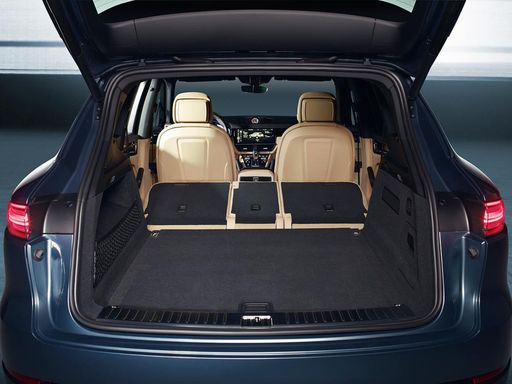
Porsche, a name synonymous with luxury, delivers the Cayenne with robust dimensions justifying its performance. It features a larger trunk space of up to 772 liters, perfect for family adventures or professional needs. Though it's a heavier set vehicle with a curb weight starting from 2130 kg, the luxury and comfort are unmatched, offering payload capacities up to 705 kg for those demanding more from their SUVs.

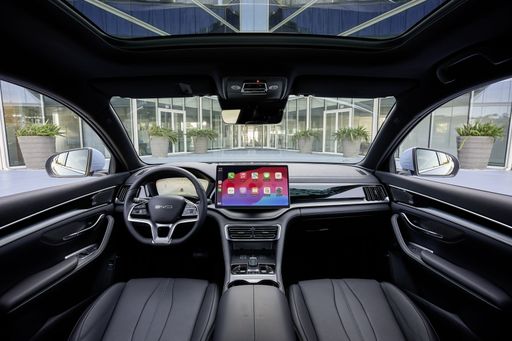
Seal U @ BYD Auto / BYD Global Media

Design and Comfort

Inside, the Seal U features a minimalist design with the focus on user comfort and intuitive technology integration, seating up to 5 passengers with ease. Modern infotainment and driver-assist features are bound to engage tech-savvy users.

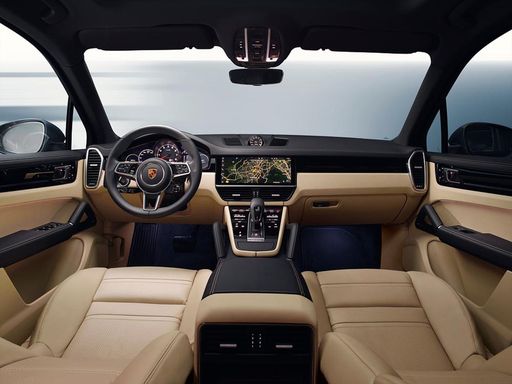
The Cayenne remains a symbol of opulence, with high-quality interiors and exceptional attention to detail. With variable seating up to 5, the premium craftsmanship and advanced technological gadgets offer an exquisite driving experience.

Cayenne @ Dr. Ing. h.c. F. Porsche AG

Conclusion

The BYD Seal U and Porsche Cayenne cater to distinct buyer tastes. The Seal U is perfect for those seeking a more environmentally-friendly and efficient choice without compromising on performance. In contrast, the Porsche Cayenne offers unrivaled luxury and performance prowess, making it the go-to option for driving enthusiasts not willing to sacrifice style or power.

Ultimately, the choice between these luxury SUVs will depend on personal preferences for efficiency, speed, design, and lifestyle needs. Each offers a unique experience with their exceptional attributes and cutting-edge technology, promising satisfaction for their owners.

Here’s where it gets real: The technical differences in detail

Costs and Efficiency:

Price and efficiency are often the first things buyers look at. Here it becomes clear which model has the long-term edge – whether at the pump, the plug, or in purchase price.

BYD Seal U has a clearly advantage in terms of price – it starts at 34300 £, while the Porsche Cayenne costs 87000 £. That’s a price difference of around 52723 £.

Fuel consumption also shows a difference: BYD Seal U manages with 0.40 L and is therefore significantly more efficient than the Porsche Cayenne with 4 L. The difference is about 3.60 L per 100 km.

As for range, the BYD Seal U performs convincingly better – achieving up to 500 km, about 417 km more than the Porsche Cayenne.

Engine and Performance:

Power, torque and acceleration are the classic benchmarks for car enthusiasts – and here, some clear differences start to show.

When it comes to engine power, the Porsche Cayenne has a significantly edge – offering 739 HP compared to 324 HP. That’s roughly 415 HP more horsepower.

In acceleration from 0 to 100 km/h, the Porsche Cayenne is decisively quicker – completing the sprint in 3.60 s, while the BYD Seal U takes 5.90 s. That’s about 2.30 s faster.

In terms of top speed, the Porsche Cayenne performs convincingly better – reaching 305 km/h, while the BYD Seal U tops out at 180 km/h. The difference is around 125 km/h.

There’s also a difference in torque: Porsche Cayenne pulls decisively stronger with 950 Nm compared to 550 Nm. That’s about 400 Nm difference.

Space and Everyday Use:

Cabin size, boot volume and payload all play a role in everyday practicality. Here, comfort and flexibility make the difference.

Both vehicles offer seating for 5 people.

In curb weight, BYD Seal U is minimal lighter – 1940 kg compared to 2130 kg. The difference is around 190 kg.

In terms of boot space, the Porsche Cayenne offers evident more room – 772 L compared to 552 L. That’s a difference of about 220 L.

In maximum load capacity, the Porsche Cayenne performs a bit better – up to 1708 L, which is about 243 L more than the BYD Seal U.

When it comes to payload, Porsche Cayenne decisively takes the win – 705 kg compared to 410 kg. That’s a difference of about 295 kg.

Who wins the race?

The BYD Seal U proves to be leaves the rival little chance and therefore becomes our DriveDuel Champion!
BYD Seal U is the better all-rounder in this comparison.

from about £34,300
Seal U @ BYD Auto / BYD Global Media

BYD Seal U

  • Engine Type : Plugin Hybrid, Electric
  • Transmission : Automatic
  • Drive Type : Front-Wheel Drive, All-Wheel Drive
  • Power HP : 218 - 324 HP
  • Consumption L/100km : 0.4 - 1.2 L
  • Consumption kWh/100km : 19.9 - 20.5 kWh
  • Electric Range : 70 - 500 km

BYD Seal U

5 (1)
rate

The BYD Seal U pairs a sleek fastback silhouette with a surprisingly roomy, tech-rich cabin, giving electric chic without the showroom pretension. It's a smart pick for buyers after confident handling, sensible practicality and standout value — all wrapped up with a cheeky grin when you put your foot down.

details

Porsche Cayenne

Der Porsche Cayenne präsentiert sich als beeindruckender Vertreter der Premium-SUVs und verbindet kraftvolles Design mit luxuriösem Komfort. Sein dynamisches Fahrverhalten und die hochwertigen Materialien im Innenraum machen jede Fahrt zu einem besonderen Erlebnis. Zudem bietet der Cayenne modernste Technologiefunktionen, die sowohl Unterhaltung als auch Sicherheit gewährleisten.

details
BYD Seal U
Porsche Cayenne
Seal U @ BYD Auto / BYD Global Media
Cayenne @ Dr. Ing. h.c. F. Porsche AG

Costs and Consumption

Price
34300 - 39800 £
Price
87000 - 186400 £
Consumption L/100km
0.4 - 1.2 L
Consumption L/100km
4 - 12.2 L
Consumption kWh/100km
19.9 - 20.5 kWh
Consumption kWh/100km
-
Electric Range
70 - 500 km
Electric Range
74 - 83 km
Battery Capacity
-
Battery Capacity
21.80 kWh
co2
0 - 26 g/km
co2
90 - 277 g/km
Fuel tank capacity
60 L
Fuel tank capacity
70 - 90 L

Dimensions and Body

Body Type
SUV
Body Type
SUV
Seats
5
Seats
4 - 5
Doors
5
Doors
5
Curb weight
1940 - 2147 kg
Curb weight
2130 - 2670 kg
Trunk capacity
425 - 552 L
Trunk capacity
434 - 772 L
Length
4775 - 4785 mm
Length
4930 mm
Width
1890 mm
Width
1983 - 1989 mm
Height
1668 - 1670 mm
Height
1652 - 1698 mm
Max trunk capacity
1440 - 1465 L
Max trunk capacity
1344 - 1708 L
Payload
410 kg
Payload
365 - 705 kg

Engine and Performance

Engine Type
Plugin Hybrid, Electric
Engine Type
Petrol, Plugin Hybrid
Transmission
Automatic
Transmission
Automatic
Transmission Detail
CVT, Reduction Gearbox
Transmission Detail
Automatic Gearbox
Drive Type
Front-Wheel Drive, All-Wheel Drive
Drive Type
All-Wheel Drive
Power HP
218 - 324 HP
Power HP
353 - 739 HP
Acceleration 0-100km/h
5.9 - 9.6 s
Acceleration 0-100km/h
3.6 - 6 s
Max Speed
170 - 180 km/h
Max Speed
248 - 305 km/h
Torque
300 - 550 Nm
Torque
500 - 950 Nm
Number of Cylinders
4
Number of Cylinders
6 - 8
Power kW
160 - 238 kW
Power kW
260 - 544 kW
Engine capacity
1497 - 1498 cm3
Engine capacity
2995 - 3996 cm3

General

Model Year
2024
Model Year
2025
CO2 Efficiency Class
B, A
CO2 Efficiency Class
G, B, C
Brand
BYD
Brand
Porsche
What drive types are available for the BYD Seal U?

The BYD Seal U is available as Front-Wheel Drive or All-Wheel Drive.

The prices and data displayed are estimates based on German list prices and may vary by country. This information is not legally binding.