VS

BYD Sealion 7 vs Volvo EX60 comparison

Compare performance (530 HP vs 680 HP), boot space and price (42,800 £ vs 54,000 £ ) at a glance. Find out which car is the better choice for you – BYD Sealion 7 or Volvo EX60?

BYD Sealion 7 vs Volvo EX60: Key differences

BYD Sealion 7

5 (2 Reviews)
rate
  • noticeably cheaper
details

Volvo EX60

  • clearly more power
  • markedly more efficient
  • clearly more electric range
  • a bit quicker 0–100 km/h
  • barely lighter
  • barely more trunk space
details

All details on performance, efficiency, range and trunk space can be found in the technical comparison below – including user reviews for both models.

By Achim Sedelmaier

Sealion 7

BYD Sealion 7 VS Volvo EX60 — quick take

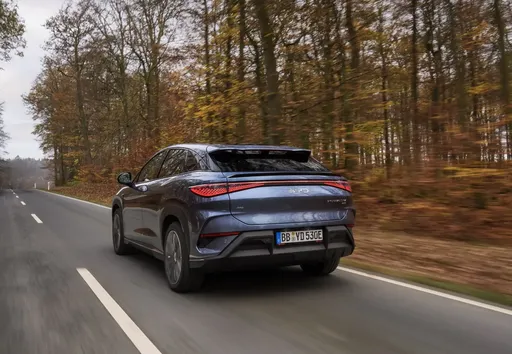
BYD Sealion 7 VS Volvo EX60 positions two very different ideas of an electric family SUV against each other: one loud on kit and presence, the other quiet, considered and engineered around efficiency and long-distance calm. The BYD Sealion 7 trades on generous standard equipment, a premium-feeling cabin and brute acceleration but carries compromises in real-world efficiency and some usability quirks. The Volvo EX60 answers with a calmer driving demeanour, clearer software and an architecture built for longer hauls and shorter charging stops, at a noticeably higher price. If you want the emotional pull of a well-equipped cruiser, the Sealion 7 will attract; if you prioritise predictable range, rapid HPC charging and a composed feel, the EX60 is the more convincing long-runner.
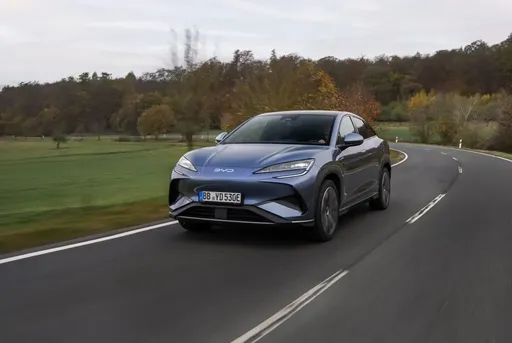
EX60

Character and driving feel

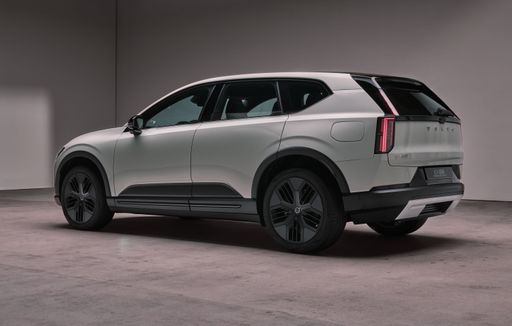
The BYD Sealion 7 feels like a product built to impress on straight-line performance and cabin quiet — it lounges down the motorway with a heavy, planted sensation but the steering and balance are tuned toward comfort rather than precision. The Volvo EX60 takes the opposite tack in practice: it doesn’t shout about power but delivers a composed, supple ride with adaptive damping that makes it feel more civilized through mixed roads. Driving the Sealion 7 can feel more visceral but also more tossy in quick direction changes, while the EX60 trades raw shove for predictable, hushed progress. Buyers who want theatrical thrust and lot of kit will prefer the BYD; those after serene, confidence-inspiring cruising will favour the Volvo.

Sealion 7

Comfort, cabin and practicality

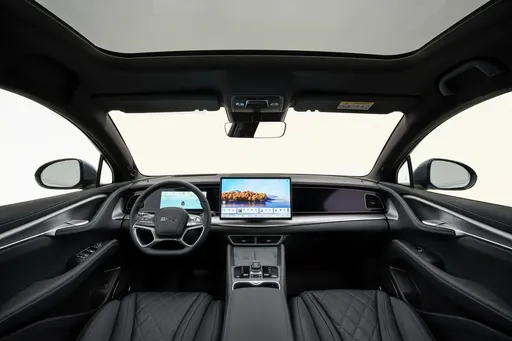
Inside, the BYD Sealion 7 impresses with materials and a feature set that punches above its price — rear passengers get exceptional legroom and adjustable backrests that make long trips forgiving, though the coupe-like roofline clips headroom for tall passengers. The Volvo EX60 emphasises space and usability with a genuinely roomy rear bench and a flat floor that improves real-family practicality; the interior reads more Scandinavian and less gadget-driven. Sealion 7’s abundant equipment (HUD, rotating screen, seat climate functions) sometimes sits behind awkward menus, while the EX60’s Google‑centric interface feels cleaner and more intuitive for everyday use. If you routinely carry tall rear-seat passengers or need easy, no-fuss UX, the EX60 leans more family-friendly; if you prize kit and rear leg comfort over roof clearance, the Sealion 7 rewards you.

EX60

Long-distance behaviour and charging

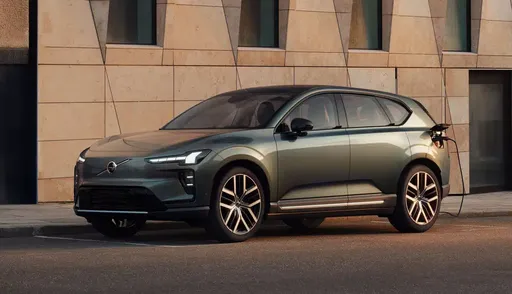
On long trips the differences become strategic: the BYD Sealion 7 offers strong peak DC power and a very quiet cabin that makes hours on the motorway pleasant, but higher real-world consumption means you’ll stop sooner and more often. The Volvo EX60 is designed around longer intervals between charges and an 800‑volt mindset that shrinks charge-time penalties, so it recovers range faster and keeps journey time down. That matters not just for motorway pace but for the predictability of trip planning — EX60 owners will generally make longer stages with less range anxiety. If your driving life includes frequent long runs and minimal charge stops, the EX60 is the pragmatic pick; if you prioritise in-cabin comfort and rapid short fills with occasional top-end DC power, the Sealion 7 still holds appeal.

Sealion 7

City friendliness, infotainment and assistance

The BYD Sealion 7 packs a lot of helpful hardware for town use — high-resolution 360° cameras, HUD and an array of driver aids — but those systems can be intrusive and their controls buried, which wears thin in daily stop‑start life. The Volvo EX60 offers modern connectivity with Google/Gemini and straightforward physical controls at the wheel, producing a calmer, more predictable interaction when you use the car every day. Both cars rely on cameras to cover blind spots created by their designs, but the EX60’s user flow is cleaner while the BYD rewards tinkering with settings to get the best experience. For city-centric buyers who value immediately usable tech and less nagging, Volvo’s approach will feel more civilized; for tech enthusiasts who want lots of visible kit and don’t mind the learning curve, BYD entertains more.

Who should choose which — buyer fit and next steps

Think of the BYD Sealion 7 as an equipment-rich cruiser: it suits buyers who want a premium-feeling cabin, strong on-paper performance and generous rear legroom without stretching to the highest price bracket, accepting some compromises in efficiency and software polish. The Volvo EX60 suits buyers who prize measured efficiency, predictable long-range behaviour and a quieter, more refined driving experience even if it costs more up front. Your decision comes down to priorities — kit and rear-seat comfort versus range, charging convenience and a cleaner UX — and that trade-off is the best segue into the technical comparison that follows, where charging architecture, real-world efficiency and power delivery clarify which compromise matters most for your use case.

Here’s where it gets real: The technical differences in detail

Sealion 7

Costs and Efficiency:

When it comes to price and running costs, the biggest differences usually appear. This is often where you see which car fits your budget better in the long run.

BYD Sealion 7 is noticeably cheaper – starting at 42,800 £ , while the Volvo EX60 costs 54,000 £ . That’s a price difference of around 11,143 £.

In terms of energy consumption, the Volvo EX60 is markedly more efficient: consuming 14.7 kWh/100km compared to 19.9 kWh/100km for the BYD Sealion 7. That’s a difference of about 5.2 kWh/100km.

As for electric range, the Volvo EX60 offers clearly more range – reaching up to 810 km, about 308 km more than the BYD Sealion 7.

EX60

Engine and Performance:

Power, torque and acceleration are the classic benchmarks for car enthusiasts – and here, some clear differences start to show.

When it comes to engine power, the Volvo EX60 offers clearly more power – delivering 680 HP compared to 530 HP. That’s roughly 150 HP more horsepower.

When accelerating from 0 to 100 km/h, the Volvo EX60 is a bit quicker – completing the sprint in 3.9 s, while the BYD Sealion 7 takes 4.5 s. That’s about 0.6 s quicker.

There’s also a difference in torque: the Volvo EX60 delivers moderately more torque with 790 Nm compared to 690 Nm. That’s about 100 Nm more.

Sealion 7

Space and Everyday Use:

Cabin size, boot volume and payload all play a role in everyday practicality. Here, comfort and flexibility make the difference.

Both vehicles offer seating for 5 people.

In terms of curb weight, Volvo EX60 is barely lighter – 2,190 kg compared to 2,225 kg. The difference is around 35 kg.

Looking at boot space, the Volvo EX60 offers barely more boot space – 523 L compared to 520 L. That’s a difference of about 3 L.

When it comes to payload, the Volvo EX60 carries somewhat more – 460 kg compared to 410 kg. That’s a difference of about 50 kg.

Who wins the race in the data check?

The Volvo EX60 holds a decisive overall lead in the objective data comparison.
This result only shows which model scores more points on paper – not which of the two cars feels right for you.

from £54,000
EX60

Volvo EX60

  • Engine Type : Electric
  • Transmission : Automatic
  • Drive Type : Rear-Wheel Drive, All-Wheel Drive
  • Power HP : 374 - 680 HP
  • Consumption kWh/100km : 14.7 - 16.2 kWh/100km
  • Electric Range : 620 - 810 km
BYD Sealion 7
Volvo EX60

Costs and Consumption

View detailed analysis

Engine and Performance

View detailed analysis

Dimensions and Body

View detailed analysis

BYD Sealion 7

The BYD Sealion 7 is a sleek electric wagon that blends sporty styling with surprising practicality, making it a compelling choice for drivers who want something different from the usual hatchback or SUV. Its refined interior and composed road manners give it an upscale feel, while clever packaging keeps it versatile for daily use.

details

Volvo EX60

The Volvo EX60 is a stylish electric SUV that pairs Scandinavian minimalism with a high-quality, comfortable cabin and an intuitive infotainment experience. It delivers a composed, refined ride with advanced safety and driver-assist systems that make daily driving relaxed and confident.

details
BYD Sealion 7
Volvo EX60

Costs and Consumption

Price
42,800 - 52,300 £
Price
54,000 - 70,100 £
Consumption L/100km
-
Consumption L/100km
-
Consumption kWh/100km
19.9 - 21.9 kWh/100km
Consumption kWh/100km
14.7 - 16.2 kWh/100km
Electric Range
456 - 502 km
Electric Range
620 - 810 km
Battery Capacity
-
Battery Capacity
-
co2
0 g/km
co2
0 g/km
Fuel tank capacity
-
Fuel tank capacity
-

Dimensions and Body

Body Type
SUV
Body Type
SUV
Seats
5
Seats
5
Doors
-
Doors
-
Curb weight
2,225 - 2,435 kg
Curb weight
2,190 - 2,425 kg
Trunk capacity
520 L
Trunk capacity
523 L
Length
-
Length
-
Width
1,925 mm
Width
1,899 mm
Height
-
Height
-
Max trunk capacity
-
Max trunk capacity
-
Payload
410 kg
Payload
435 - 460 kg

Engine and Performance

Engine Type
Electric
Engine Type
Electric
Transmission
Automatic
Transmission
Automatic
Transmission Detail
Reduction Gearbox
Transmission Detail
Reduction Gearbox
Drive Type
Rear-Wheel Drive, All-Wheel Drive
Drive Type
Rear-Wheel Drive, All-Wheel Drive
Power HP
313 - 530 HP
Power HP
374 - 680 HP
Acceleration 0-100km/h
4.5 - 6.7 s
Acceleration 0-100km/h
3.9 - 5.9 s
Max Speed
-
Max Speed
-
Torque
380 - 690 Nm
Torque
480 - 790 Nm
Number of Cylinders
-
Number of Cylinders
-
Power kW
230 - 390 kW
Power kW
275 - 500 kW
Engine capacity
-
Engine capacity
-

General

Model Year
2024
Model Year
2,026 - 2,027
CO2 Efficiency Class
A
CO2 Efficiency Class
A
Brand
BYD
Brand
Volvo
DriveDuel uses data analysis and artificial intelligence to evaluate vehicle data and create content. Content is regularly reviewed and improved. The displayed prices are estimates based on German list prices, adjusted to the respective country’s VAT. Country-specific registration taxes are not included. This information is not legally binding.