VS

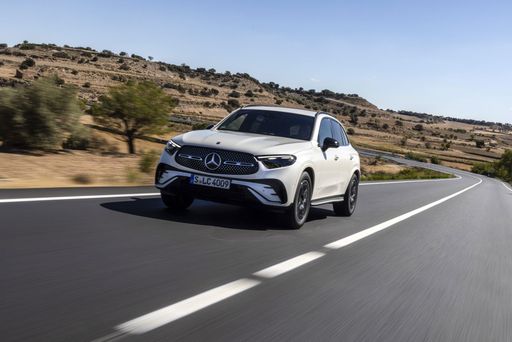
Mercedes GLC vs Toyota RAV4 comparison

Compare performance (680 HP vs 306 HP), boot space and price (50,300 £ vs 35,100 £ ) at a glance. Find out which car is the better choice for you – Mercedes GLC or Toyota RAV4?

Mercedes GLC vs Toyota RAV4: Key differences

Mercedes GLC

4.4 (11 Reviews)
rate
  • clearly more power
  • significantly more electric range
  • significantly quicker 0–100 km/h
  • very slightly more trunk space

Toyota RAV4

4.8 (6 Reviews)
rate
  • significantly cheaper
  • significantly more efficient
  • marginally lighter

All details on performance, efficiency, range and trunk space can be found in the technical comparison below – including user reviews for both models.

GLC

Comparing the Best: Mercedes GLC vs. Toyota RAV4

The automotive market has seen an explosion in the popularity of SUVs in recent years, and two standout models that have captured consumer interest are the Mercedes GLC and the Toyota RAV4. Both vehicles offer unique features and innovative technologies, making them worthy contenders in the mid-size SUV arena. In this comparison, we will delve into the technical aspects, performance capabilities, and innovations of these two exceptional SUVs.

RAV4

Power and Performance: A Tale of Two Engines

The Mercedes GLC is available with a range of engine types that include petrol mild-hybrid, diesel mild-hybrid, and plugin hybrid options. These engines produce power ranging from 186 to an exhilarating 680 hp. This variety allows drivers to select the performance level that best suits their lifestyle, whether they’re after efficient commuting or thrilling weekend escapades. Optional all-wheel drive enhances stability and handling, especially in challenging driving conditions.

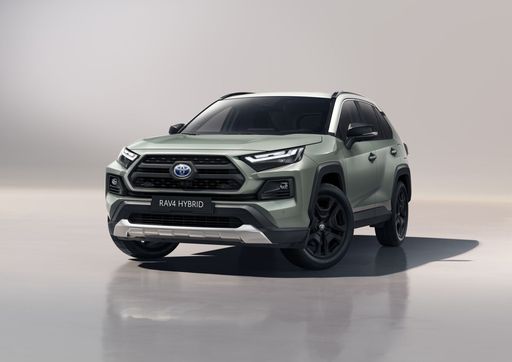
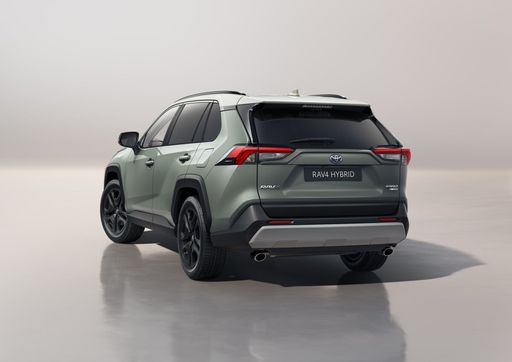
On the other hand, the Toyota RAV4 features a more straightforward powertrain configuration, primarily offering a full hybrid and plugin hybrid system with power outputs up to 306 hp. While the RAV4 may not boast the same horsepower range as the GLC, its efficiency shines through, particularly in urban settings thanks to its impressive fuel consumption figures, which can dip as low as 1 L/100 km in hybrid mode.

GLC

Acceleration and Top-Speed

When it comes to acceleration, the GLC edges out the RAV4. With models capable of sprinting from 0-100 km/h in as little as 4.7 seconds, the GLC is designed for those who prioritize performance. In contrast, the RAV4’s best performance figures, which reach 0-100 km/h in around 6 seconds, provide commendable performance for everyday driving without the overwhelming power often associated with luxury SUVs.

RAV4

Dimensions and Practicality

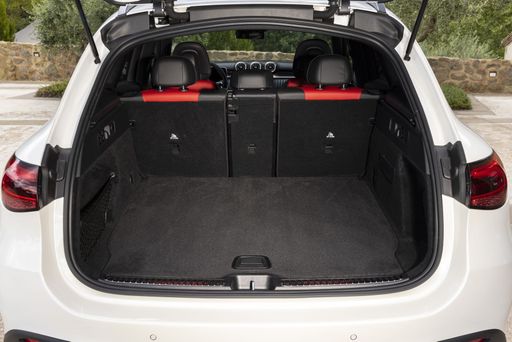
Both vehicles comfortably seat five passengers, but their dimensions vary significantly. The Mercedes GLC stretches to a length between 4716 mm to 4792 mm, while the RAV4 measures a more compact 4600 mm, providing a slightly more maneuverable vehicle in tight spaces. In terms of cargo capacity, the GLC offers a versatile trunk space ranging from 390 to 620 liters, ideal for adventure gear and family trips. The RAV4 stands close behind, offering a generous 520 to 580 liters of trunk space.

GLC

Fuel Efficiency and Emissions

In terms of fuel efficiency, the Toyota RAV4 clearly outperforms its Mercedes counterpart, with a remarkable 5.6 L/100 km in typical driving conditions and a CO2 emission rating as low as 126 g/km. The hybrid variant especially shines, offering an electric range of up to 75 km, making it perfect for eco-conscious consumers. Conversely, the GLC, while slightly less efficient on paper, offers models that can achieve as low as 5.2 L/100 km in diesel form; however, its petrol options produce more CO2 emissions, ranging from 132 to 170 g/km.

RAV4

Interior Technology and Innovations

Both the GLC and RAV4 have invested heavily in technology and driver assistance features. The GLC showcases a high-end infotainment system with an intuitive touchpad and a widescreen display, incorporating navigation, smartphone integration, and voice control features. Advanced safety systems, such as automatic emergency braking and adaptive cruise control, come standard.

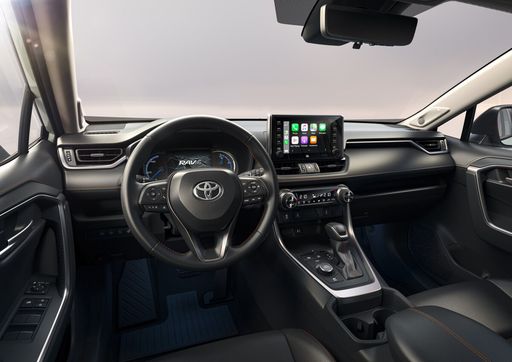
Similarly, the RAV4 offers a user-friendly touchscreen interface, equipped with Toyota's Safety Sense suite that includes adaptive cruise control, lane-keeping assistance, and a pre-collision system. It also integrates Apple CarPlay and Android Auto, ensuring connectivity on the go.

GLC

Conclusion: Choosing Your Ideal SUV

When it comes down to choosing between the Mercedes GLC and the Toyota RAV4, the decision ultimately hinges on individual priorities. The GLC excels in performance, luxury, and versatility, appealing to those seeking an upscale driving experience. In contrast, the RAV4 is an economically sensible option, delivering excellent fuel efficiency and a comprehensive suite of safety features, making it a great choice for budget-conscious buyers.

Whether you opt for the luxury of the Mercedes GLC or the practicality of the Toyota RAV4, both SUVs present compelling reasons to consider them for your next vehicle purchase.

Here’s where it gets real: The technical differences in detail

GLC

Costs and Efficiency:

Price and efficiency are often the first things buyers look at. Here it becomes clear which model has the long-term edge – whether at the pump, the plug, or in purchase price.

Toyota RAV4 is significantly cheaper – starting at 35,100 £ , while the Mercedes GLC costs 50,300 £ . That’s a price difference of around 15,193 £.

Fuel consumption also shows a difference: the Toyota RAV4 uses 1 L/100km and is significantly more efficient than the Mercedes GLC with 1.6 L/100km. The difference is about 0.6 L/100km.

As for electric range, the Mercedes GLC offers significantly more range – reaching up to 714 km, about 639 km more than the Toyota RAV4.

RAV4

Engine and Performance:

Power, torque and acceleration say a lot about how a car feels on the road. This is where you see which model delivers more driving dynamics.

When it comes to engine power, the Mercedes GLC offers clearly more power – delivering 680 HP compared to 306 HP. That’s roughly 374 HP more horsepower.

When accelerating from 0 to 100 km/h, the Mercedes GLC is significantly quicker – completing the sprint in 3.5 s, while the Toyota RAV4 takes 6 s. That’s about 2.5 s quicker.

Looking at top speed, the Mercedes GLC is noticeably faster – reaching 275 km/h, while the Toyota RAV4 tops out at 180 km/h. The difference is around 95 km/h.

GLC

Space and Everyday Use:

Cabin size, boot volume and payload all play a role in everyday practicality. Here, comfort and flexibility make the difference.

Both vehicles offer seating for 5 people.

In terms of curb weight, Toyota RAV4 is marginally lighter – 1,745 kg compared to 1,910 kg. The difference is around 165 kg.

Looking at boot space, the Mercedes GLC offers very slightly more boot space – 620 L compared to 580 L. That’s a difference of about 40 L.

For maximum load capacity, the Mercedes GLC offers barely more capacity – up to 1,740 L, about 50 L more than the Toyota RAV4.

Maximum payload is identical – both can carry up to 600 kg.

Who wins the race in the data check?

The Mercedes GLC is clearly superior overall in the objective data comparison.
This result only shows which model scores more points on paper – not which of the two cars feels right for you.

from £50,300
GLC

Mercedes GLC

  • Engine Type : Petrol MHEV, Plugin Hybrid, Diesel MHEV, Electric
  • Transmission : Automatic
  • Drive Type : All-Wheel Drive
  • Power HP : 186 - 680 HP
  • Consumption L/100km : 1.6 - 9.7 L/100km
  • Consumption kWh/100km : 14.9 - 16.6 kWh/100km
  • Electric Range : 12 - 714 km
Mercedes GLC
Toyota RAV4

Costs and Consumption

View detailed analysis

Engine and Performance

View detailed analysis

Dimensions and Body

View detailed analysis

Mercedes GLC

The Mercedes GLC blends plush cabin comfort and composed road manners into an SUV that feels more grown-up than it looks. It won’t shout for attention, but will quietly please buyers who want refinement, usable space and a touch of luxury without the drama.

details

Toyota RAV4

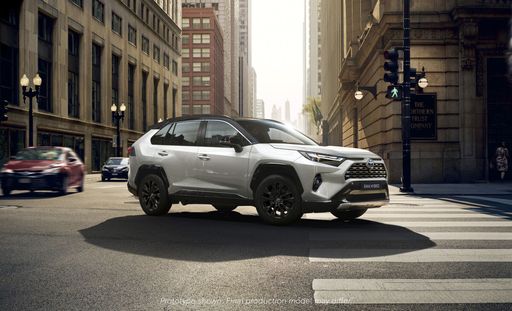
The Toyota RAV4 feels like a sensible friend on the road, marrying dependable practicality with a dash of SUV personality that keeps daily driving from turning dull. Comfortable and easy to live with, it looks tough without shouting and quietly gets the job done — a sensible pick for buyers who want versatility without drama.

details
Mercedes GLC
Toyota RAV4

Costs and Consumption

Price
50,300 - 126,600 £
Price
35,100 - 55,700 £
Consumption L/100km
1.6 - 9.7 L/100km
Consumption L/100km
1 - 5.6 L/100km
Consumption kWh/100km
14.9 - 16.6 kWh/100km
Consumption kWh/100km
-
Electric Range
12 - 714 km
Electric Range
75 km
Battery Capacity
94 kWh
Battery Capacity
-
co2
0 - 221 g/km
co2
22 - 128 g/km
Fuel tank capacity
62 - 65 L
Fuel tank capacity
55 L

Dimensions and Body

Body Type
SUV
Body Type
SUV
Seats
5
Seats
5
Doors
5
Doors
5
Curb weight
1,910 - 2,535 kg
Curb weight
1,745 - 1,910 kg
Trunk capacity
390 - 620 L
Trunk capacity
520 - 580 L
Length
4,716 - 4,845 mm
Length
4,600 mm
Width
1,890 - 1,913 mm
Width
1,855 mm
Height
1,603 - 1,644 mm
Height
1,685 mm
Max trunk capacity
1,490 - 1,740 L
Max trunk capacity
1,604 - 1,690 L
Payload
475 - 600 kg
Payload
390 - 600 kg

Engine and Performance

Engine Type
Petrol MHEV, Plugin Hybrid, Diesel MHEV, Electric
Engine Type
Full Hybrid, Plugin Hybrid
Transmission
Automatic
Transmission
Automatic
Transmission Detail
Automatic Gearbox, Reduction Gearbox
Transmission Detail
CVT
Drive Type
All-Wheel Drive
Drive Type
Front-Wheel Drive, All-Wheel Drive
Power HP
186 - 680 HP
Power HP
218 - 306 HP
Acceleration 0-100km/h
3.5 - 9 s
Acceleration 0-100km/h
6 - 8.4 s
Max Speed
210 - 275 km/h
Max Speed
180 km/h
Torque
320 - 1,020 Nm
Torque
-
Number of Cylinders
4 - 6
Number of Cylinders
4
Power kW
137 - 500 kW
Power kW
160 - 225 kW
Engine capacity
1,991 - 2,989 cm3
Engine capacity
2,487 cm3

General

Model Year
2,025 - 2,026
Model Year
2,024 - 2,025
CO2 Efficiency Class
F, G, D, B, E, A
CO2 Efficiency Class
D, B
Brand
Mercedes-Benz
Brand
Toyota
DriveDuel uses data analysis and artificial intelligence to evaluate vehicle data and create content. Content is regularly reviewed and improved. The displayed prices are estimates based on German list prices, adjusted to the respective country’s VAT. Country-specific registration taxes are not included. This information is not legally binding.