VS

Mercedes GLC vs Volvo XC60 - Differences and prices compared

Compare performance (680 HP vs 455 HP), boot space and price (50300 £ vs 49200 £ ) at a glance. Find out which car is the better choice for you – Mercedes GLC or Volvo XC60?

GLC

The Battle of Luxury SUVs: Mercedes GLC vs. Volvo XC60

When it comes to luxury SUVs, both Mercedes and Volvo have offerings that cater to those desiring sophistication, performance, and cutting-edge technology. Two models that stand out in this segment are the Mercedes GLC and the Volvo XC60. We'll delve into the technical aspects and innovations that define these vehicles, helping you decide which might be the best fit for your lifestyle.

XC60

Engine and Performance

The Mercedes GLC presents a variety of engine options, including petrol mild hybrids, diesel mild hybrids, and plug-in hybrids. Power output ranges significantly, from a conservative 186 HP to a potent 680 HP option, catering to different performance preferences. The GLC's 0-100 km/h acceleration spans from a brisk 3.5 seconds to a more relaxed 8.9 seconds, showcasing a broad spectrum of capabilities.

On the other hand, the Volvo XC60 primarily offers petrol mild hybrid and plug-in hybrid powertrains. Its power output spans from 250 HP to 455 HP, with acceleration from 0-100 km/h in as little as 4.9 seconds. Volvo has focused on delivering a balanced performance with considerable torque, ranging up to 709 Nm, ensuring a responsive driving experience.

GLC

Fuel Efficiency and Environmental Impact

Fuel efficiency is a key area where these SUVs demonstrate their advanced engineering. The Mercedes GLC, depending on the model, offers fuel consumption figures from as low as 0.4 L/100km for its hybrid variants, reaching up to 10.3 L/100km. Its electric range varies significantly, with some models capable of up to 130 km on electric power alone, providing a greener choice for urban commuting.

The Volvo XC60's plug-in hybrid variants shine with fuel consumption starting at just 0.9 L/100km. Its electric range is impressive as well, up to 80 km on a single charge, supported by a 14.7 kWh battery capacity. Volvo's focus on sustainability is reflected in a CO2 efficiency class that can reach as low as 'B', with emissions of just 22 g/km.

XC60

Design and Dimensions

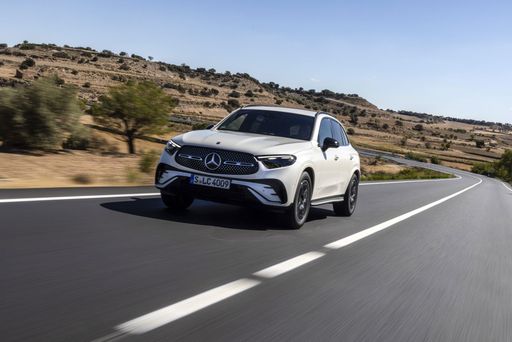
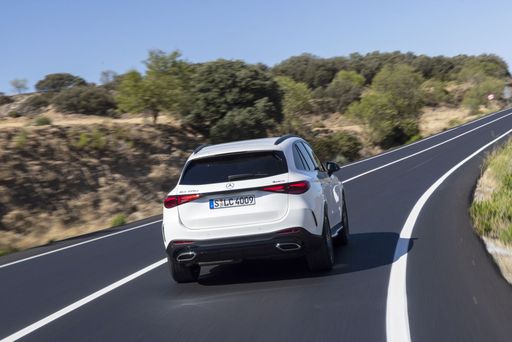
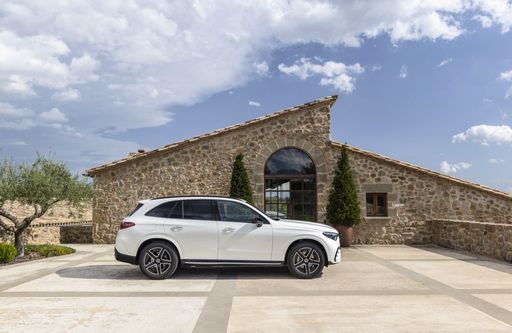
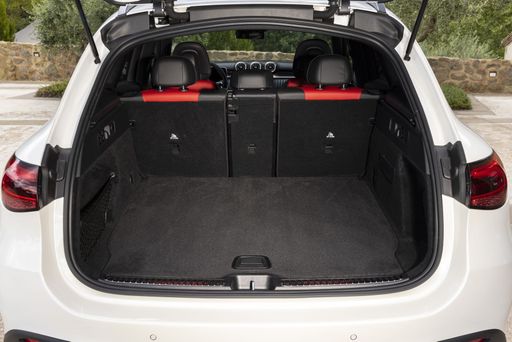
Both SUVs maintain a distinctive presence on the road. The Mercedes GLC measures between 4716 mm and 4792 mm in length, with a width of 1890 mm and heights varying slightly. The payload capacity peaks at 640 kg, complementing a trunk capacity up to 620 liters, making it practical for a luxurious family trip.

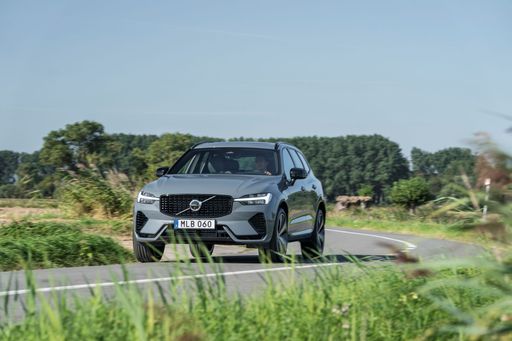
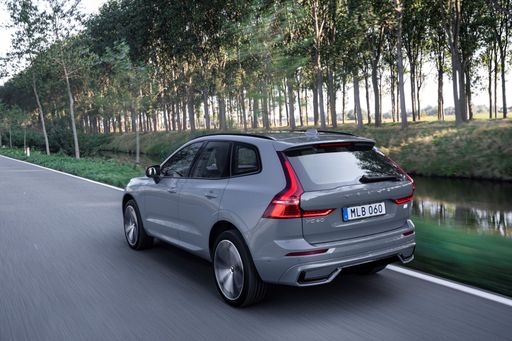
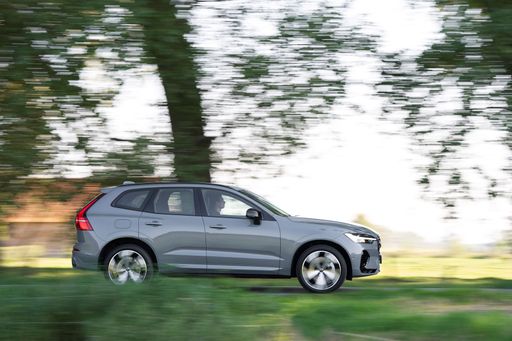
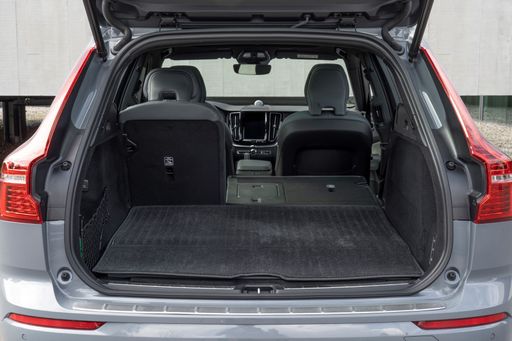
The Volvo XC60 is slightly shorter at 4688 mm in length, offering a width of 1902 mm and a height of 1658 mm. Its trunk capacity ranges from 468 to 483 liters, with a payload reaching up to 550 kg. Volvo's design philosophy emphasizes clean lines and Scandinavian minimalism, setting it apart in the luxury segment.

GLC

Comfort and Technology

Mercedes has equipped the GLC with state-of-the-art technology and superior comfort features, ensuring each journey is as pleasurable as it is engaging. The interior combines high-quality materials with intuitive technology, such as advanced infotainment and driver assistance systems.

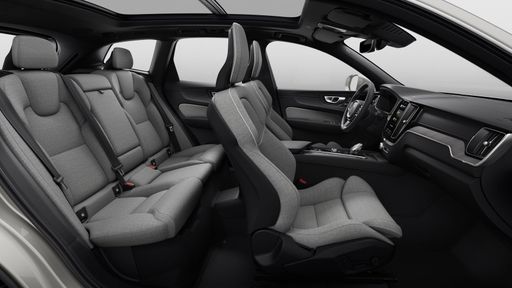
Volvo, synonymous with safety and comfort, incorporates these core values in the XC60. The SUV is packed with features like the latest infotainment systems and advanced safety technology, providing peace of mind and luxury for both driver and passengers alike.

XC60

Conclusion

Ultimately, the decision between the Mercedes GLC and Volvo XC60 rests on individual preferences. The GLC offers more varied powertrain options and slightly more interior space, catering to those who prioritize performance diversity and expansive interiors. The XC60, with its focus on efficiency, environmental friendliness, and Scandinavian elegance, presents a compelling case for those inclined towards sustainability and design simplicity.

Both the Mercedes GLC and Volvo XC60 redefine what it means to drive a luxury SUV, ensuring that either choice brings an elevated driving experience.

Mercedes GLC

3.9 (6 Reviews)
rate

Volvo XC60

5 (2 Reviews)
rate

Here’s where it gets real: The technical differences in detail

GLC

Costs and Efficiency:

When it comes to price and running costs, the biggest differences usually appear. This is often where you see which car fits your budget better in the long run.

Volvo XC60 has a slight advantage in terms of price – it starts at 49200 £ , while the Mercedes GLC costs 50300 £ . That’s a price difference of around 1136 £.

Fuel consumption also shows a difference: Mercedes GLC manages with 1.60 L and is therefore clearly more efficient than the Volvo XC60 with 2.80 L. The difference is about 1.20 L per 100 km.

As for electric range, the Mercedes GLC performs clearly better – achieving up to 714 km, about 632 km more than the Volvo XC60.

XC60

Engine and Performance:

Under the bonnet, it becomes clear which model is tuned for sportiness and which one takes the lead when you hit the accelerator.

When it comes to engine power, the Mercedes GLC has a noticeable edge – offering 680 HP compared to 455 HP. That’s roughly 225 HP more horsepower.

In acceleration from 0 to 100 km/h, the Mercedes GLC is convincingly quicker – completing the sprint in 3.50 s, while the Volvo XC60 takes 4.90 s. That’s about 1.40 s faster.

In terms of top speed, the Mercedes GLC performs evident better – reaching 275 km/h, while the Volvo XC60 tops out at 180 km/h. The difference is around 95 km/h.

There’s also a difference in torque: Mercedes GLC pulls noticeable stronger with 1020 Nm compared to 709 Nm. That’s about 311 Nm difference.

GLC

Space and Everyday Use:

Beyond pure performance, interior space and usability matter most in daily life. This is where you see which car is more practical and versatile.

Both vehicles offer seating for 5 people.

In curb weight, Volvo XC60 is barely noticeable lighter – 1900 kg compared to 1910 kg. The difference is around 10 kg.

In terms of boot space, the Mercedes GLC offers noticeable more room – 620 L compared to 483 L. That’s a difference of about 137 L.

In maximum load capacity, the Mercedes GLC performs somewhat better – up to 1740 L, which is about 197 L more than the Volvo XC60.

When it comes to payload, Mercedes GLC barely noticeable takes the win – 600 kg compared to 550 kg. That’s a difference of about 50 kg.

Who wins the race in the data check?

The Mercedes GLC is decisively ahead in the objective data comparison.
This result only shows which model scores more points on paper – not which of the two cars feels right for you.

Mercedes GLC
Volvo XC60

Costs and Consumption

View detailed analysis

Engine and Performance

View detailed analysis

Dimensions and Body

View detailed analysis
from about £50,300
GLC

Mercedes GLC

  • Engine Type : Petrol MHEV, Plugin Hybrid, Diesel MHEV, Electric
  • Transmission : Automatic
  • Drive Type : All-Wheel Drive
  • Power HP : 186 - 680 HP
  • Consumption L/100km : 1.6 - 9.9 L
  • Consumption kWh/100km : 14.9 - 16.6 kWh
  • Electric Range : 12 - 714 km

Mercedes GLC

3.9 (6 Reviews)
rate

The Mercedes GLC blends plush cabin comfort and composed road manners into an SUV that feels more grown-up than it looks. It won’t shout for attention, but will quietly please buyers who want refinement, usable space and a touch of luxury without the drama.

details

Volvo XC60

5 (2 Reviews)
rate

The Volvo XC60 blends Scandinavian calm with confident presence, offering a cabin that feels plush without shouting for attention. It’s a smart pick for buyers after a composed ride, clever practicality and thoughtful safety touches — it even makes running the family shuttle feel almost serene, which is a small miracle.

details
Mercedes GLC
Volvo XC60

Costs and Consumption

Price
50300 - 126600 £
Price
49200 - 75100 £
Consumption L/100km
1.6 - 9.9 L
Consumption L/100km
2.8 - 7.5 L
Consumption kWh/100km
14.9 - 16.6 kWh
Consumption kWh/100km
-
Electric Range
12 - 714 km
Electric Range
74 - 82 km
Battery Capacity
94 kWh
Battery Capacity
14.70 kWh
co2
0 - 225 g/km
co2
64 - 169 g/km
Fuel tank capacity
49 - 65 L
Fuel tank capacity
71 L

Dimensions and Body

Body Type
SUV
Body Type
SUV
Seats
5
Seats
5
Doors
5
Doors
5
Curb weight
1910 - 2535 kg
Curb weight
1900 - 2150 kg
Trunk capacity
390 - 620 L
Trunk capacity
468 - 483 L
Length
4716 - 4845 mm
Length
4708 mm
Width
1890 - 1913 mm
Width
1902 mm
Height
1603 - 1647 mm
Height
1651 - 1655 mm
Max trunk capacity
1335 - 1740 L
Max trunk capacity
1528 - 1543 L
Payload
475 - 600 kg
Payload
510 - 550 kg

Engine and Performance

Engine Type
Petrol MHEV, Plugin Hybrid, Diesel MHEV, Electric
Engine Type
Petrol MHEV, Plugin Hybrid
Transmission
Automatic
Transmission
Automatic
Transmission Detail
Automatic Gearbox, Reduction Gearbox
Transmission Detail
Automatic Gearbox
Drive Type
All-Wheel Drive
Drive Type
All-Wheel Drive
Power HP
186 - 680 HP
Power HP
250 - 455 HP
Acceleration 0-100km/h
3.5 - 9 s
Acceleration 0-100km/h
4.9 - 6.9 s
Max Speed
208 - 275 km/h
Max Speed
180 km/h
Torque
320 - 1020 Nm
Torque
350 - 709 Nm
Number of Cylinders
4 - 6
Number of Cylinders
4
Power kW
137 - 500 kW
Power kW
184 - 335 kW
Engine capacity
1991 - 2989 cm3
Engine capacity
1969 cm3

General

Model Year
2025 - 2026
Model Year
2025
CO2 Efficiency Class
F, G, B, A
CO2 Efficiency Class
F, B
Brand
Mercedes-Benz
Brand
Volvo
What drive types are available for the Mercedes GLC?

The Mercedes GLC is offered with All-Wheel Drive.

The prices shown are estimates based on German list prices, adjusted for local VAT. Local registration taxes (e.g. NoVA, BPM or CO2 malus) are not included. This information is not legally binding.