VS

Mercedes GLC vs VW Tayron comparison

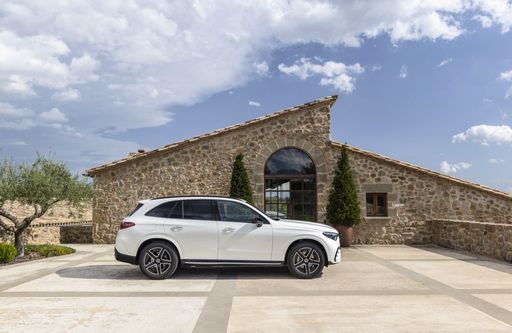
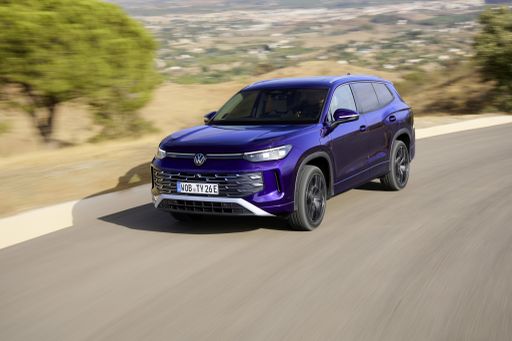
Compare performance (680 HP vs 272 HP), boot space and price (50,300 £ vs 39,600 £ ) at a glance. Find out which car is the better choice for you – Mercedes GLC or VW Tayron?

Mercedes GLC vs VW Tayron: Key differences

Mercedes GLC

4.4 (11 Reviews)
rate
  • substantially more power
  • substantially more electric range
  • clearly quicker 0–100 km/h

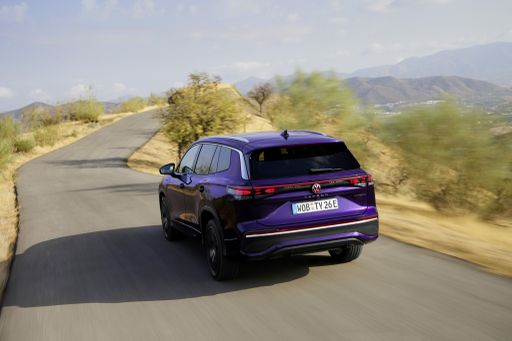
VW Tayron

5 (1 Reviews)
rate
  • markedly cheaper
  • only slightly more efficient
  • slightly lighter
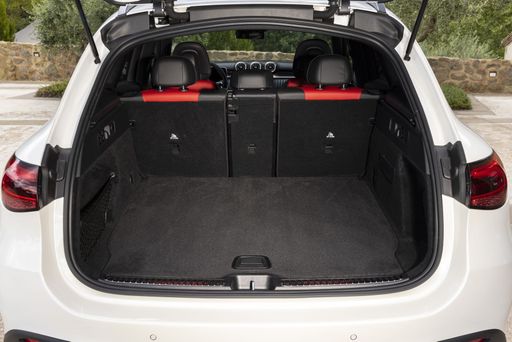
  • noticeably more trunk space

All details on performance, efficiency, range and trunk space can be found in the technical comparison below – including user reviews for both models.

GLC

Mercedes GLC vs VW Tayron: A Comprehensive SUV Showdown

The SUV market is bustling with options, and two names that have caught the attention of many are the Mercedes GLC and the VW Tayron. Each vehicle boasts a blend of performance, luxury, and modern technology, making them prime contenders for those in the market for a reliable SUV. In this comparison, we'll dive into various technical aspects and innovations to see how these vehicles stack up against each other.
Tayron

Powertrains and Performance

The Mercedes GLC offers a range of powertrains, from petrol to diesel MHEVs and plug-in hybrids, providing a wide choice for different driving preferences. With power outputs ranging from 186 HP to an impressive 680 HP, this SUV caters to both efficiency seekers and those looking for spirited performance. Moreover, its acceleration capabilities are just as impressive, with the GLC managing 0-100 km/h in as little as 3.5 seconds.

Conversely, the VW Tayron features a narrower but still commendable engine lineup, which includes petrol, diesel, and plug-in hybrid options. The max output reaches 272 HP, which is respectable for everyday driving. The Tayron’s acceleration from 0-100 km/h is slightly slower compared to the GLC, clocking in at 7.3 seconds for the quickest variant. While the Tayron may not have the outright power of the GLC, it still provides a satisfying driving experience.

GLC

Fuel Efficiency and Range

When it comes to fuel efficiency, the Mercedes GLC has a slight edge. With consumption figures ranging from 5.1 L/100km up to 10.3 L/100km, it offers options for both high-performance and economical driving. The hybrid variants, specifically, excel with CO2 emissions as low as 10 g/km and electric ranges of up to 130 km.

The VW Tayron is also competitive in terms of efficiency, boasting a consumption of around 6.2 L/100km for its petrol models. However, it trails behind the GLC in terms of electric range, managing a maximum of 126 km. For those keen on reducing their carbon footprint, the GLC takes a slight lead.

Tayron

Interior Comfort and Technology

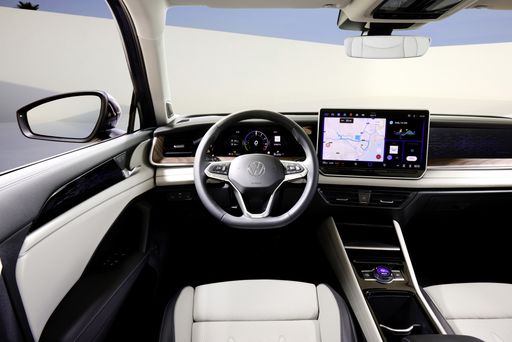
Both SUVs excel in interior design and technology offerings. The Mercedes GLC features a premium cabin with high-quality materials and a futuristic MBUX infotainment system that integrates voice control, intuitive navigation, and smartphone connectivity. The space is accommodating for five passengers and provides ample cargo space, with a trunk capacity of up to 620 liters.

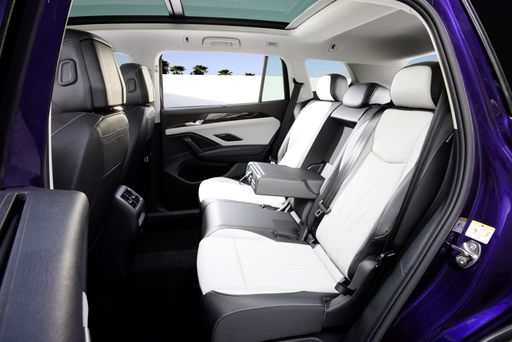
The VW Tayron, while more affordable, does not skimp on comfort. Its cabin is well-appointed, and the infotainment system offers vibrant graphics and ease of use. With a trunk capacity of 885 liters, the Tayron provides significant cargo space for those who prioritize practicality. Both vehicles support a range of driver-assistance systems to enhance safety and convenience, making them ideal for modern drivers.

GLC

Driving Dynamics

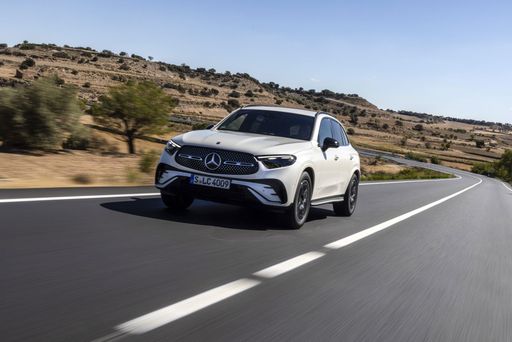
The driving dynamics of the GLC are enhanced by its all-wheel-drive (AWD) system and a sophisticated suspension setup. With various driving modes and fine-tuned steering, the GLC feels agile and composed, whether navigating city streets or tackling winding country roads.

The VW Tayron, available in both front-wheel drive and all-wheel drive configurations, offers a balanced ride. While the steering may not be as dynamic as the GLC, it provides a comfortable and reassuring drive, making it suitable for daily commutes as well as longer trips.

Tayron

Price and Value

Pricing can significantly influence buyer decisions, and here the VW Tayron generally comes in at a lower starting price than the Mercedes GLC, offering great value for those on a budget. However, the GLC justifies its premium price with a vast selection of high-end features, advanced technology, and brand prestige.

GLC

Conclusion: Which SUV Reigns Supreme?

Choosing between the Mercedes GLC and VW Tayron ultimately depends on personal preferences and priorities. For those who seek high performance, luxury, and cutting-edge technology, the GLC may be the ideal choice. However, for buyers looking for practicality and value without compromising on style and comfort, the VW Tayron stands out as a compelling option.

Both SUVs showcase the best of what their respective brands offer and cater to a wide audience. Testing both vehicles on the road remains the best way to determine which one fits seamlessly into your lifestyle.

Here’s where it gets real: The technical differences in detail

GLC

Costs and Efficiency:

Price and efficiency are key factors when choosing a car – and this is often where the real differences emerge.

VW Tayron is markedly cheaper – starting at 39,600 £ , while the Mercedes GLC costs 50,300 £ . That’s a price difference of around 10,715 £.

Fuel consumption also shows a difference: the VW Tayron uses 1.5 L/100km and is only slightly more efficient than the Mercedes GLC with 1.6 L/100km. The difference is about 0.1 L/100km.

As for electric range, the Mercedes GLC offers substantially more range – reaching up to 714 km, about 591 km more than the VW Tayron.

Tayron

Engine and Performance:

Power, torque and acceleration are the classic benchmarks for car enthusiasts – and here, some clear differences start to show.

When it comes to engine power, the Mercedes GLC offers substantially more power – delivering 680 HP compared to 272 HP. That’s roughly 408 HP more horsepower.

When accelerating from 0 to 100 km/h, the Mercedes GLC is clearly quicker – completing the sprint in 3.5 s, while the VW Tayron takes 6.1 s. That’s about 2.6 s quicker.

Looking at top speed, the Mercedes GLC is somewhat faster – reaching 275 km/h, while the VW Tayron tops out at 221 km/h. The difference is around 54 km/h.

There’s also a difference in torque: the Mercedes GLC delivers significantly more torque with 1,020 Nm compared to 400 Nm. That’s about 620 Nm more.

GLC

Space and Everyday Use:

Whether family car or daily driver – which one offers more room, flexibility and comfort?

Both vehicles offer seating for 5 people.

In terms of curb weight, VW Tayron is slightly lighter – 1,682 kg compared to 1,910 kg. The difference is around 228 kg.

Looking at boot space, the VW Tayron offers noticeably more boot space – 885 L compared to 620 L. That’s a difference of about 265 L.

For maximum load capacity, the VW Tayron offers somewhat more capacity – up to 2,090 L, about 350 L more than the Mercedes GLC.

When it comes to payload, the Mercedes GLC carries only slightly more – 600 kg compared to 566 kg. That’s a difference of about 34 kg.

Who wins the race in the data check?

The Mercedes GLC is clearly superior overall in the objective data comparison.
This result only shows which model scores more points on paper – not which of the two cars feels right for you.

from £50,300
GLC

Mercedes GLC

  • Engine Type : Petrol MHEV, Plugin Hybrid, Diesel MHEV, Electric
  • Transmission : Automatic
  • Drive Type : All-Wheel Drive
  • Power HP : 186 - 680 HP
  • Consumption L/100km : 1.6 - 9.7 L/100km
  • Consumption kWh/100km : 14.9 - 16.6 kWh/100km
  • Electric Range : 12 - 714 km
Mercedes GLC
VW Tayron

Costs and Consumption

View detailed analysis

Engine and Performance

View detailed analysis

Dimensions and Body

View detailed analysis

Mercedes GLC

The Mercedes GLC blends plush cabin comfort and composed road manners into an SUV that feels more grown-up than it looks. It won’t shout for attention, but will quietly please buyers who want refinement, usable space and a touch of luxury without the drama.

details

VW Tayron

The VW Tayron is Volkswagen's roomy, no-nonsense SUV that pairs clean, familiar styling with a practical cabin built for families and everyday use. It rides comfortably, packs sensible tech and creature comforts, and feels like the sensible sweater of SUVs for buyers who prefer steady value over headline-grabbing drama.

details
Mercedes GLC
VW Tayron

Costs and Consumption

Price
50,300 - 126,600 £
Price
39,600 - 56,000 £
Consumption L/100km
1.6 - 9.7 L/100km
Consumption L/100km
1.5 - 8.5 L/100km
Consumption kWh/100km
14.9 - 16.6 kWh/100km
Consumption kWh/100km
-
Electric Range
12 - 714 km
Electric Range
116 - 123 km
Battery Capacity
94 kWh
Battery Capacity
19.7 kWh
co2
0 - 221 g/km
co2
33 - 192 g/km
Fuel tank capacity
62 - 65 L
Fuel tank capacity
45 - 58 L

Dimensions and Body

Body Type
SUV
Body Type
SUV
Seats
5
Seats
5
Doors
5
Doors
5
Curb weight
1,910 - 2,535 kg
Curb weight
1,682 - 1,948 kg
Trunk capacity
390 - 620 L
Trunk capacity
705 - 885 L
Length
4,716 - 4,845 mm
Length
4,792 mm
Width
1,890 - 1,913 mm
Width
1,853 - 1,866 mm
Height
1,603 - 1,644 mm
Height
1,666 - 1,668 mm
Max trunk capacity
1,490 - 1,740 L
Max trunk capacity
1,915 - 2,090 L
Payload
475 - 600 kg
Payload
489 - 566 kg

Engine and Performance

Engine Type
Petrol MHEV, Plugin Hybrid, Diesel MHEV, Electric
Engine Type
Petrol MHEV, Diesel, Petrol, Plugin Hybrid
Transmission
Automatic
Transmission
Automatic
Transmission Detail
Automatic Gearbox, Reduction Gearbox
Transmission Detail
Dual-Clutch Automatic
Drive Type
All-Wheel Drive
Drive Type
Front-Wheel Drive, All-Wheel Drive
Power HP
186 - 680 HP
Power HP
150 - 272 HP
Acceleration 0-100km/h
3.5 - 9 s
Acceleration 0-100km/h
6.1 - 9.7 s
Max Speed
210 - 275 km/h
Max Speed
204 - 221 km/h
Torque
320 - 1,020 Nm
Torque
250 - 400 Nm
Number of Cylinders
4 - 6
Number of Cylinders
4
Power kW
137 - 500 kW
Power kW
110 - 200 kW
Engine capacity
1,991 - 2,989 cm3
Engine capacity
1,498 - 1,984 cm3

General

Model Year
2,025 - 2,026
Model Year
2,025 - 2,026
CO2 Efficiency Class
F, G, D, B, E, A
CO2 Efficiency Class
E, F, G, B
Brand
Mercedes-Benz
Brand
VW
DriveDuel uses data analysis and artificial intelligence to evaluate vehicle data and create content. Content is regularly reviewed and improved. The displayed prices are estimates based on German list prices, adjusted to the respective country’s VAT. Country-specific registration taxes are not included. This information is not legally binding.