VS

BYD Seal U vs Mercedes GLC comparison

Compare performance (324 HP vs 489 HP), boot space and price (34,300 £ vs 50,300 £ ) at a glance. Find out which car is the better choice for you – BYD Seal U or Mercedes GLC?

BYD Seal U vs Mercedes GLC: Key differences

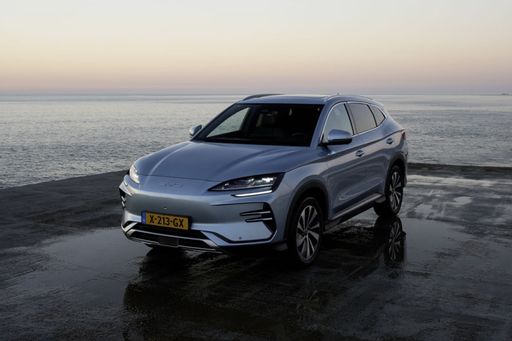
BYD Seal U

4.1 (7 Reviews)
rate
  • substantially cheaper
  • visibly more efficient
  • only slightly lighter
details

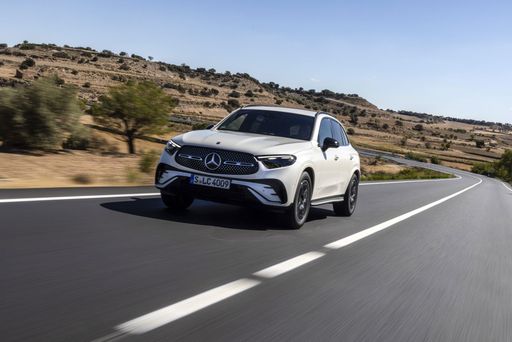
Mercedes GLC

4.4 (11 Reviews)
rate
  • clearly more power
  • clearly more electric range
  • considerably quicker 0–100 km/h
  • somewhat more trunk space
details

All details on performance, efficiency, range and trunk space can be found in the technical comparison below – including user reviews for both models.

By Achim Sedelmaier

Seal U

Head-to-Head: BYD Seal U vs. Mercedes GLC

The automotive landscape is evolving with the rising popularity of electric and hybrid vehicles. Among the notable contenders in the SUV category, the BYD Seal U and the Mercedes GLC stand out for their innovation and performance. In this comparison, we will analyze their technical aspects, innovative features, and overall driving experience to understand which vehicle might be the right fit for you.

GLC

Powertrain Choices: A Blend of Performance and Efficiency

The BYD Seal U offers versatile powertrain options, equipped with both plugin hybrid and fully electric variants. With electric power outputs ranging from 218 HP to a robust 324 HP, it provides impressive driveability. The Seal U's electric range peaks at 500 km on a single charge, highlighting its efficiency. The hybrid model boasts an incredibly low fuel consumption of just 0.9 L/100 km, making it an appealing choice for environmentally-conscious drivers.

On the other hand, the Mercedes GLC also presents a variety of engine choices, including petrol and diesel MHEVs, as well as plugin hybrids. This SUV can generate up to 390 HP, with acceleration times as quick as 4.7 seconds from 0-100 km/h in its most powerful variant. Furthermore, the GLC's electric range extends to 130 km, catering well to urban drivers seeking efficiency but wanting the assurance of a traditional engine for longer trips.

Seal U

Transmission and Drive Options: The Torque of Tradition vs. Modern Engineering

The BYD Seal U features an automatic transmission supplemented by a continuous variable transmission (CVT) for its hybrid models, alongside a reduction gearbox for its electric variants. Its front-wheel-drive and all-wheel-drive options ensure adaptability across various terrains. Torque values ranging from 300 to 550 Nm illustrate the Seal U's capacity to deliver responsive acceleration and confidence on the road.

The Mercedes GLC, equipped solely with an automatic transmission, takes full advantage of its all-wheel-drive system. With torque figures reaching a staggering 1,020 Nm in some versions, the GLC can handle demanding driving conditions with ease. Its performance-oriented designs tap into the luxurious feel expected from the Mercedes-Benz badge.

GLC

Dimensions and Practicality: Size Matters

When it comes to dimension, the BYD Seal U measures 4775 mm in length and 1890 mm in width. It provides a trunk capacity of 425 liters, accommodating everyday cargo needs while ensuring that it doesn't feel oversized. The cabin is spacious, seating five comfortably, making it suitable for families.

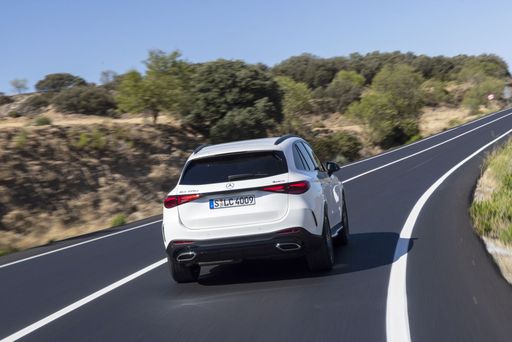
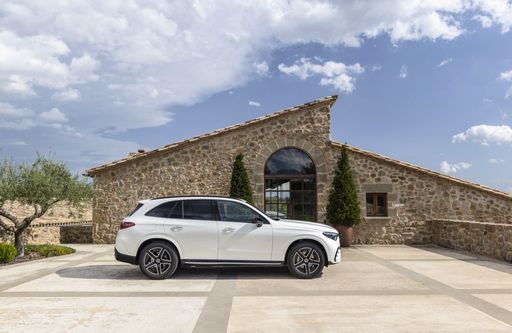
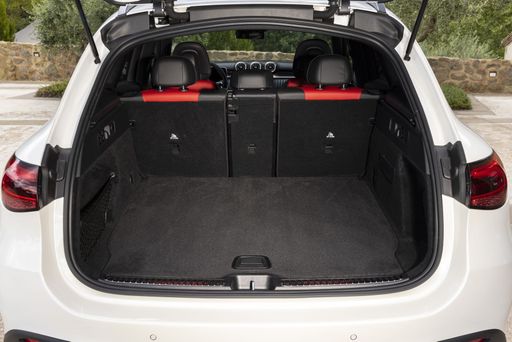
The Mercedes GLC, in comparison, varies between 4716 mm and 4792 mm in length, depending on the version. It provides a maximum trunk capacity of 620 liters, making it ideal for those who require extra space for travel or storage. It also seats five but offers a slightly more premium feeling with plush materials and an ergonomic layout.

Seal U

Technological Innovations: Enhanced Driving Experience

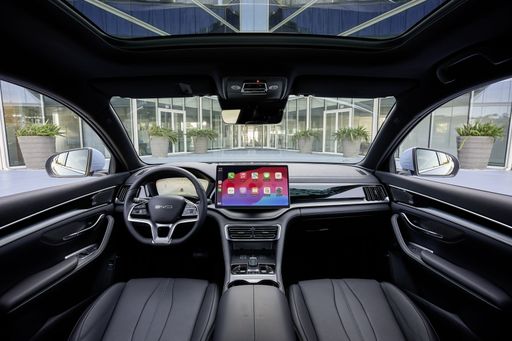
In terms of technology, the BYD Seal U is loaded with advanced features, including a comprehensive infotainment system designed for intuitive use, smartphone connectivity, and various driver-assistance technologies that enhance safety and convenience. These innovations are harmonized to provide a seamless driving experience.

Conversely, the Mercedes GLC stands out with its luxurious infotainment system, the MBUX (Mercedes-Benz User Experience), which incorporates voice activation, augmented reality navigation, and excellent connectivity options. This ensures that the driving experience is not just technical, but an engaging and luxurious affair.

GLC

Conclusion: Which SUV is Right for You?

Ultimately, the choice between the BYD Seal U and the Mercedes GLC depends on your personal preferences and priorities. If efficiency, eco-friendliness, and modern tech are at the top of your list, the BYD Seal U offers excellent value, especially for those venturing into the world of electric driving. Meanwhile, if you desire a powerful, luxurious driving experience with a stellar reputation, the Mercedes GLC stands poised to impress.

As the automotive market continues to innovate, both vehicles represent their respective manufacturers' commitment to blending performance with sustainability, ensuring a bright future for all drivers.

Here’s where it gets real: The technical differences in detail

Seal U

Costs and Efficiency:

Price and efficiency are often the first things buyers look at. Here it becomes clear which model has the long-term edge – whether at the pump, the plug, or in purchase price.

BYD Seal U is substantially cheaper – starting at 34,300 £ , while the Mercedes GLC costs 50,300 £ . That’s a price difference of around 16,050 £.

In terms of energy consumption, the BYD Seal U is visibly more efficient: consuming 12.1 kWh/100km compared to 14.9 kWh/100km for the Mercedes GLC. That’s a difference of about 2.8 kWh/100km.

As for electric range, the Mercedes GLC offers clearly more range – reaching up to 714 km, about 214 km more than the BYD Seal U.

GLC

Engine and Performance:

Power, torque and acceleration say a lot about how a car feels on the road. This is where you see which model delivers more driving dynamics.

When it comes to engine power, the Mercedes GLC offers clearly more power – delivering 489 HP compared to 324 HP. That’s roughly 165 HP more horsepower.

When accelerating from 0 to 100 km/h, the Mercedes GLC is considerably quicker – completing the sprint in 4.2 s, while the BYD Seal U takes 5.9 s. That’s about 1.7 s quicker.

There’s also a difference in torque: the Mercedes GLC delivers clearly more torque with 800 Nm compared to 550 Nm. That’s about 250 Nm more.

Seal U

Space and Everyday Use:

Cabin size, boot volume and payload all play a role in everyday practicality. Here, comfort and flexibility make the difference.

Both vehicles offer seating for 5 people.

In terms of curb weight, BYD Seal U is only slightly lighter – 1,940 kg compared to 1,985 kg. The difference is around 45 kg.

Looking at boot space, the Mercedes GLC offers somewhat more boot space – 620 L compared to 552 L. That’s a difference of about 68 L.

When it comes to payload, the Mercedes GLC carries markedly more – 575 kg compared to 410 kg. That’s a difference of about 165 kg.

Who wins the race in the data check?

The Mercedes GLC is clearly superior overall in the objective data comparison.
This result only shows which model scores more points on paper – not which of the two cars feels right for you.

from £50,300
GLC

Mercedes GLC

  • Engine Type : Diesel MHEV, Plugin Hybrid, Electric, Petrol MHEV
  • Transmission : Automatic
  • Drive Type : All-Wheel Drive
  • Power HP : 186 - 489 HP
  • Consumption L/100km : 1.6 - 9.4 L/100km
  • Consumption kWh/100km : 14.9 - 16.6 kWh/100km
  • Electric Range : 122 - 714 km
BYD Seal U
Mercedes GLC

Costs and Consumption

View detailed analysis

Engine and Performance

View detailed analysis

Dimensions and Body

View detailed analysis

BYD Seal U

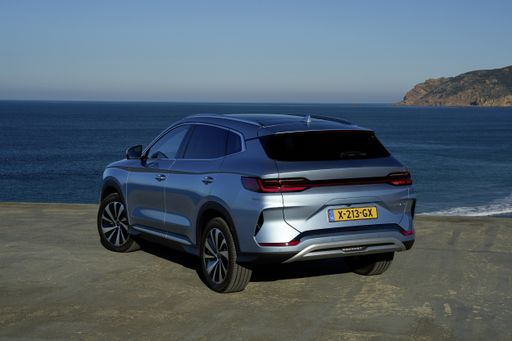
The BYD Seal U pairs a sleek fastback silhouette with a surprisingly roomy, tech-rich cabin, giving electric chic without the showroom pretension. It's a smart pick for buyers after confident handling, sensible practicality and standout value — all wrapped up with a cheeky grin when you put your foot down.

details

Mercedes GLC

The Mercedes GLC blends plush cabin comfort and composed road manners into an SUV that feels more grown-up than it looks. It won’t shout for attention, but will quietly please buyers who want refinement, usable space and a touch of luxury without the drama.

details
BYD Seal U
Mercedes GLC

Costs and Consumption

Price
34,300 - 39,800 £
Price
50,300 - 82,100 £
Consumption L/100km
-
Consumption L/100km
1.6 - 9.4 L/100km
Consumption kWh/100km
12.1 - 20.5 kWh/100km
Consumption kWh/100km
14.9 - 16.6 kWh/100km
Electric Range
70 - 500 km
Electric Range
122 - 714 km
Battery Capacity
-
Battery Capacity
-
co2
0 - 71 g/km
co2
0 - 214 g/km
Fuel tank capacity
-
Fuel tank capacity
-

Dimensions and Body

Body Type
SUV
Body Type
SUV
Seats
5
Seats
5
Doors
-
Doors
-
Curb weight
1,940 - 2,147 kg
Curb weight
1,985 - 2,535 kg
Trunk capacity
425 - 552 L
Trunk capacity
390 - 620 L
Length
-
Length
-
Width
1,890 mm
Width
1,890 - 1,920 mm
Height
-
Height
-
Max trunk capacity
-
Max trunk capacity
-
Payload
410 kg
Payload
475 - 575 kg

Engine and Performance

Engine Type
Electric, Plugin Hybrid
Engine Type
Diesel MHEV, Plugin Hybrid, Electric, Petrol MHEV
Transmission
Automatic
Transmission
Automatic
Transmission Detail
Reduction Gearbox, Automatic Gearbox
Transmission Detail
Automatic Gearbox, Reduction Gearbox
Drive Type
Front-Wheel Drive, All-Wheel Drive
Drive Type
All-Wheel Drive
Power HP
218 - 324 HP
Power HP
186 - 489 HP
Acceleration 0-100km/h
5.9 - 9.6 s
Acceleration 0-100km/h
4.2 - 9 s
Max Speed
-
Max Speed
-
Torque
300 - 550 Nm
Torque
380 - 800 Nm
Number of Cylinders
4
Number of Cylinders
4 - 6
Power kW
160 - 238 kW
Power kW
137 - 360 kW
Engine capacity
1,497 - 1,498 cm3
Engine capacity
1,993 - 2,999 cm3

General

Model Year
2,024 - 2,026
Model Year
2,025 - 2,026
CO2 Efficiency Class
A, B
CO2 Efficiency Class
D, B, E, F, A, G
Brand
BYD
Brand
Mercedes-Benz
DriveDuel uses data analysis and artificial intelligence to evaluate vehicle data and create content. Content is regularly reviewed and improved. The displayed prices are estimates based on German list prices, adjusted to the respective country’s VAT. Country-specific registration taxes are not included. This information is not legally binding.