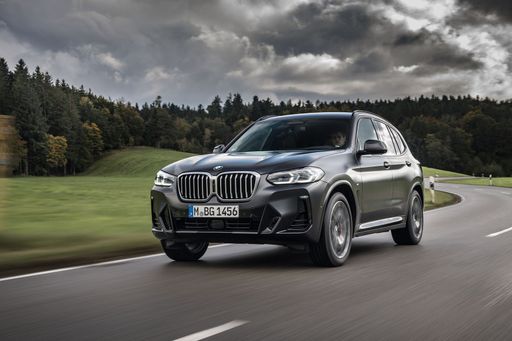
@ BMW Group Press
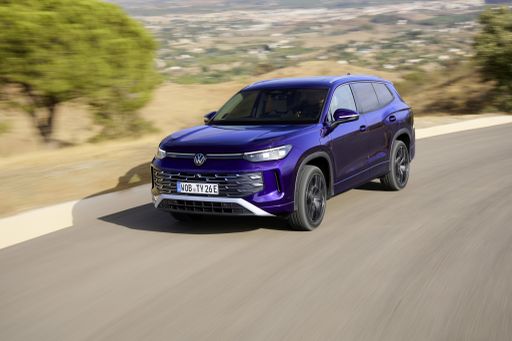
@ Volkswagen AG / VW Media
VS

BMW X3 vs VW Tayron – Which car suits you better?

Two cars, one duel: BMW X3 meets VW Tayron.
Which one wins in performance, efficiency and value for money? Find out now!

X3 @ BMW Group Press

In the increasingly competitive SUV market, the BMW X3 and Volkswagen Tayron represent two compelling choices for drivers seeking performance, innovation, and practicality. This article delves into the technical aspects, innovations, and overall appeal of these two popular models, providing a comprehensive comparison for discerning buyers.

Tayron @ Volkswagen AG / VW Media

Engine Options and Performance

The BMW X3 boasts a more diverse lineup of engine options, including Diesel MHEV, Petrol MHEV, Plugin Hybrid, and traditional Petrol engines. The power output ranges from 184 HP to a staggering 510 HP in the high-performance variants. With an impressive acceleration ranging from 4.6 seconds to 7.9 seconds for 0-100 km/h, it delivers a thrilling driving experience. Coupled with an all-wheel-drive system and automatic transmission, the X3 promises not only sporty handling but also enhanced road grip and stability.

On the other hand, the Volkswagen Tayron offers a robust selection of petrol and diesel engines with outputs varying from 150 HP to 272 HP. While the Tayron may not match the X3 in sheer horsepower, its acceleration from 0-100 km/h can be as quick as 7.3 seconds, highlighting its capable performance. The Tayron is available in both front-wheel and all-wheel drive configurations, offering flexibility depending on driving conditions.

X3 @ BMW Group Press

Fuel Efficiency and Emissions

From a fuel consumption standpoint, the BMW X3 presents an efficient option with various models averaging between 2.1 L/100 km and 10.8 L/100 km, reflecting its range of engine types, particularly the hybrid variants. With CO2 emissions as low as 21 g/km in the plugin hybrid versions, it positions itself as a responsible choice for the environmentally-conscious driver.

The Volkswagen Tayron, while slightly less efficient with a consumption rate that can go up to 6.4 L/100 km, compensates with its advanced petrol MHEV technology. Its CO2 emissions range around 9 g/km for hybrid models, making it an attractive option for those who prioritize lower emissions in urban settings.

Tayron @ Volkswagen AG / VW Media

Interior Comfort and Technology

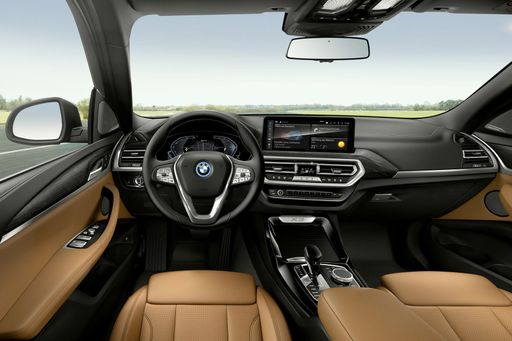
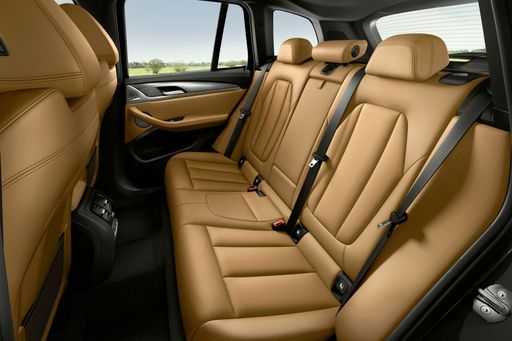
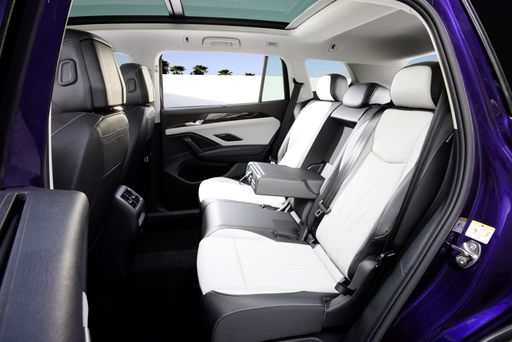
In terms of cabin space and comfort, both models offer spacious interiors that comfortably seat five passengers. The BMW X3 slightly edges out in trunk capacity, providing between 450 L and 570 L for varied load needs. The Tayron, however, shines in this area with a trunk capacity of up to 885 L, making it a practical choice for families and those needing extra cargo space.

Technologically, the BMW X3 is equipped with cutting-edge infotainment systems, featuring a large touchscreen display, advanced connectivity options, and driver assistance technologies that enhance safety and convenience on the road. The integration of features like smart navigation, adaptive cruise control, and AI-enhanced safety systems showcases BMW's commitment to safety and technological innovation.

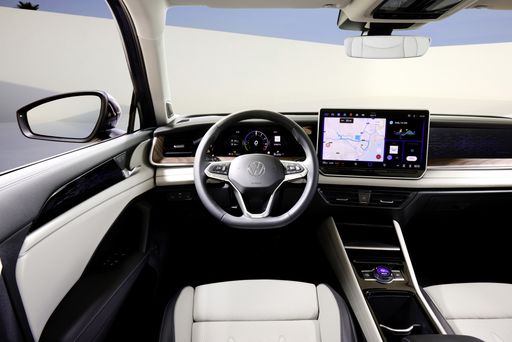
Conversely, the Volkswagen Tayron is not to be underestimated, offering a similarly advanced infotainment suite that includes a digital cockpit, smartphone integration, and various driver aids. Its modern aesthetics and functionality make for a user-friendly experience, ensuring that drivers and passengers alike enjoy their journey.

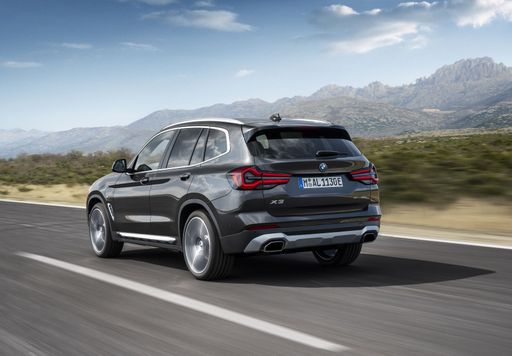
X3 @ BMW Group Press

Pricing and Value Proposition

When it comes to pricing, the BMW X3 typically commands a premium due to its brand reputation, luxury features, and performance pedigree. Buyers may expect to pay a premium for the well-rounded package it offers, including strong performance, advanced technology, and a polished interior.

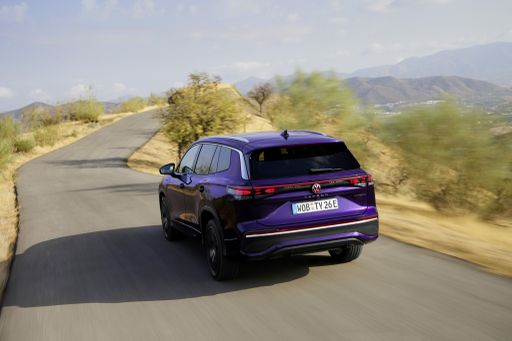
In contrast, the Volkswagen Tayron offers a more budget-friendly option, appealing to those looking for a rugged yet stylish SUV experience without breaking the bank. While it may lack some of the high-performance variants of the X3, it provides excellent value with its spaciousness and solid technology offerings.

Tayron @ Volkswagen AG / VW Media

The Final Verdict

Both the BMW X3 and Volkswagen Tayron have their strengths catering to different needs in the SUV market. The X3 excels with its performance, luxurious features, and hybrid technology, making it a prime choice for those who prioritize driving experience and brand prestige. The Tayron, meanwhile, provides exceptional value, practicality, and the promise of modern tech, appealing to families and everyday drivers alike.

Ultimately, the decision between the two comes down to personal preferences, lifestyle requirements, and budget considerations. Whether you choose the spirited X3 or the versatile Tayron, both vehicles promise to deliver an enjoyable driving experience on and off the road.

Here’s where it gets real: The technical differences in detail

X3 @ BMW Group Press

Costs and Efficiency:

Price and efficiency are often the first things buyers look at. Here it becomes clear which model has the long-term edge – whether at the pump, the plug, or in purchase price.

VW Tayron has a clearly perceptible advantage in terms of price – it starts at 39600 £, while the BMW X3 costs 51300 £. That’s a price difference of around 11645 £.

Fuel consumption also shows a difference: VW Tayron manages with 1.50 L and is therefore clearly more efficient than the BMW X3 with 2.80 L. The difference is about 1.30 L per 100 km.

As for range, the VW Tayron performs evident better – achieving up to 123 km, about 35 km more than the BMW X3.

Tayron @ Volkswagen AG / VW Media

Engine and Performance:

Under the bonnet, it becomes clear which model is tuned for sportiness and which one takes the lead when you hit the accelerator.

When it comes to engine power, the BMW X3 has a clearly perceptible edge – offering 398 HP compared to 272 HP. That’s roughly 126 HP more horsepower.

In acceleration from 0 to 100 km/h, the BMW X3 is evident quicker – completing the sprint in 4.60 s, while the VW Tayron takes 6.10 s. That’s about 1.50 s faster.

In terms of top speed, the BMW X3 performs hardly perceptible better – reaching 250 km/h, while the VW Tayron tops out at 240 km/h. The difference is around 10 km/h.

There’s also a difference in torque: BMW X3 pulls significantly stronger with 670 Nm compared to 400 Nm. That’s about 270 Nm difference.

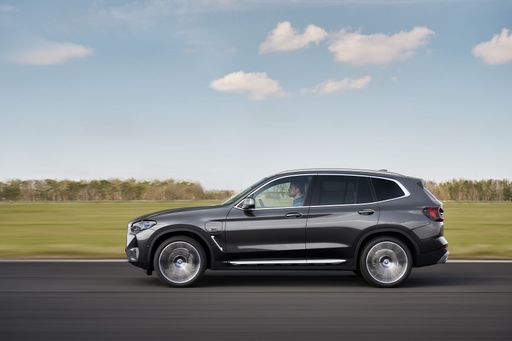
X3 @ BMW Group Press

Space and Everyday Use:

Beyond pure performance, interior space and usability matter most in daily life. This is where you see which car is more practical and versatile.

Both vehicles offer seating for 5 people.

In curb weight, VW Tayron is to a small extent lighter – 1682 kg compared to 1930 kg. The difference is around 248 kg.

In terms of boot space, the VW Tayron offers evident more room – 885 L compared to 570 L. That’s a difference of about 315 L.

In maximum load capacity, the VW Tayron performs slightly better – up to 2090 L, which is about 390 L more than the BMW X3.

When it comes to payload, BMW X3 barely noticeable takes the win – 570 kg compared to 566 kg. That’s a difference of about 4 kg.

Who wins the race?

The VW Tayron proves to be wins the duel decisively and therefore becomes our DriveDuel Champion!
VW Tayron is the better all-rounder in this comparison.

from about £39,600
Tayron @ Volkswagen AG / VW Media

VW Tayron

  • Engine Type : Petrol MHEV, Diesel, Petrol, Plugin Hybrid
  • Transmission : Automatic
  • Drive Type : Front-Wheel Drive, All-Wheel Drive
  • Power HP : 150 - 272 HP
  • Consumption L/100km : 1.5 - 8.5 L
  • Electric Range : 116 - 123 km

BMW X3

The BMW X3 mixes Bavarian poise with everyday practicality, delivering a composed ride and a cabin that feels both premium and lived-in. It’s the sort of SUV that lets you enjoy sporty handling without sacrificing family-friendly space, so you get fun and sense in one neat package.

details

VW Tayron

The VW Tayron is Volkswagen's roomy, no-nonsense SUV that pairs clean, familiar styling with a practical cabin built for families and everyday use. It rides comfortably, packs sensible tech and creature comforts, and feels like the sensible sweater of SUVs for buyers who prefer steady value over headline-grabbing drama.

details
BMW X3
VW Tayron
X3 @ BMW Group Press
Tayron @ Volkswagen AG / VW Media

Costs and Consumption

Price
51300 - 72400 £
Price
39600 - 53300 £
Consumption L/100km
2.8 - 7.7 L
Consumption L/100km
1.5 - 8.5 L
Consumption kWh/100km
-
Consumption kWh/100km
-
Electric Range
88 km
Electric Range
116 - 123 km
Battery Capacity
19.70 kWh
Battery Capacity
19.70 kWh
co2
64 - 175 g/km
co2
33 - 192 g/km
Fuel tank capacity
50 - 65 L
Fuel tank capacity
45 - 58 L

Dimensions and Body

Body Type
SUV
Body Type
SUV
Seats
5
Seats
5
Doors
5
Doors
5
Curb weight
1930 - 2140 kg
Curb weight
1682 - 1948 kg
Trunk capacity
460 - 570 L
Trunk capacity
705 - 885 L
Length
4755 mm
Length
4792 mm
Width
1920 mm
Width
1853 - 1866 mm
Height
1660 mm
Height
1666 - 1668 mm
Max trunk capacity
1600 - 1700 L
Max trunk capacity
1915 - 2090 L
Payload
570 kg
Payload
489 - 566 kg

Engine and Performance

Engine Type
Petrol MHEV, Diesel MHEV, Plugin Hybrid
Engine Type
Petrol MHEV, Diesel, Petrol, Plugin Hybrid
Transmission
Automatic
Transmission
Automatic
Transmission Detail
Automatic Gearbox
Transmission Detail
Dual-Clutch Automatic
Drive Type
All-Wheel Drive
Drive Type
Front-Wheel Drive, All-Wheel Drive
Power HP
197 - 398 HP
Power HP
150 - 272 HP
Acceleration 0-100km/h
4.6 - 7.8 s
Acceleration 0-100km/h
6.1 - 9.7 s
Max Speed
215 - 250 km/h
Max Speed
204 - 240 km/h
Torque
330 - 670 Nm
Torque
250 - 400 Nm
Number of Cylinders
4 - 6
Number of Cylinders
4
Power kW
145 - 293 kW
Power kW
110 - 200 kW
Engine capacity
1995 - 2998 cm3
Engine capacity
1498 - 1984 cm3

General

Model Year
2024 - 2025
Model Year
2025
CO2 Efficiency Class
F, E, B
CO2 Efficiency Class
E, F, G, B
Brand
BMW
Brand
VW
What drive types are available for the BMW X3?

The BMW X3 is offered with All-Wheel Drive.

The prices and data displayed are estimates based on German list prices and may vary by country. This information is not legally binding.