VS

Mazda CX-5 vs VW Tayron comparison

Compare performance (141 HP vs 272 HP), boot space and price (30,000 £ vs 40,200 £ ) at a glance. Find out which car is the better choice for you – Mazda CX-5 or VW Tayron?

Mazda CX-5 vs VW Tayron: Key differences

Mazda CX-5

4.7 (8 Reviews)
rate
  • visibly cheaper
  • only slightly lighter
details

VW Tayron

4.5 (5 Reviews)
rate
  • substantially more power
  • significantly more efficient
  • clearly quicker 0–100 km/h
  • considerably more trunk space
details

All details on performance, efficiency, range and trunk space can be found in the technical comparison below – including user reviews for both models.

By Achim Sedelmaier

CX-5

Overview: Mazda CX-5 VS VW Tayron — which suits your needs?

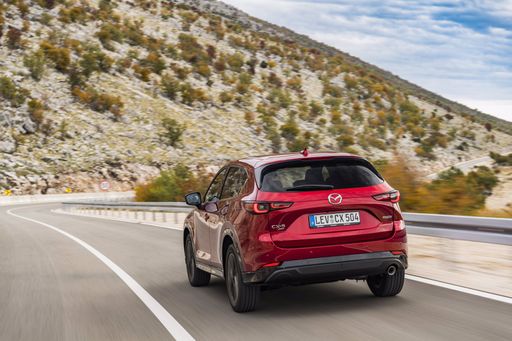
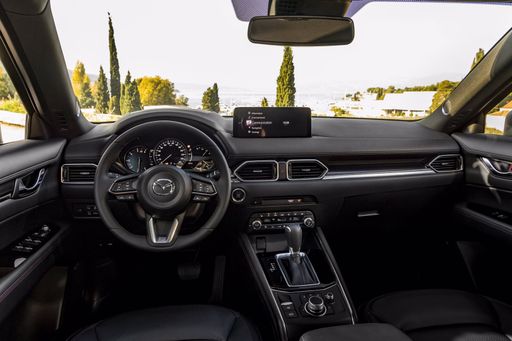
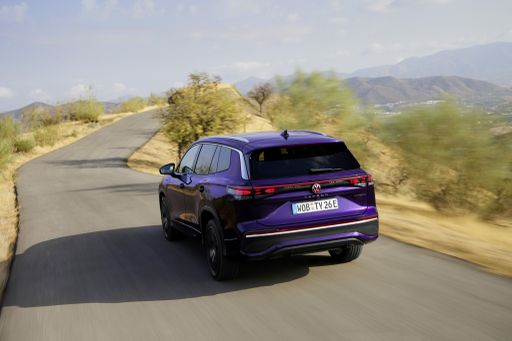
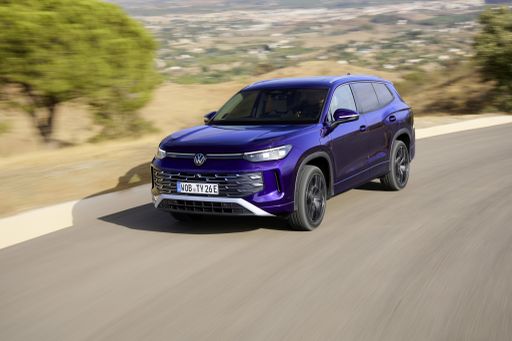
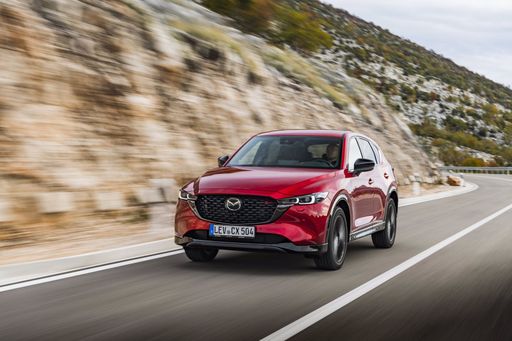
Mazda CX-5 vs VW Tayron pits two family SUVs that chase similar buyers from different angles: the CX-5 trades outright grunt for everyday usability and a composed, modern cabin, while the Tayron leans into space, refinement and more powerful drivetrain choices. If you care about street‑level practicality, low loading height and a straightforward tech experience you'll notice the Mazda's priorities immediately. If your day includes long motorway miles, towing or occasional electric driving, the Tayron's refinement and broader powertrain range pull ahead. This comparison focuses on the real-world traits that matter on commutes, school runs and long trips rather than spec sheets.
Tayron

Character and driving feel

The Mazda CX-5 presents itself as a calm, predictable companion with precise steering and a suspension tuned for everyday comfort, but it never feels sporty when you ask for urgency. The VW Tayron arrives with a heavier, more planted demeanor and access to stronger engines and PHEV options that make overtaking and motorway progress feel effortless. In town the CX-5's livelier steering and lighter footprint make it easier to hustle through traffic, whereas the Tayron rewards steady cruising with its composure rather than quick responses. Both are not aimed at drivers seeking a sporty chassis; the difference is whether you prefer responsive modesty (Mazda) or relaxed, effortless momentum (VW).

CX-5

Comfort and long‑distance behavior

On long runs the Tayron feels like the more limousine‑minded choice: superior insulation, comfy seats and a sense of quiet that keeps fatigue at bay even at sustained motorway speeds. The Mazda CX-5 is comfortable and well‑appointed for lengthy journeys, but its engine can become audibly busy under load and the ride can reveal more body motion when pushed. If you regularly cover long distances with a full load, the Tayron’s hushed cabin and options such as diesel or plug‑in hybrid drivetrains provide tangible benefits. For shorter highways and relaxed cruising the CX-5 is more than capable, especially if you value a slightly firmer, more engaged feel behind the wheel.

Tayron

Practicality, space and cabin usability

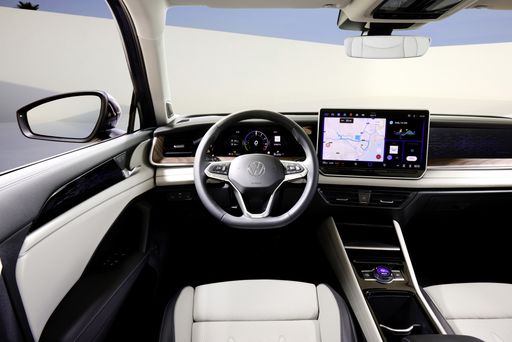
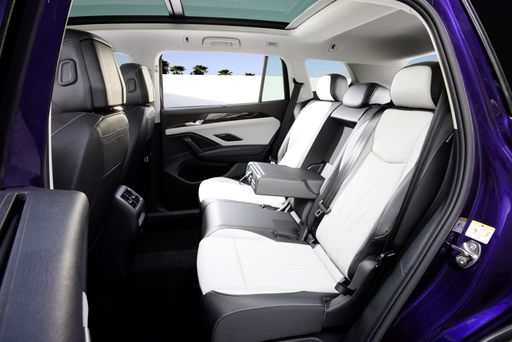
Both cars are strong on passenger room, but they deliver that space differently: the Mazda CX-5 emphasizes day‑to‑day usability with wide rear doors, a low, flat load floor and a flexible seat split that makes loading a pram or awkward boxes straightforward. The VW Tayron trades some of that door convenience for outright cargo capacity and the option of a third row for occasional passengers, so it feels more like a moving van for family loads when you need the volume. Interiors also contrast in perceived quality—Mazda keeps a clean, modern layout but uses some simpler materials, while the Tayron generally reads a touch more upmarket. If you want the easiest, most practical tailgate experience choose the CX‑5; if you need maximum luggage space or an extra seat now and then, the Tayron is the better fit.

CX-5

City friendliness and daily usability

The Mazda CX-5 is the easier companion for tight parking and frequent urban manoeuvres thanks to its smaller presence and more intuitive accessibility to rear seats and child seats. The VW Tayron manages urban life but its larger footprint and wider turning circle make tight street parking or narrow kerbside manoeuvres more demanding. Tech-wise the Mazda's deep Google integration and wireless smartphone mirroring feel modern but are touch‑centric, while the Tayron’s Volkswagen infotainment retains more tactile controls and a familiar logical layout that some buyers will prefer. For city drivers who prioritise ease of use and quick access, Mazda wins on day‑to‑day friendliness; for those who value higher perceived refinement and long‑term cruising tech, the Tayron edges ahead.

Tayron

Buyer fit: who should pick which SUV?

If your priority is pragmatic family life—easy loading, wide rear doors, strong value and a calm, safety‑focused package—the Mazda CX-5 aligns neatly with that checklist and keeps purchase cost lower. If your lifestyle demands the quietest motorway miles, larger cargo volume, optional seven‑seat flexibility or stronger powertrains (including PHEV and diesel choices), the VW Tayron is the more natural home. Consider whether you want the Mazda’s straightforward usability and lower entry price or the Tayron’s long‑distance refinement and broader drivetrain menu; both choices point to clear trade‑offs that the technical comparison will unpack in detail.

Here’s where it gets real: The technical differences in detail

CX-5

Costs and Efficiency:

When it comes to price and running costs, the biggest differences usually appear. This is often where you see which car fits your budget better in the long run.

Mazda CX-5 is visibly cheaper – starting at 30,000 £ , while the VW Tayron costs 40,200 £ . That’s a price difference of around 10,230 £.

Fuel consumption also shows a difference: the VW Tayron uses 1.5 L/100km and is significantly more efficient than the Mazda CX-5 with 7 L/100km. The difference is about 5.5 L/100km.

Tayron

Engine and Performance:

Power, torque and acceleration say a lot about how a car feels on the road. This is where you see which model delivers more driving dynamics.

When it comes to engine power, the VW Tayron offers substantially more power – delivering 272 HP compared to 141 HP. That’s roughly 131 HP more horsepower.

When accelerating from 0 to 100 km/h, the VW Tayron is clearly quicker – completing the sprint in 6.1 s, while the Mazda CX-5 takes 10.5 s. That’s about 4.4 s quicker.

There’s also a difference in torque: the VW Tayron delivers considerably more torque with 400 Nm compared to 238 Nm. That’s about 162 Nm more.

CX-5

Space and Everyday Use:

Beyond pure performance, interior space and usability matter most in daily life. This is where you see which car is more practical and versatile.

Both vehicles offer seating for 5 people.

In terms of curb weight, Mazda CX-5 is only slightly lighter – 1,629 kg compared to 1,682 kg. The difference is around 53 kg.

Looking at boot space, the VW Tayron offers considerably more boot space – 885 L compared to 466 L. That’s a difference of about 419 L.

When it comes to payload, the Mazda CX-5 carries barely more – 601 kg compared to 573 kg. That’s a difference of about 28 kg.

Who wins the race in the data check?

The VW Tayron holds a decisive overall lead in the objective data comparison.
This result only shows which model scores more points on paper – not which of the two cars feels right for you.

from £40,200
Tayron

VW Tayron

  • Engine Type Petrol MHEV, Diesel, Petrol, Plugin Hybrid
  • Transmission Automatic
  • Drive Type Front-Wheel Drive, All-Wheel Drive
  • Power HP 150 - 272 HP
  • Consumption L/100km 1.5 - 8.5 L/100km
  • Electric Range 116 - 123 km
Mazda CX-5
VW Tayron

Costs and Consumption

View detailed analysis

Engine and Performance

View detailed analysis

Dimensions and Body

View detailed analysis

Mazda CX-5

The Mazda CX-5 blends sporty handling with a refined, premium interior, making everyday driving feel engaging and comfortable. It pairs stylish design and thoughtful cabin materials with user-friendly tech to deliver a well-rounded compact SUV that suits drivers who want more driver involvement without sacrificing practicality.

details

VW Tayron

The VW Tayron combines a roomy, practical interior with a composed, comfortable ride that suits both daily commuting and longer journeys. With a restrained, modern design and a focus on straightforward tech and safety, it’s a sensible choice for buyers who want Volkswagen refinement without unnecessary flash.

details
Mazda CX-5
VW Tayron

Costs and Consumption

Price
30,000 - 39,500 £
Price
40,200 - 56,000 £
Consumption L/100km
7 - 7.5 L/100km
Consumption L/100km
1.5 - 8.5 L/100km
Consumption kWh/100km
-
Consumption kWh/100km
-
Electric Range
-
Electric Range
116 - 123 km
Battery Capacity
-
Battery Capacity
-
co2
157 - 169 g/km
co2
33 - 192 g/km
Fuel tank capacity
-
Fuel tank capacity
-

Dimensions and Body

Body Type
SUV
Body Type
SUV
Seats
5
Seats
5
Doors
-
Doors
-
Curb weight
1,629 - 1,671 kg
Curb weight
1,682 - 1,948 kg
Trunk capacity
466 L
Trunk capacity
705 - 885 L
Length
-
Length
-
Width
1,860 mm
Width
1,853 - 1,866 mm
Height
-
Height
-
Max trunk capacity
-
Max trunk capacity
-
Payload
566 - 601 kg
Payload
497 - 573 kg

Engine and Performance

Engine Type
Petrol MHEV
Engine Type
Petrol MHEV, Diesel, Petrol, Plugin Hybrid
Transmission
Automatic
Transmission
Automatic
Transmission Detail
Automatic Gearbox
Transmission Detail
Dual-Clutch Automatic
Drive Type
Front-Wheel Drive, All-Wheel Drive
Drive Type
Front-Wheel Drive, All-Wheel Drive
Power HP
141 HP
Power HP
150 - 272 HP
Acceleration 0-100km/h
10.5 - 10.9 s
Acceleration 0-100km/h
6.1 - 9.7 s
Max Speed
-
Max Speed
-
Torque
238 Nm
Torque
250 - 400 Nm
Number of Cylinders
4
Number of Cylinders
4
Power kW
104 kW
Power kW
110 - 200 kW
Engine capacity
2,488 cm3
Engine capacity
1,498 - 1,984 cm3

General

Model Year
2025
Model Year
2,025 - 2,026
CO2 Efficiency Class
F
CO2 Efficiency Class
E, F, B, G
Brand
Mazda
Brand
VW
DriveDuel uses data analysis and artificial intelligence to evaluate vehicle data and create content. Content is regularly reviewed and improved. The displayed prices are estimates based on German list prices, adjusted to the respective country’s VAT. Country-specific registration taxes are not included. This information is not legally binding.