VS

VW Passat vs VW Tayron comparison

Compare performance (272 HP vs 272 HP), boot space and price (36,500 £ vs 39,600 £ ) at a glance. Find out which car is the better choice for you – VW Passat or VW Tayron?

VW Passat vs VW Tayron: Key differences

VW Passat

5 (3 Reviews)
rate
  • barely cheaper
  • noticeably more efficient
  • marginally more electric range
  • marginally quicker 0–100 km/h
  • barely lighter

VW Tayron

5 (1 Reviews)
rate
  • visibly more trunk space

All details on performance, efficiency, range and trunk space can be found in the technical comparison below – including user reviews for both models.

Passat

Different Roads, Different Souls

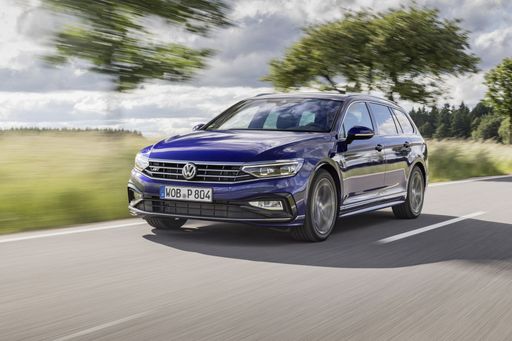
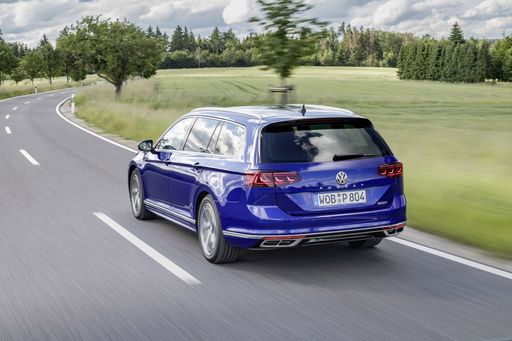
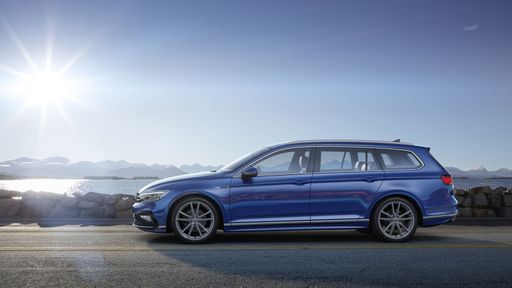
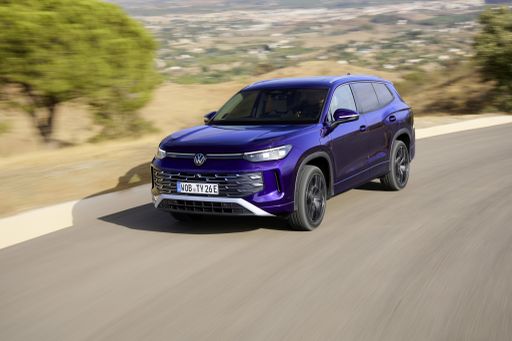
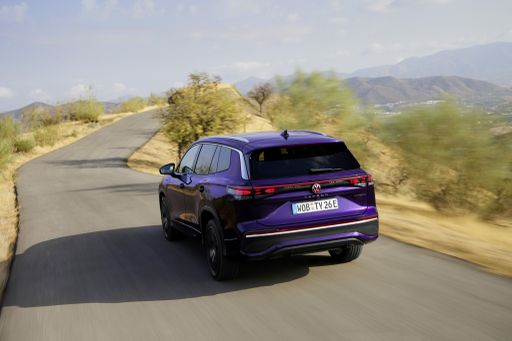
On the road the two feel like cousins who chose very different careers: the VW Passat keeps its composure, refined and understated, while the VW Tayron projects the taller, more assertive presence of an SUV. One leans into classic, grown-up motoring with a focus on calm progress; the other trades a bit of that poise for an elevated stance and a bolder visual posture. Both have charm, but they speak to drivers with different priorities and tastes.

Tayron

Daily Comfort and Cabin Vibes

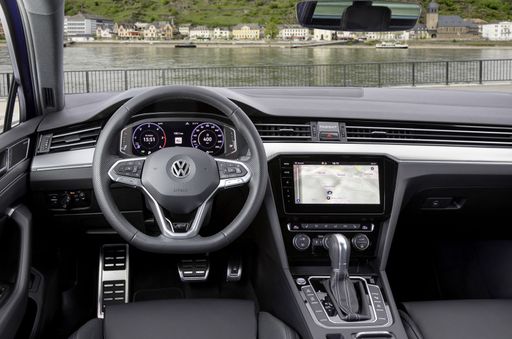
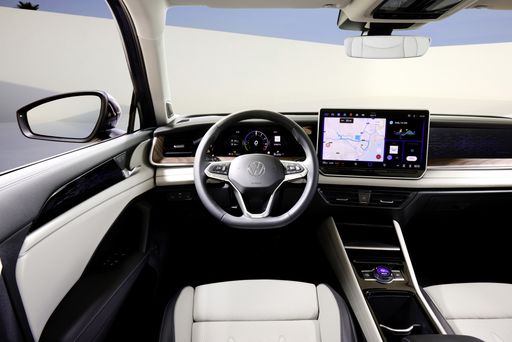
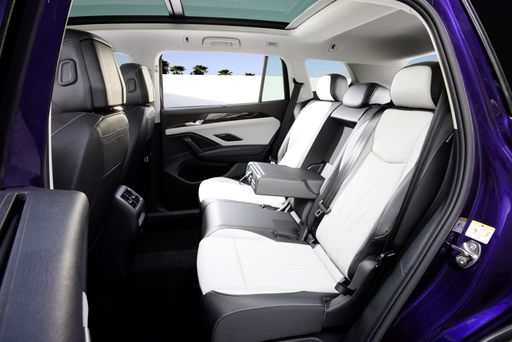
The interior experience highlights the split in purpose: the VW Passat pampers with a settled ride and a cabin that feels geared toward long, relaxed miles, whereas the VW Tayron prioritises space and an upright seating position that’s kinder on entry, exit and family loading chores. Materials and ambience are competent in both, but the Passat leans more towards a composed, executive feel while the Tayron aims for practical, airy comfort. Which atmosphere you prefer will shape how pleasant your daily commute becomes.

Passat

Behind the Wheel

Driving the two reveals their personalities immediately — the VW Passat rewards a measured, engaged driver with tidy steering and a sense of balance, while the VW Tayron favours confidence and reassurance from a higher perch, smoothing bumps with SUV-like composure. The Passat feels more agile when the road tightens; the Tayron feels more surefooted when the surface isn’t perfect. Both deliver predictability, but they go about it in characterful, distinct ways.

Tayron

Living with Luggage

Practicality is where the contrasts become useful rather than theoretical: the VW Tayron clearly courts buyers who need flexible, family-minded cargo space and easier packing on a weekly basis, while the VW Passat keeps things tidy and efficient with that traditional saloon layout that’s simple to load and use. If you habitually ferry sports kit, prams or oversized parcels, one will make life easier; if your life revolves around neat, office-to-home routine, the other keeps things elegant. Both are sensible, but they suit different packing habits.

Passat

Controls, Screens and Everyday Usability

In the everyday tech tussle, ergonomics and clarity matter more than headline features: the VW Passat tends to favour familiar, intuitive controls that let drivers get on with the journey without fuss, while the VW Tayron offers a slightly more modern, SUV-style presentation that puts visibility and convenience front and centre. Either way, usability is strong — it’s really about whether you prefer a classic cockpit or a contemporary, elevated layout. Small differences in touchpoints and screen logic will sway those who spend a lot of time in traffic or on long hauls.

Tayron

Who Should Park One on Their Drive?

If you’re a commuter or business user who prizes composed highway manners and quiet refinement, the VW Passat will feel like the natural choice; if your priority is family versatility, easy access and a bolder road presence, the VW Tayron is aimed squarely at you. Style-conscious buyers who want the look of an SUV without an overly bulky footprint will lean one way, while long-distance drivers who value serene progress may prefer the other. Read on — the DriveDuel Champion will be revealed afterwards, so keep going to see which car takes the crown.

Here’s where it gets real: The technical differences in detail

Passat

Costs and Efficiency:

Looking at overall running costs, both models reveal some interesting differences in everyday economy.

VW Passat is barely cheaper – starting at 36,500 £ , while the VW Tayron costs 39,600 £ . That’s a price difference of around 3,150 £.

Fuel consumption also shows a difference: the VW Passat uses 1.2 L/100km and is noticeably more efficient than the VW Tayron with 1.5 L/100km. The difference is about 0.3 L/100km.

As for electric range, the VW Passat offers marginally more range – reaching up to 135 km, about 12 km more than the VW Tayron.

Tayron

Engine and Performance:

Under the bonnet, it becomes clear which model is tuned for sportiness and which one takes the lead when you hit the accelerator.

Both models deliver identical power – 272 HP each.

When accelerating from 0 to 100 km/h, the VW Passat is marginally quicker – completing the sprint in 5.8 s, while the VW Tayron takes 6.1 s. That’s about 0.3 s quicker.

Looking at top speed, the VW Passat is moderately faster – reaching 250 km/h, while the VW Tayron tops out at 221 km/h. The difference is around 29 km/h.

Both models offer the same torque – 400 Nm.

Passat

Space and Everyday Use:

Whether family car or daily driver – which one offers more room, flexibility and comfort?

Both vehicles offer seating for 5 people.

In terms of curb weight, VW Passat is barely lighter – 1,573 kg compared to 1,682 kg. The difference is around 109 kg.

Looking at boot space, the VW Tayron offers visibly more boot space – 885 L compared to 690 L. That’s a difference of about 195 L.

For maximum load capacity, the VW Tayron offers moderately more capacity – up to 2,090 L, about 320 L more than the VW Passat.

When it comes to payload, the VW Passat carries only slightly more – 577 kg compared to 566 kg. That’s a difference of about 11 kg.

Who wins the race in the data check?

The VW Passat is clearly superior overall in the objective data comparison.
This result only shows which model scores more points on paper – not which of the two cars feels right for you.

from £36,500
Passat

VW Passat

  • Engine Type : Petrol, Petrol MHEV, Diesel, Plugin Hybrid
  • Transmission : Automatic
  • Drive Type : All-Wheel Drive, Front-Wheel Drive
  • Power HP : 122 - 272 HP
  • Consumption L/100km : 1.2 - 8 L/100km
  • Electric Range : 124 - 135 km
VW Passat
VW Tayron

Costs and Consumption

View detailed analysis

Engine and Performance

View detailed analysis

Dimensions and Body

View detailed analysis

VW Passat

The VW Passat is the grown-up family car that gets the basics absolutely right — roomy, comfortable and built to handle weekday commutes and weekend getaways without fuss. It won't set your pulse racing, but its calm composure and sensible packaging make it boring in the best possible way: a dependable, no‑drama choice for buyers who value practicality over flash.

details

VW Tayron

The VW Tayron is Volkswagen's roomy, no-nonsense SUV that pairs clean, familiar styling with a practical cabin built for families and everyday use. It rides comfortably, packs sensible tech and creature comforts, and feels like the sensible sweater of SUVs for buyers who prefer steady value over headline-grabbing drama.

details
VW Passat
VW Tayron

Costs and Consumption

Price
36,500 - 58,500 £
Price
39,600 - 56,000 £
Consumption L/100km
1.2 - 8 L/100km
Consumption L/100km
1.5 - 8.5 L/100km
Consumption kWh/100km
-
Consumption kWh/100km
-
Electric Range
124 - 135 km
Electric Range
116 - 123 km
Battery Capacity
19.7 kWh
Battery Capacity
19.7 kWh
co2
28 - 181 g/km
co2
33 - 192 g/km
Fuel tank capacity
45 - 66 L
Fuel tank capacity
45 - 58 L

Dimensions and Body

Body Type
Estate
Body Type
SUV
Seats
5
Seats
5
Doors
5
Doors
5
Curb weight
1,573 - 1,858 kg
Curb weight
1,682 - 1,948 kg
Trunk capacity
510 - 690 L
Trunk capacity
705 - 885 L
Length
4,917 mm
Length
4,792 mm
Width
1,849 mm
Width
1,853 - 1,866 mm
Height
1,521 mm
Height
1,666 - 1,668 mm
Max trunk capacity
1,770 L
Max trunk capacity
1,915 - 2,090 L
Payload
501 - 577 kg
Payload
489 - 566 kg

Engine and Performance

Engine Type
Petrol, Petrol MHEV, Diesel, Plugin Hybrid
Engine Type
Petrol MHEV, Diesel, Petrol, Plugin Hybrid
Transmission
Automatic
Transmission
Automatic
Transmission Detail
Dual-Clutch Automatic
Transmission Detail
Dual-Clutch Automatic
Drive Type
All-Wheel Drive, Front-Wheel Drive
Drive Type
Front-Wheel Drive, All-Wheel Drive
Power HP
122 - 272 HP
Power HP
150 - 272 HP
Acceleration 0-100km/h
5.8 - 10.7 s
Acceleration 0-100km/h
6.1 - 9.7 s
Max Speed
220 - 250 km/h
Max Speed
204 - 221 km/h
Torque
250 - 400 Nm
Torque
250 - 400 Nm
Number of Cylinders
4
Number of Cylinders
4
Power kW
90 - 200 kW
Power kW
110 - 200 kW
Engine capacity
1,498 - 1,984 cm3
Engine capacity
1,498 - 1,984 cm3

General

Model Year
2,024 - 2,025
Model Year
2,025 - 2,026
CO2 Efficiency Class
G, D, E, B
CO2 Efficiency Class
E, F, G, B
Brand
VW
Brand
VW
DriveDuel uses data analysis and artificial intelligence to evaluate vehicle data and create content. Content is regularly reviewed and improved. The displayed prices are estimates based on German list prices, adjusted to the respective country’s VAT. Country-specific registration taxes are not included. This information is not legally binding.